
Font size
 Worksheets
HMH Unit 4 Review
Total questions: 92
Worksheet time: 2hrs 36mins
Under ideal conditions with unlimited resources, a population will grow _________________.
diversely
expectantly
density
exponentially
Choose 2 density-dependent limiting factors:
competition
unusual weather
parasitism
natural disasters
Choose 2 density-independent limiting factors:
competition
unusual weather
parasitism
natural disasters
Carrying capacity
the maximum population growth rate under ideal conditions
the change in the population size per individual per unit time
the maximum population size that can be supported by an ecosystem.
the members of a species that live in an ecosystem and have the potential to reproduce.
Succession that occurs in an area with no soil
ecological succession
primary succession
secondary succession
pioneer species
The first organisms that appear in an ecological community
ecological succession
primary succession
secondary succession
pioneer speciles
A population is...
A group of the same species living in the same area
Multiple species that live in one area
All of the living and nonliving things in an area
None of these

The picture shows what type of succession?
primary
secondary
tertiary
quadanary
Starts with bare rock followed by lichen
primary succession
secondary succession
both types of succession

What does the graph represent?
Emigration
Exponential growth
Immigration
Logistic Growth
Population size decreases due to organisms moving out of a population.
Emigration
Limiting Factors
Immigration
Exponential Growth

The picture shows what type of succession?
primary
secondary
tertiary
quadanary
An environmental factor such as storms and extreme heat or cold that affects all populations regardless of their size.
density- dependent factor
population density
dispersion
density- independent factor

What is Density-dependent factor?
All the inhabitants of a particular town, area, or country.
A measurement of population per unit area or unit volume; it is a quantity of type number density.
The number of people, other living organisms, or crops that a region can support without environmental degradation.
factors whose effects on the size or growth of the population vary with the population density.
What is Density-independent factor?
Selection occurring when a population is at or near the carrying capacity of the environment. Slow maturation, slow reproduction, slow population growth
affects all populations regardless of their size
Species that adapt to unstable and unpredictable environment. rapid growth, short life span, and population growth.
What is an abiotic factor?
nonliving condition or thing, such as climate or habitat, that influences or affects an ecosystem and the organisms in it
living components of an ecosystem
the process by which the structure of a biological community evolves over time
organisms that can make their own energy through biochemical processes
What is Biotic factor?
nonliving condition or thing
living components of an ecosystem
the process by which the structure of a biological community evolves over time
organisms that can make their own energy through biochemical processes
What is Succession?
A nonliving condition or thing, as climate or habitat, that influences or affects an ecosystem and the organisms in it
living components of an ecosystem. They are sorted into three groups: producers or autotrophs, consumers or heterotrophs, and decomposers or detritivores.
the process by which the structure of a biological community evolves over time. Two different types of succession—primary and secondary—have been distinguished
organisms that can make their own energy through biochemical processes, which are just processes in living things that involve chemical reactions.
What is Producer?
nonliving condition or thing, as climate or habitat, that influences or affects an ecosystem and the organisms in it
living components of an ecosystem. They are sorted into three groups: producers or autotrophs, consumers or heterotrophs, and decomposers or detritivores.
process by which the structure of a biological community evolves over time. Two different types of succession—primary and secondary—have been distinguished
organisms that can make their own energy through biochemical processes, which are just processes in living things that involve chemical reactions.
What is Consumer ?
organisms that get their energy from eating other organisms
organisms that make their own food
The number of individuals per unit area
Population distribution
Population density
Survivorship type 1
Survivorship type 2
Large mammals show this type of survivorship?
Type 1
Type 2
Type 3
Type 4
Organisms that have a high birth rate, but do not have many young that survive to adulthood represent which type of survivorship curve?
Type 1
Type 2
Type 3
None of the above
A group of individuals that interbreed and produce fertile offspring
individual
species
population
community
All of the populations in the same area are called _________?
biosphere
ecosystem
community
population
organism
Describes the number of individuals within a population per unit area.
population
population size
population density
population distribution
Describes how organisms are arranged within an area.
population
population size
population density
population distribution
The departure of individuals from a given area.
immigration
emigration
migration
mitigation
The variety of all living things.
biome
niche
biodiversity
species
An environmental factor such as predation, disease, and competition that depends on the number of members in a population.
dispersion
density- independent factor
density- dependent factor
population growth rate
An environmental factor such as storms and extreme heat or cold that affects populations regardless of their density.
density- dependent factor
population density
dispersion
density- independent factor
How do predator prey relationships affect a population?
They are in competition with each other
One will go extinct
Predators have exponential growth
Controls size of both populations
When a population has reached carrying capacity
growth & immigration are equal to death & emigration
growth & immigration are less than death & emigration
growth & immigration are greater than death & emigration
Growth is exponential
Why are few plants found on the bottom floor of the ocean?
ocean floor has decomposers
sunlight doesn't reach the floor
water is a limiting factor
temperature is low
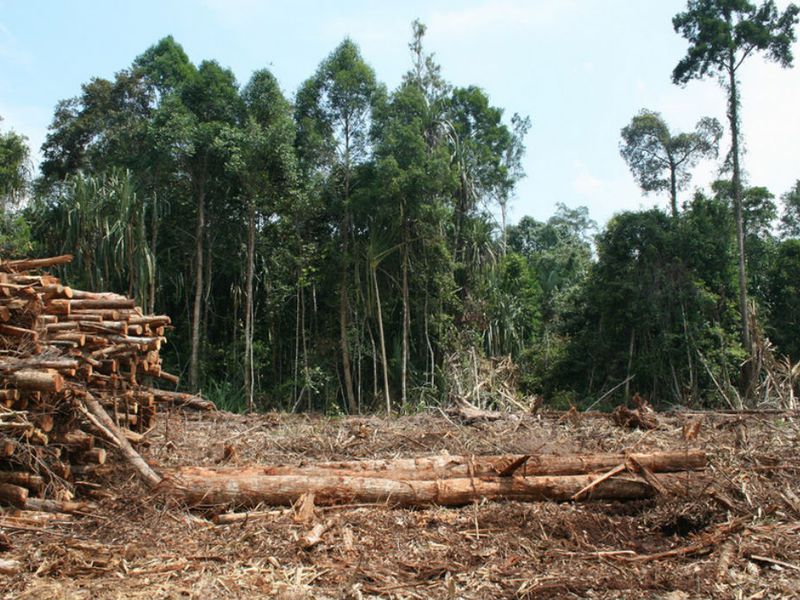
What would human alterations of the environment be considered? Ex. Cutting down the rain forests
Density-independent
Density-dependent

What type of growth model would represent the unrestricted growth of bacteria?
exponential
logistical
S-curve
J-curve

What type of spatial dispersion would dandelion seeds have?
Clumped
Random
Uniform
What type of limiting factor would a change in the number of predators be classified as?
Density-independent
Density-dependent

An Earthquake-related tsunami would be what type of limiting factor?
Density-independent
Density-dependent
When a population reaches its carrying capacity______.
The birth rate is greater than the death rate
The birth rate is less than the death rate
The birth rate and death rate flucuate around the same amount

What year is the zebra population the highest?
1920
2000
1960
2020

What year is the lion population the highest?
1920
1990
2000
2020

Which statement sounds accurate based on the graph data?
The zebra and lions do not affect each other.
As the lions population increases, so does the zebra population.
The zebra population increases first and then the lion population increases.
As the zebra populations decreases, the lion population goes up.

What is the carrying capacity of this graph?
530
400
500
480

What type of growth is happening at the A on the graph?
logistic
exponential
standard
Increasing

According to the graph, what is causing the deer population to decrease?
They got sick.
The wolf population is decreasing.
The wolf population increased.
Nothing, it's a coincidence.
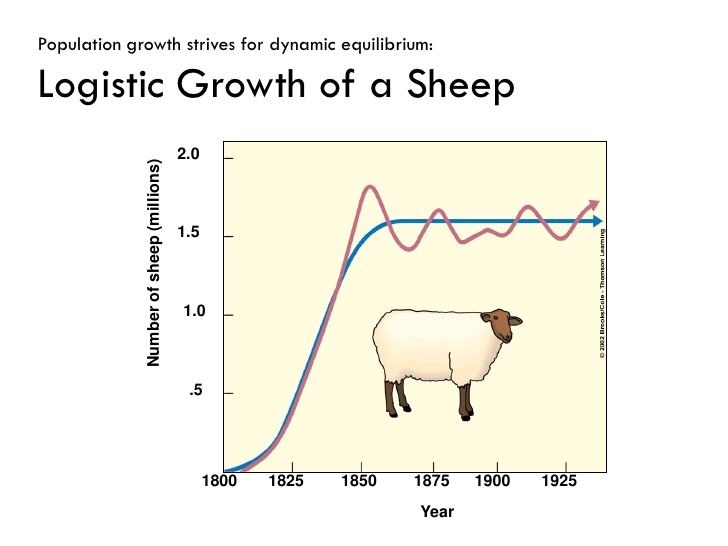

When a population grows past the ecosystem's carrying capacity, what happens to the population?
The population continues to grow.
The population starts to die off to return to carrying capacity.
The population will go extinct due to lack of resources.
The population grows until a new carrying capacity is reached.

What type of population dispersion is shown?
random
clumped
uniform

What type of population dispersion is shown?
uniform
clumped
random

What point on the graph represents the carrying capacity?
A
B
C
D

The ability of an ecosystem to recover after it has undergone a disturbance
resilience
resistance
population dynamics
dispersion
Ability of an ecosystem to resist change from a disturbance
resilience
resistance
population dynamics
dispersion
Which of these is not an example of symbiosis?
mutualism
commensalism
parasitism
competition
Which of these often describes an ecosystem with high biodiversity?
limited species variety
susceptible to disease
resilient and stable
challenging to survival
A species has an especially strong effect on an ecosystem.
keystone species
primary consumer
ecological niche
symbiosis
As bees are taking nectar from flowers, they are also pollinating the flowers.
commensalism
mutualism
parasitism
competition
One organism benefits and the other organism is neither helped nor harmed.
commensalism
mutualism
parasitism
A tick that feeds on the blood of mammals.
commensalism
mutualism
parasitism
One organisms captures and feeds upon another organism.
commensalism
parasitism
predation
mutualism
Two organisms compete for the same limited resources
predation
collaboration
parasitism
competition

If a disease destroying barley plants swept through an ecosystem, what would happen to the bird population that eat barley plants?
The bird population would stay the same
The bird population would infinitely increase
The bird population would decrease


