wayground logo

Free Printable Worksheets

Font size

S
M
L
XL
Worksheets

Biology MP3 Final Exam Review

Total questions: 87

Worksheet time: 1hrs 20mins
Name
Class
Date
1.
Gradual change in a population through adaptations over time.
a)
migration
b)
directional selection
c)
evolution
d)
speciation
2.
What is the term for a feature that allows an organism to survive in its environment?
a)
adaptation
b)
variation
c)
homologous structure
d)
vestigial structure
3.

When the better adapted organisms survive to pass traits along to offspring.

a)

Evolution

b)

Natural Selection

c)

Extinction

d)

Artifical Selection

4.
What is the advantage of having different shaped beaks?
a)
To look different from other species.
b)
To be able to eat the food readily available in the environment.
c)
To protect itself against predators.
d)
To protect itself against prey.
5.
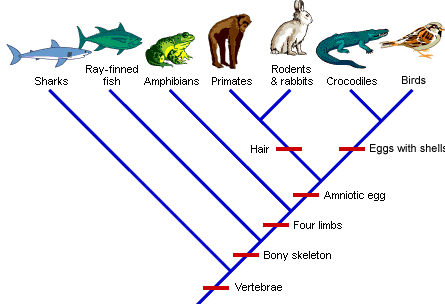
Mutations are a change in what?
a)
DNA
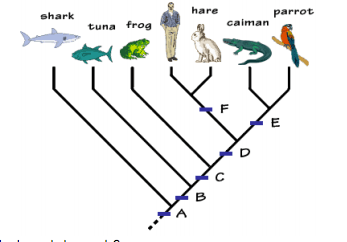
b)
tRNA
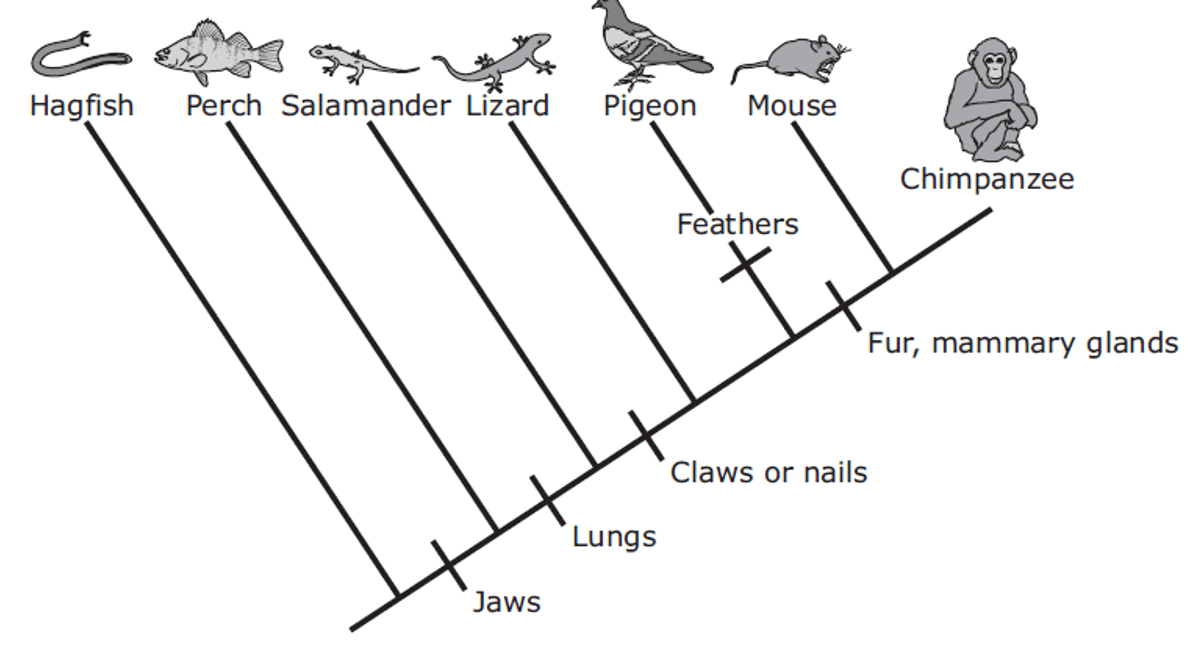
c)
genotype
d)
phenotype
6.
Some organisms that share a common ancestor have features that have different functions, but similar structures.  These are known as
a)
vestigial structures
b)
analogous structures
c)
homologous structures
d)
fossil structures
7.
Two organisms that are closely related would have
a)
very similar DNA sequence
b)
exactly the same DNA sequences
c)
no proteins in common
d)
completely different DNA sequence
8.

Which of the following are examples of evidence for evolution?

a)

The Fossil Record

b)

Comparative Anatomy

c)

Embryonic Development

d)

All of the Above

9.

Which scientist visited the Galapagos Islands and came up with the theory of natural selection?

a)

Theodor Schwann

b)

Gregor Mendel

c)

Charles Darwin

d)

Rudolf Virchow

10.

Scientists have collected millions of fossils of different organisms, and have developed a timeline of life on Earth. What do we call this?

a)

Mutation

b)

Natural Selection

c)

The theory of evolution

d)

Fossil Record

11.

What most likely caused the finches on the Galapagos Islands to have beaks that were different from the finches on the mainland?

a)

There were different types of predators on the island.

b)

There were different types of food available on the island.

c)

The finches had no water to drink.

d)

The finches on the mainland could not fly high enough.

12.
Mutations are important because they bring about
a)
death of the organism in which they develop
b)
genetic variation needed for a population to evolve
c)
benefits for the individual, not for the population
d)
Hardey-Weinberg equilibrium within a population
13.
The ability of an organism to survive and reproduce in its specific environment 
a)
diversity.
b)
evolution
c)
adaptation
d)
 fitness
14.
Why are advantageous traits more likely to be passed onto offspring?
a)
Because they are more likely to survive and reproduce.
b)
Because they come from dominant alleles.
c)
Because they come from recessive alleles.
d)
Because the trait is an acquired phenotype.
15.

The scientific theory of evolution is supported by different types of evidence. How does comparing the skeletons of animals provide support for the scientific theory of evolution?

a)

It provides information about the organisms' habitats.

b)

It shows possible common ancestry between organisms.

c)

It provides information to determine the organisms' ages.

d)

It shows possible chromosomal similarities between organisms.

16.

A green snake blends in so predators can NOT find it. This is an example of?

a)

Hibernation

b)

Mimicry

c)

Migration

d)

Camouflauge

17.
In recent years "SuperBugs" (bacteria that aren't effected by antibiotics) are becoming more and more common. How could natural selection explain this?
a)
Superbugs survive antibiotics and reproduce
b)
Antibiotics cause bacteria to become superbugs
c)
We have always had the same amount of superbugs; modern media just discusses them more.
d)
There is no reliable data on the origin of super bugs.
18.
Why do peppered moths tend to be the same color as the trees on which they live?
a)
The coloring goes along with tasting like the tree. 
b)
It keeps the moth the same temperature as the tree. 
c)
It makes the moths faster than the birds
d)
It makes the moths harder to see.
19.
Which of these is an example of natural selection?
a)
The largest animal in a population will have more opportunities for reproduction.
b)
Several species of organisms work together so that they all succeed.
c)
One species takes all the resources in an environment leaving none for others.
d)
Organism that are best suited to an environment tend to survive and reproduce more often.
20.
Evolution works by 
a)
individuals changing to suit their environment
b)
Individuals learned new traits and pass them on
c)
sudden change in the environment cause a species change 
d)
small changes pass down through many generations
21.
What might account for the fact that all of these limbs share similar structures?
a)
They came from the same source
b)
They are all from one animal
c)
They are very similar organisms
d)
Cooincidence
22.
Some people use similarities in embryos to support the the theory that 
a)
The organisms have the same ancestors 
b)
The organisms have similar numbers of offspring
c)
Cells naturally develop along similar line 
d)
There are no connections 
23.

Natural Selection is driven by a change in the environment and survival of the

a)

Earth

b)

Fastest

c)

Fittest

d)

Biggest

24.

An anatomical feature that no longer seams to have a purpose in the current form of an organism

a)

Homologous structure

b)

Analogous structure

c)

Vestigial structure

d)

None of the above

25.
A few deer wander out of their native woods into a completely new park where no deer had ever been before. They go on to create an entirely new population.
a)
Genetic Drift
b)
Natural Selection
c)
Non-random mating
d)
Mutation
26.
Yellow toucan birds seek out one another to make babies together and tend to avoid the green toucan birds.
a)
Genetic Drift
b)
Non-random mating
c)
Gene flow
d)
Mutation
27.

During gestation (pregnancy), a developing male pig had a change in his genetic code. The result was that he to produce less nitrogenous solid waste.

a)

Genetic Drift

b)

Non-random mating

c)

Mutation

d)

Natural Selection

28.
Five hundred years after the deer had established a flourishing population in the park, a few of them venture back to their original woods and have babies with the deer there.
a)
Genetic Drift
b)
Mutations
c)
Non-random mating
d)
Gene flow
29.
Wolves from the Arizona mesa were transferred to the Colorado Rockies after a forest fire destroyed their habitat. They quickly became part of the local pack and had offspring.
a)
Mutation
b)
Natural Selection
c)
Genetic Drift
d)
Gene Flow
30.

All of the genetic information found in a population.

a)

population

b)

genetic drift

c)

evolution

d)

gene pool

31.
Gene Flow tends to ___________ genetic variation (diversity)
a)
Increase
b)
Decrease
c)
Stabilize
d)
Exaggerate 
32.
Which of the following is NOT an example of natural selection? 
a)
People selectively breeding hamsters.
b)
Insect populations developing resistance to certain pesticides.
c)
Bacteria becoming resistant to antibiotics.
d)
Male birds of certain species developing colorful feathers to attract female mates.
33.

Bats are common in Texas, especially in rocky regions. Bats with longer hang claws have demonstrated higher fitness because of their ability to cling to rock while resting. This adaptation is becoming more frequent in the population. What mechanism of evolution is this?

a)

Natural Selection

b)

Non-random mating

c)

Gene Flow

d)

Genetic Drift

34.

Canis lupus, the scientific name for a wolf, is in which genus?

a)

Canis

b)

lupus

c)

Animalia

d)

Mammalia

35.

What scientific name is correct?

a)

Quercus Alba

b)

Quercus alba

c)

quercus Alba

d)

quercus alba

36.

Which category of classification has the largest variety of organisms?

a)

genus

b)

phylum

c)

species

d)

kingdom

37.

Which taxonomic category is higher than the others?

a)

Class

b)

Genus

c)

Family

d)

Phylum

38.
The closer animals are, the more _________ they share.
a)
Levels of taxonomy
b)
Adaptations
c)
Food
d)
Scientific names
39.
Members of this kingdom are multicellular and heterotrophic.
a)
Plantae
b)
Protista
c)
Animalia
d)
Achaebacteria
40.
Which organisms are closely related? 
a)
American badger and leopard
b)
coyote and gray wolf
c)
european otter and leopard
d)
coyote and american badger
41.

Which Kingdom  is capable of living in extreme environments like hot springs, geysers, or very salty waters?

a)
Bacteria
b)
Archaea
c)
Eukarya
42.

Which domain (cell type) includes all animals and plants?

a)

Archaea

b)

Eukarya (eukaryote)

c)

EuBacteria

43.
What taxa are in a scientific name?
a)
Genus and Kingdom
b)
Species and Family 
c)
Species and Class
d)
Genus and Species
44.
Organisms that belong to the same _________ share the MOST DNA.
a)
family
b)
kingdom
c)
genus
d)
species
45.

What would the scientific name of this organism be?

Kingdom: Animalia

Phylum: Chordata

Class: Mammalia

Order: Carnivora

Family:Canidae

Genus: Canis

species: mesomelas

a)

Mammalia carnivora

b)

Canidae mesomelas

c)

Canis mesomelas

d)

Animalia chordata

46.

A colony of prokaryotic organisms is found in a lake whose salt content was though to be too great for life to exist. This organism most likely belongs to which kingdom?

a)

Plantae

b)

Protista

c)

Fungi

d)

Archaea

47.

A single-celled organism is found in a sample of water. It contains a nucleus as well as other membrane bound organelles and possesses cilia for movement. This organism

most likely belongs to which kingdom?

a)

Plantae

b)

Archaea

c)

Eubacteria

d)

Protista

48.

A multicelluar organism has specialized tissues and cells which contain chloroplasts used for solar energy conversion. This organism most likely belongs to which kingdom?

a)

Plantae

b)

Fungi

c)

Protista

d)

Animalia

49.

A multicellular, eukaryotic organism is hetertrophic and highly mobile. This organism most likely belongs to which kingdom?

a)

Fungi

b)

Animalia

c)

Plantae

d)

Eubacteria

50.

Decomposers in a certain ecosystem are multicellular, eukaryotic organisms which rely on other organisms as sources of nutrition. This organism most likely belongs to which kingdom?

a)

Archaea

b)

Protista

c)

Fungi

d)

Animalia

51.

Which of the following is not a characteristic of members of the plant kingdom?

a)

Specialized tissues for water absorption

b)

Highly mobile due to flagella and cilia

c)

Perform photosynthesis to produce glucose

d)

Cell wall made of cellulose

52.

Taxonomy is the science of classifying organisms into groups based on –

a)

common names

b)

color and shape

c)

shared traits

d)

geographic location

53.

Wild cats (Felis silvestris) are most closely related to which of the following?

a)

lion (Panthera leo)

b)

bearcat (Arctictis binturong)

c)

cheetah (Acinonyx jubatus)

d)

lynx (Felis lynx)

54.

Which of the following sets of vertebrate animals would be the most closely related?

a)

Vertebrates in the same class

b)

Vertebrates in the same order

c)

Vertebrates in the same family

d)

Vertebrates in the same genus

55.
According to this cladogram, primates are most closely related to -
a)
Amphibians
b)
Rodents and rabbits
c)
Crocodiles
d)
Birds
56.
According to this cladogram, birds are LEAST related to -
a)
Amphibians
b)
Sharks
c)
Ray Finned Fish
d)
Crocodiles
57.
Which trait do only humans have, according to the cladogram?
a)
jaws
b)
mammary glands & hair
c)
terrestrial during all life stages
d)
opposable thumbs
58.
According to the cladogram, which organism is most distantly related to the human?
a)
crayfish
b)
rat
c)
perch
d)
frog
59.
On the cladogram, which organism is the closest relative of the human?
a)
Frog
b)
Hare
c)
Caiman
d)
Parrot
60.
All the animals to the right of the hagfish would have the common characteristic of -
a)
Fur
b)
Claws or nails
c)
Lungs
d)
Jaws
61.

What is the closest relative of humans shown in this diagram?

a)

horse

b)

turtle

c)

monkey

d)

dog

62.
When using a dichotomous key to identify organisms, what do we look at?
a)
physical features
b)
weather patterns
c)
environment
d)
diet
63.
A dichotomous key for insects is given. To what order does an insect with two pairs of scaly wings belong?
a)
Coleoptera
b)
Heteroptera
c)
Diptera
d)
Lepidoptera
64.
A student discovers an arachnid with a segmented abdomen, long legs, and a tail with no stinger. The student uses the dichotomous key below to identify it. Which arachnid has the student found?
a)
Whip Scorpion
b)
Wind Scorpion
c)
Daddy long legs
d)
Scorpion
65.
What do all viruses need to reproduce?
a)
They need host genetic material
b)
They need a host cell
c)
They need bacteria
d)
They need insulin
66.
What do viruses have in common with living cells? They both
a)
store genetic information
b)
have chloroplasts
c)
use glucose for cellular respiration
d)
have endoplasmic reticula
67.
Antibiotics kill viruses
a)
True
b)
False
68.
How does a virus cause a person to develop the common cold?
a)
invades the host cell to reproduce
b)
removes energy from the host cell
c)
produces toxins in the host cell
d)
protects the host cell from bacteria
69.
What helps prevent viral diseases?
a)
Vaccines
b)
Antibiotics
c)
Herbal tea
d)
Gene Therapy
70.

Bacteria is what type of cell?

a)

prokaryote

b)

eukaryote

71.
Bacteria is frequently used in the ____________system to break down food.
a)
integumentary
b)
digestive
c)
reproductive
d)
muscular
72.
Binary fisssion is a type of __________ reproduction   ?
a)
asexual 
b)
sexual
73.
All bacteria are harmful to humans
a)
True
b)
False
74.
The flu is caused by
a)
bacteria
b)
virus
75.
Bacteria are smaller then viruses.
a)
True
b)
False
76.
Viruses can be cured with antibiotics.
a)
True
b)
False
77.
Antibiotics kill bacteria.
a)
True
b)
False
78.
Which are examples of fungi?
a)
mold
b)
yeast
c)
mushrooms
d)
all of the above
79.

Which system breaks down food?

a)

digestive

b)

circulatory

c)

respiratory

d)

immune

80.

The endocrine system is responsible for

a)

breathing

b)

hormones

c)

blood circulation

d)

nerves

81.

The heart pumps blood through this system.

a)

respiratory

b)

endocrine

c)

immune

d)

circulatory

82.

The kidneys are part of this system.

a)

respiratory

b)

excretory

c)

circulatory

d)

digestive

83.

Which system senses pain and sends signals to the brain and spinal cord?

a)

immune

b)

excretory

c)

nervous

d)

circulatory

84.

When you get sick, which system protects the body through white blood cells (T cells)?

a)

endocrine

b)

immune

c)

nervous

d)

respiratory

85.

The bladder stores this.

a)

nerves

b)

urine

c)

hormones

d)

food

86.

Which system provides oxygen to the organs?

a)

digestive

b)

circulatory

c)

respiratory

d)

excretory

87.

Homeostasis is the way that the human body maintains internal balance. Homeostasis is needed in order to stay alive.

a)

True

b)

False