wayground logo

Free Printable Worksheets

Font size

S
M
L
XL
Worksheets

BIO SEMESTER REVIEW (PART 1) S. METHOD,BIOCHEMISTRY, Cells

Total questions: 85

Worksheet time: 2hrs 46mins

Name
Class
Date
1.
The variable that is measured in the experiment is-
a)
the dependent variable
b)
the independent variable
c)
the control variable
d)
the hypothetical variable
2.

What amount of sunlight makes pea plants grow tallest? What is the independent variable?

a)

height of pea plants

b)

amount of sunlight

c)

type of soil

3.
The summary at the end of an experiment that explains the results. 
a)
conclusion
b)
procedures
c)
materials
d)
responding variable
4.
Which is NOT a step in the scientific method?
a)
Make observation
b)
Form a theory
c)
Collect data
d)
Form a hypothesis
5.

Scientists ask this at the beginning of an experiment

a)

Question

b)

Data

c)

Observation

d)

Hypothesis

6.
A constant variable is...
a)
Something I can change
b)
The thing affected by my change
c)
The thing in my experiment that must stay the same
d)
The procedures
7.
Which is an example of Quantitative Data?
a)
42 grams
b)
Hard
c)
Squishy
d)
Blue
8.
What is NOT an example of qualitative data?
a)
the average high daily temperature for the month of july
b)
the names of chemicals found in breakfast cereal
c)
the zip codes in which each high school student resides
d)
types of shoes worn by pedestrians on a city street 
9.
A hypothesis is-
a)
a possible explanation of an observation that can be tested
b)
a proven statement
c)
a conclusive statement
d)
a definite answer to a possible problem
10.
How does the control group differ from an experimental group in a scientific experiment?
a)
the control group does not contain the experimental data, whereas the experimental group does
b)
the control group does not contain the experimental variable, whereas the experimental group does not
c)
the control group is not tested or measured
d)
the control group contains more than one experimental variable
11.
The maintenance of an organism’s internal environment is called:
a)
compensating
b)
homeostasis
c)
balancing
d)
routine
12.

The group of organisms that use the process of homeostasis includes

a)

mammals, only

b)

animals, only

c)

plants and animals

d)

all living things

13.
The tendency of an organism to maintain a balanced state in order to stay healthy.
a)
Stimuli
b)
Response
c)
Tropism
d)
Homestasis
14.
Name the levels of organization in the human body in order from smallest to largest:
a)
Tissue, organ, organ system
b)
Organ system, tissue, organs, cells
c)
Cells, tissue, organs, organ system
d)
Cells , organs, tissue, organ system
15.
Which biomolecule functions include enzymes­ which speeds the rate of chemical reactions, structural components in cells, mechanical functions in muscles and cytoskeleton, cell signaling, and immune response; provides structure and helps with chemical reactions 
a)
Protein
b)
Lipids
c)
Carbohydrate
d)
Nucleic Acid
16.
Which biomolecule is important source of energy for humans; glucose for human cells, tissues, and organs; provides fiber, sugar, and starches; provides structural support, cell wall, and cell membrane maker?
a)
Nucleic Acid
b)
Lipid
c)
Carbohydrate
d)
Protein
17.
Which biomolecule includes fats, such as triglycerides, oils, waxes, and steroids (cholesterol); insoluble in water; provides energy storage, insulation, part of cell membrane, and hormones 
a)
Nucleic Acid
b)
Lipids
c)
Carbohydrate
d)
Protein
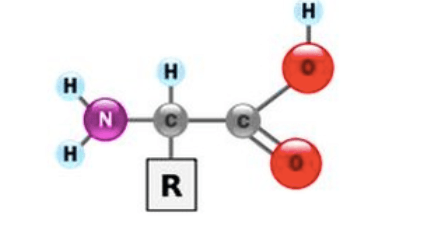
18.
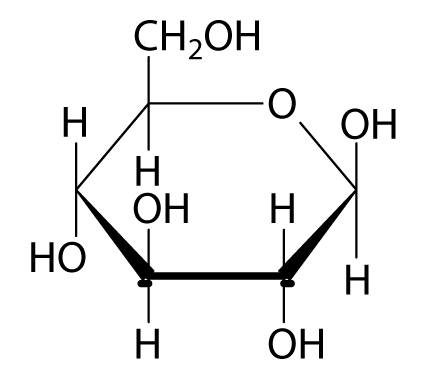
Identify the biomolecule
a)
Carbohydrate
b)
Lipid
c)
Protein
d)
Nucleic Acid
19.
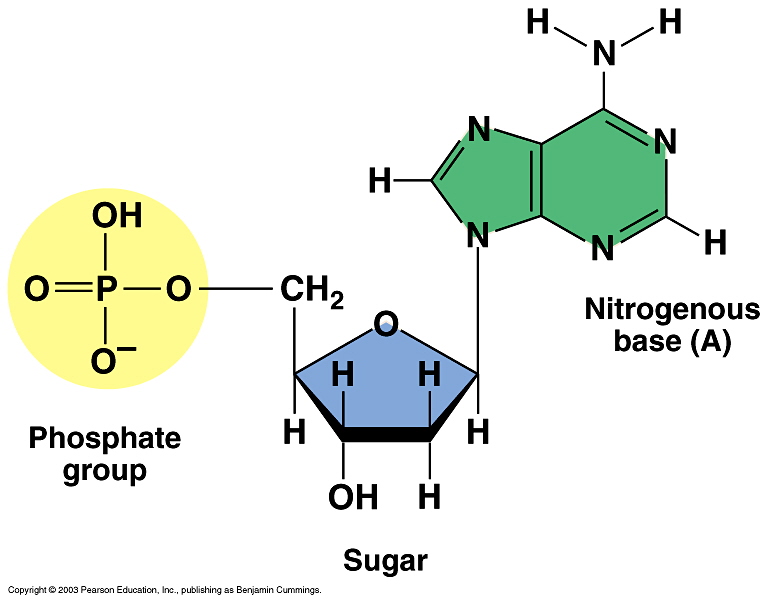
Identify the biomolecule
a)
Lipid
b)
Protein
c)
Carbohydrate
d)
Nucleic Acid
20.
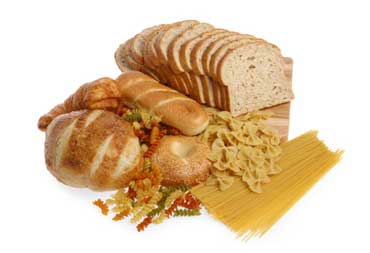
This biomolecule would be used for
a)
Building enzymes
b)
Storing energy
c)
Key source of energy
d)
Storing genetic information
21.
Lipids are made up of which of the following?
a)
glycerol and fatty acids tails
b)
glycerol and monolipids
c)
fatty acids and phosolipids
d)
amino acids and nucleotides
22.
What is the monomer of nucleic acids?
a)
Glycerol
b)
Monosaccharides
c)
Amino Acids
d)
Nucleotides
23.
Which biomolecule is found in pasta and bread?
a)
Lipid
b)
Protein
c)
Nucleic Acid
d)
Carbohydrate
24.
Which biomolecule is a main source of quick energy?
a)
Nucleic Acid
b)
Protein
c)
Lipid
d)
Carbohydrate
25.
Carbon, Hydrogen, Oxygen and Nitrogen are elements in what biomolecule?
a)
Carbohydrate
b)
Lipid
c)
Protein
d)
Nucleic acid
26.
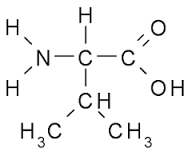
Which biomolecule is this a picture of?
a)
Protein
b)
Nucleic Acid
c)
Lipid
d)
Carbohydrate
27.
What is structure E, F, G?
a)
Substrate
b)
Active site
c)
Enzyme
d)
Products
28.
What is a substance called if it speeds up a chemical reaction?
a)
reusable
b)
catalyst
c)
specific
d)
fragile
29.
Each enzyme only has 1 substrate that will fit its active site.  What is this called?
a)
reusable
b)
catalyst
c)
specific
d)
fragile
30.
After the enzyme and substrate bind together and perform the reaction, what does the substrate become?
a)
a substrate
b)
an enzyme
c)
a product
d)
an active site
31.
Which of these is most likely an enzyme?  
a)
Sucrose
b)
Galactose
c)
Fructose
d)
Amylase
32.
Which is NOT true?
a)
Enzymes speed up chemical reactions.
b)
Enzymes react best at a specific temperature.
c)
Enzymes only control ONE type of reaction.
d)
Enzymes are made of fatty acids.
33.

This organelle functions to package and deliver proteins:

a)

golgi bodies (apparatus)

b)

ribosomes

c)

mitochondria

d)

nucleus

34.

Which is true of prokaryotic and eukaryotic cells?

a)

Prokaryotic cells are larger than eukaryotic cells.

b)

Eukaryotic cells do not have nuclei, and prokaryotic cells do have nuclei.

c)

Prokaryotic cells lack membrane-bound organelles, and eukaryotic cells contain membrane-bound organelles.

d)

Eukaryotic cells are simpler than prokaryotic cells.

35.
Proteins are produced at which cellular structures?
a)
nuclei
b)
ribosomes
c)
mitochondria
d)
chloroplasts
36.
What type of cell is pictured?
a)
Prokaryotic
b)
Eukaryotic
c)
Plant
d)
Animal
37.
Prokaryotic and eukaryotic cells have many differences, but they also share some common features.  Which of the following may be found in either type of cell?
a)
Golgi bodies
b)
ribosomes
c)
mitochondria
d)
nucleus
38.
Which of the following would be found in both eukaryotic AND prokaryotic cells?
a)
chloroplast
b)
cytoplasm
c)
nucleus
d)
endoplasmic reticulum
39.
Which of the following in NOT a characteristic of eukaryotic cells?
a)
DNA is separated from the cytoplasm by a nuclear membrane
b)
Large
c)
Complex 
d)
Lack membrane-bound organelles
40.
Type of cell shown?
a)
Bacterial
b)
Prokaryotic
c)
Eukaryotic
d)
Red blood 
41.
How are prokaryotes and eukaryotes similar?
a)
They both contain membrane-bound organelles.
b)
They both have cell membranes.
c)
The both have nuclei.
d)
They both have chloroplasts.
42.
Cell theory states:
a)
All living cells must have a cell wall.
b)
 All living cells require glucose for survival.
c)
The basic unit of life is a cell.
d)
All cells contain a nucleus
43.
 Which of the following is NOT one of the main components of the cell theory?
a)
cells must contain DNA
b)
all living things are made of cells
c)
cells can only come from other cells
d)
cells are the basic unit of life
44.
Unlike eukaryotes, prokaryotes do not have:
a)
DNA
b)
cytoplasm
c)
cell walls
d)
a membrane bound nucleus
45.
The smallest unit that can perform the basic activities of life is
a)
a cell 
b)
a tissue
c)
an organ
d)
an organism
46.

Prokaryotes are

a)

bacteria

b)

fungi

c)

plants

d)

animals

47.
Which statement reflects one of the major components of the cell theory?
a)
All living things are multi-cellular.
b)
Organs are the basic unit of structure and function for all living things.
c)
All cells come from previously existing cells.
d)
Every organism has a reproductive system to ensure survival of the species.
48.

Animal cells can be distinguished from plant cells easily because of which of the following?

a)

Animal cells have mitochondria and plant cells do not.

b)

Plant cells have lysosomes and animal cells do not.

c)

Only plant cells have centrioles around their nucleus.

d)

Only plant cells have large central vacuoles and cell walls.

49.

Jared observes a cell in biology lab with the light microscope. The cell has the following structures: nucleus, cell wall, and chloroplast. Identify the type of cell that Jared is observing.

a)

animal

b)

plant

c)

fungus

d)

bacteria

50.

Carrie observes an electron micrograph of a cell during biology lab. The cell has a flagellum, ribosomes, cell wall, and no apparent nucleus. Which of the following is likely true of the cell that Carrie is observing?

a)

The cell also contains mitochondria.

b)

The presence of the organelles proves that the cell is eukaryotic.

c)

The cell is a plant because of the cell wall.

d)

The cell is prokaryotic.

51.

Look at the cell organelles. Which of these organelles transports organic molecules that are responsible for providing structure and controlling cellular processes?

a)

endoplasmic reticulum

b)

mitochondria

c)

ribosomes

d)

Golgi apparatus

52.

Which of the following best describes the function of smooth endoplasmic reticulum?

a)

Modifies carbohydrates and proteins, placing them into vesicles

b)

Manufactures proteins and nucleic acids using the DNA code

c)

Modifies and transports proteins after the ribosome makes them

d)

Manufactures lipids and then transports them to a new location

53.

What are the small protein structures that unicellular organisms like the paramecium use as tiny paddles to swim around with?

a)

cilia

b)

pseudopodia

c)

flagella

d)

cytoskeleton

54.

Which cell has chloroplast?

a)

Plant cell

b)

Animal cell

c)

Both

d)

Neither one of them have chloroplast

55.

This cell part is in ALL cells. It is the gel-like substance that provides cell shape.

a)

Chloroplasts

b)

Cell membrane

c)

Cytoplasm

d)

Nucleus

56.

Plants perform photosynthesis through this organelle. It captures energy from the sun and uses it to produce food for the cell.

a)

Cytoplasm

b)

Chloroplasts

c)

Cell Wall

d)

Nucleus

57.
Which of these accurately compares plant cell vacuoles to those in animal cells?
a)
Plant vacuoles stores food and animal vacuoles store water
b)
Plant cells have smaller vacuoles than animals cells
c)
Plant vacuoles contain chlorophyll while animal vacuoles do not
d)
Plant vacuoles are larger and fewer in number than animal vacuoles
58.
Which of the following statements concerning cell membranes is true?  
a)
Water passes freely through a cell membrane.
b)
A substance that is soluble in lipids will be repelled by a cell membrane
c)
The size of a substance will not affect whether it passes through a cell membrane
d)
Cell membranes allow all substances to pass through freely
59.
The diagram represents an experiment carried out in a school laboratory.  A semi permeable membrane separates two solutions.  The membrane is only permeable to substances small enough to fit through the pores.
Which of the following statements is true?
a)
Osmosis will favour the movement of water molecules from side B to side A.
b)
There will be no net movement of water molecules
c)
Sucrose molecules will readily diffuse from side A to side B
d)
There will be no change in the volume of solution on either side of the membrane
60.
Liver cells are considered to be among the most active cells in the body. Therefore, it is most likely that they will contain large numbers of
a)
nuclei
b)
mitochondria
c)
vesicles
d)
golgi bodies
61.
The production of proteins occurs in the
a)
endoplasmic reticulum
b)
mitochondria
c)
ribosomes.
d)
nucleus.
62.
The most likely means by which a white blood cell would remove foreign material is
a)
osmosis.
b)
exocytosis
c)
active transport
d)
phagocytosis
63.

What is it called when large molecules move across the cell membrane from an area of high concentration to an area of low concentration through a protein channel?

a)

Diffusion

b)

Osmosis

c)

Active Transport

d)

Facilitated Diffusion

64.

How does a cell maintain homeostasis?

a)

By controlling what enters and leaves the cell

b)

Flexibility

c)

Protective barrier

d)

Structure and support

65.

Cell membrane transport that occurs without energy is called--

a)

active transport

b)

endocytosis

c)

passive transport

d)

exocytosis

66.

The movement of molecules from low to high is known as

a)

simple diffusion

b)

facilitated diffusion

c)

active transport

d)

osmosis

67.
Movement of particles from high to low concentration. 
a)
Passive Transport
b)
Active Transport
68.
Osmosis is the movement of _____ across a membrane.
a)
food
b)
energy
c)
oxygen
d)
water
69.
The concentration of water is higher in the soil than in plant root cells. Water moves into root cells of a plant by...
a)
Facilitated Diffusion
b)
Simple Diffusion
c)
Active Transport
d)
Osmosis
70.
What type of transport is illustrated?
a)
facilitated diffusion
b)
active transport
c)
diffusion
d)
osmosis
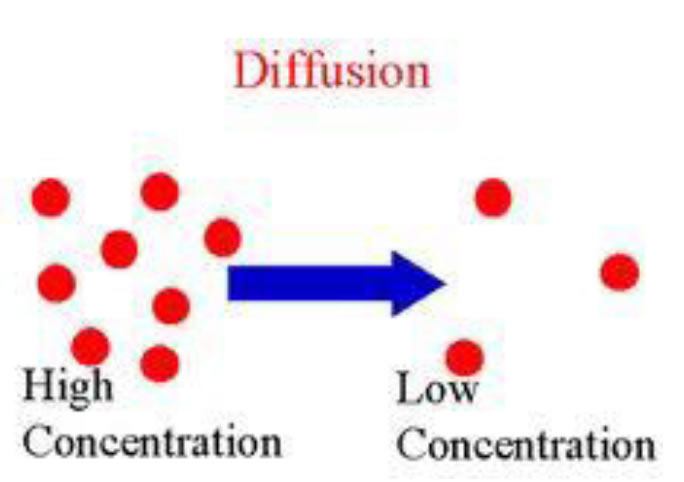
71.
The picture is an example of...
a)
active tranport
b)
passive transport
c)
diffusion
d)
osmosis
72.

What is diffusion

a)

The movement of small particles from an area of high concentration to an area of low concentration

b)

The movement of large particles from an area of high concentration to an area of low concentration

c)

The movement of small particles from an area of low concentration to an area of high concentration

d)

The movement of large particles from an area of low concentration to an area of high concentration

73.
Which type of transport requires an input of energy?
a)
Passive Transport
b)
Osmosis
c)
Simple Diffusion
d)
Active Transport
74.
During osmosis
a)
water moves from high to low concentration
b)
large or oddly shaped molecules move across a cell membrane
c)
water moves when energy is used
d)
proteins are built
75.

If the dots represent sugar which is more concentrated

a)

Inside the cell

b)

Outside the cell

c)

Neither they are equal (equilibrium)

76.

_____ is the amount of a given substance contained in a solution

a)

concentration

b)

equilibrium

c)

diffusion

d)

facilitated diffusion

77.

If the percentage represents sugar, what direction will water flow?

a)

Into the cell

b)

Out of the cell

c)

Into and out equally (equilibrium)

78.

Which cell would water move into?

a)
b)
c)
d)
79.
Ideally, your cells should be in a(n) _______ solution
a)
isotonic
b)
hypertonic
c)
hypotonic
d)
isometric
80.
In this given scenario, corn syrup is hypertonic to an egg with a dissolved shell. What will happen to the egg when it is place in corn syrup?
a)
It will stay the same.
b)
It will swell- get bigger.
c)
It will shrink- get smaller.
81.
If you looked at red blood cells under a microscope and saw the blood cells exploded, what would you say happened?
a)
The cells were placed in a hypotonic solution.
b)
the solution was isotonic.
c)
The solution was hypertonic.
82.
 If a cell containing 5% salt is placed into a glass of water with 20% salt, the water is _______ compared to the cell.
a)
hypertonic-
b)
hypotonic
c)
isotonic
83.
Both side of a selectively- permeable membrane are equal. The sides are ______.
a)
isotonic
b)
hypertonic
c)
hypotonic
84.
If a cell is placed in a hypotonic solution, the cell will _______.
a)
stay the same
b)
swell (get bigger)
c)
shrink (get smaller)
85.

What is the movement of particles with the concentration gradient using protein "helpers"?

a)

diffusion

b)

facilitated diffusion

c)

active transport

d)

enzymatic reactions