Worksheets
protein
Total questions: 80
Worksheet time: 1hrs 7mins
_________ is used to repair and build muscles
carbohydrates
fat
protein
fiber
The primary and most important function of protein in the body is to
control bodily functions
grow and repair body tissue
provide energy
fight disease
Hemoglobin is a protein that binds to oxygen and helps carry it in the blood and deliver it to other parts of the body. This is an example of what type of protein?
Transport
Signaling
Storage
Contractile

Which describes the functions of proteins in living things?
structural, transport, signaling, catalysts, etc.
stores and transmits genetic information
stores energy and makes up cell membranes
quick energy and forming cell structure

All proteins
have a unique structure that determines their unique function.
are exactly the same in function but different in structure.
are exactly the same in structure but different in function.
are enzymes.

_____________ are specialized proteins that can recognize and destroy specific pathogens.
parasites
antibodies
vaccines
surface proteins
Enzymes are an example of
Lipids
Carbohydrate
Protein
Nucleic Acid
To make more hair cells must make a large amount of what protein?
hemoglobin
insulin
collegen
keratin
Pick 2 functions of proteins:
muscle movement
quick energy
act as enzymes
long term energy
Functional proteins can act as: (pick 3)
enzymes
antibodies
fatty acid
hormones
Proteins are involved in controlling what aspect of cells?
Cell death
Cell growth
Cell division
Cell mutation
Which of the following is NOT a function of proteins?
Speed up chemical reactions
Control cell growth
Store genetic information
Provide structural support
How do antibodies, a type of protein, support the body?
By providing energy
By supporting immune function
By storing fat
By absorbing nutrients
What is the role of proteins in muscle function?
They store calcium
They support muscle contraction and movement
They absorb oxygen
They produce lactic acid
Proteins help regulate the expression of which molecules?
Lipids
Carbohydrates
DNA and RNA
Vitamins
Which elements are nucleotides composed of?
Carbon, hydrogen, oxygen, nitrogen, and phosphorus
Carbon, hydrogen, sulfur, and potassium
Oxygen, nitrogen, calcium, and magnesium
Hydrogen, oxygen, sodium, and chlorine
What is the function of the phosphate group in nucleotides?
Provides energy
Forms the backbone of nucleic acids
Acts as a catalyst
Stores genetic information
What is the role of nitrogenous bases in nucleotides?
Provide energy
Form the genetic code
Act as enzymes
Store lipids
What sticks out from the nucleotide chain and is available to bond with bases in other nucleic acids?
Phosphate
Ribose
Nitrogenous base
DNA
Which of the following is known as the "genetic code"?
RNA
Ribose
Phosphate
DNA
Which component of a nucleotide is involved in forming bonds with other nucleotides?
Nitrogenous base
Ribose
Phosphate
DNA
What is the primary function of DNA in living organisms?
To make proteins
To store genetic instructions
To bond with ribose
To form phosphates
Which part of the nucleotide is labeled as "base" in the diagram?
Phosphate
Ribose
Nitrogenous base
DNA
What is the role of the nitrogenous base in nucleic acids?
To store energy
To bond with other bases
To form the backbone of DNA
To create proteins
Which component of the nucleotide is labeled as "ribose" in the diagram?
Nitrogenous base
Ribose
Phosphate
DNA
What are transport proteins in the cell membrane responsible for?
Maintaining the shape of the cell membrane
Regulating the temperature of the cell
Producing energy for the cell
Facilitating the movement of molecules and ions across the membrane
Which type of proteins in the cell membrane are involved in cell signaling?
enzymes
receptor proteins
transport proteins
structural proteins
What is the role of cell signaling proteins in the cell membrane?
Cell signaling proteins are responsible for cell division.
Cell signaling proteins store nutrients in the cell membrane.
Cell signaling proteins transmit signals and regulate cell functions.
Cell signaling proteins protect the cell from external threats.
What function of proteins refer to the scaffolding it provides for cells to maintain its shape?
Catalysis
Hormones
Regulation
Structure
Some proteins store substances for use in the body. Which protein serves the same purpose?
Casein
Collagen
Insulin
Myosin
Insulin enables the breakdown of fat as energy source.
True
False
Enzymes are proteins that (a) the rate of biochemical reactions.
Which protein functions as protection of the body, particularly involved in blood clotting process?
Actin
Ferritin
Fibrinogen
Ovalbumin
Which protein functions as protection of the body, particularly involved in blood clotting process?
Actin
Ferritin
Fibrinogen
Ovalbumin
Which is NOT a function of proteins?
to store nutrients for newborn mammals
to store energy for long-term use
to store nutrients for bird embryos
to store iron in blood cells
Which is true about hemoglobin?
It carries both oxygen and carbon dioxide gases.
It carries oxygen gas but not carbon dioxide gas.
It carries carbon dioxide gas but not oxygen gas.
It carries neither oxygen nor carbon dioxide gas.
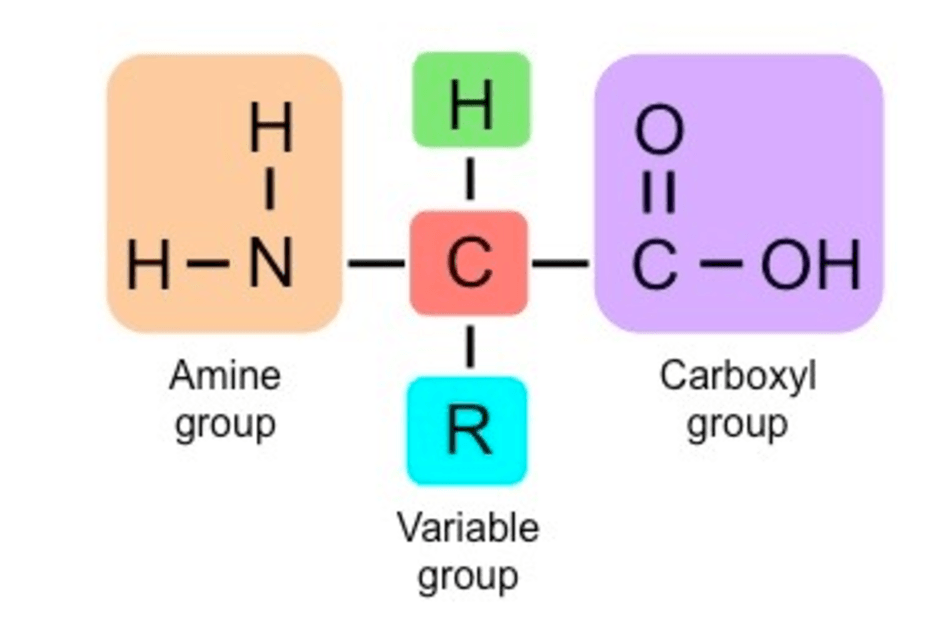

Which of the following describes the secondary structure of proteins?
The sequence of amino acids
The α-helix and β-pleated sheet folding
The folding of the polypeptide chain due to the 'R' groups
The joining of different protein molecules to make one big molecule
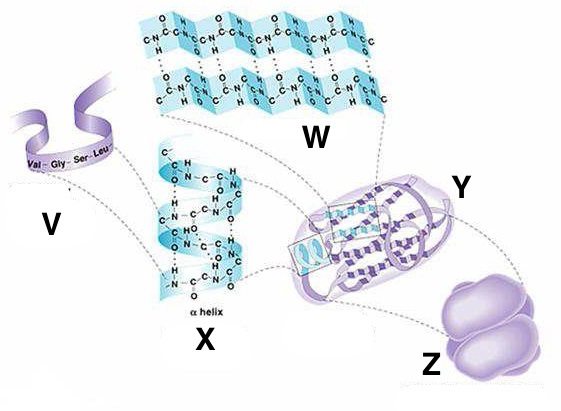
What is a of the functionsof a protein?
cell energy
structure
long term energy storage
contain genetic information
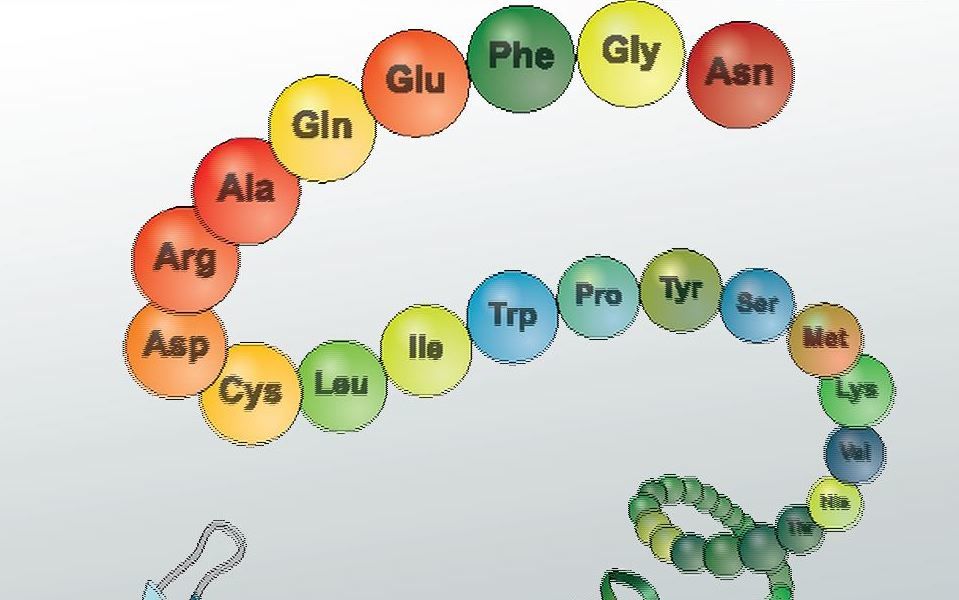

Why is folding so important in proteins?
It gives them a unique, 3-D functional shape
It makes them look tidier
It makes every protein molecule different from the next even if they are the same type
The folding is random so is not that important at all

What is it called when the unique 3-D shape of a protein has been disrupted or 'unravelled'?
Denaturation
Deproteination
Decoupling
Depeptidasing
Protein is needed in an animals diet in order to...
Produce energy
Catalyze processes in the body
Maintain the body and replace dying cells
Regulate body Temperature
Involve quick burst of energy and are performed at maximum effort for a short time. The energy system used are the ATP and Glycolytic System.
Aerobic
Anaerobic
Recreation
Exercise
Any type of cardiovascular conditioning or “cardio”. During the cardiovascular conditioning, your breathing and heart rate increase for a sustained period of time. Oxygen is your main energy source during aerobic workouts, therefore Oxidative System energy is used.
Aerobic
Anaerobic
Recreation
Exercise
An organic compound that provides energy to drive many processes in living cells such as muscle contraction, nerve impulse propagation.
Adenosine Triphosphate
Glycolytic System
Oxidative System
Muscular System
Complete Proteins contain 9 essential
Carbohydrates
Fats
Amino Acids
Records
Jo Anne is putting together recipes for cooking lean protein sources for a community event. Which recipe would be best to include?
smoked pork belly taco
buffalo chicken dip with fried chips
grilled shrimp kebabs with pineapple rice
grilled beef cheeseburger
This is a substance that changes the rate of a chemical reaction.
catalyst
solute
solvent
For enzymes to work, it has a spot where molecules dock in. What do we call this spot?
active site
substrate
inhibitor
What makes water important to life?
Check all that apply.
The polarity of water makes it good at dissolving things.
Water can move nutrients around.
Water dehydrates our body.
Water is a _________ molecule.
nonpolar
polar
This is the attraction of water molecules for each other.
cohesion
adhesion
hydrogen bonding
Of all the elements, ________ is the most significant to life.
carbon
hydrogen
nitrogen
These are molecules that contain carbon covalently bonded to other elements.
inorganic compounds
organic compounds
Below are the organic compounds.
Check all that apply.
carbohydrates
lipids
protein
water
nucleotides
Rice, potatoes, bread and legumes are good sources of _________.
carbohydrates
lipids
proteins
nucleotides

Which of the following is a type of macronutrient that provides energy in the form of sugar or glucose?
Carbohydrate (sugar/glucose)
Fat
Protein (amino acids)
Vitamin

Which of the following is a type of MACRONUTRIENT?
Carbohydrate (sugar/glucose)
Vitamin C
Mineral
Water
PROTEINS can be broken down smaller into ____________.
Fatty acids
Glucose
Amino acids
Starch

What type of nutrient is primarily found in pasta?
Carbohydrate (sugar/glucose)
Fat
Protein (amino acids)
Vitamin

What type of nutrient is primarily found in fish?
Carbohydrate (sugar/glucose)
Fat
Protein (amino acids)
Vitamin

What type of nutrient is primarily found in a donut?
Carbohydrate (sugar/glucose)
Fat
Protein (amino acids)
Vitamin

What type of nutrient is primarily found in avocados?
Carbohydrate (sugar/glucose)
Fat
Protein (amino acids)
Vitamin C
Which form of glucose is stored in the human liver and muscle?
Cellulose
Glycogen
Lipids
Starch
Which of the following is a term that refers to the building blocks of all cells?
Macromolecules
Micromolecules
Molecules
DNA
Lipids are insoluble in water because lipid molecules are _________?
hydophilic
hydrophobic
neutral
Which of the following term refers to the combination of two types of monosaccharides?
Monosaccharide
Disaccharide
Polysaccharide