wayground logo

Free Printable Worksheets

Font size

S
M
L
XL
Worksheets

Biology Final Exam Review 23-24 (Units 4, 5, 6, 7)

Total questions: 76

Worksheet time: 49mins

Name
Class
Date
1.

The equation for determining population growth is...

a)

(births + immigration) – (deaths + emigration)

b)

(births + immigration) + (deaths – emigration)

c)

(births + emigration) + (deaths – immigration)

d)

(births + deaths) – (immigration + emigration)

2.
What factor describes when populations increase because animals are moving into a population?
a)
Emigration
b)
Limiting Factors
c)
Immigration
d)
Exponential Growth
3.
What factor describes when populations decrease because animals are moving out of a population?
a)
Emigration
b)
Limiting Factors
c)
Immigration
d)
Exponential Growth
4.
What does the graph represent?
a)
Emigration
b)
Exponential growth
c)
Immigration
d)
Logistic Growth
5.

What does the graph represent?

a)

Emigration

b)

Exponential growth

c)

Immigration

d)

Logistic Growth

6.
Logistic growth has 3 phases. In Phase 1, the population grows rapidly. In Phase 2, population grows slowly. In Phase 3, growth stops. What causes growth to stop in the 3rd phase of logistic growth?
a)
Emigration
b)
Immigration
c)
Exponential Growth
d)
Carrying Capacity
7.

True or False: Limiting factors can be either population dependent or population independent.

a)

True

b)

False

8.

Which limiting factor is dependent on the number of individuals in a population and thus would increase in occurrence if the population increased?

a)

Unusual weather

b)

Natural disaster

c)

Births

d)

Disease

9.
Which limiting factor is independent of the number of individuals in a population?
a)
competition
b)
parasitism/disease
c)
stress
d)
natural disasters
10.

Which of the following is TRUE of predator/prey relationships?

a)

The amount of prey does not affect the number of predators.

b)

Herbivores are limited by the number of prey in an ecosystem.

c)

Humans are not considered predators.

d)

The number of predators is determined by available prey.

11.

Give examples of environmental factor(s) that could cause the exponential growth seen marked as "A" in this Rabbit Population?

4 lines
12.

After the exponential growth seen marked as "A" stops, what is causing the Rabbit Population to fluctuate around the population size marked as "B"? SELECT ALL THAT APPLY

a)

They have reached their carrying capacity in this specific ecosystem

b)

Their availability of food relative to population size has decreased limiting continued growth

c)

Density dependent factors are putting pressure on the population growth to limit it to stay around "B's" level

d)

The birth rate is 3x higher than the death rate

13.

Pesticides are used on crops to protect them from insect harm. They are designed to severely weaken and or kill insects when exposed.

a)

True

b)

False

14.

Honeybees are very important _____________, that transfer pollen between plants so that they produce fruit/vegetables. They account for $15 billion of added crop value in the USA.

a)

Parasites

b)

Pollinators

c)

Producers

d)

Primary consumers

15.

Which information belongs in circles designated as X and Y?

a)

X - biotic factors; Y - abiotic factors

b)

X - ecological relationships; Y - biotic relationships

c)

X- abiotic factors; Y - interacting population

d)

X - energy flow; Y- matter cycles

16.

Which gas is likely to increase in the atmosphere if deforestation continues?

a)

oxygen

b)

carbon dioxide

c)

nitrogen

d)

glucose

17.

If we increase the rates of reforestation, which gas is likely to increase in the atmosphere?

a)

nitrogen

b)

carbon dioxide

c)

oxygen

d)

glucose

18.

Water, Gases such as (oxygen and carbon dioxide), pH levels, and soil composition are all ____________ factors that influence an ecosystem's biodiversity.

a)

biotic

b)

relationships

c)

energy

d)

abiotic

19.

What is the relationship between biodiversity and species survival?

a)

increase biodiversity, decrease species survival

b)

decrease biodiversity, increase species survival
c)

increase biodiversity, increase species survival

20.

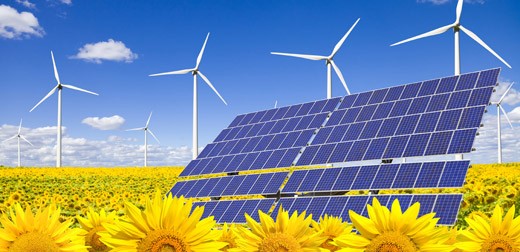
__________ is an energy resource that WILL NOT run out in the next several hundred years.

a)

Renewable Energy Resource

b)

Nonrenewable Energy Resource

c)

Fossil fuels

d)

biodegradable

21.

__________ is an energy resource that WILL run out in the next several hundred years.

a)

Renewable Energy Resource

b)

Nonrenewable Energy Resource

c)

natural resources

d)

pollution

22.
what is a non renewable resource?
a)
water
b)
wind
c)
coal
d)
biomass
23.

What is the best reason to use renewable resources?

a)

The are inexpensive

b)

They are always available

c)

They are expensive

d)

They create pollution

24.
Energy can be classified into..
a)
Renewable and non renewable
b)
Natural and non renewable
c)
Renewable and Natural
d)
All of them
25.
Why is solar energy considered renewable energy?
a)
It's cheaper than fossil fuels
b)
The sun's energy would not run out for billions of years
c)
Solar energy recharges batteries
d)
All of them
26.
Which human activity would be most likely to have a negative impact on the environment?
a)
Planting trees to control soil erosion
b)
Limiting the use of chemicals that kill weeds.
c)
Stopping the draining of swamps.
d)
Burning coal and oil to generate electric power.
27.
When predator numbers decrease, prey numbers ____________ because fewer of them are being consumed.
a)
decrease
b)
increase
c)
stay the same
d)
divide in half
28.
If a disease destroying barley plants in a field swept through an ecosystem, what would happen to the barley eating bird population in the the field ?
a)
The bird population would stay the same
b)
The bird population would infinitely increase
c)
The bird population would decrease
29.
A certain plant needs moisture, carbon dioxide, oxygen, light, and minerals to survive. This scenario shows that this particular living organism depends on .
a)
Biotic and Abiotc Factors
b)
Biotic Factors 
c)
Abiotic Factors 
d)
None of the Above
30.

The lavender plant serves an important role in the life cycle of the monarch butterfly. Adult monarchs lay their eggs in the lavender plant, and then the monarch caterpillars eat that same plant during their development.

Based on the relationship between monarchs and lavender, what is one reasonable prediction a scientist could make?

a)

If the lavender population goes down, the monarch population will do down.

b)

Population of monarch butterflies should remain constant when lavender population decreases.

c)

A decrease in the lavender population would cause a monarch butterfly population increase.

d)

If the population of lavender remains constant (the same), the monarch butterfly population increases.

31.

A community comprising all the biotic and abiotic factors in an area and all the interactions among them

a)

ecosystem

b)

population

c)

species

d)

Environmental interaction

32.

A community is ___________ types of species living together.

a)

Same

b)

Alternating

c)

All

d)

Different

33.

A population is all the ____________ species.

a)

Same

b)

Different

c)

Other

d)

Alternating

34.
Biotic includes all the following exempt:
a)
Plants
b)
Microrganism
c)
Sunlight
d)
Humans
35.
All living things are composed of cells. 
a)
True
b)
False
36.
What is the function of ATP in living things?
a)
provides energy for cells
b)
stores genetic information
c)
provides structure in the nucleus
37.
Energy is released from ATP when
a)
a phosphate group is added
b)
adenine bonds to ribose
c)
ATP is exposed to sunlight
d)
a phosphate group is removed
38.
Which of the following can be compared to a battery in need of recharging?  (empty wallet)
a)
ADP
b)
ATP
c)
Ribose
d)
Adenosine
39.
What are the parts of the ATP molecule?
a)
adenine, thylakoids, stroma
b)
stroma, grana, chlorophyll
c)
adenine, ribose, phosphate groups
d)
NADH, NAHPH, FADH
40.
Which of the following is NOT a component of ATP?
a)
Glucose
b)
Adenosine
c)
Phosphate 
d)
Ribose
41.
Which cellular organelle is responsible for manufacturing ATP?
a)
Ribosome
b)
Nucleus
c)
Mitochondria
d)
Chloroplast
42.
In which way are photosynthesis and cellular respiration different?
a)
Cellular respiration stores ATP, while photosynthesis releases ATP.
b)
Cellular respiration produces oxygen, while photosynthesis uses oxygen.
c)
Photosynthesis releases energy, while cellular respiration stores energy.
d)
Photosynthesis uses carbon dioxide, while cellular respiration produces carbon dioxide.
43.
What is the correct equation for cellular respiration?
a)
6O2 + C6H12O6 -> 6CO2 + 6H2O + Energy
b)
6O2 + C6H12O6 + Energy -> 6CO2 + 6H2O
c)
6CO2 + 6H2O -> 6O2 + C6H12O6 + Energy
d)
6CO2 + 6H2O + Energy -> 6O2 + C6H12O6
44.
What does metabolism mean?
a)
Converting energy into food
b)
Making light reactions happen
c)
Converting food into energy
45.
After intense activity, your muscles feel sore because of 
a)
the accumulation of NAD+
b)
the accumulation of lactic acid 
c)
the accumulation of ATP
d)
the accumulation of carbon dioxide
46.
Fermentation enables glycolysis to continue under 
a)
anaerobic conditions
b)
aerobic conditions
c)
photosynthetic conditions
d)
hydrophobic conditions
47.

Which organism go through cellular respiration?

a)

animals

b)

plants

c)

both animals and plants

d)

none

48.

What type of respiration requires oxygen?

a)

Aerobic

b)

Anaerobic

49.
What type of respiration does not require oxygen?
a)
Aerobic
b)
Anaerobic
50.
Which type of respiration is most efficient?
a)
Aerobic
b)
Anaerobic
51.
The important gases, carbon dioxide and oxygen, enter and leave the leaf through the
a)
upper epidermis
b)
phloem
c)
stomata
d)
guard cells
52.
Which of the following is the correct equation for PHOTOSYNTHESIS?
a)
CO+ light + H2O --> O+ Sugar
b)
CO+ sugar + H2O --> O+ light
c)
O2 + light + H2O --> CO+ Sugar
d)
CO+ O2 + H2O --> Light+ Sugar
53.
Which of the following is an example of an AUTOTROPH?
a)
Appletree
b)
Dog
c)
Mushroom
d)
Human
54.
Which of the following is an example of a HETEROTROPH?
a)
Grass
b)
Algae
c)
Lemon Tree
d)
Bear
55.
Which statement about photosynthesis is correct?
a)
Plants get the energy they need for photosynthesis from water.
b)
Plants get the energy they need for photosynthesis from soil.
c)
Plants get the energy they need for photosynthesis from sunlight.
d)
Plants get the energy they need for photosynthesis from carbon dioxide.
56.
In which  organelle does photosynthesis occur?
a)
mitochondria
b)
stomata
c)
xylem
d)
chloroplast
57.
What gas is being released during photosynthesis
a)
sulfur
b)
carbon dioxide
c)
oxygen
d)
hydrogen
58.
What are the products of photosynthesis?
a)
Glucose and Chlorophyll
b)
Glucose and Oxygen
c)
Water and Light energy
d)
Carbon Dioxide and Light energy
59.
How does photosynthesis benefit heterotrophs?
a)
It adds carbon dioxide to the air.
b)
It creates a source of energy they can eat.
c)
It creates clean water.
d)
It eliminates harmful sugars.
60.
How do autotrophic organisms obtain their energy?
a)
Consuming other organisms.
b)
Converting solar energy into chemical energy.
61.
What is the ecological role of the krill in this food chain?
a)
Tertiary Consumer
b)
Producer
c)
Primary Consumer
d)
Secondary Consumer
62.
What is the ecological role of the seal?
a)
Primary Consumer
b)
Secondary Consumer
c)
Producer
d)
Tertiary Consumer
63.
How much energy is passed on to the next trophic level?
a)
100%
b)
10%
c)
1%
d)
0%
64.
About how much percent of energy is passed on from one organism to to the next on a food web pyramid. 
a)

100 percent of all energy gets passed up the pyramid

b)

45 percent of all energy gets passed up the pyramid

c)

10 percent of all energy gets passed up the pyramid

d)

0 percent of all energy gets passed up the pyramid

65.
In the energy pyramid here, how much of the energy in each level gets lost as heat or used by the organism for survival?
a)
80%
b)
90%
c)
10%
d)
20%
66.
What is an invasive species?
a)
A native (naturally found) species which are added to an area. 
b)
A non-native (not naturally found) species added to an area. 
c)
A keystone species in an environment
d)
none of the above
67.

What is the variety of ecosystems that are present in the biosphere?

a)

species diversity

b)

genetic diversity

c)

ecosystem diversity

d)

biodiversity

68.
What is the variety of genes present?
a)
bidiversity
b)
species diversity
c)
extinction
d)
genetic diversity
69.
The number of different species and the abundance of each species in a biological community.
a)
genetic diversity
b)
ecosystem diversity
c)
extinction
d)
species diversity
70.
_______ happens when fertilizers, animal waste, sewage or other substances rich in nitrogen and phosphorus are lost into waterways causing excessive algae growth.
a)
Eutrophication
b)
Introduced species
c)
Biological Augmentation
d)
Nonrenewable Resource
71.
What effect is shown in this picture? (The pond is green from algae).
a)
biomagnification
b)
eutrophication
c)
habitat fragmentation
d)
invasive species
72.
The process shown here is called __.
a)
biomagnification
b)
eutrophication
c)
invasive species
d)
mass extinction
73.
When excess nutrients make their way into the waterways in runoff from lawns:
a)
fish populations increase
b)
algal blooms increase
c)
frog population increases
d)
people get more vitamins in their water
74.
Extinction rates are significantly __________ in recent decades than before.
a)
Lower
b)
Higher
75.
How are photosynthesis and cellular respiration related?
a)
They both produce the same things.
b)
What is produced from one process is needed for the other process.
c)
They both need the same things to work.
d)
They are not related.
76.

As energy transformations occur within a system, the total energy of the system (including what is lost as heat) __________________.

a)
remains constant
b)
increases
c)
is transferred out of the system
d)
decreases