
 Worksheets
Unit 2: Evolution Summative
Total questions: 80
Worksheet time: 3600secs

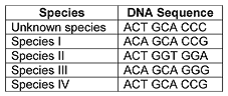
What type of evidence is represented in the picture above:
Fossils
Vestigial Structures
DNA
Homologous Structures

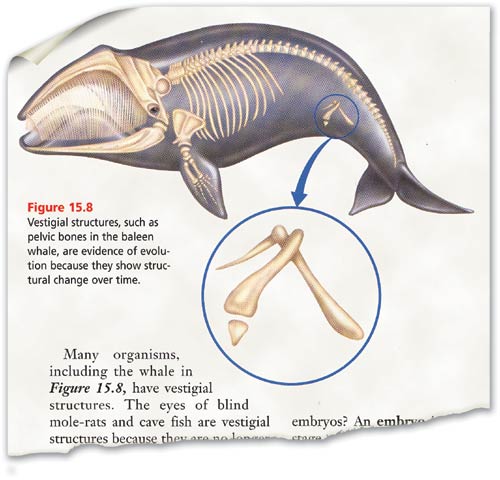
_____________________are features present in modern organisms which are no longer in use.
DNA
Vestigial structures
Fossils
Homologous structures
A category of structures that have a similar function, but are structurally different.
Homologous structures
Analogous structures
Vestigial structures
Common core structures

What type of structure does this image illustrate?
Homologous structures
Analogous structures
Vestigial structures
Introduction of new genes into a population as new organisms move in
Gene Flow (migration)
Genetic Drift
Genetic Recombination
Mutation
Natural selection acts on variations in populations through a specific trait. Which is true?
All forms of the trait have the same impact on survival
The trait is resistant to mutations
The trait is passed on to the next generation
The trait is the same for all organisms
Type of natural selection that favors the average form of a trait over extreme forms?
Stabilizing
Directional
Disruptive
A gene pool consists of
all of the dominant alleles in a population
all of the recessive alleles in a population
all of the alleles in a population
Type of natural selection that disrupts the population average by favoring the extreme traits
Disruptive Selection
Stabilizing Selection
Directional Selection
What does being "fit" mean?
You have the largest muscle mass
You are best suited to live in your environment
You can run/fly the fastest in your population
You are over 6 ft tall and at least 180 lbs
Butterflies with large wings can fly away from predators faster. If a butterfly has small wings, it won't be able to fly fast enough and will most likely be eaten at a young age. Which is most likely going to happen to the butterfly population?
Small wing butterflies will stay the same in number.
Large wing butterflies will decrease.
Small wing butterflies will increase.
Large wing butterflies will increase.
The more variation in a species, the higher the chances of surviving. True or false?
true
false
What is speciation?
Differences among a species.
The ability to interbreed with another organism
Formation of a new species
Adapting to the environment

A turtle species started on one of these islands but has now spread to almost all of the islands show in the map. Why can speciation occur on the other islands?
The food sources on the original island came onto the new islands
Predators traveled with the turtles to the new islands
Geographic isolation caused limitation to the ability to share certain traits while breeding.
Change in climate conditions allow for the turtles to breed throughout the year
What is needed in order to natural selection to occur?
Variety in food source
Variation in a population
Variation in temperature
Variety of predators

Evolution occurring gradually and slowly over long periods of time
Homeostasis
Stasis
Punctuated Equilibrium
Gradualism


The three species pictured do not share a common ancestor, yet have evolved to have a similar anatomy and life style. This is an example of ?
Homologous Structures
Divergent Evolution
Vestigial Organs
Convergent Evolution

The three species pictured share a common ancestor and have adapted so that each lives in a different environment. This is an example of
Law of Superposition
Evolutionary Arms Race
Divergent Evolution
Convergent Evolution

The yucca moth depends on the small soap weed for food, and the small soap weed is only pollinated by the yucca moth. This is an example of
Evolutionary Arms Race
Convergent Evolution
Coevolution
Adaptive Radiation

______ _________ explains how two or more organisms could evolve similar traits even though they are not related to each other.
convergent evolution
reproductive isolation
derived characters
hybrid vigor

This mechanism of evolution occurs when populations migrate.
Extinction
Gene flow
Genetic drift
Natural Selection


Predict how this species of beetles will change over time.
The number of green beetles in this population will increase.
The number of brown beetles in this population will increase.
The average body size will decrease for individual beetles in this population.
The total number of beetles will decrease.
The process in which organisms with traits well suited to an environment are more likely to survive and to produce offspring is..
origin of the species
evolution
natural selection
inheritance
Structures with no function that are remnants of an organism's evolutionary past are...
homologous
vestigial
from a common ancestor
divergent
Evolved from the same ancestor, but have different functions
Homologous structures
Analogous structures
Vestigial structures
All of the above
Variation
A person who studies plants and animals by observing them.
The resemblance of one species to another species.
Is a slight difference in an inherited trait of individual members of a species.
The breeding of organisms for desired characteristics.
Adaptation
Is a slight difference in an inherited trait of individual members of a species.
Is an inherited trait that increases the organism’s chance of surviving and reproducing in its environment.
A person who studies plants and animals by observing them.
The resemblance of one species to another species.
The large-scale events of speciation are called...
macroevolution
simplification
adaptation
microevolution

What is an inherited characteristic that helps organisms survive?
Evolution
Adaptation
Natural Selection
Extinction
A mistake or change that occurs in the DNA sequence is called a ______________________.
Extinction
Speciation
Mutation
Genetic Variation
Temporal isolation occurs when two different populations:
develop different mating behavior
become geographically separated
reproduce at different times
interbreed
This can cause changes in allele frequency randomly, causing some alleles to become more common with no selective advantage.
mutations
selection pressures
genetic drift
founder effect
gene flow
This can cause changes in allele frequency through movement between populations, increasing or decreasing allele frequency (and possibly introducing new alleles)
mutations
selection pressures
genetic drift
founder effect
gene flow
Evolved from different ancestors, but due to living in similar environments have a similar function.
Homologous structures
Analogous structures
Vestigial structures
All of the above
Why is sexual selection important?
Increase variation within a species
Reduce loneliness of individuals
Help different species mix genetic information
Some female peacocks prefer males with large, colorful tales while other female peacocks prefer males with no tail at all. Females are now mating only with the tail they prefer. What type of reproductive barrier is this?
behavioral isolation
hybrid sterility
temporal isolation
mechanical isolation
In the Great Lakes region of North America, gray wolves and coyotes are similar species but do not mate because their breeding periods occur at different times of the year.
Geographic isolation
Behavioral isolation
Temporal isolation


Which of the following can be determined by observing the embryos shown in the diagram
Darwin proposed organisms descended from
apes
bacteria
common ancestors
other organisms
What is the principle that each living species has descended, with change from other species overtime?
Survival of the fittest
Adaptation
Fossil
Common Descent
What is inherited characteristics that increase an organism's chance of survival ?
Survival of the fittest
Adaptation
Fossil
Common Descent
The more offspring an organism has the greater the odds that a few of them will survive, reproduce and pass on those traits
overproduction
variation
selection
adaptation
Organisms from the same species can vary in…
1) physical appearance
2) genetic makeup
overproduction
variation
selection
adaptation
Organisms produce more offspring than can survive
Overproduction
Variation
Struggle to Survive
Survival of the Fittest
Inheritance of Traits
A balanced polymorphism exist through disruptive selection in seed cracker finches from Cameroon in which small and large billed birds specialized in cracking soft and hard seeds, respectively. If long term climatic change resulted in all seeds becoming hard, what type of selection would then operate on the finch population?
Sexual selection
Stabilizing selection
Directional selection
Disruptive selection
Occurs when changing environment favours one extreme phenotype
stabilizing selection
Directional selection
Disruptive selection
Outbreeding
Occurs when environmental conditions fluctuate between two opposite extreme values.
Artificial selection
Distruptive selection
Directional selection
Stabilizing selection

What type of selection is depicted in the picture?
stabilizing
directional
disruptive
Robins typically lay fours eggs. If more then four eggs are produced then the baby chicks are malnourished while smaller egg numbers result in no viable (able to live) baby chicks. This is an example of
stabalizing
disruptive
directional


Slow changes over a long period of time.
Gradualism
Extinction
Coevolution
Convergent evolution
Bursts of change followed by periods of stability.
Punctuated equilibrium
Gradualism
Extinction
Speciation
A number of different species arise from one common ancestor.
Adaptive Radiation (aka, Divergent Evolution)
Gradualism
Coevolution
Speciation
When unrelated species evolve similar characteristics because they live in similar environments.
Convergent Evolution
Coevolution
Adaptive Radiation
Divergent Evolution
Two organisms change in response to each other forming a specialized relationship.
Coevolution
Convergent Evolution
Gradualism
Extinction

