
 Worksheets
Unit 3 Review
Total questions: 90
Worksheet time: 3hrs 10mins
The combined observations of Mattias Schleiden, Theodor Schwann and Rudolph Virchow resulted in the formation of the cell theory. Which of the following is not part of the cell theory?
What structures do all cells have in common?
cytoplasm
Ribosomes
DNA
cell membrane
nucleus
What do plant cells have that animal cells do not?
Chloroplasts
Cell wall
Large vacuoles
Nucleus
ribosomes
Robert Hooke
Matthias Schleiden

What is the function of the cell membrane?
To control what comes in and out of the cell
To break down food inside the cell
to serve as a barrier
to eat the cells food

Which organelle produces the energy a cell needs to carry out its function
Mitochondria
Golgi Bodies
Cytoplasm
Nucleus

Which organelle is found inside the nucleus and produces ribosomes
Nucleolus
Cell Membrane
Lysosome
Golgi Bodies

What is the function of the Vacuoles
Store food, water and waste
Receive proteins
Assembles amino acids
Found inside the nucleus

Which organelle receives proteins and materials from the ER, packages them and distributes them
Vacuoles
Golgi Bodies
Nucleus
Chromatin

Which cell contains Chloroplasts?
Animal
Plant

what is the function of ribosomes
to assemble amino acids to create proteins
to pack proteins
to clean proteins

The control center of cell is
the nucleus
ribosomes
chromatin
This provides structure and helps the cell keep its shape.
cytoskeleton
cell membrane
nucleus
endoplasmic reticulum
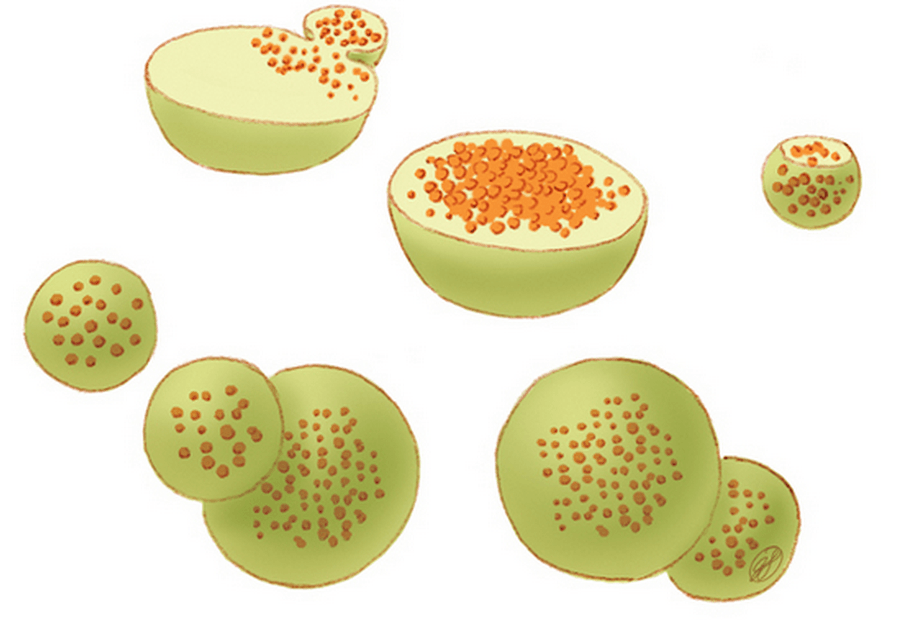
Which organelle is the trash collector, but also recycles parts of the cell?
mitochondria
lysosome
vacuole
ribosome

appendage that protrudes from eukaryotic cells for movement
Organelle
Flagella
Cilia
Chloroplast

a slender threadlike structure, especially a microscopic appendage that enables many protozoa, bacteria, spermatozoa, etc. to swim.
Cilia
Organelle
Eukaryote
Flagella
What organelle that is present in other plant cells, is absent from the root hair cells?
Nucleus
Vacuole
Chloroplast
Cell Wall
Which example is hydrophobic in nature?
Oil
Sugar
Salt
Water
What does "hydrophilic" mean?
water loving, associates with water
water fearing, does not associate with water
a world war II submarine
an example would be solutes like oil or fat
What does "hydrophobic" mean?
water loving, associates with water
water fearing, does not associate with water
a world war II submarine
an example would be solutes like sugar or salt
What is the "big idea" of the fluid mosaic model of plasma membranes?
the plasma membrane creates a specialized FLUID that looks like a MOSAIC.
the plasma membrane is a MOSAIC.
the fluid mosaic model is NOT related to the plasma membrane.
a plasma membrane is a MOSAIC of components that move FREELY and FLUIDLY.

This image is an example of a phospholipid. Which part of a phospholipid is HYDROPHILIC?
the phosphate "head"
the lipid "tails"
This image is an example of a phospholipid. Which part of a phospholipid is HYDROPHOBIC?
the phosphate "head"
the lipid "tails"
Which type of biological macromolecule is the main component of the plasma membrane?
carbohydrate
lipid
protein
nucleic acid

Define plasma membrane
lipid that helps minimize effects of temperature
only on the outer surface of the plasma membrane and are attached to proteins or lipids; form distinctive cellular markers
flexible boundary of a cell that separates a cell from its surroundings
may extend partway into the plasma membrane, cross the membrane entirely, or be loosely attached to its inside or outside face
Which is NOT a function of the membrane?
it forms a selective barrier
it has receptors for chemical messages
it is the control center of the cell
it is involved in self recognition
The cell membrane is mostly made of what?
Membrane-spanning Proteins
Surface Proteins
Phospholipids
Carbohydrates
What are the two parts of a phospholipid?
head
enzyme
tail
hormone
What forms due to the two layers of phospholipids coming together?
trilayer
bilayer
unilayer

Identify a peripheral protein
structure a
strucure b
structure g
structure h
Which of the following substances would have the most trouble crossing the membrane by diffusing through the bilayer?
water
oxygen
carbon dioxide
a sodium ion
Which of these is NOT embedded in the hydrophobic portion of the lipid bilayer at all?
peripheral proteins
transmembrane proteins
integral proteins
all of these are embedded

Which structure is the hydrophilic polar head of the phospholipid molecule?
F
D
C
A1

Which structure is the hydrophobic tail of the phospholipid molecule?
E
B
G
A2
The cell membrane is _______________ permeable.
selectively
somewhat
physically
ionically




In which cell is the concentration of solute greater on the inside of the cell?
The one on the left
The one on the right
The one in the middle
The concentration of solute is the same for each solution

Which red blood cell is in an isotonic solution?
The one on the left
The one on the right
The one in the middle
Each solution is isotonic


Endocytosis is a cellular process in which substances are brought into the cell. The material to be internalized is surrounded by an area of cell membrane, which then buds off inside the cell to form a vesicle containing the ingested materials.
Exocytosis is an active transport process in which a cell transports neurotransmitters and proteins out of the cell by secreting them through an energy-dependent process.
The sodium-potassium pump moves sodium ions out of the cell and potassium ions into the cell. This helps maintain the cell's resting membrane potential, regulate cell volume, and stabilize osmotic equilibrium.
What type of transport is this?

Endocytosis is a cellular process in which substances are brought into the cell. The material to be internalized is surrounded by an area of cell membrane, which then buds off inside the cell to form a vesicle containing the ingested materials.
Exocytosis is an active transport process in which a cell transports neurotransmitters and proteins out of the cell by secreting them through an energy-dependent process.
The sodium-potassium pump moves sodium ions out of the cell and potassium ions into the cell. This requires energy. This helps maintain the cell's resting membrane potential, regulate cell volume, and stabilize osmotic equilibrium.
What type of transport is this?
Active transport is movement of particles through the cell membrane from a region of ...1... to a region of ...2... using energy in the form of ...3...
1: lower concentration, 2: higher concentration, 3: NADPH
1: higher concentration, 2: lower concentration, 3: NADPH
1: higher concentration, 2: lower concentration, 3: ATP
1: lower concentration, 2: higher concentration, 3: ATP
Which one is the definition of active transport?
movement of particles through the cell membrane from a region of lower concentration to a region of higher concentration using energy in the form of ATP.
passage of water molecules from a region of their higher concentration to a region of their lower concentration through a partially permeable membrane
net movement of molecule from a region of higher concentration to region of lower concentration. Molecule down a concentration gradient
net movement of molecule from a region of lower concentration to region of higher concentration. Molecule down a concentration gradient


Which is an accurate description of the diagram below?
Na+ and Amino Acids are both transporting passively.
Na+ and Amino Acids are both transporting actively.
Na+ is diffusing passively, and Amino Acids are transporting actively.
Na+ is transporting actively, and Amino Acids are diffusing passively.
An example of pump transport is
glucose transport
osmosis
Na+/K+ Pump
CO2 + O2 Transport
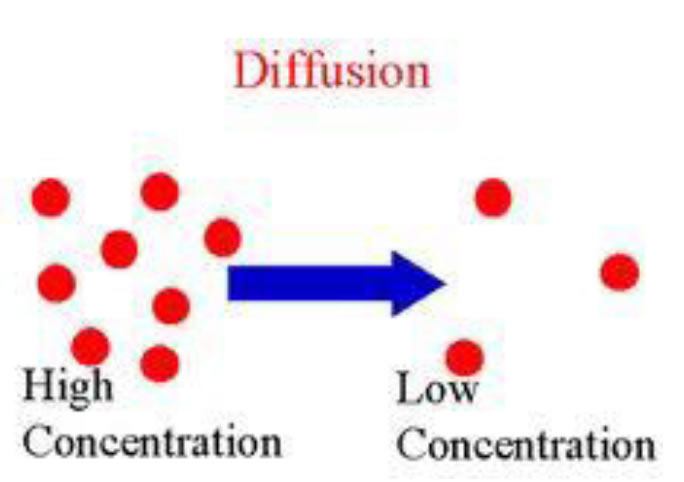
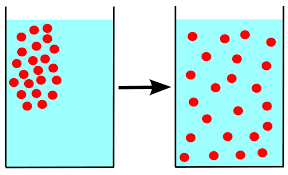
Movement of particles from high to low concentration.
Diffusion, a form of passive Transport
Difussion, a form of Active Transport
Osmosis is a form of ______________.
Passive Transport because it does not require energy.
Active Transport because it requires energy.

The diffusion or movement of WATER across a semi-permeable membrane from an area of low concentration t to an area of high concentration is_______________________
osmosis
diffusion
endocytosis
exocytosis

In the given scenario what will happen? An egg with a dissolved shell is placed in pure water for 48 hours.
Water will move in and out of the cell equally, and the cell with neither shrink nor swell.
The egg will gain water and swell.
The egg will lose water and shrink.

A gummy bear placed in a hypertonic (salty) solution will
Stay the same
Shrink- get smaller
Swell- get bigger
What is a hypotonic solution?
a high concentrated solution
a low concentrated solution
a solution that has equal concentration to another solution

A(n) _________________ refers to two solutions having the same osmotic pressure across a semipermeable membrane. This state allows for the free movement of water across the membrane without changing the concentration of solutes on either side.
isotonic solution
hypertonic solution
hypotonic solution

A red blood cell will _______________ when we put it in a isotonic solution
Shrink
Swell
Stays the same

which side is hypertonic?
Left. Low concentration
Right. High concentration

a semi-permeable membrane is a membrane that
lets everything to pass
lets some things to pass
does not let anything to pass

If the percentage represents sugar, what direction will water flow?
Into the cell
Out of the cell
Into and out equally (equilibrium)

small compartment enclosed by a membrane formed during transport of material during endo + exocytosis
vesicles
large vacuole
mitochondria
lysosome

The image shows a (a) transport

