wayground logo

Free Printable Worksheets

Font size

S
M
L
XL
Worksheets

Unit 4 Biology Review

Total questions: 95

Worksheet time: 1hrs 25mins

Name
Class
Date
1.
What is the relationship between DNA and chromosomes?
a)
Chromosomes are made of DNA
b)
DNA is made of chromosomes
c)
DNA and chromosomes are the same thing.
d)
All of the above are correct
2.
How many pairs of chromosomes exist in each of your cells?
a)
10
b)
12
c)
23
d)
46
3.
Why are your chromosomes arranged in pairs?
a)
Scientists have no idea
b)
Because you get one from your mom and one from your dad
c)
Because pairs can divide easier
d)
Because DNA is awesome
4.
Put in order smallest to largest:
a)
Chromosome - DNA - Gene
b)
Gene - DNA - Chromosome 
c)
DNA - Gene  Chromosome
d)
Chromosome - Gene  - DNA
5.

What is the correct order to make a protein?

a)

Protein, DNA, RNA

b)

RNA, DNA, Protein

c)

DNA, RNA, Protein

d)

Protein, RNA, DNA

6.

Where is DNA and RNA made?

a)

nucleus

b)

cytoplasm

c)

mitochondria

d)

ER

7.

Where are proteins made?

a)

ER

b)

nucleus

c)

cytoplasm

d)

mitochondria

8.

DNA contains the template to make RNA

a)

True

b)

False

9.

RNA contains which sugar?

a)

deoxyribose

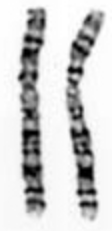
b)

Ribose

c)

glucose

d)

fructose

10.

RNA has what base that is instead of thymine?

a)

guanine

b)

adenine

c)

thymine

d)

uracil

11.

What enzyme does transcription use?

a)

DNA polymerase

b)

ligase

c)

RNA polymerase

d)

helicase

12.

Which RNA brings amino acids?

a)

rRNA

b)

tRNA

c)

mRNA

13.

Which RNA forms part of the ribosomes?

a)

tRNA

b)

mRNA

c)

rRNA

14.

Which RNA carries the message?

a)

mRNA

b)

rRNA

c)

tRNA

15.

Transcription and DNA replication both involve complex enzymes and complementary base paring.

a)

True

b)

False

16.

The goal of transcription is to make RNA.

a)

True

b)

False

17.
How does RNA differ from DNA?
a)
RNA contains uracil and deoxyribose
b)
RNA contains ribose and thymine
c)
RNA contains uracil and ribose
d)
RNA contains adenine and ribose
18.
How would the DNA sequence GCTATA be transcribed to mRNA?
a)
GCUAUA
b)
CGATAT
c)
CGAUAU
d)
GCUTUT
19.
The process by which the genetic code of DNA is copied into a strand of RNA is called
a)
translation
b)
transcription
c)
transformation
d)
replication
20.
Which of the following describes RNA?
a)
RNA is usually double-stranded and contains the base thymine
b)
RNA is usually single-stranded and contains the base uracil
c)
RNA is longer than DNA and uses five bases to encode information
d)
RNA is made in the nucleus of eukaryotic cells and stays there to carry out its functions
21.

Transcribe the following DNA sequence:


AAT TAG GGC TCG

a)

AAT TAG GGC TCG

b)

TTA ATC CCG AGC

c)

UUA AUC CCG AGC

d)

TTU UTC CCG UGC

22.
Replicate the following strand of DNA: 
AATCATGGA
a)
AATCATGGA
b)
TTAGTACCT
c)
UUAGUACCU
d)
GGATAUCUA
23.
Which of the following statements is true?
a)
DNA is single-stranded
b)
RNA is single-stranded
c)
DNA contains uracil
d)
RNA contains deoxyribose
24.
Where does transcription take place?
a)
nucleus
b)
cytoplasm
c)
ribosome
25.
What is occurring in this picture?
a)
Translation
b)
Replication
c)
Translocation
d)
Transcription
26.
what does mRNA do?
a)
carry info from genes to ribosomes
b)
carry amino acids to ribosomes
c)
help with RNA splicing
d)
make up ribosomes
27.
True or false:  RNA is double-stranded.
a)
true
b)
false
c)
it depends on the type
28.
Which of these bases does not exist in RNA?
a)
C
b)
T
c)
U
d)
A
29.
Which of the following best describes a DNA molecule?
a)
double helix
b)
contains ribose
c)
made of amino acids
d)
contains Uracil
30.

What is the building block of the biomolecule, Nucleic Acid?

a)
b)
c)
d)
31.
Translation takes place in the 
a)
ribosome
b)
chloroplast
c)
nucleus
d)
mitochondria
32.
Brings the amino acids to the ribosome
a)
mRNA
b)
tRNA
c)
rRNA
d)
DNA
33.
What would be the tRNA anticodon for the mRNA codon CAG?
a)
GTC
b)
GUC
c)
CUG
d)
CAG
34.

What is the term for a three-nucleotide sequence on mRNA that codes for an amino acid?

a)

base

b)

codon

c)

amine

d)

serine

35.
Which phrase best describes translation?
a)
converts mRNA into a polypeptide
b)
catalyzes bonds between amino acids
c)
produces RNA from DNA molecules
d)
recycles tRNA molecules for reuse
36.
What type of bonds are forming during translation?
a)
Peptide bonds
b)
Hydrogen bonds
c)
Acid bonds
37.
How many amino acids are coded for by this sequence of nucleotides:
ATG GGA ACT CCA
a)
4
b)
2
c)
6
d)
12
38.
Which phase of which process does this picture show?
a)
Transcription
b)
Translation
c)
Replication
39.
The job of tRNA is to
a)
carry amino acids to the ribisomes
b)
carry ribisomes to the ER
c)
carry glucose to mitochondria
d)
carry mRNA out of the nucleus
40.
The codon is located on the 
a)
DNA
b)
mRNA
c)
tRNA
d)
rRNA
41.
What would be the tRNA anticodon for the mRNA codon CAG?
a)
GTC
b)
GUC
c)
CUG
d)
CAG
42.

What is the correct amino acid sequence for the mRNA code AUGCCAGUAUGA

a)

Met-Pro-Ala-Val

b)

Met-Pro-Val

c)

Tyr-Gly-His

d)

Tyr-Gly-Arg-His

43.
What type of macro-molecules are DNA and RNA?
a)
Protein
b)
Carbohydrate
c)
Nucleic Acid
d)
Lipid
44.
Which of the following would be a nucleotide found in DNA
a)
Ribose + phosphate + uracil
b)
Deoxyribose + phosphate + uracil  
c)
Deoxyribose + phosphate + adenine
d)
Ribose + phosphate + adenine
45.
An RNA molecule is
a)
double helix
b)
always double stranded
c)
usually double stranded
d)
single stranded
46.

. What are the building blocks of proteins called?

a)

nucleotides

b)

proteins

c)

amino acids

d)

carbohydrates

47.
How many bases are in one codon?
a)
1
b)
2
c)
3
d)
4
48.
Using the codon identify the amino acid sequence:
AUG-CCA-GUA-GGG-UAA
a)
MET-HIS-ALA-GLY-STOP
b)
MET-PRO-GLY-VAL-STOP
c)
MET-PRO-VAL-GLY-STOP
d)
MET-THR-SER-ASP-STOP
49.
What is the correct sequence?
a)
RNA --> DNA --> Protein
b)
Protein --> RNA --> DNA
c)
DNA --> RNA --> Protein
d)
DNA --> Protein --> RNA
50.
What is this a picture of?
a)
mRNA
b)
tRNA
c)
rRNA
d)
pRNA
51.
Which amino acid is made from the RNA codon UUA?
a)
Phenylalanine
b)
Leucine
c)
Serine
d)
Tyrosine
52.
Process in which amino acids are assembled into proteins at the ribosome?
a)
Translation
b)
Transcription
c)
Meiosis
d)
Replication
53.
What type of molecule is the end product of translation?
a)
Glucose
Glucose
b)
Fatty Acid
c)
Glycogen
d)
Protein
54.

What is the correct sequence of protein synthesis?

A. tRNA brings amino acids to the ribosome

B. DNA molecules serve as the templates for mRNA.

C. mRNA molecules move to ribosomes.

D. Polypeptides are formed on ribosomes.

a)

A-B-C-D

b)

B-C-A-D

c)

C-B-A-D

d)

D-B-A-C

55.
What causes genetic variation in meiosis?
a)
chromosomes lining up
b)
crossing over of chromosomes
c)
separation of chromosomes
d)
chromosomes pulling apart
56.
What kind of cells are made in MEIOSIS?
a)
Haploid cells
b)
Diploid Cells
c)
Skin Cells
d)
Liver Cells
57.
Diploid Cells are represented by
a)
2n
b)
n
c)
4n
d)
1/2 n
58.
If the Diploid number of Carrots is 18, the haploid number is
a)
18
b)
9
c)
27
d)
36
59.
The process of crossing over occurs in what phase of meiosis?
a)
anaphase 1
b)
prophase 1
c)
prophase 2
d)
telophase 1
60.
The chromosomes that pair up during meiosis, are called __________ chromosomes.  
a)
homozygous 
b)
asexual
c)
homologous
d)
genes
61.
Which cellular process is shown?
a)
meiosis
b)
endocytosis
c)
mitosis
d)
phagocytosis
62.
Which of the following best describes meiosis?
a)
It is carried out in all tissues theat require cell replacement
b)
It occurs only in cells in the reproductive structures of an organism
c)
It happens in all of the tissues except the brain and spinal cord
d)
It is the first stage of mitosis
63.
What phase is represented?
a)
metaphase 1
b)
metaphase 2
c)
anaphase 1
d)
anaphase 2
64.
What phase is  shown in the picture?
a)
metaphase 2
b)
anaphase 2
c)
metaphase 1
d)
telophase 1
65.
products of meiosis are genetically
a)
different
b)
identical
66.
A human zygote should have _____ chromosomes inside.
a)
46
b)
23
c)
92
d)
64
67.
Meiosis makes sperm and egg cells. In humans, sperm and egg cells each have _____ chromosomes. Therefore a fertilized human egg cell (sperm and egg cell combined) would create a cell with _____ chromosomes.
a)
23, 46
b)
46, 23
c)
2, 4
d)
50, 100
68.
How many daughter cells does Meiosis create?
a)
2
b)
4
c)
8
d)
1
69.
A human usually has ______ chromosomes in their body cells.
a)
6
b)
22
c)
4
d)
46
70.
Asexual reproduction and mitosis occur in...
a)
Body Cells
b)
Sex Cells or Gametes
71.
The purpose of sexual reproduction and meiosis is to form ________ cells.
a)
body
b)
sex
c)
somatic
d)
brain
72.
How many chromosomes are in the new cells of meiosis?
a)
46
b)
23
73.
Before mitosis or meiosis can begin, DNA must go through Interphase. This is when...
a)
DNA replicates
b)
DNA splits
c)
DNA forms chromosomes
d)
Chromosomes cross over
74.
In meiosis, Prophase 1 is when chromosomes...
a)
cross over
b)
mutate
c)
hybridize
d)
fertilize
75.
What is one reason why we need meiosis?
a)
To double the number of chromosomes going into sex cells
b)
To halve the number of chromosomes going into sex cells
c)
To triple the number of chromosomes going into sex cells
d)
To not change the number of chromosomes going into sex cells
76.
Which of the following cells is a gamete?
a)
egg
b)
bone
c)
heart
d)
muscle
77.
The fertilized egg is termed a/an _____.
a)
gamete
b)
allele
c)
homolog
d)
zygote
78.

Is the following cell diploid or haploid?

a)

Diploid

b)

Haploid

79.
Meiosis is the _____.
a)
 nuclear division of gametes
b)
nuclear division of body cells
c)
division of body cells
d)
division of sex cells
80.

1n indicates that the cell is ____.

a)

Diploid

b)

Haploid

81.

Is this karyotype for a male or female?

a)

MALE

b)

FEMALE

82.

Mitosis makes sure that all daughter cells are _____.

a)

genetically identical, diploid

b)

genetically identical, haploid

c)

genetically diverse, diploid

d)

genetically diverse, haploid

83.

DNA stands for ...

a)

Deoxyribonucleic Acid

b)

Ribonucleic Acid

c)

Adenosine Triphosphate

d)

Adenosine Diphosphate

84.

RNA stands for ...

a)

Deoxyribonucleic Acid

b)

Ribonucleic Acid

c)

Adenosine Triphosphate

d)

Adenosine Diphosphate

85.

What are the components of the nucleotide from left to right of the figure? (Orange - Blue - Yellow)

a)

Phosphate - Sugar - Nitrogenous Base

b)

Sugar - Phosphate - Nitrogenous Base

c)

Nitrogenous Base - Phosphate - Sugar

d)

Phosphate - Nitrogenous Base - Sugar

86.

What's the type of bond between the bases in the double helix?

a)

Hydrogen bonds

b)

Peptide bonds

c)

Covalent bonds

d)

Ionic bonds

87.

What bases pair together?

a)

A-T; C-G

b)

A-C; T-G

c)

A-G; T-C

88.

When does DNA replication occur?

a)

S phase

b)

G1 Phase

c)

G2 Phase

d)

M Phase

89.

What does Semi-Conservative DNA replication mean?

a)

2 identical DNA molecules that's half old and half new

b)

Molecules with both DNA and RNA

90.

What type(s) of RNA are involved with transcription?

a)

mRNA

b)

tRNA

c)

rRNA

91.

What type(s) of RNA are involved with translation?

a)

mRNA

b)

tRNA

c)

rRNA

92.

How many/which homologous chromosomes are autosomes? Which are sex chromosomes?

a)

Autosomes: pairs 1-22

Sex Chromosomes: pair 23

b)

Autosomes: pair 23

Sex Chromosomes: pairs 1-22

c)

Autosomes: pair 1-10

Sex Chromosomes: pairs 11-23

d)

Autosomes: pair 11-23

Sex Chromosomes: pairs 1-10

93.
Which structure is labeled as C in the diagram?
a)
Centromere
b)
Chromosome
c)
Sister chromatids
94.
A pair of identical chromosomes shown in a karyotype, one inherited from mom, and one inherited from dad are called
a)
sister chromotids
b)
centromeres
c)
homologous chromosomes
d)
autosomes
95.

Karyotypes can show ...

a)

Gender

b)

Number of chromosomes

c)

Appearance of chromosomes

d)

Gene traits

e)

Potential offspring