wayground logo

Free Printable Worksheets

Font size

S
M
L
XL
Worksheets

Unit 2 Cells Review

Total questions: 92

Worksheet time: 3hrs 41mins
Name
Class
Date
1.

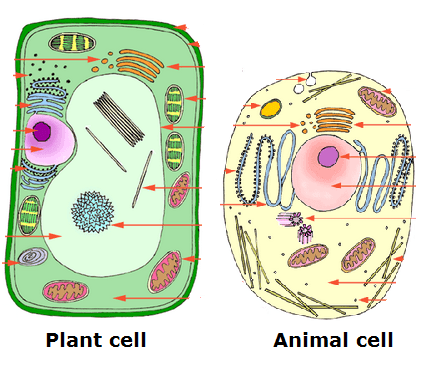
What distinguishes a plant cell from an animal cell? (How do you tell them apart) Hint: There's 3 ways (Check all 3)

a)

Central Vacuole

b)

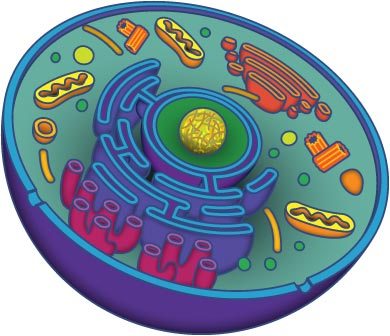
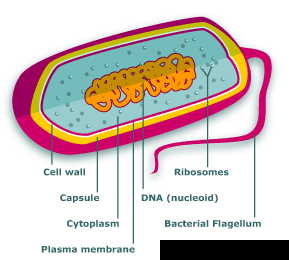
Mitochondria

c)

Cell Wall

d)

Ribosomes

e)

Chloroplasts

2.

The 3 parts of the Cell Theory are...?

a)

All living things are composed of cells

Cells are the basic units of structure and function in living things

All cells are produced from other cells

b)

All living things are composed of cells

Cells are the basic units of dance and vibes in living things

All cells are destroyed from other aliens

c)

All living things are composed of Jell-O

Cells are the basic units of structure and function in living things

All cells are produced from factories in Canada

d)

All living things are composed of cells

Cells do karate and practice eating whole pies in their free time

All cells are produced from other cells

3.

I provide plant cells their rigid shape. I am the...

a)

Basketball that Nic Quarne left in Mr. Woller's room last week

b)

Cytoskeleton

c)

Cell Membrane

d)

Cell Wall

4.

I am found in a plant cell and I provide a "central" and LARGE amount of storage. I am a...

a)

Central Vacuole

b)

Cytoplasm

c)

Central Membrane

d)

Mitochondria

5.

I provide structure from within the cell so it doesn't collapse inwards upon itself. I am made of micro-filaments. I am the...

a)

Cytoskeleton

b)

Cytoplasm

c)

Baconidis

d)

Cell Wall

6.
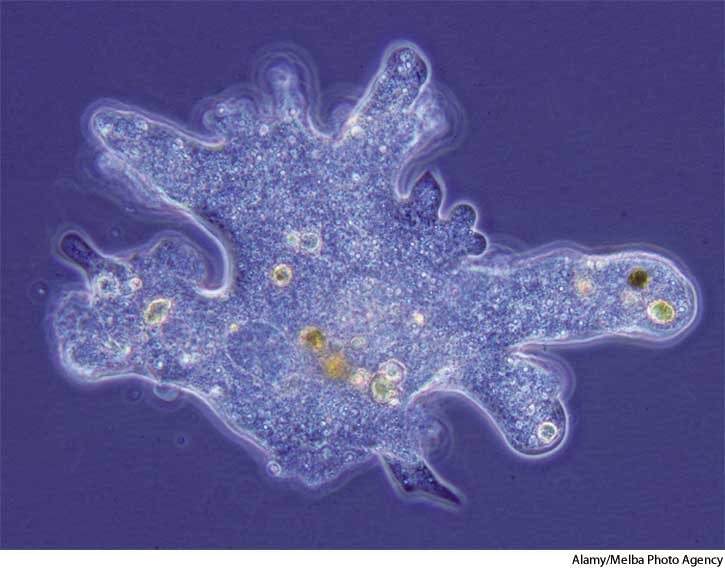
An Amoeba is a unicellular, animal-like protist that lives in ponds and streams. According to cell theory, where did this cell come from?
a)
another pre-existing amoeba cell.
b)
energy from sun that allowed the protist to reproduce.
c)
a multicellular organism.
d)
the nonliving environment.
7.
Which of the following is NOT a cell theory.
a)
All non-living things are made of cells
b)
All cells come from pre-existing cells
c)
Cells are the basic unit of structure and function of all living things
8.
All living things are made up of...
a)
cells
b)
cell tissues
c)
organ
d)
organ systems
9.
All cells come from___________ cells.
a)
pregnant
b)
pre-existing
c)
paternal
d)
pin size
10.
What is the basic structural and functional unit of all living things? 
a)
atom
b)
cell
c)
molecule
d)
human
11.
An organism made of one cell is called
a)
unicellular organism
b)
multicellular organism
12.
Has membrane bound organelles
a)
Prokaryote
b)
Eukaryote
c)
both
13.

Has cell membrane

a)

Prokaryote

b)

Eukaryote

c)

both

14.
Has cytoplasm
a)
Prokaryote
b)
Eukaryote
c)
both
15.
Has nucleus
a)
Prokaryote
b)
Eukaryote
c)
both
16.
Bacteria
a)
Prokaryote
b)
Eukaryote
c)
both
17.
more complex
a)
Prokaryote
b)
Eukaryote
c)
both
d)
both
18.
multicellular
a)
Prokaryote
b)
Eukaryote
c)
both
19.
Which type of cell?
a)
Prokaryote
b)
Eukaryote
20.
Which type of cell?
a)
Prokaryote
b)
Eukaryote
21.
A single-celled organism that lacks a membrane-bound nucleus, mitochondria, or any other membrane -bound organelle .
a)
Prokaryote
b)
Eukaryote
c)
Nucleus
d)
Single-celled organism
22.
Where is the DNA found in a prokaryotic cell? 
a)
floating around in the cytoplasm 
b)
in the nucleus 
23.
What type of cell has a nucleus? 
a)
eukaryotic
b)
prokaryotic 
24.
What type of cell does not have a nucleus?
a)
eukaryotic 
b)
prokaryotic 
25.
Are prokaryotes multicellular or unicellular? 
a)
Multicellular
b)
Unicellular
26.
Where is the DNA found in a eukaryotic cell? 
a)
floating around in the cytoplasm 
b)
in the nucleus 
27.
Include kingdoms: Protist, Animal, Fungi, and Plant
a)
Prokaryote
b)
Eukaryote
28.
What organelle controls and regulates cellular activity?
a)
Ribosome
b)
Nucleus
c)
Mitochondria
d)
Lysosome 
29.
The major function of ribosomes is to
a)
Make fats
b)
Synthesize protein
c)
Digest protein
d)
Make sugars
30.
The ____________ packages and processes material before it exports out of the cell.
a)
Vacuoles
b)
mitochondria
c)
Golgi apparatus 
d)
nucleus 
31.
Which of the following is an enzyme filled organelle that breaks down waste in the cell?
a)
lysosomes
b)
chloroplast
c)
mitochondria 
d)
Golgi apparatus 
32.
What am I?       I'm a real "powerhouse". I break down glucose to make ATP.  
a)
Cell membrane 
b)
ribosome
c)
mitochondria
d)
lysosome
33.
What is the name and function of the organelle displayed above?
a)
Mitochondria: breakdown glucose and produce ATP
b)
Chloroplast: converts solar energy into chemical energy
c)
Vacuole: Stores H2O, salt, food
d)
Nucleus: stores genetic information
34.
Rough endoplasmic reticulum has ________________ attached to it. 
a)
ribosomes 
b)
chromosomes 
c)
Golgi apparatus 
d)
nucleolus 
35.
What is the function of vacuoles?  
a)
make protein
b)
store genetic information
c)
storage of salt, H2O, food, and waste
d)
transports material outside the cell
36.
Which of these statements best describes the function of the cell membrane?
a)
It allows things to freely enter and exit the cell
b)
it controls which substances enter and exit the cell
c)
it prevents substances from entering the cell
d)
it prevents substances from leaving the cell
37.
The arrow is point to the 
a)
mitochondria 
b)
Cell membrane 
c)
nucleus 
d)
ribosome
38.
The clear, jelly-like material in a cell that supports and protects the cell’s organelles.
a)
Cytoplasm
b)
Cell Membrane
c)
Nucleus
d)
Mitochondria
39.
What is the difference between rough and smooth ER?
a)
There is no difference.
b)
Plants have rough ER, animals have smooth ER.
c)
What type of injuries the Doctors treat.
d)
Rough has ribosomes, smooth does not.
40.
This organelle makes the lipids that make the cell membrane
a)
Smooth ER
b)
Cell Wall
c)
Vacuole
d)
Mitochondria
41.

This organelle makes proteins and moves them to the Golgi apparatus

a)

Ribosome

b)

Cell Membrane

c)

Nucleus

d)

Rough ER

42.
Osmosis is the movement of _____ across a membrane.
a)
food
b)
energy
c)
oxygen
d)
water
43.
Which is true about active transport?
a)
It requires energy
b)
it does not require energy
c)
It moves substances down the concentration gradient
d)
it moves material from high to low concentration
44.
This picture represents which type of cellular transport?
a)
passive transport
b)
endocytosis
c)
exocytosis
d)
osmosis
45.
The cell below is in a _________ solution.
a)
Hypotonic
b)
Hypertonic
c)
Isotonic
46.
The cell below is in a _____________ solution.
a)
Hypertonic
b)
Hypotonic
c)
Isotonic
47.
A cell in an isotonic solution will
a)
swell
b)
shrink
c)
stay the same size
d)
impossible to tell
48.
A cell in a hypotonic solution will
a)
swell
b)
shrink 
c)
stay the same size
d)
impossible to tell
49.
What does it mean that a cell membrane is semi-permeable?
a)
It allows all substances in
b)
It allows some substances in
c)
It allows nothing in
50.
This picture represents what type of cell transport?
a)
endocytosis
b)
exocytosis
c)
osmosis
d)
passive transport
51.
Molecules diffusing with the concentration gradient through a protein channel is...
a)
Facilitated Diffusion
b)
Simple Diffusion
c)
Active Transport
d)
Osmosis
52.
Passive transport requires no
a)
concentration gradients
b)
osmosis
c)
motion
d)
energy
53.
When a cell is placed in a hypotonic solution (less concentrated), water
a)
moves from the inside of the cell to the solution
b)
moves from the solution to the inside of the cell
c)
moves equally in and out of the cell
d)
none of these
54.
When a cell is placed in a hypertonic (more concentrated) solution water
a)
moves from the inside of the cell to the solution
b)
moves from the solution to the inside of the cell
c)
moves equally in and out of the cell
d)
none of these
55.

What type of transport is pictured here?

a)

endocytosis

b)

exocytosis

c)

facilitated diffusion

d)

osmosis

56.

What type of transport is pictured here?

a)

endocytosis

b)

exocytosis

c)

diffusion

d)

osmosis

57.

Give three examples of passive transport.

a)

diffusion, osmosis, phagocytosis

b)

facilitated diffusion, molecular pumps, osmosis

c)

osmosis, facilitated diffusion, diffusion

d)

exocytosis, molecular pumps, pinocytosis

58.

Which form of cellular transport requires the use of energy?

a)

active transport

b)

passive transport

59.

In a hypertonic solution, water will move ____ the cell, causing the cell to ________.

a)

out of; shrink

b)

out of; swell

c)

into; shrink

d)

into; swell

60.

In a hypotonic solution, water will move ____ the cell, causing the cell to ________.

a)

out of; shrink

b)

out of; swell

c)

into; shrink

d)

into; swell

61.
________ is the cell's maintaining it internal environment by regulating what comes in and out.
a)
homeostasis
b)
concentration gradient
c)
active transport
d)
facilitated diffusion
62.

Molecular pumps move molecules from an area of _______ concentration to and area of _______ concentration.

a)

zero, 100%

b)

high, low

c)

some, little

d)

low, high

63.
passive transport, is the movement of _____ concentration to _____ concentration.
a)
high to none
b)
high to low
c)
low to high
d)
same to low
64.

Select ALL stages of Interphase

a)

G1

b)

S

c)

G2

d)

Mitosis

65.

In which stage of the cell cycle does the DNA replicate?

a)

G1

b)

S

c)

G2

d)

Mitosis

66.

The following describes_________________________ during mitosis. The chromatin condenses and spindle fibers form at each side of the cell. The chromosomes begin to form and nuclear membrane disappears.

a)

prophase

b)

anaphase

c)

metaphase

d)

telophase

67.

How many chromosomes do human somatic cells (body cells) have?

a)

23

b)

48

c)

46

d)

92

68.

When you start with 1 cell, at the end of mitosis, how many identical cells will you have?

a)

1

b)

2

c)

3

d)

4

69.

After mitosis is complete, the new cells:

a)

are all identical

b)

are half identical and half different

c)

are all different

d)

are all stretched out

70.
Place these cells in order of mitosis.
a)
A, B, C, D, E
b)
B, E, D, A, C
c)
C, E, A, D, B
d)
B, D, A, E, C
71.

The three stages of the cell cycle are __________, mitosis, and

cytokinesis.

a)

interphase

b)

anaphase

c)

metaphase

d)

prophase

72.

The process by which a cell nucleus divides is called:

a)

interphase

b)

mitosis

c)

cytokinesis

d)

cell cycle

73.

The phase of mitosis when chromosomes align in the

middle is called ________

a)

anaphase

b)

prophase

c)

telophase

d)

metaphase

74.

The phase of mitosis where the nuclear membrane forms

is called ________ .

a)

anaphase

b)

prophase

c)

metaphase

d)

telophase

75.

The final stage of the cell cycle is called:

a)

Interphase

b)

mitosis

c)

cytokinesis

d)

daughter cells

76.

A copy a chromosome made during cell division are called:

a)

daughter chromatids

b)

sister chromatids

c)

cell chromatids

d)

sister chromosome

77.

The stage of mitosis where the sister chromatids separate:

a)

prophase

b)

anaphase

c)

telophase

d)

metaphase

78.
During which phase of the cell cycle does the cell spend the most time?
a)
Mitosis
b)
Cytokinesis
c)
Interphase
79.
During which parts of the cell cycle does the cell grow?
a)
G1 and G2
b)
G1 and S
c)
M phase and cytokinesis
80.
Which phase of mitosis is shown in the picture?
a)
Prophase
b)
Anaphase
c)
Telophase
81.
Which phase of mitosis is shown in the picture?
a)
Interphase
b)
Metaphase
c)
Telophase
82.
Which phase of mitosis is shown in the picture?
a)
Prophase
b)
Metaphase
c)
Anaphase
83.
Which phase of mitosis is shown in the picture?
a)
Prophase
b)
Telophase
c)
Metaphase
84.
What is shown in the picture?
a)
Mitosis
b)
Interphase
c)
Cytokinesis
85.

Uncontrolled cell division which usually leads to tumors and disease is called:

a)

Metaphase

b)

Cytokinesis

c)

Cancer

d)

Diabetes

86.
Any substance that is known to cause cancer is called a
a)
carcinogen
b)
nicolyte
c)
pathogen
d)
retrovirus
87.

An abnormal mass/group of cancer cells is called a

a)

tumor

b)

cyst

c)

lesion

d)

polyp

88.

Which type of tumor is being described:


Slow growing Not dangerous Does not spread

a)

Malignant

b)

Benign

89.

Which type of tumor is being described below:


Spreads Dangerous Grows quickly

a)

Benign

b)

Malignant

90.

If cancerous cells travel throughout your body, the cells have gone through a process known as:

a)

Metastisize

b)

Migration

c)

Flowing

d)

Locomotion

91.

What is a mutation?

a)

A mistake in DNA which can lead to cancer

b)

A complete copy of DNA

c)

A change in DNA which doesn't cause an issue

d)

A mistake in your body that is caught and removed

92.

These are examples of:

  • chemicals in cigarette smoke
  • radiation
  • nitrates in processed foods
  • artificial sweeter
  • Heavy metals such as mercury and lead
a)

Carcinogens

b)

Predispositions

c)

Mutations

d)

Tumors