
 Worksheets
Biology Semester 2 Final Exam
Total questions: 90
Worksheet time: 45mins
Name
Class
Date
1.
What was the phenomenon for Unit 4?
a)
Ecospheres.
b)
Biracial Twins vs Albino Siblings.
c)
Sea Otters.
d)
Human Skin Color.
2.
One cat carries heterozygous, long-haired traits (Ss), and its mate carries homozygous short-haired traits (ss). Use a Punnett square to determine the probability of one of their offspring having long hair.
a)
100%
b)
25%
c)
75%
d)
50%
3.
What does the allele notation TT mean to geneticists?
a)
two dominant alleles
b)
two recessive alleles
c)
at least one dominant allele
d)
one dominant allele and one recessive allele
4.
What does the allele notation Tt mean to geneticists?
a)
two dominant alleles
b)
two recessive alleles
c)
at least one dominant allele
d)
one dominant allele and one recessive allele
5.
What does the allele notation tt mean to geneticists?
a)
two dominant alleles
b)
two recessive alleles
c)
at least one dominant allele
d)
one dominant allele and one recessive allele
6.
An organism's physical appearance is its ....
a)
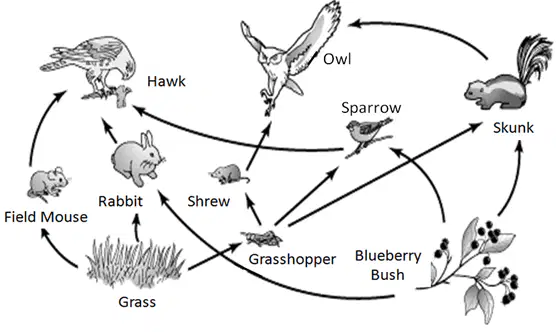
genotype
b)
phenotype
c)
codominance
d)
heterozygous
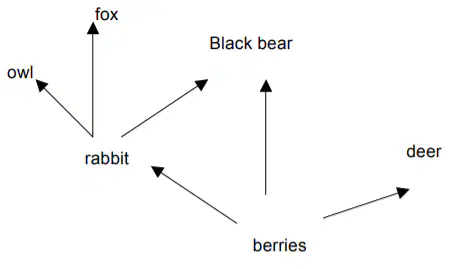
7.
An organism's genotype is its __________
a)
genetic makeup
b)
feather color
c)
physical appearance
d)
stem height
8.
An organism that has two identical alleles for a trait is...
a)
co-dominant
b)
tall
c)
homozygous
d)
heterozygous
9.
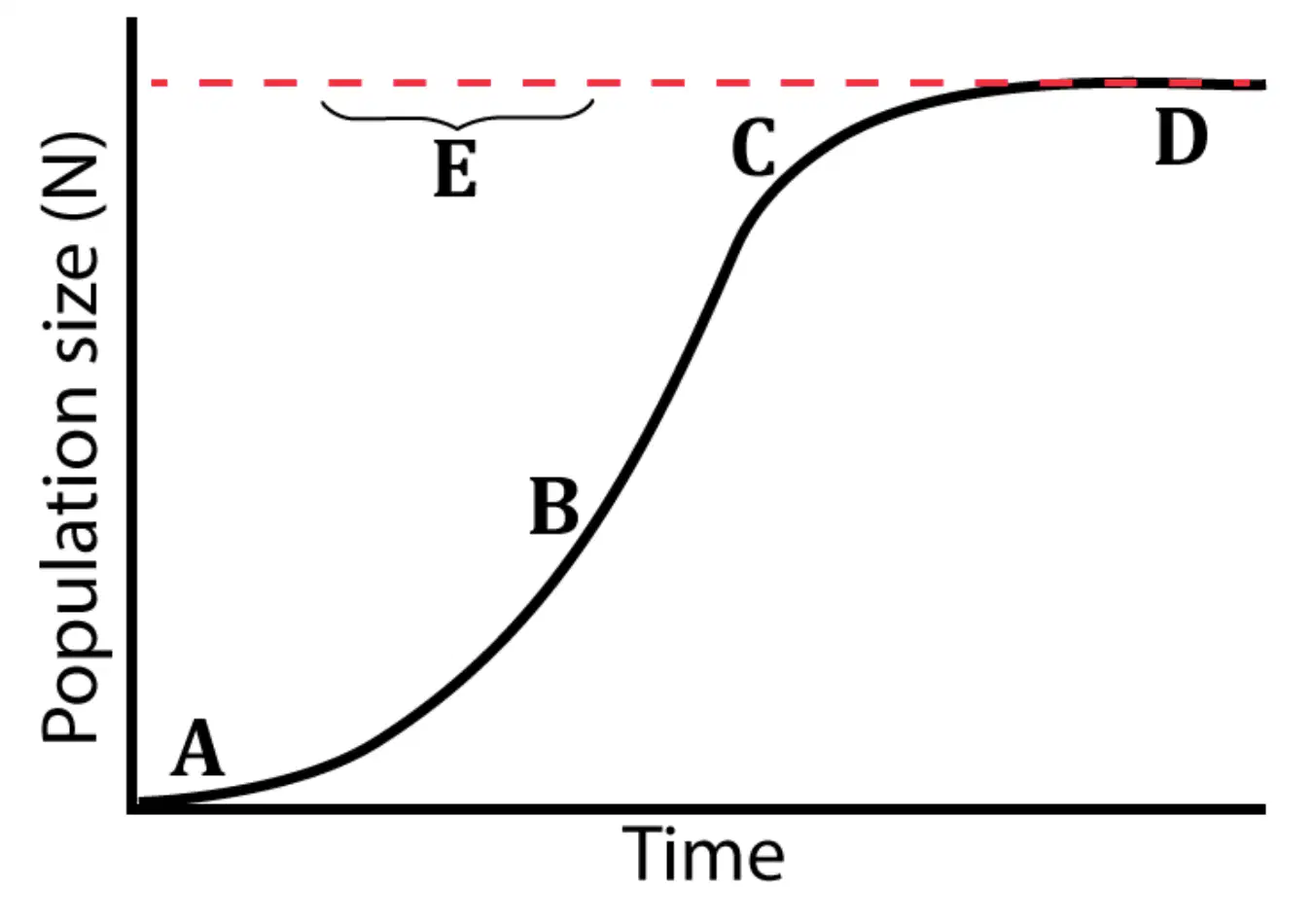
A heterozygous organism has
a)
three different alleles for a trai
b)
two identical alleles for a trait
c)
only one allele for a trait
d)
two different alleles for a trait
10.
Proteins are a
a)
Chemical
b)
Reaction
c)
Molecule
d)
Atom
11.
Protein function is determined by its
a)
Structure
b)
Composition
c)
Location
d)
Size
12.
DNA replication occurs in the
a)
Nucleus
b)
Cytoplasm
c)
Ribosome
d)
Mitochondria
13.
Translation occurs in the
a)
Nucleus
b)
Cytoplasm
c)
Ribosome
d)
Mitochondria
14.
DNA contains the code for
a)
Ribosomes
b)
Biomolecules
c)
Lipids
d)
Proteins
15.
The monomers of proteins are (or, proteins are made of)
a)
Fatty acids
b)
Amino acids
c)
Nucleic acids
d)
Monosaccharides
16.
A segment of DNA which codes for a specific protein is called a
a)
Chromosome
b)
tRNA
c)
Gene
d)
Amino acid
17.
In replication, each new strand of DNA made has how much of the original strand within it?
a)
0%
b)
25%
c)
50%
d)
100%
18.
What happens in transcription?
a)
Messenger RNA is made from DNA
b)
The cell uses information from messenger RNA to make proteins
c)
Transfer RNA is made from messenger RNA
d)
Copies of DNA are made
19.
What happens in translation?
a)
Messenger RNA is made from DNA
b)
The cell uses information from messenger RNA to make proteins
c)
Transfer RNA is made from messenger RNA
d)
Copies of DNA are made
20.
How many nucleotides make up a codon?
a)
1
b)
2
c)
3
d)
5
21.

Based on the sequence below select the answer that would complete the new strands in DNA replication.
a)
GTGGCGCTGA
b)
ATGGCATTGA
c)
UTGGUATTAA
d)
TCAATGCCAT
22.
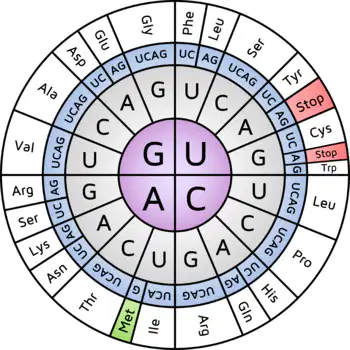
Which amino acid corresponds to the codon UUU?
a)
SER
b)
TER
c)
PHE
d)
LEU
23.
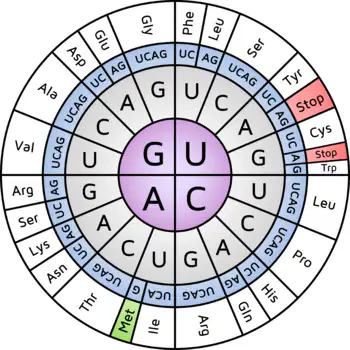
Which amino acid corresponds to the codon AGC?
a)
MET
b)
LYS
c)
THR
d)
SER
24.
Which is true
a)
Adenine bonds with Cytosine
b)
Guanine bonds with Thymine
c)
Guanine bonds with Cytosine
d)
All of the above
25.
Which contains the codon for the amino acid
a)
mRNA
b)
tRNA
c)
DNA
d)
DNA helicase
26.
How many total chromosomes does each human cell have?
a)
23 pairs
b)
21 pairs
c)
46 pairs
d)
2 pairs
27.
What was the phenomenon for Unit 5?
a)
Ecospheres.
b)
Biracial Twins vs Albino Siblings.
c)
Sea Otters.
d)
Human Skin Color.
28.
What is evolution?
a)
The change in an individual's characteristics to become better adapted to its environment
b)
The process by which natural selection occurs
c)
The change in the heritable characteristics of a population over time
d)
The improvement of a species
29.
What do we call structures that no longer have a function in an organism?
a)
Vestigial
b)
Homologous
c)
Analogous
d)
Deleterious
30.
What do we call structures found in different species that have shared ancestry?
a)
Vestigial
b)
Homologous
c)
Analogous
d)
Deleterious
31.
What do we call structures found in different species that are similar in function but that evolved independently?
a)
Vestigial
b)
Homologous
c)
Analogous
d)
Deleterious
32.

Based on the DNA sequences shown in the image above, which animal appears to be most closely related to the mouse?
a)
Rabbit
b)
Dog
c)
Bat
33.

Based on the DNA sequences shown in the image above, which animal is more closely related to the dog?
a)
Rabbit
b)
Mouse
c)
Bat
34.
What eventually happens to a species when the environment changes and the organisms do not adapt?
a)
a. classification
b)
b. development
c)
c. extinction
d)
d. regulation
35.
Of the following anatomical structures, which is homologous to the wing of a bat?
a)
a. dorsal (back) fin of a shark
b)
b. kangaroo tail
c)
c. butterfly wing
d)
d. human arm
36.
In the phrase "survival of the fittest," to what does the term "fittest" refer?
a)
a. The best-adapted organisms
b)
b. The biggest organisms
c)
c. The smartest organisms
d)
d. The fastest organisms
37.
How, according to natural selection, is the evolution of long necks in giraffes best explained?
a)
a. Shorter-necked giraffes were killed by long necked giraffes.
b)
b. Giraffe necks grew longer because the giraffes knew they had to do something to change.
c)
c. Giraffes with longer necks survived because they were better suited to the environment.
d)
d. Long-necked giraffes mated only with short-necked giraffes.
38.
Over the last several decades, bacteria that cause illness in humans have become more and more difficult to kill with antibiotics – medicines that kill bacteria. The ability of populations of bacteria to develop this resistance to antibiotics is an example of which of the following?
a)
a. competition
b)
b. speciation
c)
c. ineffective medication
d)
d. natural selection
39.
Boa constrictor snakes have tiny pelvic girdles and leg bones within their bodies. Since these structures are not functional, they are called
a)
a. vestigial
b)
b. analogous
c)
c. maladaptive
d)
d. homologous
40.
How does natural selection lead to evolution?
a)
a. Stronger offspring kill weaker members of the species.
b)
b. Helpful variations accumulate among surviving members of the species.
c)
c. Overproduction provides food for stronger members of the species.
d)
d. Environmental changes favor weaker members of the species.
41.
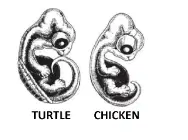
The drawings below show a turtle embryo and a chicken embryo. Which of the following statements is supported by the similarities between these embryos?
a)
a. The turtle is more advanced than the chicken.
b)
b. The chicken has more offspring than the turtle.
c)
c. The turtle and the chicken are similar as adults.
d)
d. The chicken and the turtle share a common ancestor.
42.

The drawings show skulls of three modern animals. The three skulls all share characteristics with a fossil skull of an extinct seal (not shown) that is believed to be 23 million years old. What conclusion can be drawn about the relationship between the three modern animals and the fossil?
a)
a. They are all the same species.
b)
b. They share a common ancestor.
c)
c. They share the same food supply.
d)
d. They are all 23 million years old.
43.

The pictures below show bone structures in three animals. The similarity in the structure of the bones of these animals suggests that
a)
a. the size of these bones is the same
b)
b. these species share common ancestors
c)
c. these species developed at the same time and location
d)
d. the chemical make-up of these animals is exactly the same
44.
The structural similarities between the flippers of whales and the arms of humans are used to show that
a)
a. human species began life in the oceans
b)
b. human species and whales have a common ancestry
c)
c. whales are older than the human species
d)
d. whales evolved from the human species
45.
What type of evidence do scientist use to understand human evolution?
a)
Biochemical evidence
b)
Fossil records
c)
DNA
d)
All of the above
e)
None of the above
46.
Bipedal means...
a)
to walk on all 4 limbs (arms & legs)
b)
to walk on two legs
c)
to walk on your hands
d)
swing from tree to tree
47.
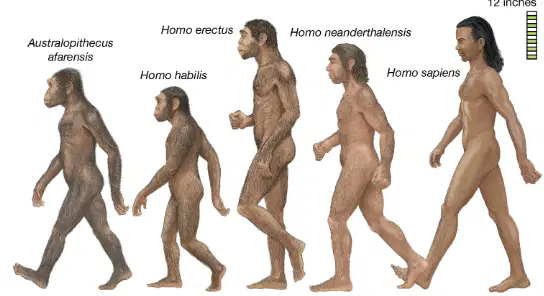
Which of the following began to use stone tools & was called the "handy man"?
a)
Austrolipithcus
b)
Homo Habilis
c)
Homo Erectus
d)
Homo Neanderthalensis
e)
Homo Sapiens
48.
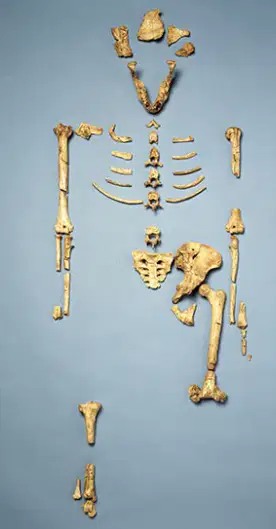
These fossil remains belong to "Lucy". Why is this important?
a)
It was the first female fossil
b)
It was one of the most complete fossils ever found
c)
Her fossils are the first Homo Sapien
d)
These fossils appeared 195,000 years ago
49.
The genus Homo includes...
a)
Only living humans
b)
Extinct humans
c)
Both living & extinct humans
d)
None of these are correct
50.
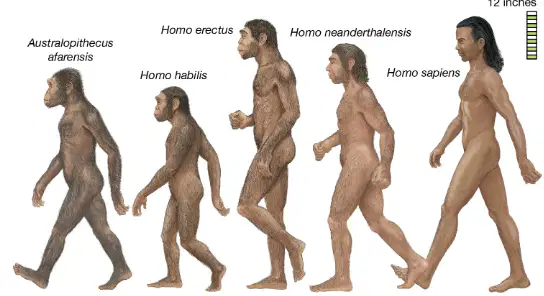
Which of the following include modern man?
a)
Austrolipithcus
b)
Homo Habilis
c)
Homo Erectus
d)
Homo Neanderthalensis
e)
Homo Sapiens
51.
What was the phenomenon for Unit 6?
a)
Ecospheres.
b)
Biracial Twins vs Albino Siblings.
c)
Sea Otters.
d)
Human Skin Color.
52.
When hiking in the forest, Gary noticed squirrels gathering nuts from trees. He also noticed an active beehive in one of the trees and mushrooms growing on the forest floor. All of the organisms that Gary saw in the forest make up a(n)_____________.
a)
biome
b)
ecosystem
c)
community
d)
population
53.
All of the organisms of different species living together in a particular place make up a(n) ____________________.
a)
niche
b)
population
c)
community
d)
ecosystem
54.
Soil is the _______________ of an earthworm.
a)
niche
b)
habitat
c)
biome
d)
population
55.
Buzzards play an important role in the environment by eating carcasses of dead animals. This role, that the buzzard plays, is called its —
a)
niche
b)
habitat
c)
biome
d)
ecosystem
56.
A group of Fowler’s toads lives near a pond in South Carolina. How would this group of toads be classified?
a)
population
b)
a biome
c)
a niche
d)
a community
57.
When a rotting log was turned over, pillbugs, termites, ants, fungi, and earthworms were living there. The termites represent _______________ in this community.
a)
an environment
b)
an abiotic factor
c)
a niche
d)
a population
58.
Which grouping lists the levels of organization of the living world from the level with the least number of members to the level with the greatest number of members?
a)
ecosystem, biome, organism, population, biosphere, community
b)
organism, community, ecosystem, population, biosphere, biome
c)
ecosystem, community, population, biome, biosphere, organism
d)
organism, population, community, ecosystem, biome, biosphere
59.
The role an organism plays within its community or ecosystem is its —
a)
ecosystem.
b)
niche.
c)
habitat.
d)
biome.
60.
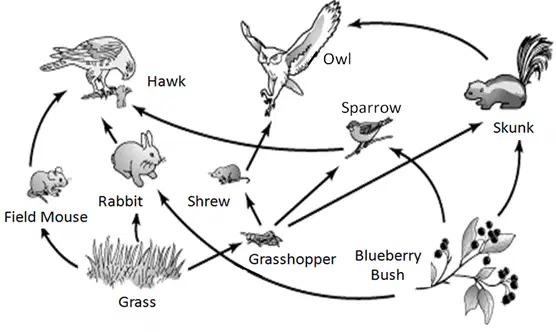
Which organism from the food web is a producer?
a)
a. mouse
b)
b. grass
c)
c. hawk
d)
d. owl
e)
e. skunk
61.
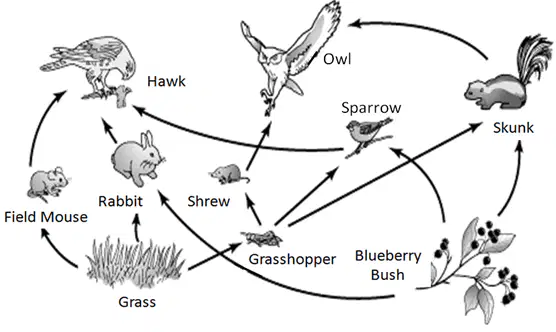
Which organism from the food web is an omnivore?
a)
a. mouse
b)
b. grass
c)
c. hawk
d)
d. owl
e)
e. skunk
62.
4. Which of the following is the BEST example of a food chain from the food web above?
a)
a. grass → grasshopper → shrew → owl
b)
b. blueberry bush → grass → rabbit → hawk
c)
c. grasshopper → skunk → owl
d)
d. grasshopper → sparrow → hawk
63.
Of the options below, which correctly shows the path energy takes in an ecosystem?
a)
Sun - grass - deer - mountain lion
b)
grass - deer - mountain lion - Sun
c)
mountain lion - deer - Sun - grass
d)
plant - fish - bear - Sun
64.
Consumers are organisms that must -
a)
eat other plants and animals
b)
make their own energy using photosynthesis
c)
break down the remains of other dead organisms
d)
eat other animals
65.
Bacteria, fungi, and earthworms are examples of -
a)
herbivores
b)
producers
c)
consumers
d)
decomposers
66.
Camouflage is used by organisms to survive in their ecosystem. Which is an example?
a)
colorful fish living in brightly colored coral reef
b)
an elephant's skin color in the Serengeti grasslands
c)
a bear that sleeps in a cave all winter long
d)
an elephant's large ears fanning away insects
67.
Use the food web below to answer the following question: What would you expect to happen to the rabbit population if black bear and fox were removed from the ecosystem?
a)
rabbit populations would increase
b)
rabbit populations would decrease
c)
rabbit populations would stay the same
d)
black bear populations would decrease
68.
A(n) ___________________ is an organism that eats only plants.
a)
herbivore
b)
omnivore
c)
carnivore
d)
decomposers
69.
An organism's _______________ is it's job, role, or purpose in an ecosystem.
a)
adaptation
b)
niche
c)
habitat
d)
none of the above
70.
Parasitism refers to -
a)
a relationship between two organisms where both benefit
b)
a relationship where one organism benefits (food or shelter) but the other is neither harmed nor helped
c)
a relationship where one organism benefits and the other is harmed
d)
none of the above
71.
Mutualism refers to -
a)
a relationship between two organisms where both benefit
b)
a relationship where one organism benefits (food or shelter) but the other is neither harmed nor helped
c)
a relationship where one organism benefits and the other is harmed
d)
none of the above
72.
An acacia tree provides nutrients and shelter to ants. In return, ants protect the tree from herbivores. This is an example of -
a)
parasitism
b)
commensalism
c)
mutualism
d)
herbivorous
73.
A food web is best described as a diagram of
a)
feeding relationships in an ecosystem.
b)
energy flow among producers.
c)
Calories available to primary consumers.
d)
nutrients present in certain foods.
74.
Which trophic level of an ecosystem has the least biomass?
a)
secondary consumers
b)
primary consumers
c)
producers
d)
tertiary consumers
75.
a system of interlocking and interdependent food chains.
a)
food chain
b)
food pyramid
c)
Food Web
d)
all of the above
76.
What do carnivores eat?
a)
herbivores
b)
other consumers
c)
other carnivores
d)
all of the above
77.
omnivores
a)
organisms that eat both plants and animals as primary food sources
b)
small organisms that consume producers on or near the surface of a body of water
c)
organisms that consume dead plants and animals and other organic waste
d)
all organisms that produce organic compounds from energy and simple inorganic molecules
78.
20. A healthy ecosystem needs a large amount of ...
a)
Producers
b)
Primary Consumers
c)
Herbivores
d)
Carnivores
79.
12. A keystone species is important because...
a)
helps hold the system together
b)
no other species would be able to fill its ecological niche
c)
define an entire ecosystem
d)
All of these are correct
80.

13. How much energy is available and transferred to the next trophic level?
a)
10%
b)
90%
c)
100%
d)
0%
81.

15. How much energy is released?
a)
10%
b)
90%
c)
100%
d)
0%
82.
16. In a food web, the arrows point in which direction?
a)
up
b)
down
c)
towards the energy
d)
towards the animal eating the other animal
83.
18. Which organism eats only plants?
a)
producer
b)
herbovire
c)
omnivore
d)
carnivore
84.
19. Which organism eats plants & animals?
a)
producer
b)
herbovire
c)
omnivore
d)
carnivore
85.
3. The following are ALL Biotic:
a)
Trees, Sun, Atmosphere, Animals
b)
Weather, Temerature, Light, Rocks, Soil
c)
Plants, Trees, Lizards, Squirrels & People
d)
Plants, Trees, Lizards, Squirrels & Sun
86.
4. Which is the largest level of organization in Ecology?
a)
Biosphere
b)
Ecosystem
c)
Population
d)
Organism
87.
8. A limiting factor will...
a)
Stop the population growth
b)
Help the population grow
c)
Do nothing. The population will stay the same.
88.

24. Which of the following is carrying capacity?
a)
A
b)
B
c)
C
d)
D
e)
E
89.
25. Which of the following is shows exponential growth?
a)
A
b)
B
c)
C
d)
D
e)
E
90.
6. Amchitka & Shemya are two islands with similar characteristics. What is different about the islands?
a)
Amchitka had the keystone species, sea otters
b)
Amchitka had the keystone species, sea urchins
c)
Shemya had the keystone species, sea otters
d)
Both islands were not different and had the same organisms
100 %

