
 Worksheets
Cells & Tissues
Total questions: 94
Worksheet time: 1hrs 9mins
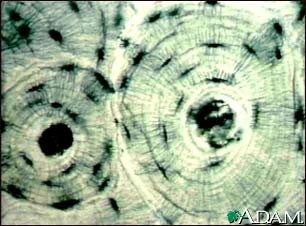
smooth muscle
bone
nerve
blood

What is the function of epithelial cells?
Act as barriers between the external environment or between organs and fluid-filled cavities
Provide movement by pulling on bones
Provide secretions that help digest food
Act as the messaging pathway between different areas of the body
Define tissue in the context of anatomy.
A group of structurally and functionally related cells that come together to perform common functions.
Multiple sheets of thin paper used to clean your nose.
A series of different cells in the same area.
The smallest structural and functional unit of an organism.
Which type of tissue signals the intestines to move food along?
Nervous tissue
Blood tissue
Smooth muscle tissue
Skeletal muscle tissue
Which type of muscle tissue lines the intestine?
Smooth
Cardiac
Skeletal
Transitional

What type of tissue is shown in this image?
Adipose tissue
Cardiac muscle
Nervous tissue
Skeletal muscle
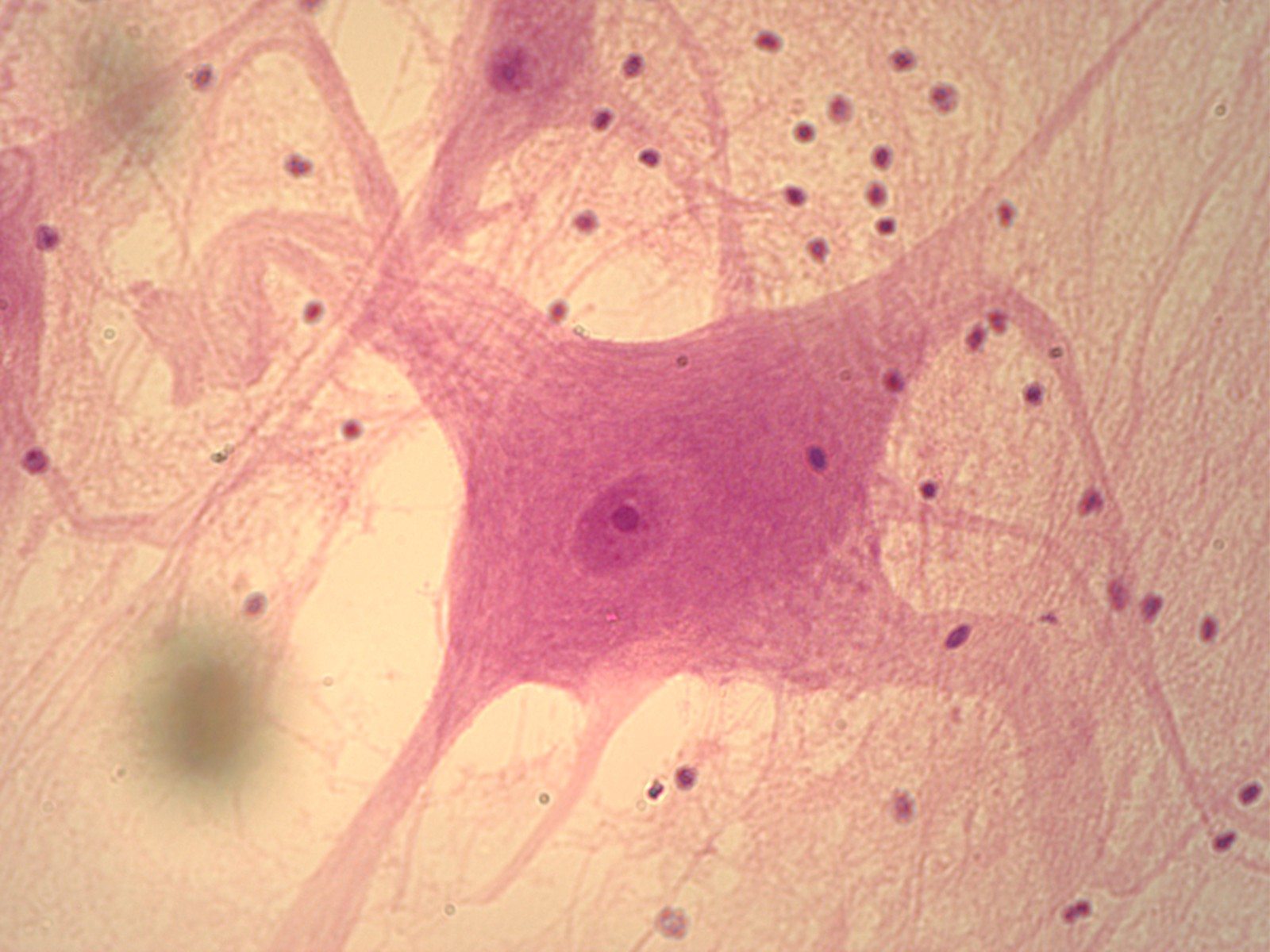
What type of tissue is shown in this image?
Nervous tissue
Cardiac muscle
Smooth muscle
Connective tissue proper

What type of tissue is shown in this image?
Skeletal muscle
Nervous tissue
Adipose tissue
Specialized connective tissue
Cells make up...
Tissues
Organs
Organ systems
More cells
Organs make up...
Tissues
Organs
Organ systems
More cells
Which of the following tissues lines the interior and exterior of organs?
Epithelial
Connective
Muscle
Nervous

Identify this tissue.
Bone
Cartilage
Blood
Adipose
What is the general structure of cuboidal cells?
Square with a large central nucleus
Flat, 'fried egg' appearance
Rectangular with the nucleus toward the basal end
Dead apical cells filled with keratin
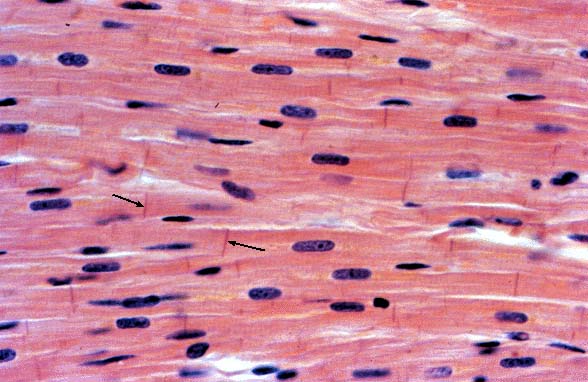
What type of tissue is shown here? The arrows provide a clue.
Cardiac muscle
Skeletal muscle
Smooth muscle
Nervous tissue
Which type of connective tissue is found at the ends of bones to reduce friction?
Dense connective tissue
Cartilage
Adipose tissue
Loose connective tissue
Which type of muscle tissue is controlled voluntarily?
Skeletal Only
Skeletal and Cardiac
Smooth and Cardiac
Cardiac Only
Chondrocytes secrete intercellular material that contains a thickened ground substance in which type of tissue?
compact bone
dense connective tissue
cartilage
skeletal muscle
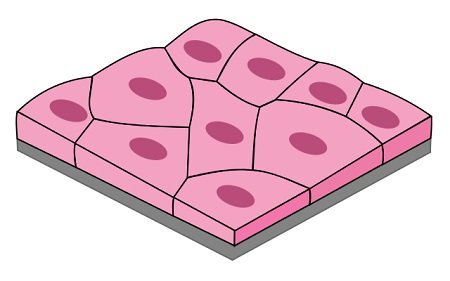
Identify the type of epithelium shown in the image below.
Simple cuboidal
Simple squamous
Simple columnar
Stratified squamous
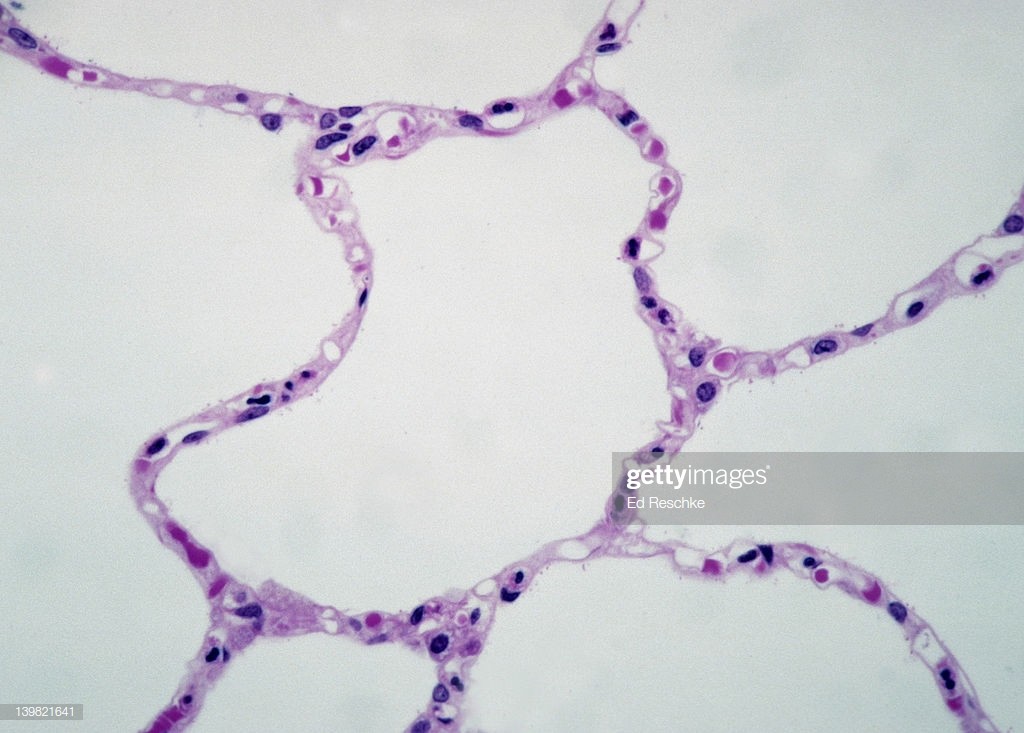
What type of epithelium lines the air sacs in this slide of lung tissue?
Simple cuboidal
Simple columnar
Simple squamous
Pseudostratified columnar
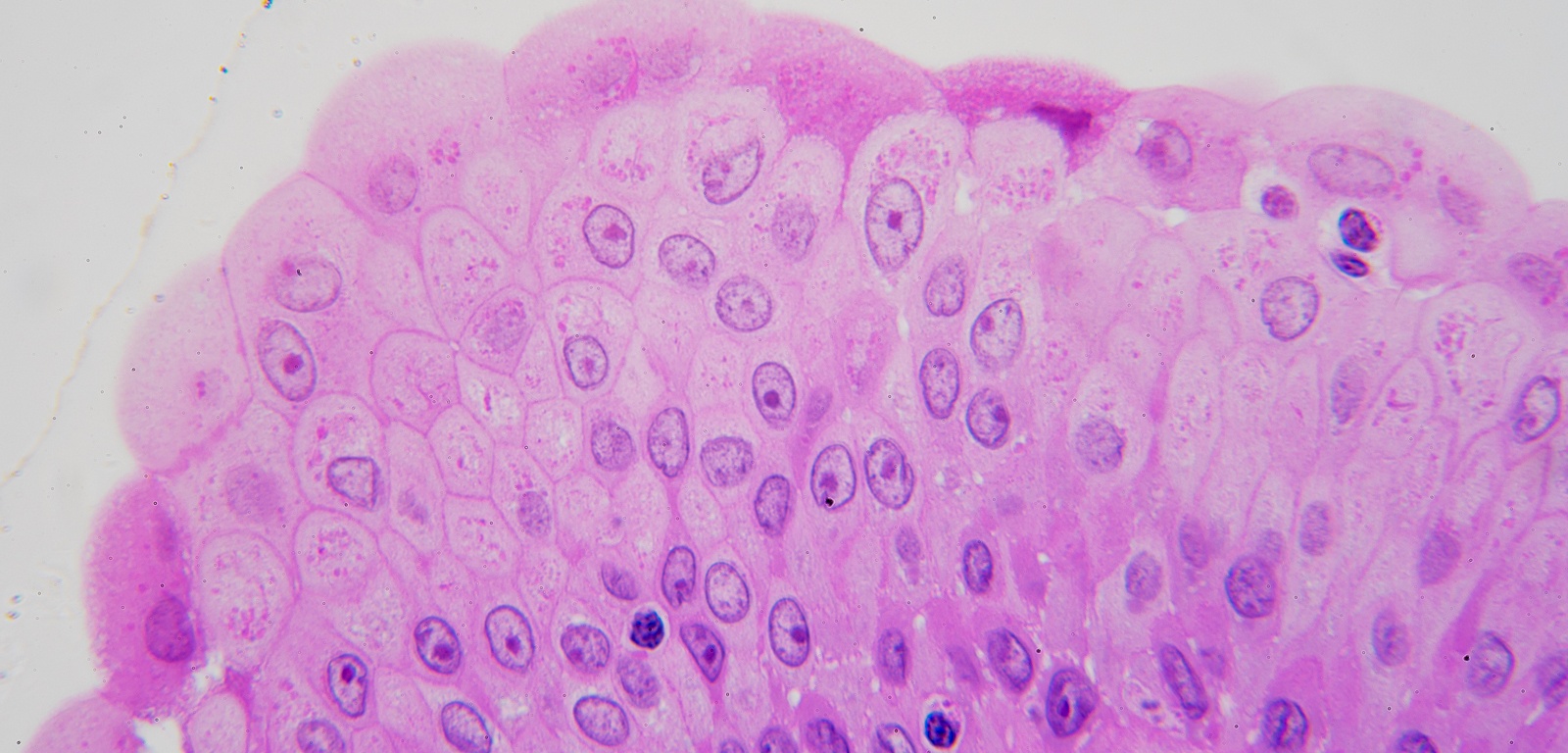
What type of epithelial tissue is shown here, and where might it be found?
Stratified cuboidal; small intestine
Simple squamous; lung
Pseudostratified columnar; trachea
Transitional; bladder

Identify the tissue shown in the image below:
Pseudostratified
Smooth Muscle
Transitional
Stratified Squamous

Identify the tissue shown in the image:
Smooth muscle
Columnar
Transitional
Pseudostratified
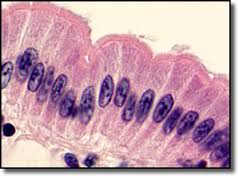
Identify the type of epithelial tissue shown in the image:
Columnar
Cuboidal
Pseudostratified
Transitional
Stratified epithelium is typically used for:
excretion
secretion
protection
absorption
The principal difference between simple and stratified epithelium is the number of
Microvilli
Cell layers
Free surfaces
Nuclei per cell
What is semipermeable and surrounds a cell?
membrane
cytoplasm
intracellular fluid
mitochondria
How many main tissue types are found in the body?
3
4
7
12
What is cytoplasm?
The largest organelle
A semipermeable membrane
A clear, gel-like fluid
Which of the following is NOT a type of tissue?
epithelial
connective
nervous
fibroblast
What are the three types of muscle tissue?
skeletal, adipose, elastic
smooth, elastic, fibrous
skeletal, smooth, cardiac
areolar, adipose, cardiac
All living things are made up of cells.
True
False
This is the "brain" that controls all the activities of the cell.
Mitochondria
Cell membrane
Nucleus
Nuclear membrane
Which level of organization is arranged from smallest to largest?
Cells, organs, tissues, organ systems
Tissues, cells, organ systems, organs
Organ systems, organs, tissues, cells
Cells, tissues, organs, organ systems
Which term refers to groups of different tissues that combine to form a single structure?
Cells
Organs
Organ system
Organisms
I produce the energy that a cell needs. I am a mighty powerhouse. Who am I?
Mitochondria
Nucleus
Lysosome
Cell Membrane
Which statement is a fundamental principle of cell theory?
All cells have a cell membrane (plasma membrane)
Eukaryotic cells are larger than prokaryotic cells
Living organisms are composed of cells
The genetic material in cells is DNA
Which structure is found only in eukaryotic cells?
cell membrane
cytoplasm
DNA
nucleus
Which organelle converts sugars into energy?
lysosome
mitochondria
nucleus
ribosome

Identify the structure labeled 'I'.
nucleus
mitochondria
cell membrane
cell wall
Identify the structure labeled H.
nucleus
mitochondria
Golgi complex
cytoplasm

Identify structure B:
Golgi apparatus
Nucleus
Cell wall
Vacuole

Identify the cell shown in the image:
nerve cell
blood cell
fat cell
epithelial cell

Number 1 is:
Golgi bodies
Mitochondrion
Ribosome
Nucleus

In eukaryotic cells, which organelle secretes waste?
Golgi apparatus
Smooth endoplasmic reticulum
Vacuole
Ribosome
In eukaryotic cells, which organelle generates energy for the cell?
Golgi apparatus
Mitochondria
Chloroplast
Vacuole
Rough endoplasmic reticulum
In eukaryotic cells, which part stores genetic information?
Nucleolus
Nucleus
Vacuole
Nucleoid region
Which of the following statements about the rough endoplasmic reticulum are true? (Check all that apply.)
Found in prokaryotic and eukaryotic cells
Embedded with ribosomes
Modifies and transports proteins
Synthesizes lipids
Detoxifies the cell
Which of the following statements about the cell membrane are true? (Check all that apply)
Found in prokaryotic and eukaryotic cells
Controls what enters the cell
Controls what leaves the cell
Made of phospholipids
Serves as an impermeable barrier
Which of the following statements about the smooth endoplasmic reticulum are true? (Check all that apply.)
Only found in eukaryotic cells
Embedded with ribosomes
Modifies and transports proteins
Helps synthesize lipids and carbohydrates
Stores calcium ions
Which of the following statements about the cytoskeleton are true? (Check all that apply)
A hard, protective covering for the cell
Provides reinforcement of the cell's shape
Contains thin filaments that allow contraction of muscle cells
A mesh of protein fibers
Stores calcium ions

In eukaryotic cells, which organelle produces the building blocks of ribosomes?
smooth endoplasmic reticulum
nucleus
nucleolus
cytoskeleton
rough endoplasmic reticulum
In eukaryotic cells, which structure consists of uncoiled and uncondensed DNA and proteins?
chromosome
nucleus
nucleolus
chromatin
cytoskeleton
True or false: Regulating what enters and leaves the cell helps the cell maintain homeostasis.
True
False

Which region of the cell membrane is hydrophobic?
E
B
C
A
___________ allow cells to recognize each other and act as ID tags.
Carbohydrates
Proteins
Phospholipids
Cholesterol
How many layers does the lipid bilayer have?
1
2
3
4
True or False: Large molecules, such as glucose, can easily pass through the cell membrane without assistance.
True: They pass right through.
False: They need a protein channel.
The function of the plasma membrane is...
to regulate what enters and leaves the cell.
to fight bacteria and viruses that enter the cell.
to provide rigid support and protection to the cell.
to make sure each cell can move.
Which type of molecule has the most difficulty passing through the membrane?
small & hydrophobic
small & hydrophilic
large & hydrophobic
large & hydrophilic

What is the name of the structure shown in the diagram where cellular respiration takes place?
Chloroplast
Mitochondrion
Nucleus
Vacuole

What is the name of the genetic material found inside the nucleus?
ER
ATP
YOLO
DNA

What type of epithelial tissue is shown in this image?
Stratified squamous epithelium
Smooth muscle
Simple columnar epithelium
Simple squamous epithelium

What type of muscle tissue is shown in this image?
skeletal
cardiac
bone
smooth

What type of tissue is shown in this image?
connective
skeletal
epithelial
nervous

Which type of connective tissue is shown in this image?
bone
blood
cartilage
tendon

What type of epithelial tissue is shown in this image?
simple cuboidal
stratified columnar
simple squamous
stratified squamous

Which tissue is shown in the image?
Simple squamous
Simple columnar
Transitional
Simple cuboidal
Which type of muscle tissue is voluntarily controlled?
Skeletal Only
Skeletal and Cardiac
Smooth and Cardiac
Cardiac Only
Blood, bone, and cartilage are all examples of:
simple cuboidal tissue
epithelial tissue
connective tissue
transitional tissue
Stratified means
striped
layered
thin
selective
Which of the following is not one of the four tissue types?
Blood
Connective
Epithelial
Nervous
Where is epithelial tissue found?
glands
covering body surfaces
lining organs
all of the above
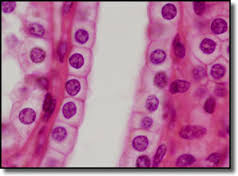
Identify the tissue:
Pseudostratified
Simple cuboidal
Transitional
Simple squamous

According to the picture, where is the basement membrane located?
Apical Side
Columnar Cells
Avascular Tissue
Basal Side
Epithelial tissue regenerates quickly.
True
False
_____________ provides tensile strength.
Fibrocartilage
Cortical bone
Hyaline cartilage
Cancellous bone

This type of tissue includes ligaments, tendons, and cartilage.
epithelial
connective
muscular
nervous

This type of tissue lines internal organs and covers the outside of the body as skin.
epithelial
connective
muscular
nervous
Nervous tissue
Tissue that is responsible for lining and covering
Tissue responsible for protecting, supporting, and binding together other body tissues
Tissue that contracts and shortens to produce movement
Tissue that receives and conducts electrochemical impulses from one part of the body to another

Name this tissue.
Skeletal
Cardiac
Smooth
This type of muscle tissue is found only in the heart.
Skeletal
Cardiac
Smooth
This type of muscle tissue is found in the walls of hollow organs such as the stomach.
Skeletal
Cardiac
Smooth
This cell is a phagocyte (it engulfs other cells) and plays a role in immunity.
Macrophage
Blast Cell
Mast cell
Fibroblast
This cell is large and widely distributed. It is located near blood vessels and is involved in the immune response by releasing histamine and heparin.
Fibroblast
Mast cell
Macrophages

