wayground logo

Free Printable Worksheets

Font size

S
M
L
XL
Worksheets

Chapter 7 Practice

Total questions: 90

Worksheet time: 52mins

Name
Class
Date
1.
Muscular tube that connects the mouth to the stomach
a)
Epiglottis
b)
Peristalsis
c)
Stomach
d)
Esophagus
2.
Where chemical digestion starts.
a)
Small intestine
b)
Oesophagus
c)
Mouth
d)
Stomach
3.
Type of digestion in the stomach:
a)
Mechanical
b)
Chemical
c)
Both
4.
The chewing and grinding of food into smaller pieces is an example of...
a)
Mechanical Digestion
b)
Chemical Digestion
5.
Bile is made by which digestive organ?
a)
Gallbladder
b)
Stomach
c)
Rectum
d)
Liver
6.
Nutrients from digested food are absorbed in which digestive organ?
a)
Small Intestine
b)
Stomach
c)
Large Intestine
d)
Gallbladder
7.
Which of the following is NOT part of the digestive tract?  (Hint:  Identify the secondary organ.)
a)
Mouth
b)
Esophagus
c)
Small Intestine
d)
Liver
8.
As waste moves through the digestive system, the ______ absorbs water before storing waste in the rectum.
a)
Small intestine
b)
Stomach
c)
Esophagus
d)
Large intestine
9.
Bile is stored in which secondary digestive organ?
a)
Stomach
b)
Liver
c)
Gallbladder
d)
Pancreas
10.
Which secondary organ makes digestive juices like insulin to help absorb food in the small intestine?
a)
Large intestine
b)
Pancreas
c)
Liver
d)
Gallbladder
11.
Gastric juices in the stomach digest food into a thick liquid.  This is...
a)
Mechanical digestion
b)
Chemical digestion
12.

what is villi?

a)

tiny fingers that help break down food

b)

things that line the small intestines

c)

tiny fingers that absorb nutrients

d)

tiny fingers that are in your taste buds

13.

what three parts are the small intestines divided into?

a)

pancreas, liver, rectum

b)

esophagus, stomach, large intestines

c)

large intestines, pancreas, liver

d)

duodenum, jejunum, and ileum

14.

what is the esophagus do

a)

it pushes food into the stomach

b)

?

c)

breaks down food and pushes into stomach

d)

is a long tube that leads to stomach

15.
This amazing organ filters toxins, recycles some into bile, and store food until it is needed and releases it into the blood stream.
a)
stomach
b)
kidneys
c)
liver
d)
patella
16.
This has chemicals that start breaking down food.
a)
large intestine
b)
esophagus
c)
teeth
d)
saliva
17.
Digestion begins here.
a)
stomach
b)
nose
c)
mouth
d)
esophagus
18.
what chemicals are in your stomach?
a)
hydrogen acid
b)
hydrochloric acid
c)
hexamine
d)
chemicals
19.

What is the enzyme called that is produced after your food is mixed with saliva?

a)

saliva

b)

lingual

c)

lysozyme

d)

amylase

20.
how long does it take to digest a meal?
a)
2-3 hours
b)
4-5 hours
c)
6-8 hours
d)
9-10 hours
21.
What is the movement of food down the throat
a)
Peristalsis
b)
falling
22.
What is the function of the digestive system?
a)
To break down food
b)
To cool you down
c)
To help you breathe
d)
To pump blood through your body
23.
Bile begins the chemical digestion of _______. 
a)
Food
b)
Proteins 
c)
fats
d)
None of these 
24.
Pepsin in the stomach is responsible for the primary digestion of;
a)
Fats
b)
Proteins 
c)
Carbohydrates 
d)
None of these
25.
The walls of a small intestine have fingerlike projections called _______. 
a)
Appendix
b)
Chyme 
c)
Villi
d)
None of these 
26.
Saliva contains this enzyme to start the digestive process.
a)
spit
b)
amylase
c)
hydrochloric acid
d)
sodium bicarbonate
27.

Why doesn't the stomach digest itself

a)

the stomach wall isnt composed of protein, so there are no digestive enzymes to attack it

b)

the digestive enzymes in the stomach aren't strong enough

c)

the lining of the stomach is too tough to be attacked by digestive enzymes

d)

the stomach wall is protected by large amounts of mucus
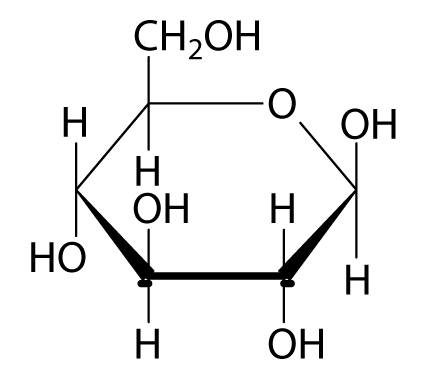
28.
What does the word organic mean?
a)
has nitrogen
b)
has sulfur
c)
has carbon
d)
has oxygen
29.
Which of the following is NOT a biomolecule?
a)
Water
b)
Nucleic Acid
c)
Protein
d)
Lipid
30.
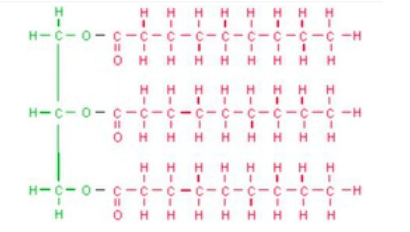
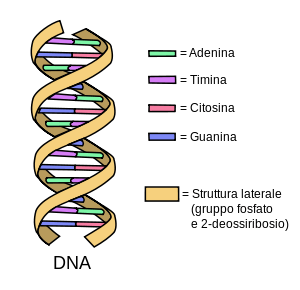
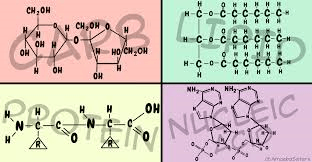
Identify the biomolecule
a)
Carbohydrate
b)
Lipid
c)
Protein
d)
Nucleic Acid
31.
Identify the biomolecule
a)
Lipid
b)
Protein
c)
Carbohydrate
d)
Nucleic Acid
32.
Which biomolecule is the key source of energy?
a)
Lipid
b)
Protein
c)
Carbohydrate
d)
Nucleic Acid
33.
A monomer is ...
a)
a single atom
b)
a building block for polymers
c)
a single element
d)
is an inorganic molecule
34.
What is the monomer for a protein?
a)
Monosaccharide
b)
Triglyceride
c)
Amino Acid
d)
Nucleotide
35.
Which foods are high in protein?
a)
Meats, cheeses, milk, eggs
b)
Breads, pasta, grains
c)
Butter, oil, lard
d)
Apples, Bananas, Grapes
36.
What is the functions of lipids?
a)
Quick source of energy
b)
Builds muscles, skin, enzymes
c)
Stores genetic information
d)
Stores energy, insulation, protection
37.
Which of the following is an example of a nucleic acid?
a)
Glucose
b)
Phospholipid
c)
Enzymes
d)
DNA
38.
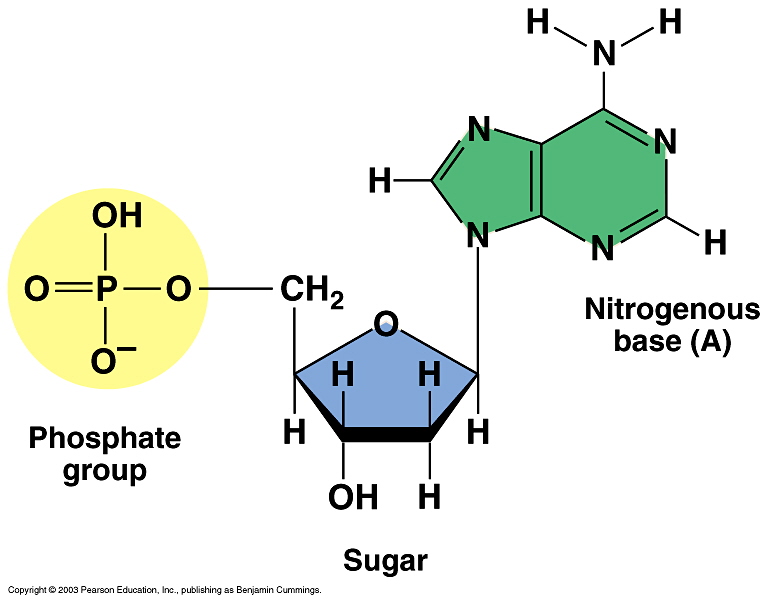
Identify the biomolecule
a)
Protein
b)
Lipid
c)
Carbohydrate
d)
Nucleic Acid
39.
What is the function of a nucleic acid?
a)
Stores genetic information
b)
Stores energy
c)
Quick source of energy
d)
Builds structures
40.
Lipids are made of
a)
monosaccharides
b)
amino acids
c)
glycerol and 3 fatty acids
d)
nucleotides
41.
Nucleotides are monomer for
a)
Nucleic Acids
b)
Proteins
c)
Carbohydrates
d)
Lipids
42.
What biomolecule do enzymes belong to? 
a)
Carbohydrate
b)
Lipid
c)
Nucleic Acid
d)
Protein
43.
Which biomolecule is a main source of quick energy?
a)
Nucleic Acid
b)
Protein
c)
Lipid
d)
Carbohydrate
44.
Which biomolecule is found in fats, oils, and waxes and is a source of long-term energy
a)
Proteins
b)
Nucleic Acid
c)
Lipids
d)
Carbohydrate
45.
Carbon, Hydrogen, Oxygen and Nitrogen are elements in what biomolecule?
a)
Carbohydrate
b)
Lipid
c)
Protein
d)
Nucleic acid
46.
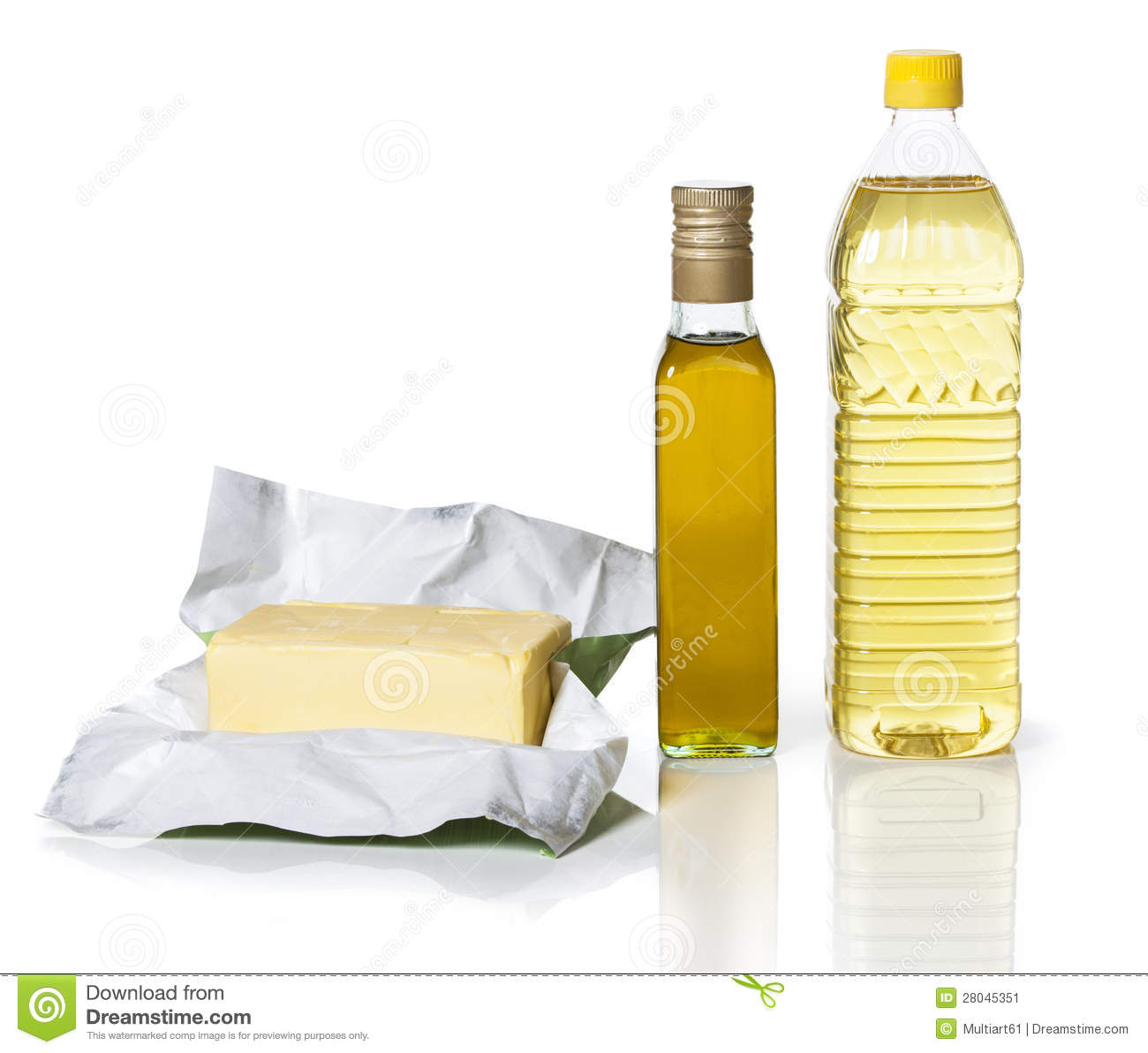
Which biomolecule is this a picture of?
a)
Protein
b)
Nucleic Acid
c)
Lipid
d)
Carbohydrate
47.

Which biomolecule helps form muscles?

a)

Nucleic Acid

b)

Carbohydrate

c)

Protein

d)

Lipids

48.
Which biomolecule is responsible for insulation and energy storage?
a)
Protein
b)
Nucleic Acid
c)
Lipid
d)
Carbohydrate
49.
Which biomolecule has sugars and starches?
a)
Lipids
b)
Proteins
c)
Carbohydrates
d)
Nucleic Acid
50.
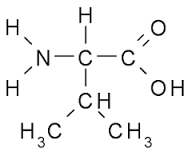
What type of molecule is this?
a)
Nucleic acid
b)
Protein
c)
Carbohydrate
d)
Lipid
51.
What elements are common to all 4 biomolecules?
a)
Carbon, hydrogen, nitrogen
b)
Carbon, Nitrogen, Phosphorus
c)
Carbon, Hydrogen, Oxygen
d)
Carbon, Hydrogen, Phosphorus
52.
What is the purpose  of an enzyme?
a)
give permission for the reaction
b)
raise activation energy
c)
speed up reactions
d)
control how many reactions occur
53.
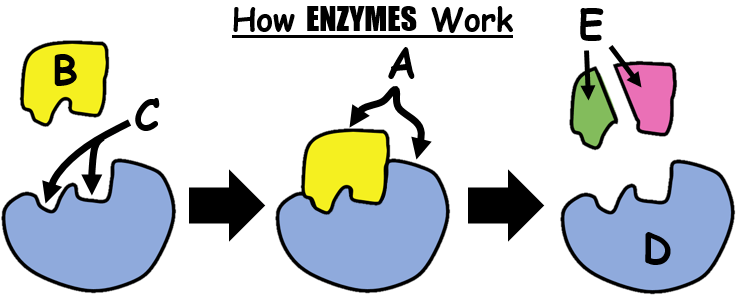
Letter D...
a)
active site
b)
enzyme
c)
substrate
d)
products
54.
Many monomers can be cross-linked together to form ______________. 
a)
molecules
b)
plastic material
c)
polymers
d)
balloons and silly putty
55.
The characteristic that all lipids have in common is----
a)
made of lots of double bonds
b)
acidic when mixed with water
c)
no high energy content
d)
do not dissolve in water
56.
What suffix is used in the names of most carbohydrates?
a)
-ase
b)
-nic
c)
-ose
d)
-yme
57.
Which of these molecules is the main human storage of carbohydrates for animals?
a)
Glycogen
b)
Glucose
c)
Starch
d)
Lactose
58.
Monosaccharides are monomers of
a)
Carbohydrates
b)
Lipids
c)
Proteins
d)
Nucleic Acids
59.

Which biomolecule makes up the cell membrane and hormones?

a)

lipids

b)

protein

c)

nucleic acid

d)

carbohydrate

60.
Enzymes are considered to be 
a)
Lipids
b)
Carbohydrate
c)
Protein
d)
Nucleic Acid
61.
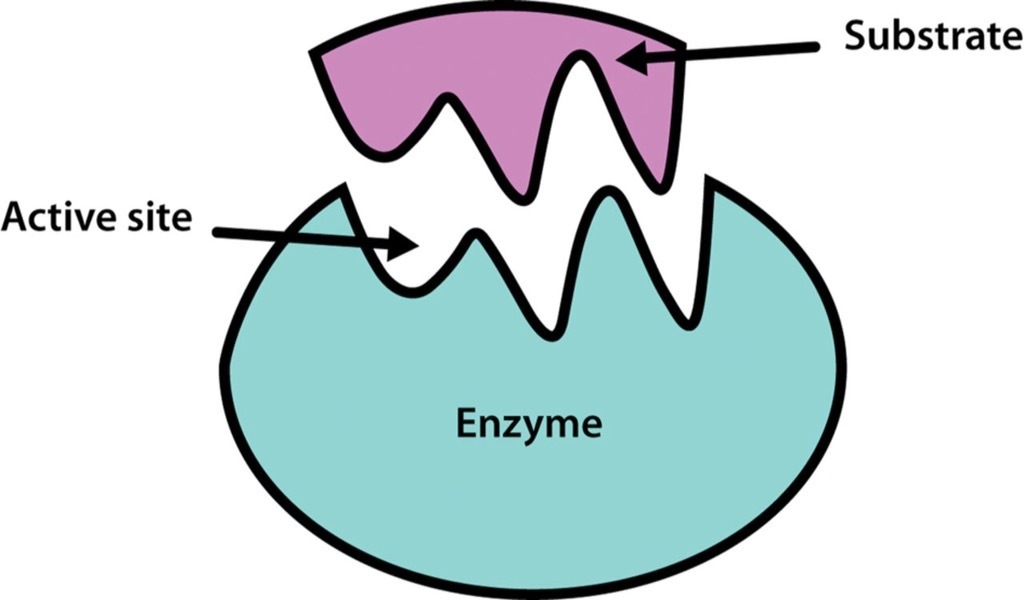
Where do substrates bind on an enzyme?
a)
voltage-gated channels
b)
surface receptor
c)
calcium channels
d)
active site
62.
Enzymes are capable of increasing the rate of a chemical reaction within a living cell.  Enzymes accomplish this through which of the following means?
a)
reducing the number of products   
b)
reducing the activation energy
c)
increasing the temperature of the cell
d)
increasing the concentration of reactants 
63.
What is structure A?
a)
Substrate
b)
Active site
c)
Enzyme
d)
Products
64.
What is structure D?
a)
Substrate
b)
Active site
c)
Enzyme
d)
Products
65.
What is structure C?
a)
Substrate
b)
Active site
c)
Enzyme
d)
Products
66.
What is structure E, F, G?
a)
Substrate
b)
Active site
c)
Enzyme
d)
Products
67.
How do enzymes speed up chemical reaction?
a)
Increasing activation energy
b)
Decreasing activation energy
c)
Increasing deactivation energy
d)
Decreasing deactivation energy
68.
What 3 letters do enzymes typically end in?
a)
-ose
b)
-ase
c)
-ese
d)
-tic
69.

What are 3 basic types of muscle found in the body? Mark all that apply

a)

Skeletal

b)

Smooth

c)

Cardiac

d)

Tendon

70.
Which concept best describes the interaction between myosin and actin that causes a muscle contraction?
a)
sliding filament theory
b)
stretch reflex
c)
energy mechanism
d)
isokinetic
71.
What is the name of the thick myofilaments?
a)
Actin
b)
Myosin
c)
Myoglobin
d)
Titan
72.
What is the name of the thin myofilaments in the muscle cell?
a)
Actin
b)
Myosin
c)
Myoglobin
d)
Titan
73.

Muscle contractions are generated by

a)

shortening of thick filaments

b)

shortening of thin filaments

c)

sliding of thin filaments past thick filaments

d)

"accordian-like" folding of thick and thin filaments

74.
The mechanism of muscle contraction.
a)
sarcoplasmic reticulum
b)
fasciitis
c)
sliding filament mechanism
d)
muscle cramps
75.
Muscle fatigue is when a muscle
a)
cannot contract due to glucose deficiency
b)
cannot relax due to oxygen defiecincy
c)
cannot contract due to oxygen deficiency
d)
spasms due to glucose deficiency
76.
What biological process makes the energy for the cell to function?
a)
cellular respiration
b)
photosynthesis
c)
mitochondria
d)
oxygenation
77.
Muscle fatigue is mainly due to 
a)
lack of oxygen
b)
lack of glucose
c)
increased cellular respiration
d)
lack of calcium
78.
Movement is enabled by muscle
a)
contraction
b)
atrophy
c)
subduction
d)
torpor
79.
What is the function of ATP in living things?
a)
provides energy for cells
b)
stores genetic information
c)
provides structure in the nucleus
80.

Why do we eat?

a)

To obtain energy. Food is broken down, glucose is extracted, and energy is converted to ATP

b)

To obtain energy. Food is converted to gases.

c)

To obtain energy and is converted to water.

81.
The mitochondria is responsible for ...
a)
photosynthesis
b)
anaerobic respiration
c)
aerobic respiration
d)
fermentation
82.
When we work without oxygen we work?
a)
anaerobically 
b)
aerobic 
83.

ATP is an abbreviation for:

a)

aniline triphosphate.

b)

adenine triphosphate.

c)

adenosine diphosphate.

d)

adenosine triphosphate.

84.
Anaerobic respiration.....
a)
doesn't require CO2
b)
requires CO2
c)
doesn't require oxygen
d)
requires oxygen
85.
Cellular Respiration's goal is to
a)
make water
b)
make ATP
c)
make glucose
d)
make  oxygen
86.
Which type of fermentation occurs in muscles?
a)
Alcoholic 
b)
Lactic acid
87.

A hard skeleton on the outside of the body is called?

a)

endoskeleton

b)

vertebrate

c)

exoskeleton

d)

invertebrate

88.

A hard internal skeleton is called?

a)

endoskeleton

b)

invertebrate

c)

exoskeleton

d)

hydrostatic skeleton

89.

Many invertebrates have what kind of skeleton

a)

endoskeleton

b)

exoskeleton

c)

hydrostatic skeleton

d)

water skeleton

90.

Muscle fibers are made up of?

a)

2 long thin protein molecules

b)

2 long carbohydrate molecules

c)

tendons

d)

skeletal tissues