wayground logo

Free Printable Worksheets

Font size

S
M
L
XL
Worksheets

MACROMOLECULES

Total questions: 90

Worksheet time: 2hrs 41mins

Name
Class
Date
1.

True or False?

Macromolecules are tiny molecules that cells need.

a)

True

b)

False

2.

A carbohydrate is a macromolecule that is used to...

a)

give cells/systems energy.

b)

build cell parts.

c)

give cells/systems long term energy storage.

d)

help cells with chemical processes.

3.

When reading the ingredients on a nutrition facts label carbohydrates are written as a type of

a)

food additive

b)

enzyme

c)

sugar

d)

protein

4.

Starch is...

a)

a protein

b)

a carbohydrate

c)

a lipid

5.

Example(s) of Lipids are...

a)

Sugar

b)

Olive Oil

c)

Butter

d)

Bread

6.

When reading the nutrition facts on food packaging total fats is a measure of...

a)

Carbohydrate

b)

Lipids

c)

Water

d)

Protein

7.

A lipid is a macromolecule that is used to...

a)

give cells/systems energy.

b)

build cell parts.

c)

give cells/systems long term energy storage.

d)

help cells with chemical processes.

8.

Fat, oil, butter and cream cheese are apart of which macromolecule group?

a)

amino acids

b)

carbohydrates

c)

lipids

d)

protein

9.

What is the monomer for carbohydrates? Remember: its the fancy word for sugar

a)

nucelotide

b)

monosaccaride

c)

nucleic acid

d)

polymer

10.

Which macromolecule has the function of quick energy?

a)

Lipids

b)

Carbohydrates

c)

Protein

d)

Nucleic Acids

11.

Which macromolecule has the function of long term energy or energy storage

a)

Nucleic Acids

b)

Carbohydrates

c)

Lipids

d)

Protein

12.

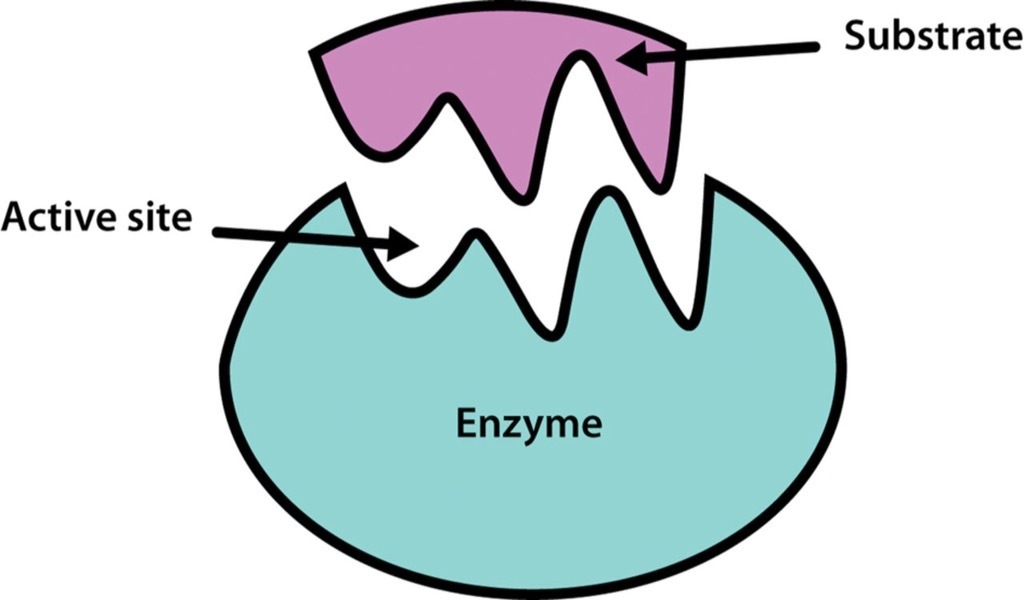
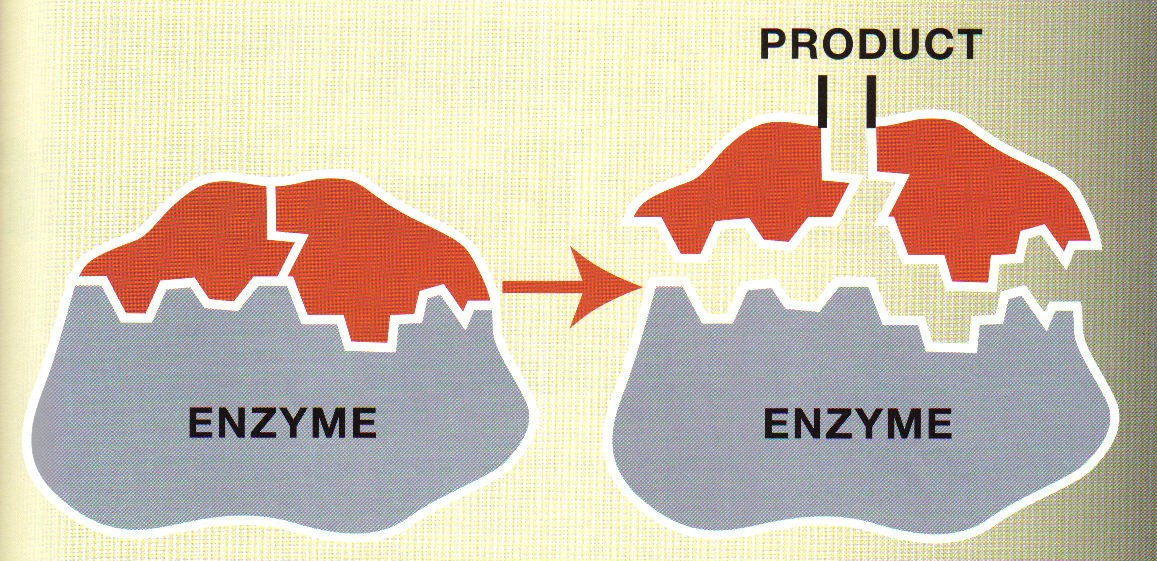
When looking at the enzyme substrate model, the substrate turns into what at the end of the chemical reaction?

a)

Nothing

b)

It does not change

c)

Products

d)

Pieces

13.

What is the monomer for protein?

a)

Polymer

b)

Nucleic Acids

c)

Amino Acids

d)

Fatty Acids

14.
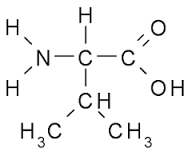
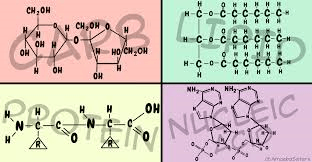
Which major macromolecule is being represented in this image? 
a)
carbohydrate
b)
lipid
c)
protein
d)
nucleic acid
15.
What are the single sugars that are the building blocks of carbohydrates?
a)
monosaccharides
b)
disaccharides
c)
polysaccharides
d)
amino acid
16.
Which of the four major biological macromolecules can be easily identified by the nitrogen base and phosphate found in its structure?
a)
carbohydrate
b)
lipid
c)
protein
d)
nucleic acid
17.
The element _______is found in all of the organic compounds.
a)
Iron
b)
Nitrogen
c)
Carbon
d)
Oxygen
18.
Nucleotides are monomers of
a)
Carbohydrates
b)
Lipids
c)
Proteins
d)
Nucleic Acids
19.
Waxes, oils and fats are examples of
a)
Carbohydrates
b)
Lipids
c)
Proteins
d)
Nucleic Acids
20.
Glycerol and fatty acids are the monomers of
a)
Carbohydrates
b)
Lipids
c)
Proteins
d)
Nucleic Acids
21.
What is the function of nucleic acids?
a)
store genetic information
b)
store energy (long-term)
c)
store energy (short-term)
d)
build skin, hair, nails, muscles
22.
Carbohydrates are made of... 
a)
C H O
b)
C H O N
c)
C H O N P
d)
C H O N S
23.
Lipids are made of... 
a)
C H O
b)
C H O N
c)
C H O N P
d)
C H O N S
24.
Proteins are made of... 
a)
C H O
b)
C H O N
c)
C H O N P
d)
C H O N S
25.
Which macromolecule stores energy, insulates us, and makes up the cell membrane?
a)
lipids
b)
proteins
c)
carbohydrates
d)
nucleic acids
26.
What are the four macromolecules?
a)
proteins, nucleic acids, carbohydrates, and lipids
b)
monosaccharides, lipids, polysaccaharides, and proteins
c)
RNA, DNA, proteins, and carbohydrates
d)
proteins, DNA, RNA, and steroids
27.
RNA and DNA are which type of macromolecules?
a)
carbohydrate
b)
lipid
c)
nucleic acid
d)
protein
28.

What is the smallest piece of matter that still has properties of that matter?

a)

element

b)

atom

c)

proton

29.
An atom with atomic number 6 would have how many protons 
a)
6
b)
12
c)
3
d)
cannot be determined 
30.
The part of the atom that is moving around the nucleus is called?
a)
electron
b)
neutron
c)
proton
31.
What does the nucleus consist of?
a)
Protons + Electrons
b)
Neutrons + Electrons
c)
Atoms
d)
Protons + Neutrons
32.
Which biomolecule is made of nucleotides and contain you DNA?
a)
Carbohydrate
b)
Lipids
c)
Protein
d)
Nucleic Acid
33.
Which biomolecule has sugars and starches?
a)
Lipids
b)
Proteins
c)
Carbohydrates
d)
Nucleic Acid
34.
Which biomolecule functions include enzymes­ which speeds the rate of chemical reactions, structural components in cells, mechanical functions in muscles and cytoskeleton, cell signaling, and immune response; provides structure and helps with chemical reactions 
a)
Protein
b)
Lipids
c)
Carbohydrate
d)
Nucleic Acid
35.
Which biomolecule is important source of energy for humans; glucose for human cells, tissues, and organs; provides fiber, sugar, and starches; provides structural support, cell wall, and cell membrane maker?
a)
Nucleic Acid
b)
Lipid
c)
Carbohydrate
d)
Protein
36.
Which biomolecule includes fats, such as triglycerides, oils, waxes, and steroids (cholesterol); insoluble in water; provides energy storage, insulation, part of cell membrane, and hormones 
a)
Nucleic Acid
b)
Lipids
c)
Carbohydrate
d)
Protein
37.
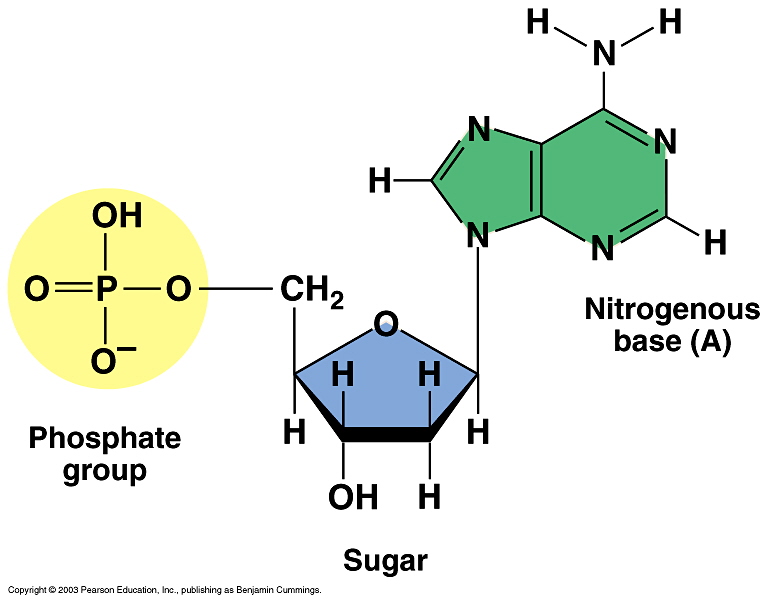
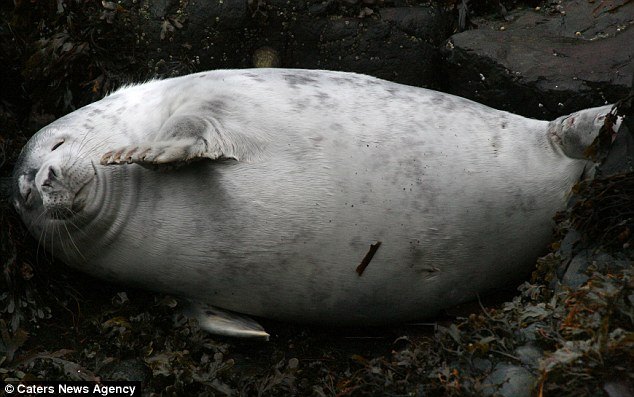
Identify the biomolecule
a)
Lipid
b)
Protein
c)
Carbohydrate
d)
Nucleic Acid
38.
This biomolecule would be used for
a)
Building enzymes
b)
Storing energy
c)
Key source of energy
d)
Storing genetic information
39.
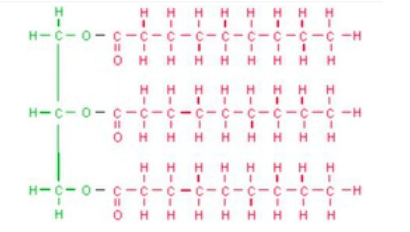
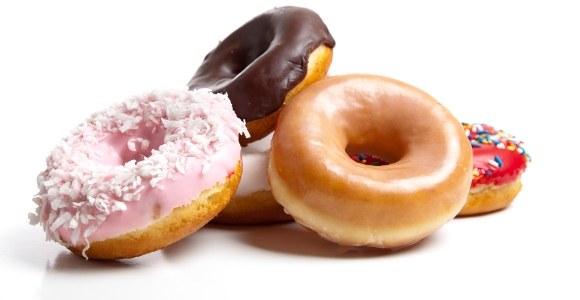
Which biomolecule is this a picture of?
a)
Protein
b)
Nucleic Acid
c)
Lipid
d)
Carbohydrate
40.
The arrangement of which three components is used to distinguish one molecule from another?
a)
carbon, hydrogen, and oxygen
b)
glucose, fructose, and ribose
c)
peptide, fatty acid, and purine
d)
water, carbon dioxide, and notrogen
41.
The waxy, organic substances used by aquatic birds to coat their feathers, when analyzed consists mostly of 
a)
lipids
b)
proteins
c)
carbohydrates
d)
nucleic acids
42.
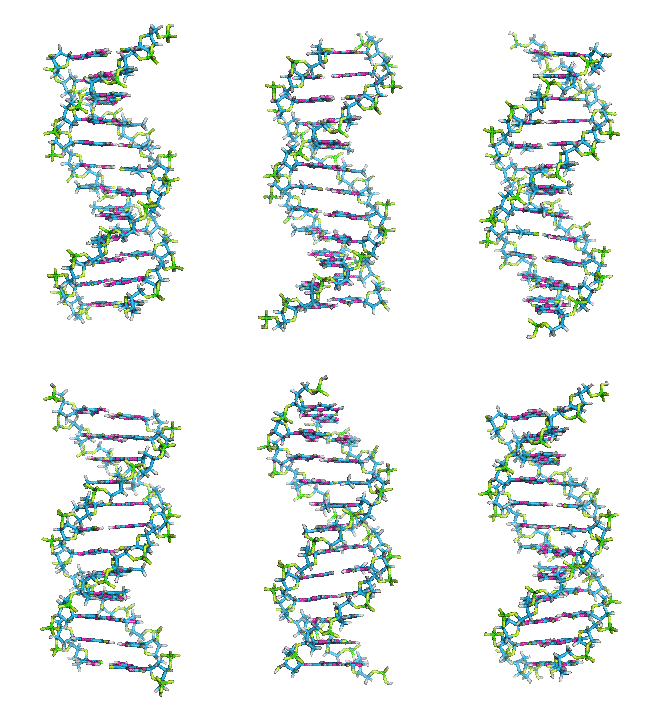
Which biomolecule is this a picture of?
a)
Protein
b)
Nucleic Acid
c)
Lipid
d)
Carbohydrate
43.
Which biomolecule is this a picture of? (Hint: it is made of amino acids)
a)
Proteins
b)
Nucleic Acids
c)
Lipids
d)
Carbohydrates
44.
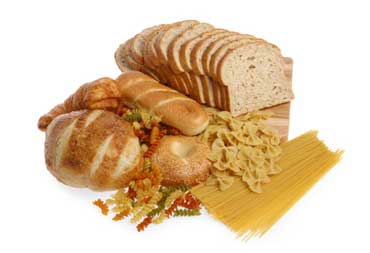
Which biomolecule is found in pastas and breads? (Hint: it is a polymer)
a)
Lipid
b)
Protein
c)
Simple Carbohydrate
d)
Complex Carbohydrate
45.
Which biomolecule is made of nucleotides and include your DNA? (Hint: they carry genetic information)
a)
Carbohydrate
b)
Lipids
c)
Protein
d)
Nucleic Acid
46.
Which biomolecule is responsible for insulation and LONG term energy storage?
a)
Proteins
b)
Nucleic Acids
c)
Lipids
d)
Carbohydrates
47.
Which biomolecule includes sugars and starches? (Hint: simple or complex)
a)
Lipids
b)
Proteins
c)
Carbohydrates
d)
Nucleic Acids
48.
Which biomolecule group includes fats, oils, and waxes?
a)
Proteins
b)
Nucleic Acid
c)
Lipids
d)
Carbohydrate
49.
ALL polymers (large molecules) are made up of...
a)
monosaccharides
b)
monomers
c)
proteins
d)
None of these
50.
Monomers combine to form ________ through the process of ________.
a)
polymers; hydrolysis
b)
polymers; dehydration synthesis
c)
monomers; hydrolysis
d)
monomers; dehydration synthesis
51.

Polymer's split apart to form ________, by __________.

a)

monomers, hydrolysis

b)

monomers, dehydration synthesis

c)

amino acids, hydrolysis

d)

amino acids, dehydration synthesis

52.
Which of the following is NOT a biomolecule?
a)
Water
b)
Nucleic Acid
c)
Protein
d)
Lipid
53.
Lipids can be digested into what smaller subunits?
a)
nucleic acids
b)
amino acids
c)
fatty acids
d)
glucose
54.
Which 2 molecules contains the elements C-H-O and function pertains to energy?
a)
Lipids and Protein
b)
Carbohydrates and Nucleic Acids
c)
Protein and Carbohydrates
d)
Carbohydrates and Lipids
55.
What are foods that are high in carbs?
a)
Eggs, fish, poultry
b)
Cheese, meats, vegetables
c)
Bread, potatoes, and pasta
d)
Multitude of oils, butter and condiments
56.
Carbon, Hydrogen, Oxygen and Nitrogen are the elements that make up______?
a)
Carbohydrate
b)
Lipid
c)
Protein
d)
Nucleic acid
57.
What do disaccharides, such as sucrose, and polysaccharides, such as starch, have in common?
a)
They are lipids made of fatty acids.
b)
They are proteins made of amino acids.
c)
They are nucleic acids made of nucleotides.
d)
They are carbohydrates made of simple sugars.
58.
Which group of organic compounds contains fatty acids?
a)
Carbohydrates
b)
Lipids
c)
Nucleic Acids
d)
Proteins
59.
Which of the following answers links a biomolecule with one of its proper functions?
a)
Lipids - Store genetic information
b)
Carbohydrates - short term energy storage
c)
Nucleic Acids - Catalyze reactions
d)
Proteins - long term energy storage
60.
Peptide bonds in proteins can be broken down by the enzyme peptidase. Adrian orders a hamburger and French fries for lunch. He adds cheese and mayonnaise to his hamburger and then sits down to eat lunch with his friends. Which structure would most likely result from the action of peptidase in Adrian’s stomach?
a)
Lipids
b)
Glucose
c)
Nucleic Acid
d)
Amino Acid
61.
How many sugar-phosphate strands exist in each RNA molecule?
a)
4
b)
2
c)
1
d)
None
62.
Which organic macromolecules are composed of chains of amino acids that join to form the structural components of organisms.
a)
Carbohydrates
b)
Proteins
c)
Amino Acids
d)
Lipids
63.
The molecule in the diagram plays what role in the body?
a)
Releasing Energy
b)
Forming part of the sugar-phosphate backbone of DNA
c)
Storing Fat
d)
Controlling blood glucose levels
64.
The monomers used to synthesize proteins are called ____________.
a)
Nucleotides
b)
Fatty Acids
c)
Amino Acids
d)
Sugars
65.
The four most common elements found in biomolecules are:
a)
Carbon, Nitrogen, Phosphorus, Bromine
b)
Sulfur, Nitrogen, Iron, Carbon
c)
Sulfur, Phosphorus, Carbon, Oxygen 
d)
Carbon, Oxygen, Nitrogen, Hydrogen
66.
Which biomolecule is also known as enzymes?
a)
Carbohydrate
b)
Lipid
c)
Nucleic Acid
d)
Protein
67.
Which biomolecule are in starches and fibers?
a)
Lipid
b)
Protein
c)
Nucleic Acid
d)
Carbohydrate
68.

Which biomolecule helps form muscles?

a)

Nucleic Acid

b)

Carbohydrate

c)

Protein

d)

Lipids

69.
Which biomolecule contain your genetics?
a)
Carbohydrate
b)
Lipid
c)
Nucleic Acid
d)
Protein
70.
Proteins don't have specific shapes.
a)
True
b)
False
71.
Enzymes produce a specific reaction.
a)
True
b)
False
72.
If you want a reaction to speed up you need an _________.
a)
nucleic acid
b)
enzyme
c)
nerve cell
d)
carbohydrate
73.
What biomolecule do enzymes belong to? 
a)
Carbohydrate
b)
Lipid
c)
Nucleic Acid
d)
Protein
74.
Carbon, Hydrogen, Oxygen and Nitrogen are elements in what biomolecule?
a)
Carbohydrate
b)
Lipid
c)
Protein
d)
Nucleic acid
75.
What elements are common to all 4 biomolecules?
a)
Carbon, hydrogen, nitrogen
b)
Carbon, Nitrogen, Phosphorus
c)
Carbon, Hydrogen, Oxygen
d)
Carbon, Hydrogen, Phosphorus
76.

Which biomolecule makes up cell membranes?

a)

Protein

b)

Carbohydrate

c)

Lipid

d)

Nucleic acid

77.

The area that the substrate fits into on the enzyme is called the:

a)

Active Site

b)

Allosteric Site

c)

Construction Site

d)

Geometric Site

78.
Substances X and Y are examples of what kind of molecules? 
a)
Proteins
b)
Amino Acids
c)
Simple Sugars
d)
Disaccharides
79.
Examine the reaction below.  In this reaction, catalase functions as an
a)
enzyme in the digestion of hydrogen peroxide
b)
enzyme in the synthesis of hydrogen peroxide
c)
indicator in the detection of hydrogen peroxide
d)
hormone in the digestion of hydrogen peroxide
80.

What macromolecules are present?

a)

Carbohydrates

b)

Lipids

c)

Proteins

d)

Nucleic Acids

e)

None

81.

What macromolecules are present?

a)

Carbohydrates

b)

Lipids

c)

Proteins

d)

Nucleic Acids

e)

None

82.

What macromolecules are present?

a)

Carbohydrates

b)

Lipids

c)

Proteins

d)

Nucleic Acids

e)

None

83.

What macromolecules are present?

a)

Carbohydrates

b)

Lipids

c)

Proteins

d)

Nucleic Acids

e)

None

84.

What macromolecules are present?

a)

Carbohydrates

b)

Lipids

c)

Proteins

d)

Nucleic Acids

e)

None

85.

What macromolecules are present?

a)

Carbohydrates

b)

Lipids

c)

Proteins

d)

Nucleic Acids

e)

None

86.

What macromolecules are present?

a)

Carbohydrates

b)

Lipids

c)

Proteins

d)

Nucleic Acids

e)

None

87.

What macromolecules are present?

a)

Carbohydrates

b)

Lipids

c)

Proteins

d)

Nucleic Acids

e)

None

88.

What macromolecules are present?

a)

Carbohydrates

b)

Lipids

c)

Protiens

d)

Nucleic Acids

e)

None

89.

What macromolecules are present?

a)

Carbohydrates

b)

Lipids

c)

Proteins

d)

Nucleic Acids

e)

None

90.

What macromolecules are present in human blood?

a)

Carbohydrates

b)

Lipids

c)

Proteins

d)

Nucleic Acids

e)

None