wayground logo

Free Printable Worksheets

Font size

S
M
L
XL
Worksheets

BIO Unit 2 Cell Structure Review

Total questions: 85

Worksheet time: 1hrs 3mins

Name
Class
Date
1.
What organelle is associated with the production of proteins?
a)
nucleus
b)
ribosome
c)
mitochondria
d)
cell membrane
2.
What organelle is also known as the "gate keeper"?
a)
nucleus
b)
mitochondria
c)
ribosome
d)
cell membrane
3.
What organelle is responsible for energy production?
a)
nucleus
b)
mitochondria
c)
ribosome
d)
cell membrane
4.

Which structures do plant cells have that animal cells do NOT have?

a)

cell wall

b)

large central vacuole

c)

chloroplasts

d)

all of these

5.
Name the prokaryote?
a)
animal cell
b)
plant cell
c)
bacteria
d)
fungi cell
6.

The cell membrane is selectively permeable. What does "selectively permeable" mean?

a)

Anything can enter.

b)

Nothing can enter.

c)

Some things can enter, while other things can't enter.

7.

What is the major difference between a prokaryote and a eukaryote?

a)

prokaryotes do not have a nucleus

b)

prokaryotes do not have ribosomes.

c)

prokaryotes do not have a cell membrane.

d)

prokaryotes do not contain DNA

8.
Chloroplasts in plant cells are where this process takes place.
a)
cellular respiration
b)
photosynthesis
c)
protein production
d)
glycolysis 
9.

Basic unit of all forms of life

a)

Cell

b)

Nucleus

c)

Prokaryote

d)

Eukaryote

10.

Fundamental concept of biology that states that all living things are composed of cells

a)

Cell Membrane

b)

Cell Wall

c)

Cell Theory

d)

Cell Hypothesis

11.

Structure that contains the cell's genetic material in the form of DNA

a)

Vacuole

b)

Nucleolus

c)

Nucleus

d)

Ribosome

12.

Specialized structure that performs important cellular functions within a cell

a)

Vacuole

b)

Ribosome

c)

Organelle

d)

Nucleus

13.

Cell organelle that stores materials such as water, salts, proteins, and carbohydrates

a)

Centriole

b)

Vacuole

c)

Ribosome

d)

Lysosome

14.

Cell organelle that breaks down lipids, carbohydrates, and proteins into small molecules that can be used by the rest of the cell

a)

Vacuole

b)

Chloroplast

c)

Lysosome

d)

Golgi apparatus

15.

Network of protein filaments in a eukaryotic cell that gives the cell its shape and internal organization and is involved in movement

a)

Cytoskeleton

b)

Golgi apparatus

c)

Ribosome

d)

Endoplasmic reticulum

16.

Cell organelle consisting of RNA and protein found throughout the cytoplasm in a cell; the site of protein synthesis

a)

Endoplasmic reticulum

b)

Ribosome

c)

Nucleus

d)

Nucleolus

17.

Organelle in cells that modifies, sorts, and packages proteins and other materials from the endoplasmic reticulum for storage in the cell or release outside the cell

a)

Golgi apparatus

b)

Ribosome

c)

Vacuole

d)

Lysosome

18.

Organelle found in cells of plants and some other organisms that captures the energy from sunlight and converts it into chemical energy

a)

Chloroplast

b)

Mitochondria

c)

Cell Wall

d)

Lipid Bilayer

19.

Strong, supporting layer around the cell membrane in some cells

a)

Cytoskeleton

b)

Cytoplasm

c)

Cell wall

d)

Nucleus

20.
This organelle is a gel-like fluid that takes up most of the space inside the cell. 
a)
Cytoplasm
b)
Cell Membrane
c)
Vacuole
d)
Golgi Body
21.
Which  structures are present in animal and plant cells?
a)
Vacuole, nucleus and cell membrane
b)
Nucleus, cell wall, cytoplasm
c)
Nucleus, cell membrane, cytoplasm
d)
Cell membrane, chloroplast, cell wall
22.
Which of the following is NOT included in the Cell Theory?
a)
All cells can survive independently
b)
All cells come from cells.
c)
All organisms are made of cells.
d)
The cell is the basic unit of organization in an organism.
23.

Synthesis and packeging of proteins occurs in...

a)

Rough ER

b)

Smooth ER

c)

Lysosome

d)

Plasma membrane

24.

......is important in the creation and storage of lipids and steroids.

a)

Smooth ER

b)

Rough ER

c)

Lysosome

d)

Mitochondria

25.

.........biomolecules are NOT synthesized by the Endoplasmic Reticulum.

a)

Proteins

b)

Lipids

c)

Cholesterol

d)

Nucleic acids

26.

Rough ER are found in the cells which are actively synthesizing..

a)

Lipids

b)

Cholesterol

c)

Proteins

d)

Nucleic acids

27.

Detoxification is carried out in...

a)

Smooth ER

b)

Rough ER

c)

Both of above

d)

None of above

28.

What is D pointing at?

a)

Flagellum

b)

Pilia

c)

Cell Membrane

d)

Nucleus

29.

Makes

lipids and gets rid of the chemicals and poisons

a)

Rough Endoplamsic Reticulum

b)

Lysosomes

c)

Ribosomes

d)

Smooth Endoplasmic Reticulum
30.
Layered stack of flat membrane-enclosed spaces containing enzymes that process, sort, and deliver proteins. 
a)
Golgi apparatus 
b)
vacuole 
c)
cell wall
d)
none of these 
31.
Fluid filled sac for storage of materials; stores food, water, and enzymes. 
a)
vacuole 
b)
centrosome 
c)
nucleus 
d)
chloroplast
32.
Bean-shaped organelle that supplies energy to the cell and has its own ribosomes and DNA. 
a)
mitochondria
b)
nucleus
c)
cell wall 
d)
smooth endoplasmic reticulum 
33.
Dense area of the nucleus that is essential for making protiens. 
a)
nucleolus
b)
ribosome 
c)
lysosome 
d)
cytoskeleton 
34.
Organelle composed of many membranes used to convert solar energy into chemical energy; contains chlorophyll and is where photosynthesis occurs. 
a)
chloroplast
b)
smooth endoplasmic reticulum
c)
nucleus
d)
vesicle 
35.
A rigid structure that gives protection, support, and shape to plants, algae, fungi and some bacteria. 
a)
cell wall
b)
cell membrane 
c)
cytoskeleton 
d)
cytoplasm 
36.
A network of proteins such as microfilaments, microtubules, that are inside of eukaryotic cells that support it and gives cells their shape. 
a)
cytoskeleton
b)
cell wall
c)
nucleus 
d)
ribosome 
37.
A double-layer of phospholipids that forms a boundary between the cell and surrounding environment and controls the passage of materials into and out of the cell.
a)
cell membrane 
b)
cell wall
c)
cytoplasm 
d)
lysosome 
38.
An interconnected network of thin, folded membranes that produce, process, and distribute proteins. Is covered in ribosomes. 
a)
rough endoplasmic reticulum 
b)
cell wall
c)
smooth endoplasmic reticulum 
d)
centriole 
39.
An interconnected network of thin, folded membranes that produce, process, and distribute proteins. Is NOT covered in ribosomes. 
a)
smooth endoplasmic reticulum 
b)
nucleus 
c)
ribsome
d)
Golgi apparatus 
40.
Organelle that contains enzymes. It helps with the immune system and breaks down dead or damaged cell parts.
a)
lysosomes
b)
nucleus
c)
cell wall
d)
chloroplast
41.
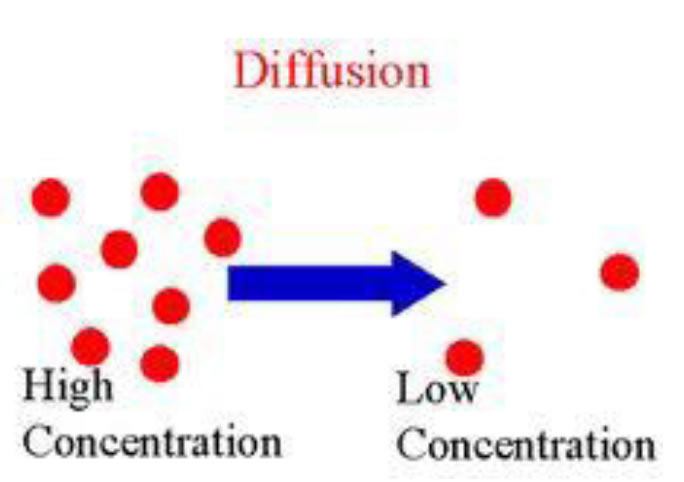
Movement of particles from high to low concentration. 
a)
Passive Transport
b)
Active Transport
42.
a)
Passive Transport
b)
Active Transport
43.
Osmosis is a form of ______________. 
a)
Passive Transport
b)
Active Transport
44.
a)
Passive Transport
b)
Active Transport
45.
Solutes move with the concentration gradient, therefore no energy is used. 
a)
Passive Transport
b)
Active Transport
46.
a)
Passive Transport
b)
Active Transport
47.
a)
Passive Transport
b)
Active Transport
48.
a)
Passive Transport
b)
Active Transport
49.
ATP is a form of energy.
a)
Passive Transport
b)
Active Transport
50.
Exocytosis
a)
Passive Transport
b)
Active Transport
51.
Endocytosis
a)
Passive Transport
b)
Active Transport
52.
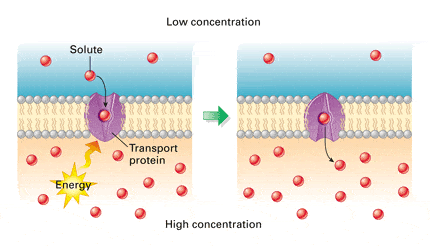
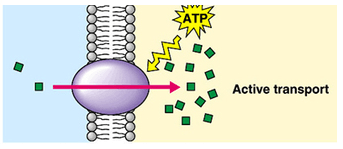
Solutes move against the concentration gradient, therefore energy is needed
a)
Passive Transport
b)
Active Transport
53.
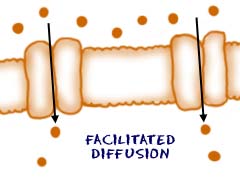
What is it called when molecules move across the cell membrane from an area of high concentration to an area of low concentration through a carrier protein?
a)
Diffusion
b)
Osmosis
c)
Active Transport
d)
Facilitated Diffusion
54.
The diffusion of water
a)
Active transport
b)
Diffusion
c)
Osmosis
d)
Engulfing
55.
During passive transport, molecultes move from an area of ______ concentration to an area of _____ concentration.
a)
higher, lower
b)
lower, higher
c)
higher, equal
d)
lower, equal
56.
What is the Movement of WATER IN and OUT of the cell membrane?
a)
Diffusion
b)
Osmosis
c)
Hypertonic
d)
My 3g is slowww
57.
The movement of molecules from an area of HIGHer Concentration TO an area of LOWer Concentration
a)
Diffusion
b)
Osmosis
c)
High Low
d)
Alay wa?
58.
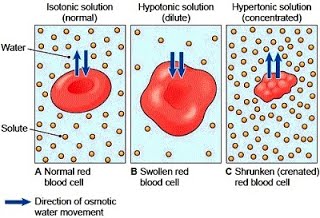
The cell below is in a _________ solution.
a)
Hypotonic
b)
Hypertonic
c)
Isotonic
59.
You put a cell into a solution, the cell grows. Is the solution hypotonic or hypertonic to the cell? 
a)
hypertonic
b)
hypotonic
c)
isotonic
d)
not enough information
60.
The cell below is in a _____________ solution.
a)
Hypertonic
b)
Hypotonic
c)
Isotonic
61.
This egg has shrunk, what type of solution was it placed in?
a)
hypotonic solution
b)
hypertonic solution
c)
isotonic solution
d)
active transport
62.
What type of solution allows water to enter the plant cell?
a)
hypotonic solution
b)
hypertonic solution
c)
isotonic solution
d)
active transport
63.
An ISOTONIC solution has a(n) ______________ concentration of solute (dissolved stuff) than inside the cell.
a)
lower
b)
equal
c)
higher
64.
A HYPOTONIC solution has a ______________ concentration of solute (dissolved stuff) than inside the cell.
a)
lower
b)
equal
c)
higher
65.
If a cell is placed in a HYPOTONIC solution, water will move _________ of the cell, causing it to ___________.
a)
into, swell
b)
out of, shrivel
c)
in and out of the cell, stay the same
66.
What type of solution is this cell in?
a)
Isotonic
b)
Hypertonic
c)
Hypotonic
d)
diffused
67.
The movement of water across the membrane for a high concentration to a low concentration.
a)
endocytosis
b)
osmosis
c)
facilitated diffusion
68.
A balance that an organism maintains by regulating what goes into and out of the cell.
a)
love
b)
peace
c)
homeostasis
d)
happiness
69.
This cell organelle helps organisms maintain homeostasis by controlling what substances may enter or leave cells.
a)
vacuole
b)
nucleus
c)
cell membrane
d)
cell wall
70.

What is the correct hierarchy of cells?

a)

tissues-cells-organ systems-organs-organisms

b)

cell-organisms-tissues-organs-organ systems

c)

cells-tissues-organs-organ systems-organisms

d)

organs-tissues-cells-organ systems-organisms

71.

What is an organ system?

a)

an individual living thing such as a plant, bacterium, animal, or fungi.

b)

a group of organs that work together to perform one or more functions.

c)

a group of tissues that perform a specific function or group of functions.

d)

groups of cells that have a similar structure and act together to perform a specific function.

e)

the smallest structural and functioning unit of an organism.

72.

What is an organ?

a)

an individual living thing such as a plant, bacterium, animal, or fungi.

b)

a group of organs that work together to perform one or more functions.

c)

a group of tissues that perform a specific function or group of functions.

d)

groups of cells that have a similar structure and act together to perform a specific function.

e)

the smallest structural and functioning unit of an organism.

73.

What is an organism?

a)

an individual living thing such as a plant, bacterium, animal, or fungi.

b)

a group of organs that work together to perform one or more functions.

c)

a group of tissues that perform a specific function or group of functions.

d)

groups of cells that have a similar structure and act together to perform a specific function.

e)

the smallest structural and functioning unit of an organism.

74.

What is a cell?

a)

an individual living thing such as a plant, bacterium, animal, or fungi.

b)

a group of organs that work together to perform one or more functions.

c)

a group of tissues that perform a specific function or group of functions.

d)

groups of cells that have a similar structure and act together to perform a specific function.

e)

the smallest structural and functioning unit of an organism.

75.

What are tissues?

a)

an individual living thing such as a plant, bacterium, animal, or fungi.

b)

a group of organs that work together to perform one or more functions.

c)

a group of tissues that perform a specific function or group of functions.

d)

groups of cells that have a similar structure and act together to perform a specific function.

e)

the smallest structural and functioning unit of an organism.

76.

An organ is made up of many...

a)

tissues

b)

organ systems

c)

organisms

d)

hearts and lungs

77.

A group of similar cells working together makes a(n)

a)

organ system

b)

tissue

c)

organism

d)

molecule

78.

Digestive and reproductive are examples of...

a)

organ systems

b)

organisms

c)

cells

d)

tissues

79.
A person with swollen gums rinses his mouth with warm salt water, and the swelling decreases. Which of the following has occurred?
a)
The swollen gums have absorbed the saltwater solution.
b)
The saltwater solution lowers the temperature of the water in the gums.
c)
The salt in the solution has moved against the concentration gradient.
d)
The water in the gums has moved out due to the high concentration of salt in the solution. 
80.

An example of diffusion is

a)

CO2 and O2 exchange in the lungs

b)

Glucose transport

c)

Na+ / K+ Pumps

d)

Exocytosis

81.

What is the movement of particles with the concentration gradient using protein "helpers"?

a)

diffusion

b)

facilitated diffusion

c)

active transport

d)

enzymatic reactions

82.

An example of facilitated diffusion is

a)

CO2 and O2 exchange in the lungs

b)

Glucose transport

c)

Na+ / K+ Pumps

d)

Endocytosis

83.

Facilitated diffusion needs what to get particles from one side of the membrane to the other?

a)

a membrane-spanning protein

b)

a surface protein

c)

a phospholipid

d)

a carbohydrate

84.

What is a difference between diffusion and facilitated diffusion?

a)

movement of particles from [high] to [low]

b)

a protein "helper"

c)

movement of particles from [low] to [high]

d)

energy

85.

Small changes of particles moving across the membrane that sum together to produce no net change.

a)

equilibrium

b)

dynamic equilibrium

c)

net movement