wayground logo

Free Printable Worksheets

Font size

S
M
L
XL
Worksheets

Unit 4 & 5 Study Review

Total questions: 90

Worksheet time: 1hrs 9mins

Name
Class
Date
1.
Who was the naturalist that traveled the world to study plants and animals?
a)
Albert Einstein
b)
Charles Darwin
c)
Charles Barkley
d)
Isaac Newton
2.
The gradual change in species over time is...
a)
Evolution
b)
Nucleotide 
c)
Adaptation
d)
Natural Selection
3.
To adjust to a changing environment
a)
Mutation
b)
Adapt
4.
Darwin wrote that organisms with traits that are best suited to the environment will ________________
a)
increase in number
b)
become extinct
5.
Which term refers to the process by which individuals that are better suited to the environment survive and reproduce therefore passing down their genes to their offspring? 
a)
Evolution 
b)
Variation 
c)
Adaptation
d)
Natural Selection 
6.
When an organism completely dies out, it is called.....
a)
Adaption
b)
Extinction
c)
Fossilization
d)
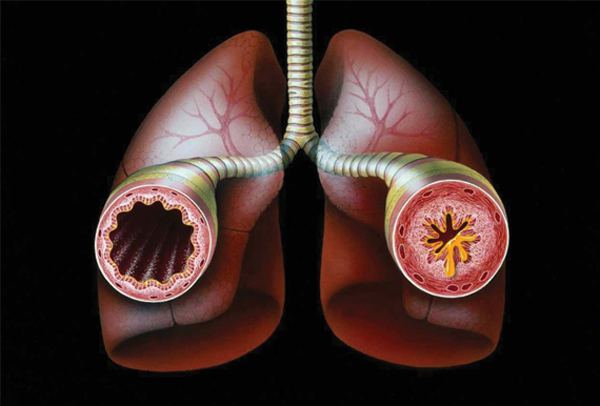
Mutation
7.
The white feathers of a snowy owl allow it to blend in with its environment during the winter months (snow). This is an example of ________________
a)
Species
b)
Environmental Change
c)
Adaptation
d)
Variation
8.
Darwin referred to this as survival of the fittest. Over time, it results in changes in the inherited characteristics of a population because organisms with adaptations that make them fit for their environment will survive and reproduce better than those without favorable traits.
a)
Natural Selection
b)
Genetic Variation
c)
Survival of the Fittest
9.
Genetic differences between organisms of the same species
a)
Variation
b)
Adaptation
c)
Behavior
d)
Environment
10.
Remains of ancient organisms are called
a)
Extinctions
b)
Fossils
c)
Mutations
d)
Variations
11.
Charles Darwin came up with this theory 
a)
Natural Selection
b)
Mutation
12.
What is another name for natural selection?
a)
survival of the smartest
b)
survival of the fastest
c)
survival of the biggest
d)
survival of the fittest
13.
What is an organism that has similar characteristics and can reproduce?
a)
species
b)
organism
c)
embryology
d)
vestigial 
14.
Two organisms that are closely related would have
a)
very similar DNA sequence
b)
exactly the same DNA sequences
c)
no proteins in common
d)
completely different DNA sequence
15.
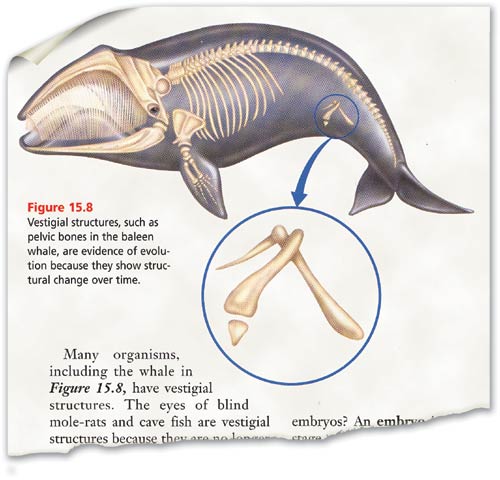
Which of the following is an example of a vestigial structure?
a)
the wings of a red-tailed hawk
b)
the hind limbs of a house cat
c)
the fins of sharks
d)
the tailbone of a human
16.
The biggest level of classification is called a...
a)
species
b)
class
c)
order
d)
kingdom
17.
Which isn't classified as an invertebrate?
a)
Reptile
b)
Echinoderm
c)
Crustacean
d)
Arthropod
18.
Which isn't classified as a vertebrate?
a)
Birds
b)
Mammals
c)
Mollusks
d)
Fish
19.
Vertebrates are animals without a backbone.
a)
True
b)
False
20.
Arthropods have a skeleton outside it's body.
a)
True
b)
False
21.
the scientific study of how living things are classified
a)
Taxonomy
b)
Linnaeus
c)
Binomial Nomenclature
d)
Dichotomous Key
22.
a two-part scientific name using the Genus and the Species name
a)
Binomial Nomenclature
b)
Dichotomous Key
c)
Taxonomy
d)
Linnaeus
23.
group of closely related species; the first part of the scientific name
a)
Genus
b)
Kingdom
c)
Domain
d)
Species
24.
a group of similar organisms that can breed and produce fertile offspring
a)
Species
b)
Domain
c)
Kingdom
d)
Kingdom
25.
an organized set of characteristics used to identify organisms. Each step contains two choices until the organism is correctly identified
a)
Dichotomous Key
b)
Binomial Nomenclature
c)
Taxonomy
d)
Linnaeus
26.
Largest taxonomic category.
a)
Domain
b)
Phylum
c)
Class
d)
Order
27.
Second largest group in taxonomic hierarchy
a)
Kingdom
b)
Domain
c)
Genus
d)
Species
28.
A living thing
a)
Organism
b)
Domain
c)
Genus
d)
Taxonomy
29.
Father of Taxonomy; created binomial nomenclature
a)
Linnaeus
b)
Woes
c)
Darwin
d)
One Punch Man
30.
8 Levels of Taxonomy
a)
Domain, Kingdom, Phylum, Class, Order, Family, Genus,Species
b)
Domain, Kingdom, Phylum, Class, Structure, Family, Genus,Species
c)
Domain, Kingdom, Phylum, Class, Order, Family,Species, Race
d)
Domain, Kingdom, Phylum, Unit, Order, Family, Genus, Species
31.
The ____________ kingdom includes decomposers , such as mushrooms.
a)
kingdoms
b)
fungi
c)
archaebacteria
d)
nonvascular
32.
Multicellular organisms that use sunlight to create food are grouped into the _____________  kingdom.
a)
plant
b)
animal
c)
fungi
d)
protist
33.
____________________ are vertebrates that are warm-blooded, have hair, and give birth to live young. 
a)
mammals
b)
animals
c)
amphibians
d)
protists
34.
The ________________ kingdom can be divided into two groups; those with backbones and those without.
a)
animal
b)
mammal
c)
vertebrates
d)
invertebrates
35.
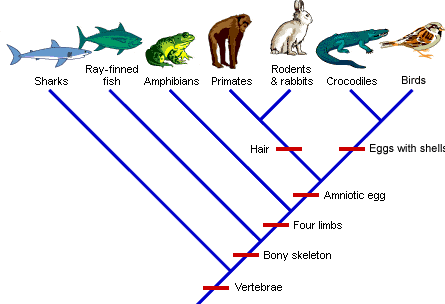
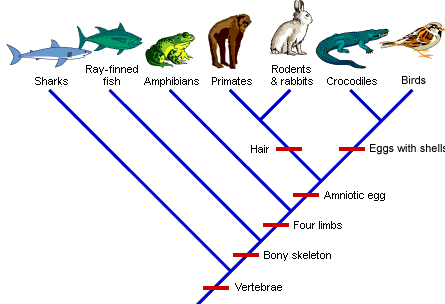
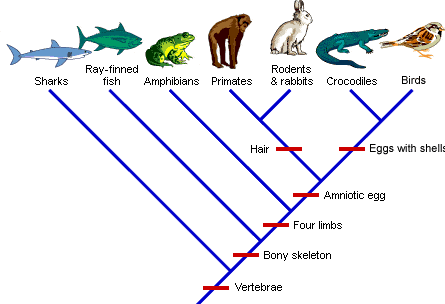
According to this cladogram, birds are LEAST related to: 
a)
Amphibians
b)
Sharks
c)
Ray Finned Fish
d)
Crocodiles
36.
Which two orgainsms have hair? 
a)
Sharks & Ray Finned Fish
b)
Primates & Rodents
c)
Birds & Crocodiles
d)
Rabbits & Birds
37.
According to this cladogram, sharks are MOST closely related to which organism? 
a)
Amphibians
b)
Ray finned fish
c)
Crocodiles
d)
Birds
38.
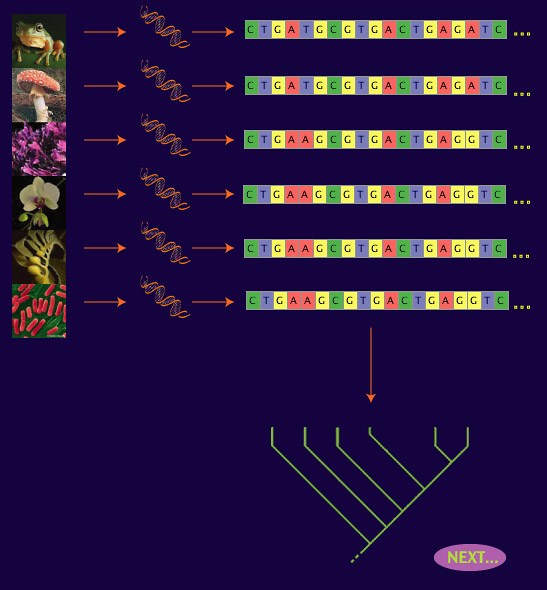
You look at two species and see very similar DNA. What does this likely tell you?
a)
These are the same animal.
b)
These animals have a common ancestor.
c)
These animals are not likely related.
d)
These animals are likely becoming one species.
39.

the outer layer of the skin is called

a)

dermis

b)

subcutaneous layer

c)

epidermis

d)

organ

40.

Nails are protective coverings on the ends of the fingers and toes

a)

true

b)

false

41.

What does not make up the integumentary system ?

a)

skin

b)

nails

c)

glands

d)

bones

42.

Keratin is...

a)

a vitamin growing out of your skull

b)

a mineral found in the hair skin and nails

c)

a protein found in the skin, hair and nails.

43.

A pigment that protects your skin and gives it color; found in the epidermis of your skin.

a)

Sebaceous Gland

b)

Melanin

c)

Follicle

44.

A pigment that protects your skin and gives it color; found in the epidermis of your skin.

a)

Sebaceous Gland

b)

Melanin

c)

Follicle

45.

These are the roles of the integumentary system select all that are correct.

a)

Protection

b)

Sensory Response

c)

Production of Vitamin C

d)

Waste elimination

46.

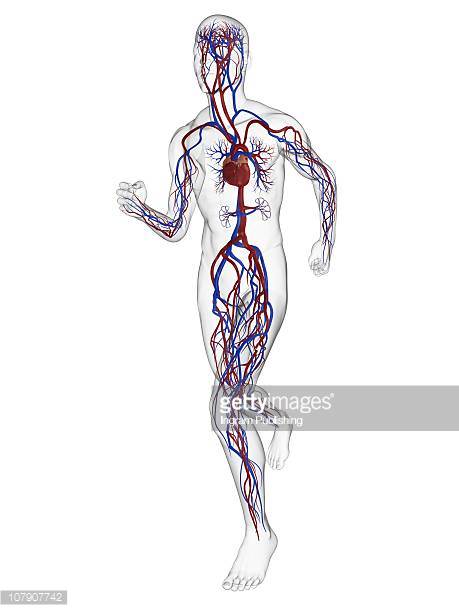
What is the main organ of the circulatory system?

a)

small intestine

b)

bone

c)

lungs

d)

heart

47.

Arteries carry oxygen rich blood away from the heart.

a)

True

b)

False

48.

Veins carry oxygen poor blood back to the heart.

a)

False

b)

True

49.

The job of the heart is to . . .

a)

pump blood around the body.

b)

send food to the small intestines.

c)

break down food.

d)

give energy to the body.

50.

The heart is about the size and shape of your . . .

a)

head

b)

fist

c)

hand

d)

foot

51.

How does the heart work?

a)

It pumps blood first to the lungs, back to the heart and then around the rest of the body.

b)

It pumps blood first to the rest of the body, back to the lungs and then to the heart.

c)

It pumps blood around the rest of the body, back to the heart and then to the lungs,

52.
______________ are the smallest blood vessels.
a)
Arteries
b)
Veins
c)
Capillaries
53.
______________ are the second largest blood vessel. 
a)
Arteries
b)
Veins
c)
Capillaries
54.
The circulatory system works with the ___________ system to provide our body with oxygen.
a)
respiratory
b)
digestive
c)
muscular
d)
skeletal
55.
The circulatory system works with the __________ system to obtain energy from nutrients that we eat. 
a)
respiratory 
b)
digestive
c)
skeletal
d)
nervous
56.
The heart has ___ chambers.
a)
1
b)
2
c)
3
d)
4
57.
True or False: There are four chambers in the heart.
a)
True
b)
False
58.
What does Deoxygenated mean?
a)
Oxygen-rich
b)
Blood flow
c)
Oxygen-poor
d)
Water Flow
59.
Which is the correct definition of the Circulatory system?
a)
The system fights disease so the body stays healthy.
b)
The system that circulates blood and oxygen through the body, consisting of the heart,blood vessels,and blood.
c)
Breaks down food into smaller pieces and absorbs those nutrients into the body.
d)
Provides shape and structure for the body.
60.
Inhale!!!!
Your lungs are ___________  air
a)
taking in
b)
letting out
61.
EXHALE!!!
My lungs are __________________ air. 
a)
taking in
b)
letting out
62.
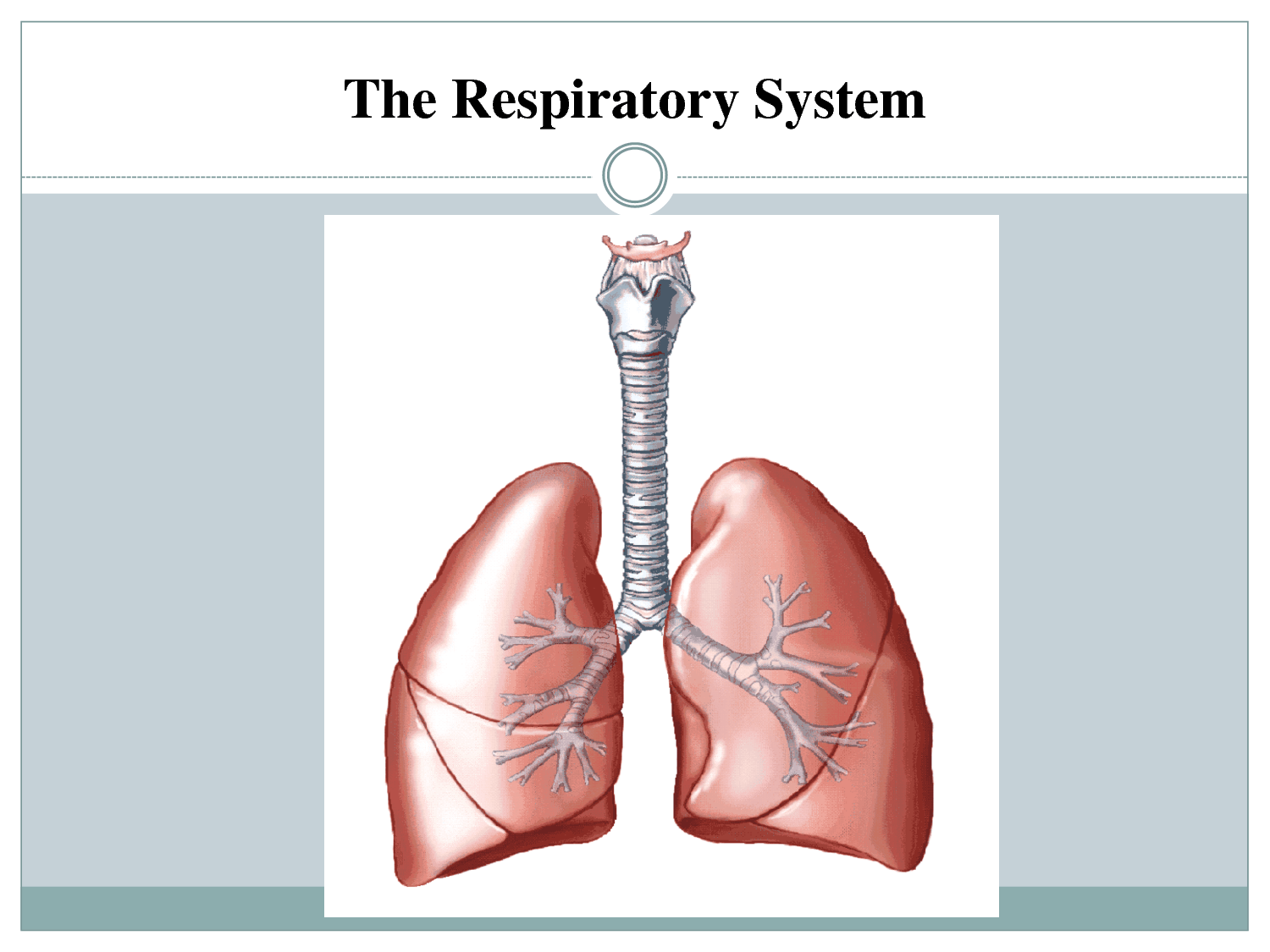
What is the main function of the respiratory system?
a)
to provide oxygen and remove carbon dioxide from the body
b)
to bring oxygen to the body
c)
to break down food and absorb nutrients
d)
to remove oxygen from the body and deliver carbon dioxide
63.
What are the main organs of gas exchange in the respiratory system?
a)
diapragm
b)
lungs
c)
trachea
d)
bronchi
64.
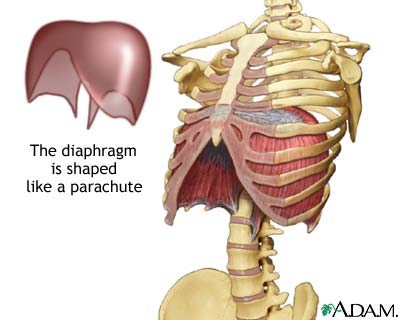
What is function of the dome-shaped diaphragm?
a)
This is where gas exchange happens.
b)
Air passes through the diaphragm on the way to the lungs.
c)
It attaches to the lungs to help in breathing.
d)
It is under the lungs and keeps them from falling down to your stomach.
65.

A disorder of the lungs called ____ causes the bronchi to become restricted (get smaller) so air can't get to the lungs.

a)

asthma

b)

cold

c)

influenza

d)

bronchitis

66.
The Pharynx is the muscle that moves the lungs
a)
True
b)
False
67.
Flap of skin that covers the opening to the windpipe during swallowing
a)
Stomach
b)
Trachea
c)
Pancreas
d)
Epiglottis
68.
The chewing and grinding of food into smaller pieces is an example of...
a)
Mechanical Digestion
b)
Chemical Digestion
69.
Which of the following is NOT part of the digestive tract?  (Hint:  Identify the secondary organ.)
a)
Mouth
b)
Esophagus
c)
Small Intestine
d)
Liver
70.
Which organ pushes food down to the stomach?
a)
Mouth
b)
Esophagus
c)
Rectum
d)
Large intestine
71.
The opening at the end of the digestive system where solid waste comes out is the...
a)
rectum
b)
anus
c)
mouth
d)
large intestine
72.
Gastric juices in the stomach digest food into a thick liquid.  This is...
a)
Mechanical digestion
b)
Chemical digestion
73.
Enzymes (chemicals) in your saliva help break down food while chewing.  This is...
a)
Mechanical digestion
b)
Chemical digestion
74.
Which excretory organ filters the blood to remove excess water, urea, and cell wastes?
a)
Kidney
b)
Bladder
c)
Urethra
d)
Ureters
75.
A short tube where urine is released from the body is the _______.
a)
Ureter
b)
Kidney
c)
Bladder
d)
Urethra
76.
Which organ system removes cellular wastes as the result of cellular respiration?
a)
nervous
b)
digestive
c)
excretory
d)
circulatory
77.
What is the function of the excretory system?
a)
It's responsible for the elimination of waste by homeostasis. 
b)
Makes protein
c)
Transport of nutients, oxygen, and hormones to cells throughout the body and removal of metabolic wastes 
d)
Movement
78.
Which of the following is the fluid released by the kidneys once the wastes are removed from the water and blood in the body?
a)
bile
b)

urea

c)
sweat
d)
urine
79.
All people with diabetes are overweight.
a)
False
b)
True
80.
Insulin is something that you get
a)
from a pill that cures diabetes.
b)
as a hormone made by the beta cells in your pancreas
c)
from a pill that cures diabetes
81.
Insulin
a)
lowers your blood sugar levels
b)
blocks the sugar in your bloodstream from doing what it is supposed to do
c)
gives you diabetes
82.
The most common types of diabetes are Type 1 and Type 2 diabetes.
a)
True
b)
False
83.
Common signs/symptoms of diabetes are
a)
blurry vision
b)
being thirsty more often than usual and urinating more often
c)
unusual weight loss
d)
all of the above
84.
Insulin is a hormone that is made in the pancreas of a healthy person without diabetes.
a)
True
b)
False
85.
Hormone that develops male sex characteristics
a)
Follicle Stimulating Hormone
b)
Testosterone
c)
Estrogen
d)
Glucagon
86.
What are the 3 types of muscle tissue?
a)
Thigh, Calf, & Shoulder
b)
Traps, Forearm, & Abs
c)
Hamstring, Biceps, & Triceps
d)
Smooth Muscle, Cardiac Muscle, & Skeletal Muscle
87.
Which muscle type is found in your stomach, bladder, and intestines?
a)
Skeletal
b)
Smooth
c)
Cardiac
d)
Straight
88.
Which type of muscle is found in your heart?
a)
Skeletal
b)
Smooth
c)
Cardiac
d)
Straight
89.
Which muscles are involuntary?
a)
skeletal
b)
cardiac
c)
smooth
d)
smooth and cardiac
90.
What is an example of an involuntary muscle? 
a)
Heart
b)
Arms 
c)
Legs
d)
Shoulders