
 Worksheets
Year 9 Semester Quiz preparation
Total questions: 85
Worksheet time: 2hrs 42mins
Wher is the majority of the mass of an atom located?
In the electron shells
In the Nucleus
In the nucleus and electron shells
What is the charge of electrons?
Positive
Negative
Neutral
Variable
How do electrons fill the orbitals?
Randomly
From higher energy to lower energy orbitals
From lower energy to higher energy orbitals
In no specific order
What is the octet rule?
Atoms have 8 protons in the nucleus
Atoms have 8 neutrons in the nucleus
Atoms have 8 electrons in the outer shell
Atoms have 8 electrons in the nucleus
What do atoms tend to do to achieve stability?
Lose protons
Gain protons
Lose electrons
Gain electrons
What is the maximum number of electrons in a full outer shell?
2
4
6
8
What is the purpose of gaining or losing electrons?
To increase the mass of the atom
To decrease the mass of the atom
To achieve a full outer shell and stability
To change the charge of the nucleus

The atomic NUMBER tells you what?
number of electrons
number of protons
number of neutrons
number of protons AND electrons in an element

The atomic MASS tells you what?
number of electrons
number of protons
number of neutrons
the number of protons + neutrons

How many NEUTRONS does Boron have?
11
5
16
6

How many NEUTRONS does Fluorine have?
19
10
9
28

How many ELECTRONS does Beryllium have?
4
9
5
13
How many PROTONS does Fluorine have?
19
10
9
28
Isotopes of an element have a different number of...
Protons
Neutrons
Electrons
Mass
Potassium-39 has how many neutrons?
19
18
20
21
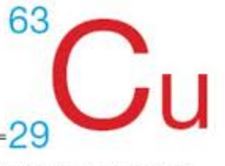
12 protons and 13 neutrons
Mg-12
Mg-13
Mg-25
Mg-24.305
How do you calculate mass number?
Mass x percent
Protons + Electrons
Protons + Neutrons
Neutrons + Protons + Electrons
ALL atoms of the same element have:
same number of proton
same number of nucleon
different number of neutron
different number of electron



What are the products during this reaction
Metal + Acid--->
Salt (two metals, one a cation and one an anion) + hydrogen
Salt (two metals, one a cation and one an anion) + carbon dioxide
Salt (two metals, two cations) + hydrogen
The combustion of propane can be written by the following chemical equation:
C3H8 + 5O2 → 3CO2 + 4H2O
What are the products in this equation?
C3H8 and 3CO2
3CO2 and 4H2O
C3H8 and 5O2
4H2O and 5O2
What does the law of conservation of mass state?
All atoms will always have exactly the same mass because they are all made from protons, neutrons and electrons.
The mass of the chemicals involved in a chemical reaction must equal 1 kg.
The total mass of the chemicals involved in a chemical reaction is not changed.
Mass within the living world is precious and must be conserved.
C3H8(g) + 5O2(g) → 3CO2(g) + 4H2O(g)
The chemical equation shown supports the law of conservation of mass because:
the numbers balance on both sides of the arrow.
there are gases either side of the arrow, which balances the masses.
water is produced from the reaction of two gases therefore producing something heavier.
there are the same number of atoms of each element either side of the arrow.
The reaction between an acid and a metal:
produces a metallic salt only.
produces a salt and hydrogen gas.
produces hydrogen gas only.
produces magnesium chloride and hydrogen.
How many Aluminium atoms are represented? 4Al2O3
8
5
11
20
How many Hydrogen atoms are there TOTAL in:
H2SO4
4
2
How many Oxygen atoms are there TOTAL in:
H2SO4
4
2


During combustion, a fuel reacts with (a) gas from the air.

All combustion reactions are exothermic, which means they give off (a) to their surroundings.
Which of the following is an alpha decay particle?
electron
helium nucleus
positron
gamma ray

What type of radioactive decay is this example?
alpha
beta minus
beta plus
gamma

What type of radioactive decay is this example?
alpha
beta minus
beta plus
gamma

What change happens in the nucleus for this radioactive decay example?
loses 2 protons + 2 neutrons
neutron becomes a proton
proton becomes a neutron
no change to nucleus
Which type of radioactive decay has the highest penetrating ability?
alpha
beta
gamma
it is the same for all of them
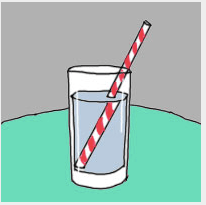
Why does the straw appear to be bent?
light is reflected
light is absorbed
light is turned
light is refracted
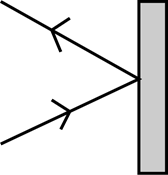
In the illustration, the light ray striking the object is-
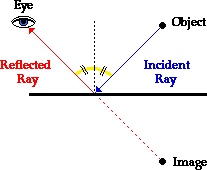
What is the angle of reflection equal to?
The angle of refraction
The angle of incidence
The angle of absorption
The angle of light

What might explain why light travels in a straight line?
If there is nothing to interfere with light waves, they should travel in a straight line.
Light waves will always travel in a straight line, even if they come into contact with another object.
Light waves don't travel in a straight line.
Light waves travel in a straight line because sound waves travel in a straight line.

What is the angle of incidence?
The angle at which light bends in water.
The angle at which light hits a surface.
The angle at which light is absorbed by an object.
The angle at which light bounces off a surface.

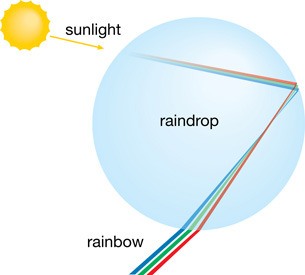
A beam of light bends when it passes from air into water, and more when it passes from water into glass. What can you conclude from this fact?
Air is denser than glass
Water is denser than glass
Glass is denser than water
Air is denser than water
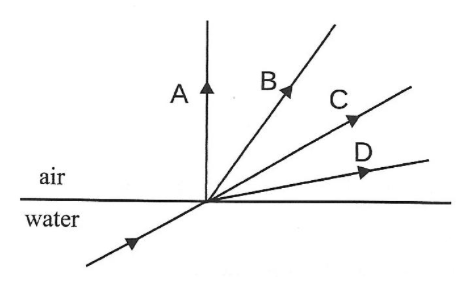
A light ray is incident from water to air. Which of the refracted rays is correct?
A
B
C
D
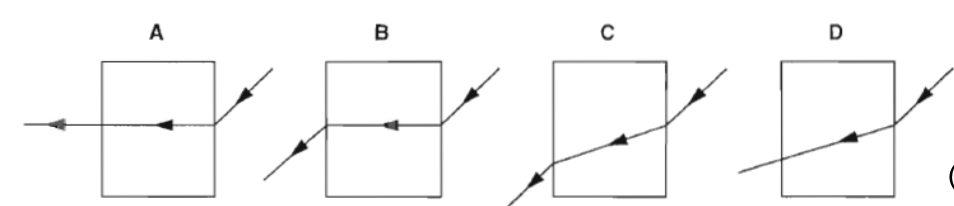
A ray of light travels from air into a glass block.
Which diagram correctly shows the path of the ray through the glass block?
A
B
C
D
Loudness of sound depends on
Frequency
Amplitude
Wave length
Velocity
Pitch of a sound depends on
Amplitude
Frequency
Wave length
Velocity
Sound travels in
Air
Water
Gas
All the above
Sound is produced by
Rotation
Vibration
Movement
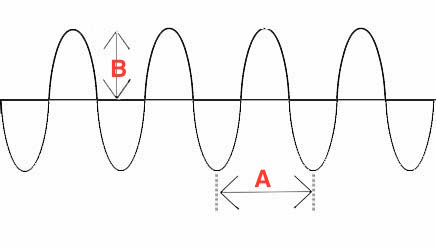
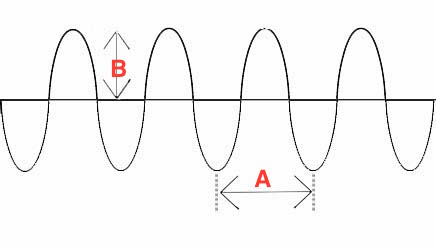
What property of this wave is represented by the letter "A"
amplitude
crest
trough
wavelength

What object would best complete this circuit?
a paper clip
a pen
a battery
piece of plastic
Describe a series circuit.
a circuit that has multiple branches
a circuit that has one path
a circuit that dead ends after a light bulb
Using the diagram provided, identify the wire.
Using the diagram provided, identify the resistor.
Using the diagram provided, identify the battery.
Using the diagram provided, identify the switch.

In a circuit diagram, what does this symbol represent?
battery
filament
bulb
wire
Making wires thinner, longer, or hotter (a) the resistance
Current is usually the flow of (a)
acid + base -->
salt + water
salt + oxygen
salt + carbon dioxide
When an acid and a base react, a ______________ reaction takes place.
Displacement
Oxidation
Neutralisation
Transamination

