wayground logo

Free Printable Worksheets

Font size

S
M
L
XL
Worksheets

Body Systems What we have leazzy so feazzy

Total questions: 83

Worksheet time: 1hrs 11mins

Name
Class
Date
1.

Melanin absorbs ultraviolet radiation in sunlight, preventing it from causing mutations in the DNA of skin cells and other damaging effects.

a)

True

b)

False

2.

the outer layer of the skin is called

a)

dermis

b)

subcutaneous layer

c)

epidermis

d)

organ

3.

A brownish black pigment is called pheomelanin

a)

true

b)

false

4.

Nails are protective coverings on the ends of the fingers and toes

a)

true

b)

false

5.

What does not make up the integumentary system ?

a)

skin

b)

nails

c)

glands

d)

bones

6.

Inflammation is s normal response to injury or stress

a)

false

b)

true

7.

Keratin is...

a)

a vitamin growing out of your skull

b)

a mineral found in the hair skin and nails

c)

a protein found in the skin, hair and nails.

8.

A pigment that protects your skin and gives it color; found in the epidermis of your skin.

a)

Sebaceous Gland

b)

Melanin

c)

Follicle

9.

These are the roles of the integumentary system select all that are correct.

a)

Protection

b)

Sensory Response

c)

Production of Vitamin C

d)

Waste elimination

10.

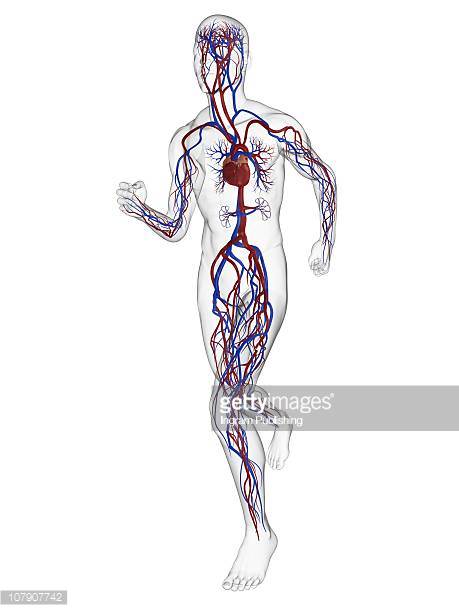
What is the main organ of the circulatory system?

a)

small intestine

b)

bone

c)

lungs

d)

heart

11.

Arteries carry oxygen rich blood away from the heart.

a)

True

b)

False

12.

Veins carry oxygen poor blood back to the heart.

a)

False

b)

True

13.

The job of the heart is to . . .

a)

pump blood around the body.

b)

send food to the small intestines.

c)

break down food.

d)

give energy to the body.

14.

The heart is about the size and shape of your . . .

a)

head

b)

fist

c)

hand

d)

foot

15.

How does the heart work?

a)

It pumps blood first to the lungs, back to the heart and then around the rest of the body.

b)

It pumps blood first to the rest of the body, back to the lungs and then to the heart.

c)

It pumps blood around the rest of the body, back to the heart and then to the lungs,

16.
______________ are the smallest blood vessels.
a)
Arteries
b)
Veins
c)
Capillaries
17.
______________ are the second largest blood vessel. 
a)
Arteries
b)
Veins
c)
Capillaries
18.
The circulatory system works with the ___________ system to provide our body with oxygen.
a)
respiratory
b)
digestive
c)
muscular
d)
skeletal
19.
The circulatory system works with the __________ system to obtain energy from nutrients that we eat. 
a)
respiratory 
b)
digestive
c)
skeletal
d)
nervous
20.
The heart has ___ chambers.
a)
1
b)
2
c)
3
d)
4
21.
True or False: There are four chambers in the heart.
a)
True
b)
False
22.
What does Deoxygenated mean?
a)
Oxygen-rich
b)
Blood flow
c)
Oxygen-poor
d)
Water Flow
23.
Which is the correct definition of the Circulatory system?
a)
The system fights disease so the body stays healthy.
b)
The system that circulates blood and oxygen through the body, consisting of the heart,blood vessels,and blood.
c)
Breaks down food into smaller pieces and absorbs those nutrients into the body.
d)
Provides shape and structure for the body.
24.
Inhale!!!!
Your lungs are ___________  air
a)
taking in
b)
letting out
25.
EXHALE!!!
My lungs are __________________ air. 
a)
taking in
b)
letting out
26.
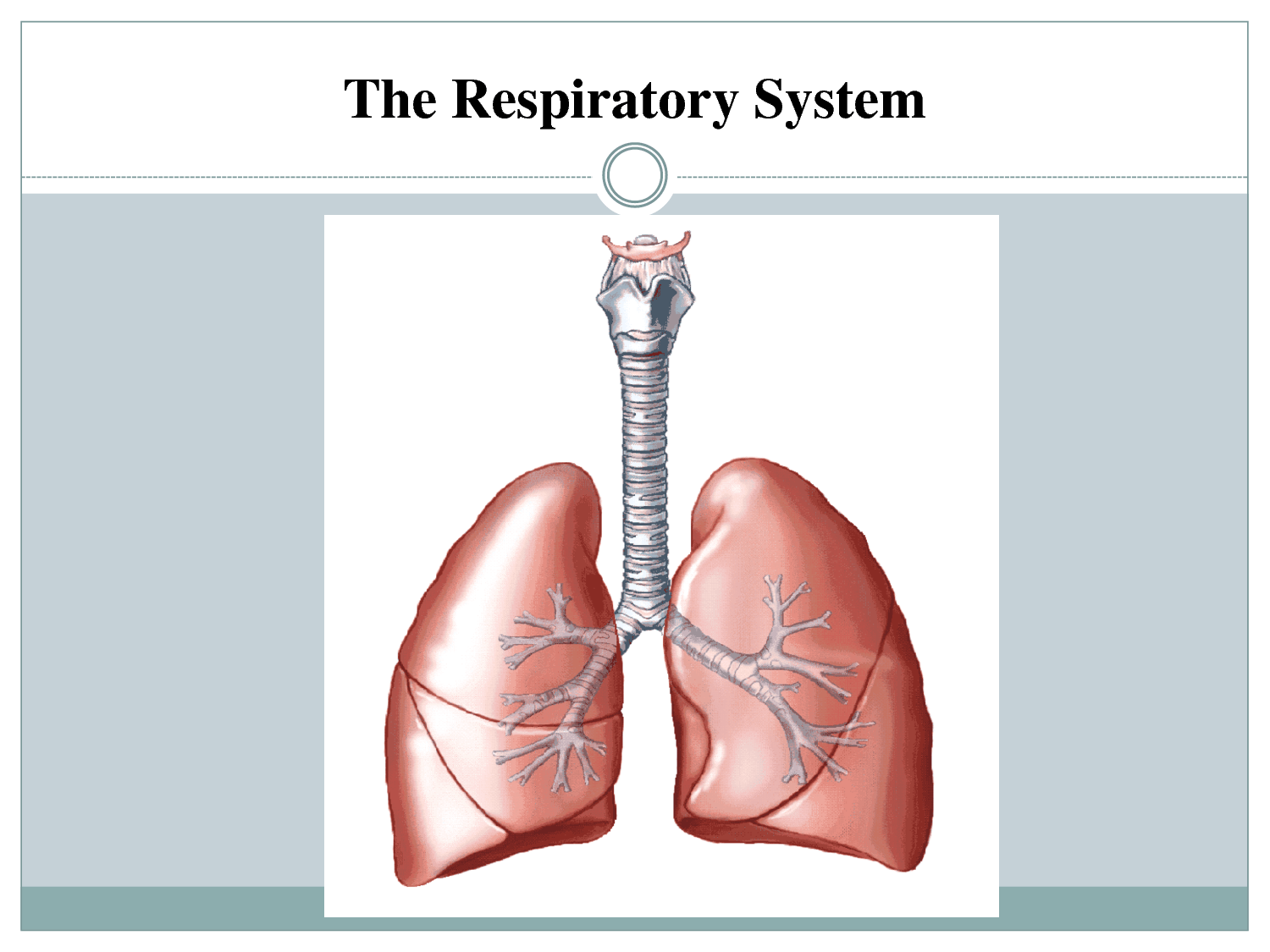
What is the main function of the respiratory system?
a)
to provide oxygen and remove carbon dioxide from the body
b)
to bring oxygen to the body
c)
to break down food and absorb nutrients
d)
to remove oxygen from the body and deliver carbon dioxide
27.
What are the main organs of gas exchange in the respiratory system?
a)
diapragm
b)
lungs
c)
trachea
d)
bronchi
28.
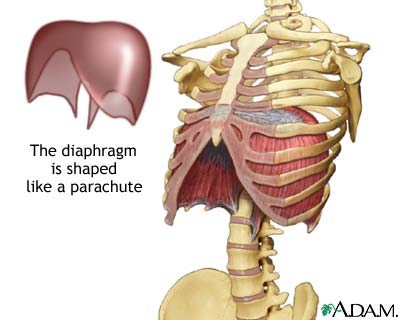
What is function of the dome-shaped diaphragm?
a)
This is where gas exchange happens.
b)
Air passes through the diaphragm on the way to the lungs.
c)
It attaches to the lungs to help in breathing.
d)
It is under the lungs and keeps them from falling down to your stomach.
29.
When you breathe, your lungs take in ___ and remove ___. 
a)
air/oxygen
b)
oxygen/carbon dioxide 
c)
carbon dioxide/waste 
d)
waste/air 
30.
What is the function of the bronchi?
a)
Transport air from nose to lungs
b)
Transport air from trachea to lungs
c)
Transport air from lungs to alveoli
d)
Transport air from alveoli to blood
31.

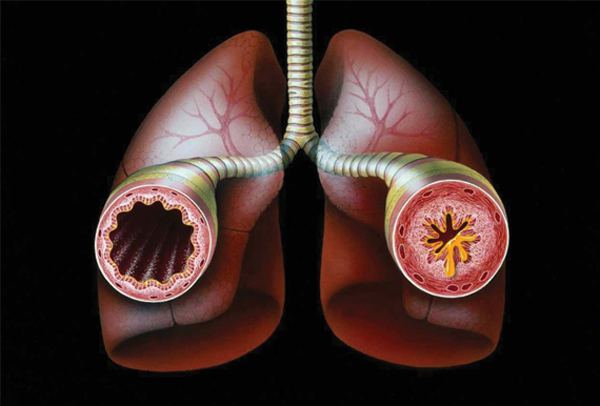
A disorder of the lungs called ____ causes the bronchi to become restricted (get smaller) so air can't get to the lungs.

a)

asthma

b)

cold

c)

influenza

d)

bronchitis

32.
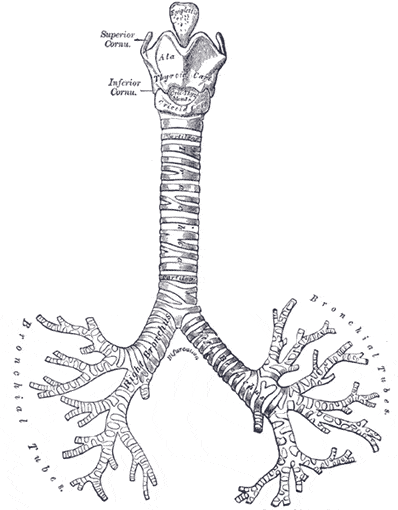
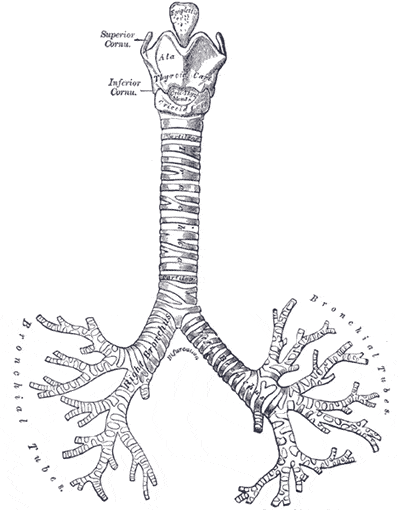
The two main branches from the trachea (one to each lung)
a)
bronchi
b)
alveoli
c)
capillaries
d)
bronchioles
33.
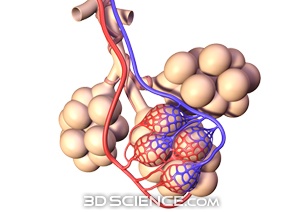
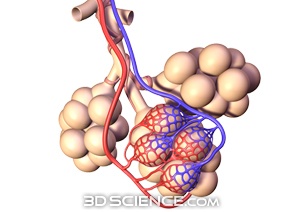
The air sacs that are covered with capillaries where gas exchange takes place
a)
bronchi
b)
lungs
c)
oxygen
d)
alveoli
34.
What is tube that is also known as your wind pipe?
a)
esophogus
b)
bronchi
c)
trachea
d)
alveoli
35.
Flap of skin that covers the opening to the windpipe during swallowing
a)
Stomach
b)
Trachea
c)
Pancreas
d)
Epiglottis
36.
The Pharynx is the muscle that moves the lungs
a)
True
b)
False
37.
The chewing and grinding of food into smaller pieces is an example of...
a)
Mechanical Digestion
b)
Chemical Digestion
38.
What is one secondary (helper) organ of the digestive system?
a)
Small Intestine
b)
Esophagus
c)
Gallbladder
d)
Stomach
39.
Bile is made by which digestive organ?
a)
Gallbladder
b)
Stomach
c)
Rectum
d)
Liver
40.
Nutrients from digested food are absorbed in which digestive organ?
a)
Small Intestine
b)
Stomach
c)
Large Intestine
d)
Gallbladder
41.
Which of the following is NOT part of the digestive tract?  (Hint:  Identify the secondary organ.)
a)
Mouth
b)
Esophagus
c)
Small Intestine
d)
Liver
42.
Which organ pushes food down to the stomach?
a)
Mouth
b)
Esophagus
c)
Rectum
d)
Large intestine
43.
Which body system gets ride of solid waste?
a)
Excretory (Urinary)
b)
Digestive
c)
Circulatory
d)
Respiratory
44.
As waste moves through the digestive system, the ______ absorbs water before storing waste in the rectum.
a)
Small intestine
b)
Stomach
c)
Esophagus
d)
Large intestine
45.
A short tube at the end of the large intestine that stores solid waste is the...
a)
Anus
b)
Rectum
46.
Which is NOT a function of the Digestive System?
a)
To rid the body of solid waste
b)
Absorb nutrients for energy & growth
c)
Break down nutrients from food
d)
Pump blood around the body
47.
The opening at the end of the digestive system where solid waste comes out is the...
a)
rectum
b)
anus
c)
mouth
d)
large intestine
48.
Gastric juices in the stomach digest food into a thick liquid.  This is...
a)
Mechanical digestion
b)
Chemical digestion
49.
Enzymes (chemicals) in your saliva help break down food while chewing.  This is...
a)
Mechanical digestion
b)
Chemical digestion
50.
Which excretory organ filters the blood to remove excess water, urea, and cell wastes?
a)
Kidney
b)
Bladder
c)
Urethra
d)
Ureters
51.
A short tube where urine is released from the body is the _______.
a)
Ureter
b)
Kidney
c)
Bladder
d)
Urethra
52.
The ____ is a sac-like muscular organ that stores urine until it is ready to be released from the body
a)
Stomach
b)
Bladder
c)
Urethra
d)
Gallbladder
53.
Which organ system removes cellular wastes as the result of cellular respiration?
a)
nervous
b)
digestive
c)
excretory
d)
circulatory
54.
What is the function of the excretory system?
a)
It's responsible for the elimination of waste by homeostasis. 
b)
Makes protein
c)
Transport of nutients, oxygen, and hormones to cells throughout the body and removal of metabolic wastes 
d)
Movement
55.
Which of the following is the fluid released by the kidneys once the wastes are removed from the water and blood in the body?
a)
bile
b)

urea

c)
sweat
d)
urine
56.
All people with diabetes are overweight.
a)
False
b)
True
57.
Insulin is something that you get
a)
from a pill that cures diabetes.
b)
as a hormone made by the beta cells in your pancreas
c)
from a pill that cures diabetes
58.
Insulin
a)
lowers your blood sugar levels
b)
blocks the sugar in your bloodstream from doing what it is supposed to do
c)
gives you diabetes
59.
One way to try to manage your diabetes is to
a)
eat only meat
b)
eat as many carbohydrates in your meals as possible
c)
check your blood sugar levels frequently throughout the day
60.
The most common types of diabetes are Type 1 and Type 2 diabetes.
a)
True
b)
False
61.
In Type 1 diabetes, the body makes little or no 
a)
insulin
b)
carbohydrates
c)
glucose
62.
The most common type of diabetes is
a)
Type 1 diabetes
b)
Juvenile diabetes
c)
Type 2 diabetes
63.
Common signs/symptoms of diabetes are
a)
blurry vision
b)
being thirsty more often than usual and urinating more often
c)
unusual weight loss
d)
all of the above
64.
Symptoms of Type 1 often come on suddenly where as those of Type 2 diabetes happen over a period of time and are often hard to detect.
a)
True
b)
False
65.
Insulin is a hormone that is made in the pancreas of a healthy person without diabetes.
a)
True
b)
False
66.
regulates blood-sugar levels.
a)
Endocrine System
b)
Pancreas
c)
Flight or Fight Response
d)
Glands
67.
A tissue or group of tissues that make and releases hormones. 
a)
Endocrine System
b)
Pancreas
c)
Flight or Fight Response
d)
Glands
68.
Which of the following glands produces estrogen?
a)
Pineal
b)
Pituitary
c)
Ovary
d)
Adrenal
69.
Growth Hormone is released from 
a)
pituitary gland
b)
thymus 
70.
This gland/organ produces ___ when your blood sugar level is high.
a)
GH
b)
ADH
c)
Glucagon
d)
Insulin
71.
Hormone that develops male sex characteristics
a)
Follicle Stimulating Hormone
b)
Testosterone
c)
Estrogen
d)
Glucagon
72.

The Endocrine system is composed of what?

a)

a group of organs and glands that produce hormones.

b)

hormones

c)

organs

d)

glands

73.

Type 1 and Type 2 diabetes are the same?

a)

True

b)

False

74.

A group of cells that gives off or secretes chemicals?

a)

Vein

b)

Gland

c)

Artery

d)

All the above

75.
What are the 3 types of muscle tissue?
a)
Thigh, Calf, & Shoulder
b)
Traps, Forearm, & Abs
c)
Hamstring, Biceps, & Triceps
d)
Smooth Muscle, Cardiac Muscle, & Skeletal Muscle
76.
Which muscle type is found in your stomach, bladder, and intestines?
a)
Skeletal
b)
Smooth
c)
Cardiac
d)
Straight
77.
Which type of muscle is found in your heart?
a)
Skeletal
b)
Smooth
c)
Cardiac
d)
Straight
78.
Which muscles are involuntary?
a)
skeletal
b)
cardiac
c)
smooth
d)
smooth and cardiac
79.
Which types of muscle tissue are voluntary?
a)
Cardiac
b)
Skeletal
c)
Smooth
d)
Cardiac and Smooth
80.
Skeletal muscles are attached to the _________.
a)
Stomach
b)
Lungs
c)
Bones
d)
Involuntary Muscles
81.
Cardiac muscles are ONLY located in the heart
a)
TRUE
b)
FALSE
82.
What type of muscle is found in the bladder?
a)
cardiac
b)
skeletal
c)
smooth
d)
involuntary
83.
What is an example of an involuntary muscle? 
a)
Heart
b)
Arms 
c)
Legs
d)
Shoulders