
 Worksheets
C2: Chapter 7 Question Bank
Total questions: 80
Worksheet time: 7hrs 40mins


Radio Waves are an example of _________ waves.
mechanical
electromagnetic
light
_____ waves NEED a medium to travel.
Seismic
Light
Mechanical
The distance in between two waves.
wave speed
frequency
wavelength
Frequency is always measured in _________
kilometers
Hertz
centimeters
the number of waves that pass a certain point.
wave speed
frequency
when a wave hits a barrier and bounces
diffraction
reflection
You're in your room blasting music with the door shut, your mom opens your door. Now your music is heard throughout your home. This is an example of _______
interference
diffraction
reflection
When two waves overlap each other, this behavior is known as _______.
interference
refraction
frequency

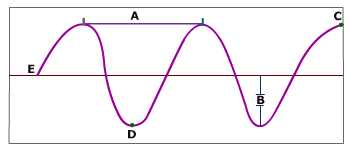
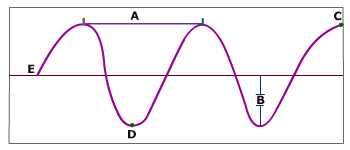
Look at this wave. "A" is which part of a wave?
Crest/Peak
Wave Speed
Resting Point

This is a high frequency wave. Which part of the wave is "B"
crest/peak
wavelength
trough

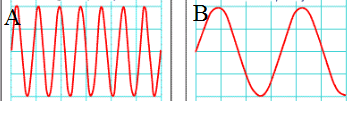
Which wave has the longest wave length?
top wave
bottom wave

Does this wave have a high frequency or low frequency?
High
Low

What is the letter d showing?
crest
trough
wavelength
amplitude

What the letter b showing?
crest
trough
wavelength
amplitude

What is the letter a showing?
crest
trough
wavelength
amplitude
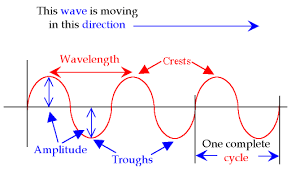
What is another name for wave height?
Frequency
Amplitude
Wavelength
Origin
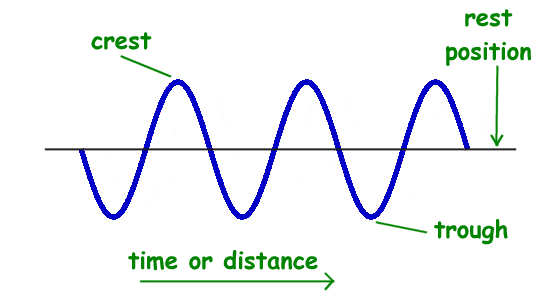
What is measured from crest to crest or trough to trough?
mediums
resting position
wavelength
origin
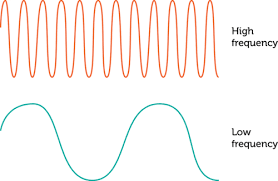
If a wave has a greater frequency, what happens to number of waves per second?
increases
decreases
stays the same
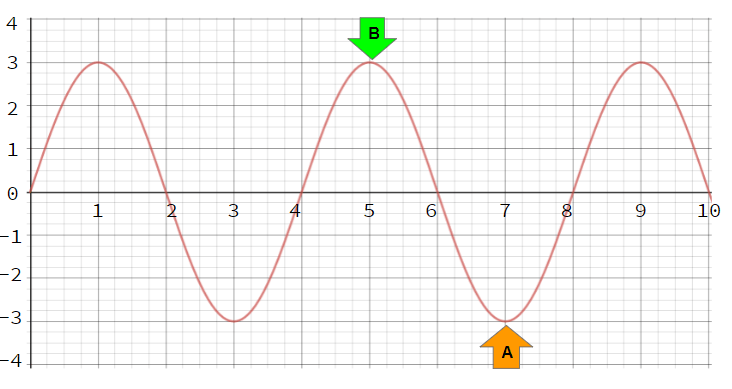
What is the amplitude of this wave?
2
3
6
10
What is the wavelength of this wave?
1
2
3
4
What property does the green arrow (B) represent?
Crest
Trough
Wavelength
This sound has high pitch, which means it has a higher frequency. This means when you hear the sound...
More waves hit your ears per second
Bigger waves hit your ears
Less waves hit your ears per second
Longer waves hit your ears
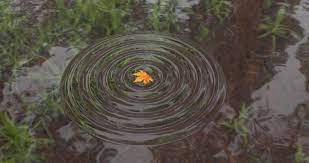
All waves carry energy from one place to another, but some waves carry more energy than others. A leaf falling on water produces waves so small they are hard to see. An earthquake under the ocean can produce huge waves that cause great destruction.
What affects the energy of a wave? Select the 3 that apply.
The energy in a wave is determined by amplitude, which is the distance from the rest position of a wave to the top or bottom.
Large amplitude waves contain more energy.
The energy in a wave is determined by frequency, which is the number of waves that pass by each second.
The medium (material) moving along with the wave.
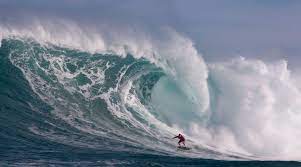
A disturbance that transfers energy from place to place through matter or space
wave
position
time
protein
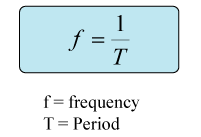
Frequency and period are closely related. Frequency is the inverse of period.
suppose the time from one crest to another (one crest to another is also known as "the period") is 5 seconds; what is the frequency?
Select the 2 that apply.
.2
1/5
.5
1/2
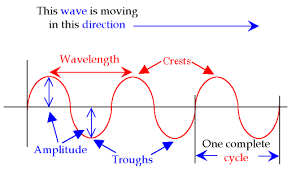
One hertz is equal to:
1 cycle per second
1 amplitude
1 frequency
all the cycles in the wavelength
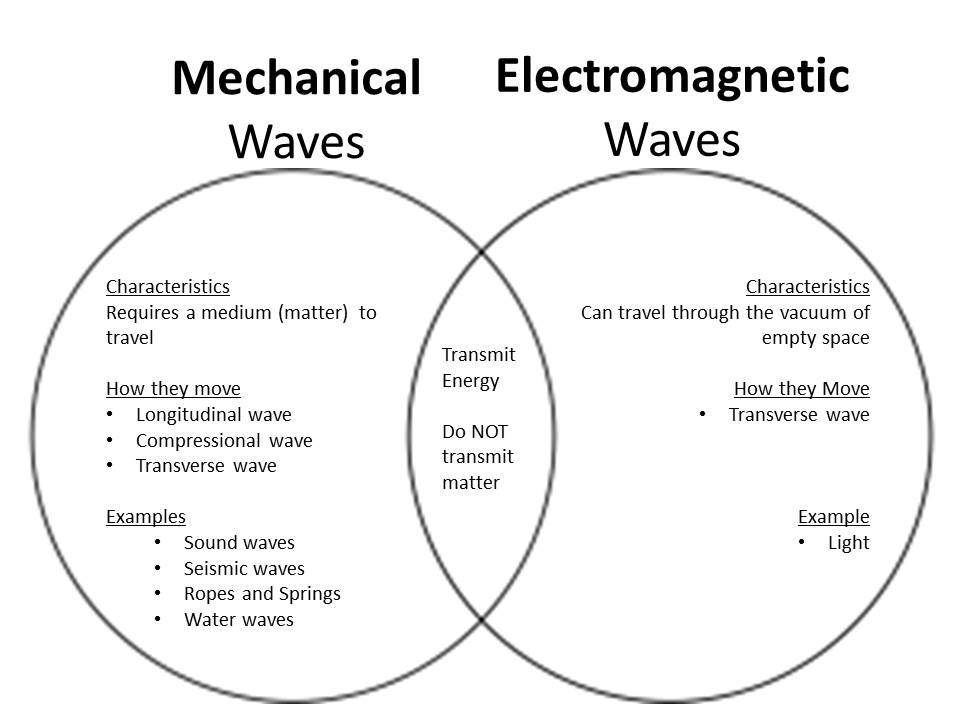
The particles in cold air have less kinetic energy than the particles in warm air. this means that they collide less often and take longer to transmit a sound wave pulse. What is this an explanation of:
the speed of mechanical energy
the speed of sound
the speed of electromagnetic energy
the speed within a vacuum
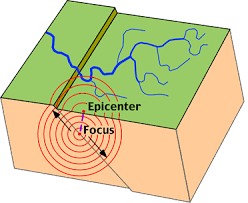
Each wavefront expands in a sphere, spreading the energy across a larger area. This means that the energy per unit area of the wave decreases as it moves farther form its source, causing the loudness of the sound wave to decrease. This is an example of:
energy of the sound wave changing as it moves farther away from the source.
energy of the sound wave remaining constant as it moves farther away from the source.
energy of the sound wave increases as it moves farther away from the source.
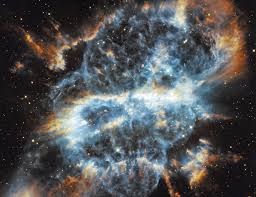
How are Electromagnetic waves different from Mechanical waves?
EM waves have very short wavelengths
EM waves transmit energy instead of matter
EM waves can travel through the vacuum of space (without particles)
EM waves can change direction by reflection
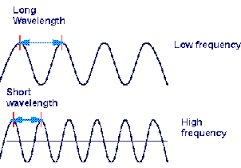
Wavelength and Frequency are related in that...
they are always the same
when one increases, the other decreases (inversely proportional)
there is no correlation
they both vary in an irregular pattern


What happens when waves slow down and change direction?
refraction
diffraction
absorption
What is it called when two waves combine to form a new wave?
reflection
diffraction
interference
What happens when the crests of two waves overlap to form a larger wave?
diffraction interference
destructive interference
constructive interference
What happens when the crest of one wave overlaps the trough of a different wave?
diffraction interference
destructive interference
constructive interference

refraction
diffraction
angle of reflection
angle of incidence

refraction
diffraction
angle of reflection
angle of incidence
Light spreads out after it travels through a keyhole.
refraction
diffraction
angle of reflection
angle of incidence
A straw in a glass of water looks bent.
refraction
diffraction
angle of reflection
angle of incidence
The measurement for Frequency is...
Cycle
Meters
Hertz
Seconds
What is the "average" in this number set? 2+4+6+8=
5
4
10
20

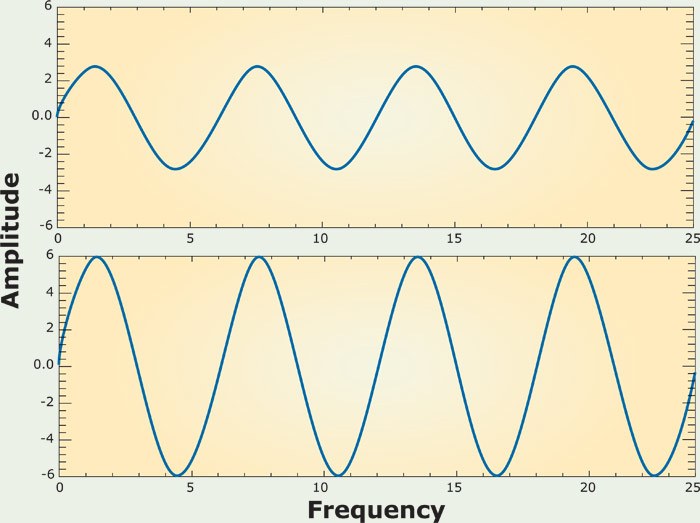
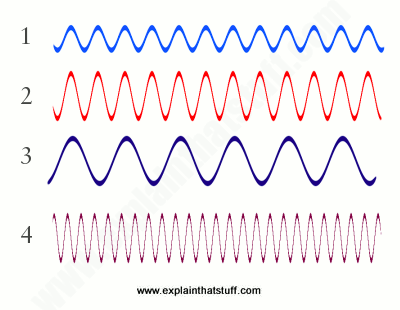

What is a wave ?
a disturbance that transfers matter
a disturbance that transfers energy
a disturbance that transfers both matter and energy

