wayground logo

Free Printable Worksheets

Font size

S
M
L
XL
Worksheets

7th grade Spring Final Review

Total questions: 85

Worksheet time: 1hrs 19mins

Name
Class
Date
1.

Which cell structure acts like the brain of the cell?

a)

Cell Membrane

b)

Cell Wall

c)

Nucleus

d)

Mitochondria

2.

Which cell organelle helps break down food to release energy?

a)

Mitochondria

b)

Nucleus

c)

Vacuole

d)

Endoplasmic Reticulum

3.

The jelly like substance in the cell is called --

a)

cytoplasm

b)

lysosomes

c)

chromosomes

d)

cytokinesis

4.

What are organelles?

a)

Parts that come together to make an organ system.

b)

A group of similar cells that perform similar functions.

c)

A group of organs that perform similar functions

d)

Tiny structures within a cell that allow the cell to live, grow, and reproduce.

5.

What is the function of a chloroplast?

a)

Control center of the cell

b)

Makes food (sugar) from sunlight

c)

Protects the cell

d)

Makes ribosomes

6.

The rigid outer boundary of plant cells, giving them their boxy appearance is..

a)

cell membrane

b)

cell wall

c)

mitochondria

7.
Every living organism is made up of one or more cells
a)
True
b)
False
8.
A cell is...
a)
the basic unit of structure and function in living organism
b)
an organism
c)
a basic part of everything that we see
d)
found only in animals, not plants
9.
Which of the following are NOT found in animal cells
a)
chloroplasts and cytoplasm
b)
chloroplasts and cell wall
c)
cell wall and cell membrane
d)
mitochondria and nucleus
10.
What do vacuoles do? 
a)
They actually do not have an important role
b)
They protect the cell
c)
They are the brain of the cell
d)
storage area for cells; water storage in plants 
11.
All cells come from___________ cells.
a)
pregnant
b)
pre-existing
c)
paternal
d)
pin size
12.
Label A
a)
Cell wall
b)
cytoplasm
c)
nucleus
d)
cell membrane
13.
Directs all cell activities through the DNA located there.
a)
Lysosomes
b)
Nucleus
c)
ribosomes
d)
Mitochondria
14.
What is the name of the genetic material that is inside the nucleus?
a)
ER
b)
ATP
c)
YOLO
d)
DNA
15.
What is a phenotype
a)
The genetic make up (code)
b)
The physical trait
16.
having two of the same genes for the trait (sometimes called purebred).
a)
homozygous
b)
hetrozygous
c)
protein
d)
chromosome
17.
G = green, g = yellow
The genotype for a yellow plant is...
a)
GG
b)
Gg
c)
gg
d)
all of the choices result in yellow
18.
having two of the same genes for the trait (sometimes called purebred).
a)
homozygous
b)
hetrozygous
c)
protein
d)
chromosome
19.
What does heterozygous mean?
a)
An organism that has the same genes for a trait (TT or tt)
b)
An organism that has different genes for a trait (Tt)
c)
When neither gene is fully dominant; offspring is a mixture of both
d)
the different forms of a trait (hair color--> brown, blonde, red
20.
Which of the following is homozygous dominant?
a)
Yy
b)
Y
c)
yy
d)
YY
21.
Who is considered the "father" of modern genetics?
a)
Einstein
b)
Mendel
c)
Disney
d)
Trump
22.
What type of "square" helps us solve genetic problems?
a)
carpenter square
b)
Mendel square
c)
Punnett square
d)
genetic square
23.
Females-XX; MalesXY.  A couple has 4 girls.  What is the chance the next child will be a boy?
a)
75%
b)
100%
c)
25%
d)
50%
24.
A physical characteristic that can be passed from parent to offspring.
a)
behavior
b)
trait
c)
strong muscles
d)
ability to fly a plane.
25.
Which best explains why children resemble their parents?
a)
they eat same foods
b)
they have similar DNA
c)
they speak the same language
d)
they have the same interests
26.
Which deals with the transmission of inherited traits from one generation to another?
a)
anatomy
b)
ecology
c)
genetics
d)
forensics
27.
Which of the following alleles is homozygous (purebred) recessive?
a)
Tt
b)
tt
c)
TT
d)
t
28.
Aa is
a)
homozygous (purebred)
b)
heterozygous (hybrid)
29.
Who is considered the "father of genetics"?
a)
Gregor Mendel
b)
Reginald Punnett
c)
James Watson
d)
Justin Bieber
30.
This is a example of ........
a)
cell
b)
organ system
c)
organ
d)
tissue
31.
Which of the following is directly involved in the transportation of materials inside/within the cell?
a)
Endoplasmic Reticulum
b)
Vacuole
c)
Lysosome
d)
Mitochondria
32.
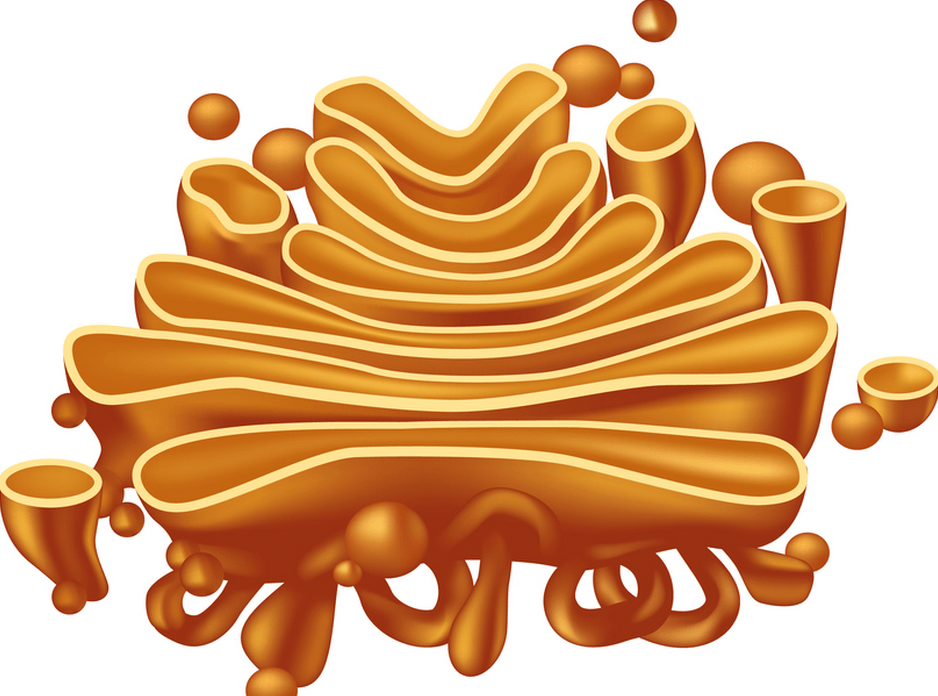
I am a protein packaging and shipping machine! Who am I?
a)
vacuole
b)
ribosome
c)
mitochondrion
d)
golgi apparatus
33.
I am the outer most layer of an animal cell. What am I?
a)
cell wall
b)
nucleus
c)
cell membrane 
d)
cell skin
34.
A rigid layer that lies outside the cell's  membrane is...
a)
Cytoskeleton
b)
Cilia
c)
Cell Wall
d)
Flagella
35.

Which structure is B pointing to?

Hint: energy

a)

Mitochondria

b)

Chloroplasts

c)

Nucleus

d)

Cell membrane

36.

Which structure is letter A pointing to?

a)

Nucleus

b)

Vacuole

c)

Mitochondria

d)

Ribosomes

37.

Which set of Organs belongs to the Excretory System?

a)

Heart, blood vessels

b)

Trachea, larynx, pharynx, and lungs

c)

Kidneys, urinary bladder

d)

Brain, spinal column

38.

Which set of organs belong to the Nervous System?

a)

Heart, blood vessels

b)

Kidneys, urinary bladder

c)

Esophagus, stomach, intestines

d)

Brain, spinal column

39.

Which organs belong to the Respiratory System?

a)

Bones, cartilage

b)

Cardiac, smooth, skeletal

c)

Trachea, larynx, pharynx, lungs

d)

Kidneys, urinary bladder

40.

What is the purpose of the Circulatory System?

a)

Transports oxygen and nutrients

b)

Removes extra water and wastes

c)

Digests foods and absorbs nutrients

d)

Collects, transfers and processes information

41.

Blood vessels that carry blood away from the heart

a)

capillaries

b)

arteries

c)

veins

42.

Which body system does this represent?

a)

Nervous

b)

Integumentary

c)

Circulatory

d)

Digestive

43.
What body system protects your organs?
a)
Nervous System
b)
Cardiovascular System
c)
Respiratory System
d)
Skeletal System
44.
What system moves the body?
a)
Endocrine System
b)
Muscular System
c)
Cardiovascular System
d)
Skeletal System
45.
What system sends and receives messages?
a)
Immune System
b)
Urinary System
c)
Digestive System
d)
Nervous System
46.
What body system breaks down food for energy?
a)
Urinary System
b)
Digestive System
c)
Lymphatic System
d)
Respiratory
Respiratory System
47.
This system gets rid of waste.  What is it?
a)
Muscular System
b)
Urinary System
c)
Lymphatic System
d)
Endocrine System
48.
What system protects the body from disease?
a)
Lymphatic System
b)
Endocrine System
c)
Immune System
d)
Urinary System
49.
This system regulates body functions.
a)
Endocrine  System
b)
Muscular System
c)
Cardiovascular System
d)
Nervous System
50.
What body system makes your body move? 
a)
Circulatory
b)
Respiratory
c)
Skeletal
d)
Muscular
51.
The skin is the major organ in which system?
a)
Integumentary
b)
Muscular
c)
Endocrine
d)
Immune
52.

Which set of Organs belongs to the Excretory System?

a)

Heart, blood vessels

b)

Trachea, larynx, pharynx, and lungs

c)

Kidneys, urinary bladder

d)

Brain, spinal column

53.

Which set of organs belong to the Nervous System?

a)

Heart, blood vessels

b)

Kidneys, urinary bladder

c)

Esophagus, stomach, intestines

d)

Brain, spinal column

54.
Which system of the body uses veins, blood, and arteries?
a)
The nervous system
b)
The circulatory system
c)
The respiratory system
d)
The blood system
55.
What two systems work together to get rid of infection?
a)
Digestive and immune
b)
Respiratory and circulatory
c)
Circulatory and immune
d)
Immune and endocrine
56.
Where does mechanical digestion begin?
a)
stomach
b)
esophagus
c)
pancreas
d)
mouth
57.
The circulatory system works with the ___________ system to provide our body with oxygen.
a)
respiratory
b)
digestive
c)
muscular
d)
skeletal
58.
Skeletal muscles are attached to the _________.
a)
Stomach
b)
Lungs
c)
Bones
d)
Involuntary Muscles
59.
Which is NOT a function of the skeletal system?
a)
producing blood cells
b)
protecting internal organs
c)
providing shape and support
d)
getting oxygen into your body
60.

Which system do the kidneys belong in?

a)

Endocrine

b)

Skeletal

c)

Repiratory

d)

Excretory

61.

Which represents the levels of organization from LEAST to MOST complex?

a)

Cell, organ, tissue, system

b)

System, organ, tissue, cell

c)

Cell, tissue, organ, system

62.

What is the function of the DNA?

a)

Carry genetic information

b)

Provide energy

c)

Store chemicals

d)

Regulate the movement of nutrients

63.

Budding is an example of

a)

Sexual reproduction

b)

Asexual reproduction

64.

When an offspring is genetically identical to the parent it is

a)

Sexual reproduction

b)

Asexual reproduction

65.

Which plant would be stiff and rigid?

a)

A

b)

B

66.

Which plant would be stiff and rigid?

a)

The plant with the full vacuole in the cell

b)

The plant with the empty vacuole in the cell

c)

All plants the water in the vacuole does not matter

67.
A plant growing in response to the sunlight. 
a)
Geotropism 
b)
Phototropism
c)
Thigmotropism
d)
Hydrotropism
68.
Which type of tropism?
a)
hydrotropism
b)
thigmotropism
c)
phototropism
d)
geotropism
69.
What happens when the vacuole is empty or skinny?
a)
Mild Turgor pressure
b)
Low turgor pressure
c)
High turgor pressure
d)
Regular turgor pressure
70.
How does turgor pressure relate to a plant wilting?
a)
A wilting plant = high turgor pressure
b)
A wilting plant = high photosynthesis
c)
A wilting plant = low turgor pressure
d)
They are not related
71.

Our planet is the only one, in the solar system, which can sustain life. This is posible thanks to three caracteristics.

a)

The temperature of the Earth, liquid water and the atmosphere.

b)

The temperature of the Earth, frozen water and the atmosphere.

c)

The temperature of the Earth, liquid water and the lithosphere.

d)

The trumpet of the Earth, liquid water and the atmosphere.

72.

Which of the following characteristics of the Earth that sustain life makes it possible for water to exist in its liquid form?

a)

Atmosphere

b)

Magnetic field

c)

Proper distance

d)

Oxygen

73.

Which of the following characteristics of the Earth that supports life protects the earth from harmful solar wind and cosmic rays?

a)

Atmosphere

b)

Magnetic field

c)

Proper distance

d)

Oxygen

74.
Layer of ozone in upper atmosphere of Earth is important to life because it shields Earth from
a)
changes in temperature.
b)
ultraviolet radiation.
c)
solar winds.
d)
impacts from meteors.
75.
Earth is 150 mil. km from the Sun. If it was 200 mil. km away, it wouldn't support life because
a)
there would be less exposure to solar wind.
b)
the oxygen would leave the atmosphere.
c)
the temperature would be too cold.
d)
the surface water would evaporate
76.

How does the DNA of the offspring formed from asexual reproduction compare to the parent?

a)

none of the DNA is transferred to the offspring

b)

half of the DNA is transferred to the offspring

c)

the DNA of the offspring is identical to the DNA of the parent

d)

none of these are correct

77.
How many parent(s)are needed for asexual?
a)
4
b)
1
c)
9
d)
100
78.
Which process is considered to be faster? 
a)
Asexual
b)
Sexual 
79.
The passing of physical characteristics from parent to offspring 
a)
Heredity
b)
Chromosome
c)
Genes
d)
Chemistry
80.
Prokaryotes (bacteria) reproduce asexually via -
a)
spore formation
b)
bud creation
c)
vegetative propagation
d)
binary fission
81.

A mode of reproduction in which an organism arises from two organisms and inherits half of its DNA from each parent

a)

Sexual Reproduction

b)

Asexual Reproduction

c)

Cloning

d)

Fragmentation

82.
Which of the following describes the main advantages of sexual reproduction
a)
requires lots of time/energy
b)
no new gene combos can arise 
c)
diversity
d)
looks identical to the parent
83.
Which reproduction requires a mate?
a)
asexual
b)
sexual
c)
neither
84.

___________________ is a type of asexual reproduction in which a piece of a parent organism breaks off to form an new organism (ex. starfish).

a)

fission

b)

budding

c)

fragmentation

d)

fertiliztion

85.

How many parents are required for sexual reproduction?

a)

0

b)

1

c)

2

d)

3