
 Worksheets
8th Grade Science NC Check-In 1 Review
Total questions: 86
Worksheet time: 2hrs 47mins

How does intrusion X compare to the ages of the other rock layers and fossils in this geologic column?
Intrusion X is older than layers Y and Z.
Intrusion X is younger than all the layers.
Intrusion X is older than the clam and broadleaf fossils.
Intrusion X is younger than the broadleaf and fern fossils.

Which is true?
Layer W is older than intrusion X.
Intrusion X is younger than layers Z and Y.
The broadleaf fossil is older than the fern fossil.
The clam fossil is younger than the reptile bone fossil.

Which is younger than the clam fossil?
layer Z
broadleaf
intrusion X
reptile bone

Which is younger than the broadleaf fossil?
layer Z
layer Y
fern fossil
intrusion X

If the layers have been undisturbed, which best represents their arrangement from bottom to top?
W,X,Y,Z
X,Y,W,Z
Z,W,Y,X
Z,Y,X,W

Which layer contains the oldest fossils?
Layer 1
Layer 2
Layer 3
Layer 4

Which is most likely the oldest sedimentary rock layer?
Layer R
Layer S
Layer T
Layer U

Which best describes the age of the fish relative to the age of the fern and the age of the shell?
The fish is older than both the fern and the shell.
The fish is younger than both the fern and the shell.
The fish is older than the fern, but younger than the shell.
The fish is younger than the fern, but older than the shell.
What can ice cores most accurately tell you about Earth’s history for a given location?
the climate at that time
the plants that grew at that time
the animals that lived at that time
Throughout Earth’s history, igneous rocks have been most closely
associated with which landform?
mountain
plateau
volcano
Which theory does evidence found in sedimentary rocks best support?
Most organisms from Earth’s history still exist.
Organisms have not changed significantly over time.
All organisms from Earth’s history have become extinct.
Organisms have evolved from simple to complex forms.
A fault is found that cuts through lower rock layers but not those above it. What can most likely be concluded?
The fault is the same age as the layers it cuts through, and the same age as the layers above it.
The fault is younger than the layers it cuts through, and younger than the layers above it.
The fault is younger than the layers it cuts through, but older than the layers above it.
The discovery of the theory of continental drift led to the subsequent discovery of which theory?
theory of relativity
theory of superposition
theory of plate tectonics
Why are index fossils good clues for identifying when rocks were formed?
They are easy to form in rock.
They are difficult to form in rock.
They only existed during specific periods of time.
Which is the most accurate method scientists can use to estimate Earth’s age?
relativism
superposition
relative dating
radioactive dating
Which statement is true?
The oldest layers of rock and soil are closest to the surface of the earth.
The youngest layers of rock and soil are farther away from the surface of the earth.
Carbon-14 dating is an example of relative dating, and the law of superposition is an example of absolute dating.
Absolute geologic dating and relative geologic dating are two methods used by scientists to determine the age of geologic evidence.
Which best describes a fossil that helps determine the relative age of a rock layer?
trace fossil
index fossil
radioactive fossil
Based on uniformitarianism, ______________ rocks are deposited in horizontal layers.
Sedimentary
Igneous
Metamorphic
In some environments, wolves prey on deer for their source of food. If all of the wolves were taken from the environment, what would most likely happen to the deer population?
The deer population would increase and begin to compete for food.
The deer population would become larger and healthier animals.
The deer population would decrease, because there would be an increase in disease.
The deer population would change color, because they would not have to hide from wolves.
How are mutualism and parasitism different?
Both organisms benefit in mutualism, while in parasitism only one organism benefits at the other’s expense.
Both organisms benefit in parasitism, while in mutualism only one organism benefits at the other’s expense.
Both organisms benefit in mutualism, while in parasitism one organism benefits, and the other is neither harmed nor benefits.
Both organisms benefit in parasitism, while in mutualism one organism benefits, and the other is neither harmed nor benefits.
Which supports the theory that some mountains were once at the bottom of an ocean?
There are underwater mountains on the ocean floor today.
Freshwater rivers flow to the ocean.
Fossils of marine organisms are found on the tops of some mountains.
Both mountains and ocean floors have similar minerals in their rocks.
If a bat, an alligator, and a bird evolved from a common ancestor, what most likely can be concluded?
They have similar anatomical structures.
They live in the same part of the world.
They are in the same biological classification.
They are able to survive changes in their environments.
Recent changes in species can be found in the upper layers of rock. This provides a link between which two scientific ideas?
cell theory and the theory of evolution
the periodic nature of the elements and cell theory
the theory of evolution and the Law of Superposition
the Law of Superposition and the periodic nature of the elements
Which of these would most likely happen to a species that is not able to adapt to a changing environment?
The species would become extinct over time.
The species would develop mutated cells.
The species would develop resistance to disease.
The species would change the environment.
What are particles of minerals, rock fragments, shells, leaves, and the remains of once-living things?
lava
sediments
magma
Shale

non-living things
always plants
living things

What is a living thing that breaks down plant and animal material, returning the nutrients to the soil?
Producer
Primary consumer
Secondary consumer
Decomposer
What is a living thing that converts energy from the environment into sugars?
Producer
Primary consumer
Secondary consumer
Decomposer

an ecosystem consists of:
all of the biotic factors in a given area
the types of plants that inhabit a given area
abiotic factors such as the sun, salinity, temperature, and weather found in a specific area
all of the biotic factors and their interactions with the abiotic factors in a given area


In this energy pyramid, which organisms have the most energy available?
Producers
Carnivores
Herbivores
Top Predator
What does a primary consumer eat?
tertiary consumers
secondary consumers
producers
decomposers
Word that means the same thing as consumer is...
producer.
autotroph
carbohydrate
heterotroph

Which organism is a secondary consumer (3rd trophic level)?
larvae
capecod
killifish
snapper
What is an example of an ecosystem?
a deer
a group of deers, the sun, rabbits, the lake, the soil, a bird, a tree
a group of deers
a group of deers, rabbits, a bird, and a tree
Why is the ecosystem important?
It can sustain overpopulation.
It sustains the balance of life in nature.
It allows humans to exploit natural resources.
It can absorb all the toxins humans dispose of.
A fire destroys all of the trees and plants in the forest. How might this affect the birds in the area?
The birds will plant seeds and grow new trees.
The birds will have more food to eat.
The birds will plant seeds and grow new trees.
The birds will have no place to build their homes.
Pick the correct food chain order.
Producer > Primary Consumer >Tertiary Consumer
Producer > Primary Consumer > Secondary Consumer
Primary Consumer > Producer > Secondary Consumer
Secondary Consumer > Primary Consumer > Producer
Each is a limiting factor except.......?
Number of Organisms present
Amount of Food
Temperature Changes
Access to Water
This is a model of the feeding relationships in ecosystem
Energy Pyramid
Biome
Food Web
Abiotic Factor
All the energy in an ecosystem comes from _______
the sun
the producer
the minerals
the primary consumer
__________ takes place when organisms seek the same resource
limiting factor
competition
community
predation
In the relationship between a squirrel and a hawk, the squirrel is the ________?
prey
commensalism
predator
tertiary consumer
Why is the Energy pyramid in the form of a pyramid?
to account for limiting capacity
Energy transfer is not 100% efficient
populations change
Secondary Consumers eat less than Primary Consumers
The number of chipmunks increased in a year. Which is true?
the population increased
the density increased
competition increased
all the above
Food chains begin with a __________.
photosynthetic producer
dependent organism
Apex Predator
Consumer
A tick attaches itself to a dog after a run in the woods. This is an example of which symbiotic relationship.
Mutualism
Commensalism
Parasitism
Not an example of Symbiosis
A barnacle attached itself to a whale. The whale is needed harmed or benefited. This is an example of which symbiotic relationship.
Mutualism
Commensalism
Parasitism
Not an example of Symbiosis
The clown fish cleans the sea anemone and the sea anemone gives shelter to the clown fish. This is an example of ___________
Mutualism
Commensalism
Parasitism
Not an example of Symbiosis
Which one shows the flow of energy in an ecosystem.
seed>tree>bird>snake
tree>seed>snake>bird
snake>bird>seed>tree
bird>snake>tree>seed

Cuckoo/Warbler: A cuckoo lays its eggs in the nest of the warbler. The cuckoo’s eggs hatch first and the youngkick the warbler eggs out of the nest. The warbler raises the cuckoo babies and the warbler babies aren’t hatched.
Commensalistic
Mutualistic
Parasitic
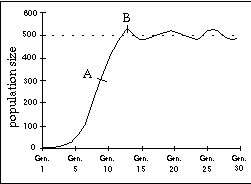

Carrying capacity is...
The maximum number of individuals that can fit into an area
Ability of an area to accommodate a growing population
The greatest # of individuals an area can support over time.
The maximum number of species that can co-exist in an area
Genetic variation can help a species survive when the environment changes. What is the best example of an organism with a genetic variation that could improve its chances to survive over time?
An ant that is resistant to pesticides
A wasp that is infected with parasites
A mouse that has learned to avoid mousetraps
A bird losing the ability to fly
What is required for natural selection to occur?
Competition for unlimited resources
Gradual warming of the Earth
Environmental disasters
Genetic variation in species

Butterflies, birds, bats and the extinct pterodactyls developed unique ways to achieve flight. How would an anatomist classify the wings of these organisms?
As homologous structures
As analogous structures
As vestigial structures
As embryonic structures

What is a vestigial structure?
An old building
A part of an organism which has lost its original function
An extra appendage
A mutated strand of DNA
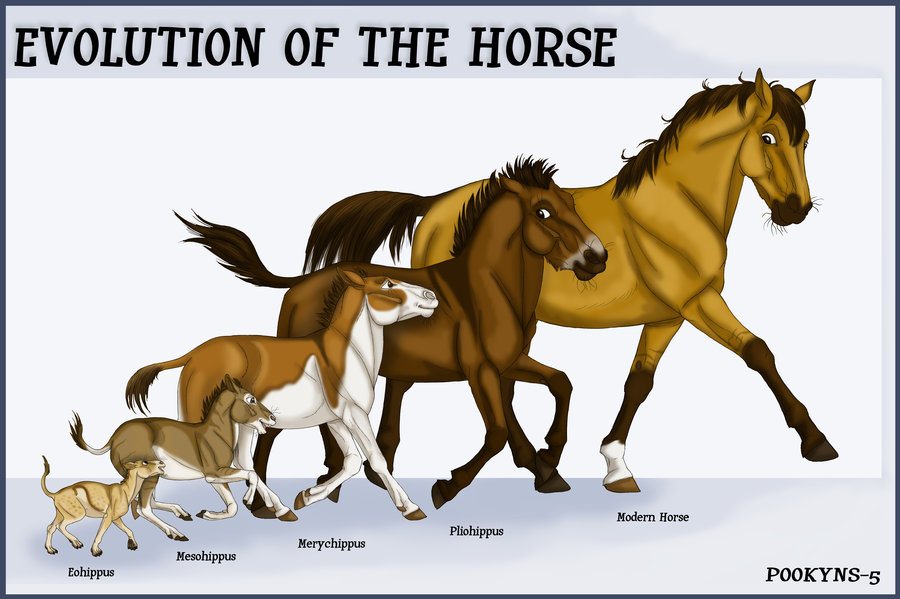
In which time period are we currently living?
Precambrian Time
Paleozoic Era
Mesozoic Era
Cenozoic Era
What are fossils that are abundant, easily recognizable, short lived, and widespread called?
Preserved fossils
Index fossils
Imprints
Radioactive dating
Dinosaurs, small mammals, and birds are found in this time period.
Precambrian
Paleozoic
Mesozoic
Cenozoic
The Law of Superposition states
Younger rocks layers are on top of older rock layers
Fossils are found in sedimentary rocks
Older rock layers are on top of younger rock layers
Absolute age dating
What does absolute age tell us about a rock layer or fossil?
The 'exact' age of a fossil determined by radiometric dating
The relative age of a fossil determined by radiometric dating
Younger rock layers sit on top of older rock layers
Older rock layers sit on top of younger rock layers
What does relative age tell us about a rock layer or fossil?
The age of one rock layer or fossil compared to another.
The relative age of a fossil determined by radiometric dating
Younger rock layers sit on top of older rock layers
Older rock layers sit on top of younger rock layers

Which fossil would make the best index fossil?
Beetle
Flower
Frog
Fish
The movement of the tectonic plates is caused by
the rotation of the Earth.
convection currents in the Asthenosphere
the gravity of the iron-nickel core.
the Moho discontinuity.
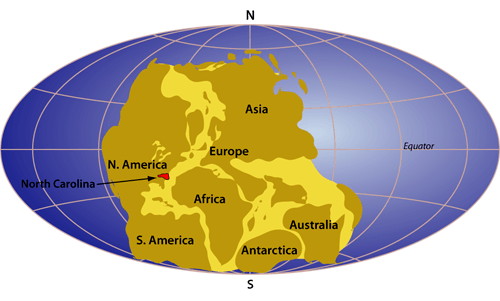
Process by which a more dense plate is forced underneath another when they collide. (Produces a trench, volcanoes, deep/thrust earthquakes, and tsunamis.)
Seafloor Spreading
Mid-Ocean Ridge
Divergence
Subduction

What type of plate boundary is this?
Transform
Convergent
Divergent

What type of plate boundary is this?
Transform
Convergent
Divergent

What type of plate boundary is this?
Transform
Convergent
Divergent
Identical rock types, identical fossils, and very similar mountain ranges are found on different continents that are separated by a wide ocean. Which of these best explains these observations?
Organisms traveled between these continents on land bridges.
The same forces erode mountains in different locations.
These continents were joined together at one time in the past.
Some rock types are very common and are found everywhere.

Where are most of the active volcanoes?
Hawaii
The United States
The Atlantic Ocean
The Ring of Fire

The theory that the continents have not always been in their present locations but have moved there over millions of years
Continental Drift Theory
Plate Tectonics
Alfred Wegener
Lystrasaurus

Galileo Galilei
Sir issac
Newton

