wayground logo

Free Printable Worksheets

Font size

S
M
L
XL
Worksheets

Biogeochemical Cycles

Total questions: 90

Worksheet time: 23hrs 30mins

Name
Class
Date
1.
What is the most abundant gas in the atmosphere?
a)
hydrogen
b)
oxygen
c)
helium
d)
nitrogen
2.
The process of plants losing water through their leaves is called ____.
a)
condensation
b)
evaporation
c)
transpiration
d)
exhaling
3.
Which is NOT a process of the water cycle?
a)
precipitation
b)
freezing
c)
transpiration
d)
evaporation
4.
The type of nitrogen that can be used by producers is called _____.
a)
free nitrogen
b)
nitrous oxide
c)
nitrogen gas
d)
nitrogen compounds
5.
Why do living things need nitrogen?
a)
To get energy
b)
To make amino acids
c)
To make proteins
d)
To make proteins AND amino acids
6.
What are the swellings found on the roots of legumes called?
a)
noodles
b)
nodularisms
c)
nodules
d)
tubers
7.
Where are denitrifying bacteria found?
a)
In the soil
b)
Root nodules
c)
In dead things
d)
In the atmosphere
8.
Where are nitrogen-fixing bacteria found?
a)
In the soil
b)
Root nodules
c)
In dead things
d)
In the atmosphere
9.
What happens during the process of nitrogen-fixation?
a)
Nitrogen compounds turn into free nitrogen
b)
Free nitrogen turns into nitrogen compounds
10.
Nitrogen that is not combined with other elements and found in the atmosphere as gas is _____.
a)
free nitrogen
b)
nitrogen compounds
c)
ammonia
d)
nitrates
11.
What happens during the process of denitrification?
a)
Nitrogen compounds turn into free nitrogen
b)
Free nitrogen turns into nitrogen compounds
12.
Which is NOT a way that nitrogen compounds are added to the soil?
a)
Decay of dead organisms
b)
Denitrification
c)
Animal waste
d)
Nitrogen-fixation
13.
What is the only process that removes carbon from the atmosphere?
a)
combustion
b)
cellular respiration
c)
photosynthesis
d)
decomposition
14.
What 2 things does a plant make during photosynthesis?
a)
oxygen, glucose
b)
glucose, carbon dioxide
c)
useable energy, glucose
d)
oxygen, carbon dioxide
15.
What 3 things are made during cellular respiration?
a)
useable energy, water, glucose
b)
glucose, water, carbon dioxide
c)
oxygen, carbon dioxide, glucose
d)
carbon dioxide, water, useable energy
16.

Which describes the relationship between plants and animals in the carbon cycle?

a)

Plants produce and release oxygen that animals need

b)

Plants produce and release carbon dioxide that animals need

c)

Animals produce and release oxygen that plants need

d)

Animals produce oxygen that plants turn into carbon dioxide
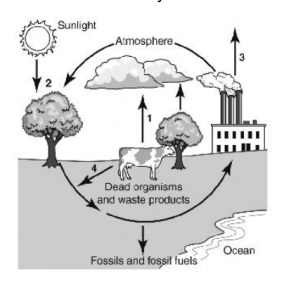
17.
What is happening at 1?
a)
respiration: releasing CO2
b)
decomposing COin the soil
c)
photosynthesis: absorbing CO2
d)
turning CO2 from the atmosphere into organic molecules
18.
Identify the cycle pictured.
a)
The Water cycle
b)
The Carbon cycle
c)
The Nitrogen cycle
d)
The Phosphorus cycle
19.

What process is part of the hydrological (water) cycle?

a)

transpiration

b)

nitrification

c)

combustion

d)

sedimentation

20.

Coal, natural gas, and oil are examples of _________

a)

the carbon cycle

b)

products of photosynthesis

c)

good fuels for barbecues

d)

fossil fuels

21.

When water is heated in the ocean by the sun and turns into water vapor

a)

Condensation

b)

Evaporation

c)

Transpiration

22.

Forms of precipitation are

a)

only sleet and snow

b)

rain, sleet, snow, and hail

c)

only dew, mists, and rain

23.

When water flows back into the ocean it is called

a)

run-off

b)

transpiration

c)

precipitation

24.

After condensation, the droplets of water in the clouds fall to Earth in different forms...

a)

precipitation

b)

condensation

c)

evaporation

25.

When drops of water fall down from the sky...

a)

evaporation

b)

condensation

c)

precipitation

26.

Precipitation occurs because

a)

the droplets evaporate in the air

b)

the droplets are too light for the air to hold

c)

the droplets are too heavy for the air to hold

27.

When water vapor is cooled and forms droplets...

a)

condensation

b)

evaporation

c)

transpiration

28.

The water cycle has not start or end

a)

true

b)

false

29.

When water turns into a gas...

a)

condensation

b)

evaporation

c)

precipitation

30.

Number 4 in this picture is showing

a)

Evaporation

b)

Collection

c)

Condensation

d)

Precipitation

31.

Number 5 in this picture is showing

a)

Precipitation

b)

Condensation

c)

Collection

d)

Evaporation

32.

You might see this on the outside of a cold glass when it is hot outside.

a)

Evaporation

b)

Precipitation

c)

Collection

d)

Condensation

33.
What is A?
a)
Evaporation
b)
Condensation
c)
Precipitation
d)
Runoff
34.
What is B?
a)
Evaporation
b)
Condensation
c)
Precipitation
d)
Runoff
35.
What is      D?
a)
Evaporation
b)
Condensation
c)
Precipitation
d)
Runoff
36.

Runoff means...

a)

water vapor cooling to form clouds

b)

water running downhill

c)

water falling from the sky

d)

water heating up and rising as gas

37.

During evaporation water changes from ...

a)

water vapor (gas) to liquid

b)

liquid to water vapor (gas)

c)

water vapor (gas) to solid ice

38.

During condensation water changes from ....

a)

solid ice to liquid water

b)

liquid water to water vapor (gas)

c)

water vapor (gas) to liquid water drops

39.

Liquid water turns into gas and rises into the sky in....

a)

precipitation

b)

condensation

c)

evaporation

40.
What does NOT produce carbon dioxide?
a)
Photosynthesis
b)
Burning Fossil Fuels
c)
Animal respiration
d)
Plants decaying
41.
Combustion is another word for __________.
a)
Transportation
b)
Respiration
c)
Fossil Fuels
d)
Burning
42.
TRUE or FALSE?
All of the carbon in existence is continually recycled in the carbon cycle.
a)
True
b)
False
43.
Organisms that do not decompose can be buried and become what?
a)
water
b)
nutrients
c)
air
d)
fossil fuels
44.
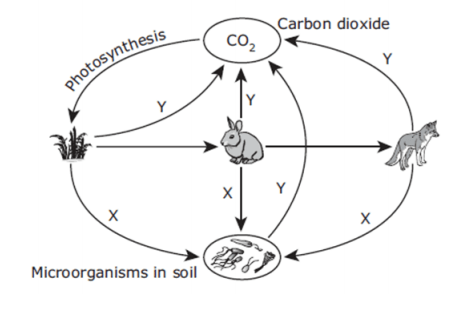
The diagram shows the flow of organic molecules through an ecosystem. What two processes are identified by the labels X and Y?
a)
X : Respiration
Y : Predation
b)
X : Adaptation
Y : Decomposition
c)
X : Fermentation
Y : Nitrogen Fixation
d)
X : Decomposition
Y : Respiration
45.
Which of the following is an example of a decomposer?
a)
Owl
b)
Fish
c)
Tree
d)
Mushroom
46.

If the plant population decreased, the amount of carbon in the atmosphere would _________.

a)

Stay the same

b)

Increase

c)

Decrease

47.

What converts nitrogen gas into a usable form for plants and animals?

a)

bacteria

b)

rain

c)

fungi

d)

car exhaust

48.

The process in which nitrogen circulates and is recycled is called

a)

The nitrogen cycle

b)

The carbon cycle

c)

The water cycle

d)

The phosphorus cycle

49.

Organisms that need nitrogen to survive.

a)

only plants

b)

only animals

c)

only bacteria

d)

all living things

50.

How is nitrogen "fixed" into a usable form for plants?

a)

Through action of bacteria only

b)

Through lightning only

c)

Through action of bacteria and lightning

d)

Through photosynthesis

51.

How do animals get the nitrogen they need?

a)

From the air they breathe

b)

From the water they drink

c)

From the food they eat

d)

From the sun

52.

Gas that makes up 78% of our atmosphere.

a)

Oxygen

b)

Nitrogen

c)

Hydrogen

d)

Carbon Dioxide

53.

What is the process of combining nitrogen gas with other elements to make nitrogen into usable compounds?

a)

nitrogen composition

b)

nitrogen fixation

c)

ammonia

d)

denitrification

54.

What is the formula for atmospheric nitrogen?

a)

N

b)

N2

c)

NH3

d)

NO3

55.

What process occurs when dead plant and animal matter decomposes and nitrogen is released back into the atmosphere?

a)

Assimilation

b)

Fixation

c)

Ammonification

d)

Denitrification

56.

Plants and animals cannot use nitrogen directly from the air.

a)

True

b)

False

57.

Bacteria fix nitrogen from the atmosphere into a form plants can use.

a)

True

b)

False

58.

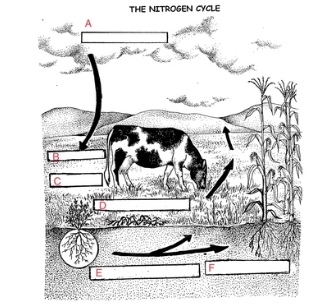
In the nitrogen cycle, what does label A in the diagram represent?

a)

Gas

b)

Clouds

c)

Carbon dioxide in the atmosphere

d)

Nitrogen in the atmosphere

59.
Plants and animals need nitrogen to make __________.
a)
Protein
b)
Carbohydrates
c)
Lipids
d)
Minerals
60.
succession that occurs in an area with no soil
a)
ecological succession 
b)
primary succession 
c)
secondary succession
d)
pioneer speciles
61.
succession that occurs in an area where soil is already present
a)
ecological succession 
b)
primary succession 
c)
secondary succession
d)
pioneer speciles
62.
the first organisms that appear in an ecological community
a)
ecological succession 
b)
primary succession 
c)
secondary succession
d)
pioneer speciles
63.
a stable ecological community that has reached equilibrium
a)
ecological succession 
b)
climax community
c)
secondary succession
d)
pioneer speciles
64.
starts with bare rock followed by lichen
a)
primary succession 
b)
secondary succession
c)
both types of succession
65.
reaches a climax community quicker because soil is already present
a)
primary succession 
b)
secondary succession
c)
both types of succession
66.
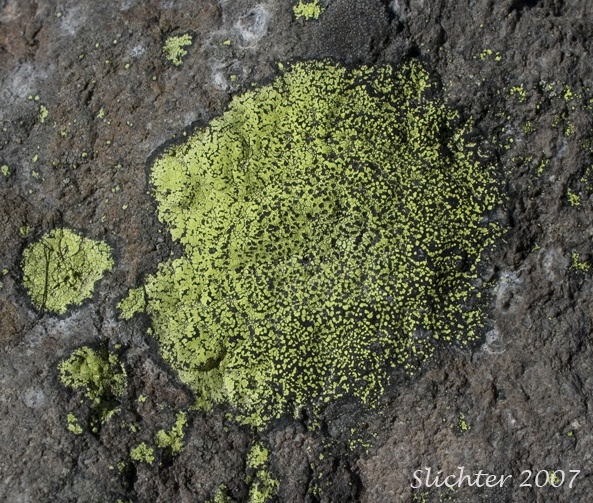
The picture shows what type of succession?
a)
primary
b)
secondary
c)
tertiary
d)
quadanary
67.
How do lichens contribute to primary succession?
a)
Lichens decompose organic matter from animals and plants
b)
Lichens begin to break down rock to form soil
c)
Lichens are nitrogen fixing bacteria
68.
Natural disasters such as flooding and tornadoes are linked to ________________.
a)
primary
b)
secondary
c)
old field
d)
ecosystem
69.
What type of succession is shown going from figure A to figure B?
a)
primary succession
b)
eutrophication
c)
secondary succession
d)
intermediate
70.

Primary succession occurs in areas with:

a)

very little soil

b)

lots of soil

c)

no soil

d)

soil that has been disturbed

71.
What is the name given to lichen or algae after a primary succession?
a)
pioneer species
b)
volunteer species
c)
founder species
d)
conqueror species
72.

After a volcanic eruption, lava covers the land. What is the order that plants grow to repopulate the area?

a)

Lichens → Shrubs → Grasses → Trees

b)

Lichens → tree → shrubs→Grasses

c)

Grasses → Lichens → Shrubs → Trees

d)

Lichens → Grasses → Shrubs → Trees

73.

___ are the first organisms to colonize an area and begin the process of ecological succession.

a)

foundational organisms

b)

introductory organisms

c)

primary organisms

d)

pioneer species

74.

What is an example of an area that is likely to undergo primary succession?

a)

Glaciers melt and leave exposed rock

b)

Plants die from drought and decompose

c)

Land is bulldozed and soil remains

75.

Which of the following is the correct order of ecological succession?

a)

grass - shrubs - lichens - trees

b)

lichens - shrubs - grasses - trees

c)

lichens - grasses - shrubs - trees

d)

grasses - lichens - shrubs - trees

76.

What is the main difference between primary and secondary ecological succession?

a)

Primary begins WITHOUT soil; Secondary begins WITH soil

b)

Primary is the first state and secondary is the second stage

c)

Primary builds plant community; secondary builds animal community

d)

Primary begins WITH soil; Secondary begins WITHOUT soil

77.

What is the term that describes a steady and stable community?

a)

peak community

b)

turf community

c)

climax community

d)

disturbed community

78.

Which is faster: Primary or Secondary Succession?

a)

Primary Succession

b)

Secondary Succession

c)

Both Take The Same Amount of Time

79.

Which of the following is NOT a pioneer species?

a)

Shrubs

b)

Lichen

c)

Mosses

d)

Fungi

80.

T or F: Succession increases biodiversity.

a)

true

b)

false

81.

The Final stage of ecological succession is...

a)

Mature Tree Growth

b)

Climax Community

c)

Pioneer Community

d)

Primary Succession

82.

A bare rock community must first undergo...

a)

the break down of soil in primary succession

b)

the formation of grasses in secondary succesion

c)

creating a climax community

d)

the growth of trees on it

83.

What is formed during primary succession that doesn't need to be formed during secondary succession?

a)

pioneer species

b)

soil

c)

climax community

d)

grasses

84.
After a forest fire, an ecosystem would start regrowth through -
a)
primary succession
b)
secondary succession
c)
climax community
d)
limiting factors
85.

Which experiences the least change over time?

a)

Pioneer Species

b)

Primary Succession

c)

Aquatic Succession

d)

Climax Community

86.

Which of the following best describes primary succession?

a)

Volcano wipes out ecosystem that gradually grows back from ash covered soil

b)

Volcano creates a new island of rock that must break down to form an ecosystem

c)

Forest fire burns down forest that must bounce back over time

d)

Tornado destroys a crop that must slowly grow back over time.

87.
What is ecological succession?
a)
A slow change in an environment
b)
A change that takes days in an environment
c)
No change
d)
Abiotic change
88.
Which is the correct order in primary succession?
a)
Rocks, Lichens & Mosses, Bushes & Shrubs, Trees
b)
Lichens & Mosses, Rocks, Trees, Bushes & Shrubs 
c)
Trees, Bushes and Shrubs, Lichens & Mosses, Lichens & Mosses
d)
Rocks, Grass, Trees, Bushes & Shrubs
89.
ends in a climax community
a)
primary succession 
b)
secondary succession
c)
both types of succession
90.

Climax communities are always large forests.

a)

True

b)

False