
 Worksheets
Cell Theory, Organelles & Microscope, Ch.7
Total questions: 89
Worksheet time: 5hrs 58mins
This Cell Theory states all the following EXCEPT
The cell is the basic unit of life
All cells reproduce sexually
All cells come from existing cells
All living organisms are made from cels
The ________ is made of phospholipids.
Cell Wall
Cytoplasm
Cell membrane
Nucleus
Which organelle contains all the genetic information and instruction for protein synthesis?
Mitochondria
Nucleus
Ribosomes
ER
Which organelle holds everything in place and controls materials entering and exiting the cell?
Cell Wall
Cytoplasm
Cell Membrane
Vacuole
The __________ is located around the nucleus and is responsible for protein stynthesis and lipid production?
Mitochondria
Endoplasmic Reticulum
Ribosomes
Nucleus
Rough ER
DNA
Smooth ER
Chloroplast
Enzymes that break down and get rid of waste within the cell
Protein
Ribosomes
Vacuoles
Lysosomes
Cytoplasm
Chlorophyll
Chloroplast
Cell Wall

Animal or Plant? Prokaryote or Eukaryote?
Animal, Prokaryote
Plant, Prokaryote
Animal, Eukaryote
Plant, Eukaryote
The cell wall is made of -----
Phospholipids
Cellulose
Protein
Fatty Acids

Animal or Plant? Prokaryote or Eukaryote?
Animal, Prokaryote
Plant, Eukaryote
Plant, Prokaryote
Animal, Eukaryote

receives, packages and distributes proteins
golgi body
chloroplast
ribosomes
lysosome

protects and supports plant cells
cell wall
cell membrane
mitochrondria
cytoplasm

Convert's the sun's energy to food for the cell
chloroplast
nucleus
endoplasmic reticulum
lysosome

storage area for the cell
vacuole
cytoplasm
chloroplast
cell wall

controls what enters and leaves the cell
cell membrane
cell wall
endoplasmic reticulum
golgi body

builds proteins for cell functions
ribosomes
mitochondria
nucleus
lysosome

powerhouse of the cell, produces energy
mitochondria
nucleus
cytoplasm
chloroplast

command center, direct's the cell's activities
nucleus
lysosome
mitochondria
endoplasmic reticulum

breaks down food and worn out parts
mostly in animal cells
lysosome
vacuole
cell wall
golgi body

fluid that fills the cell
cytoplasm
vacuole
chloroplast
golgi body

transports materials in the cell
endoplasmic reticulum
golgi body
ribosomes
mitochondria

Which organelle is circled in the diagram?
Nucleus
Mitochondria
Vacuole
Ribosomes

Which organelle is colored in the diagram?
Nucleus
Mitochondria
Vacuole
Ribosomes

Which organelle is colored in the diagram?
Nucleus
Mitochondria
Vacuole
Ribosomes

Which part is colored in the picture? (Look closely--it's the little dots!)
Nucleus
Mitochondria
Vacuole
Ribosomes

Which organelle is colored in this picture?
Cell membrane
Cytoplasm
Vacuole
Nucleus

Which organelle is colored in this picture?
Plasma membrane
Cytoplasm
Vacuole
Nucleus

Which organelle is colored in this picture?
Cytoplasm
Chloroplast
Ribosomes
Nucleus
Which organelle is colored in this picture?
Cytoplasm
Chloroplast
Ribosomes
Nucleus

Which organelle is colored in this picture?
Endoplasmic reticulum
Gogli body
Lysosomes
Cell mebrane

Which organelle is colored in this picture?
lysosome
nucleus
cytoplasm
chloroplast


packages and distributes proteins
proteins may be modified here
golgi body
chloroplast
ribosomes
lysosome

gel-like substance where all other organelles are found
it is constantly moving and some cellular reactions can occur here
cytoplasm
vacuole
chloroplast
golgi body


Cell
smallest unit that is typically considered alive and is fundamental unit of life
link between the study of cells and genetics
undifferentiated cells that have yet to develop into more specialized cells
Prokaryotic
cells with no nucleus
cells with a nucleus
made of 2 or more cells
made of 1 cell
Eukaryotic
cells with no nucleus
cells with a nucleus
made of 2 or more cells
made of 1 cell
Cells come from______.
other preexisting cells
cytoplasm
organelles
prokaryotes
The cell theory states that_________
cells come from cells
all organisms are made of cells
cells are the basic unit of structure and function for life
all of the above
________ is the scientist who saw small chambers when looking at cork, and named them “cells”.
Newton
Hooke
Carson
Manning
The cell theory is a result of the work of one very important scientist name Hooke.
True
False
A multicellular organism is made of
one cell
multiple cells
unicellular cells
there is no such thing as a "multicellular" organism
One common feature of all cells is their ability to -
work with other cells in a "unicellular" organism.
reproduce themselves.
be formed by spontaneous generation.
exist without needing a cell membrane
Regardless of type, all cells
have a cell membrane
have cytoplasm
can duplicate themselves by undergoing cell division
all of the above
Who proposed that all cells come from pre-existing cells after viewing cell division using a microscope?
Virchow
Leeuwenhoek
Hooke
Schwann
Who proposed that all animals are made of cells?
Virchow
Leeuwenhoek
Schwann
Schliden
Who proposed that all plants are made of cells?
Hooke
Leeuwenhoek
Schliden
Schwann
Which of the following are statements of the cell theory? (choose all that apply)
All living things are made of cells.
All living things have DNA inside a nucleus.
Cells are the basic unit of life.
Cells come from other living cells.
All living things require energy.
Who was the first to describe and name cells while viewing dead plant cells?
Hooke
Schliden
Schwann
Virchow


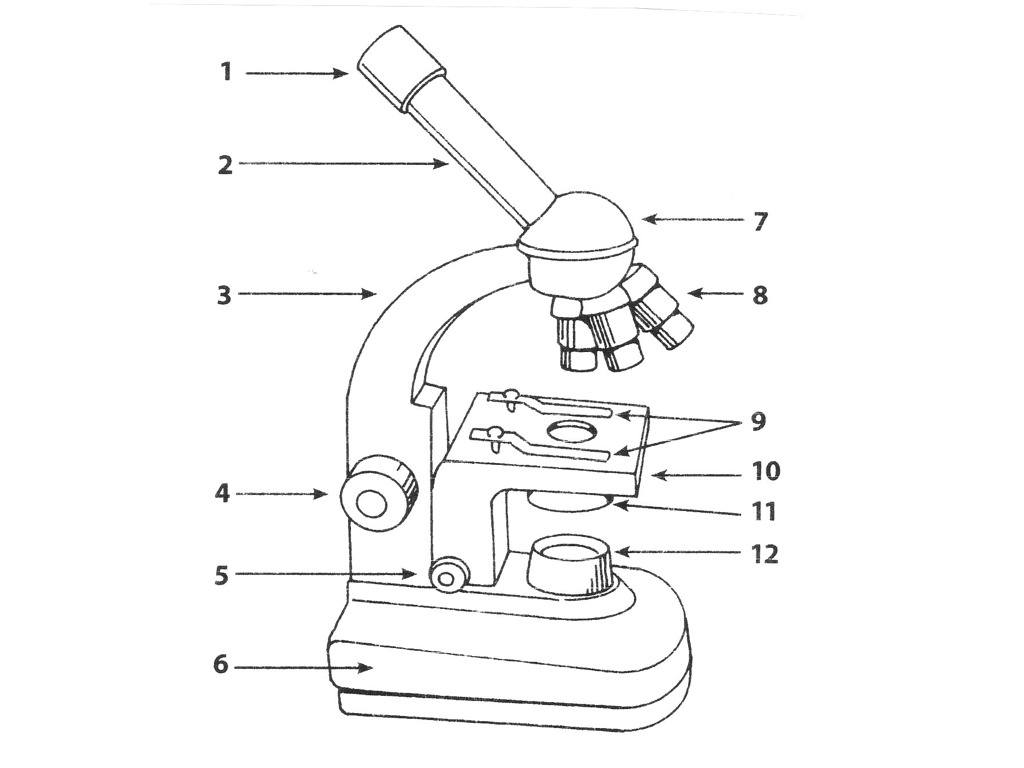


coarse focus


eye piece/ocular lens

coarse focus

coarse focus
fine focus


coarse focus
The greater the ___________________, the smaller the field you are actually viewing.
detail
objective
magnification
body
Moves stage up and down for focusing; locates the specimen
Fine Focus Knob
Large Focus Knob
Course Focus Knob
Small Focus Knob
True of False: You should always store microscopes covered.
True
False

