wayground logo

Free Printable Worksheets

Font size

S
M
L
XL
Worksheets

Unit 3 Evolution and Animal Behavior Practice Test 2022

Total questions: 85

Worksheet time: 1hrs 4mins

Name
Class
Date
1.
Choose which scientist corresponds best with the statement: 
use or disuse
a)
Darwin 
b)
Lamarck
2.
Choose which scientist corresponds best with the statement: 
variations within populations
a)
Darwin 
b)
Lamarck
3.
Choose which scientist corresponds best with the statement: 
acquired characteristics are inherited
a)
Darwin 
b)
Lamarck
4.
Choose which scientist corresponds best with the statement: 
organisms overproduce
a)
Darwin 
b)
Lamarck
5.
The process in which organism with variations most suited to their local environment survive and leave more offspring.
a)
Natural Selection
b)
Survival of the Fittest
c)
Common Descent
d)
Phenotype
6.
What do we call differences among heritable traits?
a)
Variation
b)
Adaptation
c)
Evolution
d)
Speciation
7.
What do we call change over time?
a)
Evolution
b)
Natural Selection
c)
Natural Variation
d)
Speciation
8.

Who would have stated "acquired traits" such as a giraffe needing a long neck so they stretch it over time

a)

Darwin

b)

Lamarck

9.
Charles Darwin called the ability of an organism to survive and reproduce in its specific environment 
a)
diversity.
b)
evolution
c)
adaptation. 
d)
 fitness.
10.
What is survival of the fittest?
a)
It is where the fittest die out and therefore reproduce and pass on their genes
b)
It is where the fittest die out and therefore can't reproduce and pass on their genes
c)
It is where the fittest don't die out and therefore can't reproduce and pass on their genes
d)
It is where the fittest don't die out and therefore reproduce and pass on their genes
11.

When organisms are better adapted to their environment they will survive and reproduce more successfully than organisms less adapted. This process is called what?

a)

Selective breeding

b)

Natural Selection

c)

Cloning

d)

Evolution of all species

12.

Sometimes bones in the front limbs of animals are very similar in structure. What do we call similar bone structures that indicate a link to a common ancestor?

a)

Adaptations

b)

Gradualism

c)

Homologous Structures

d)

Extinction

13.

A physical or behavioral trait that helps an organism survive and reproduce in its environment is called a what?

a)

An adaptation

b)

A response to a stimulus

c)

A mutation

d)

Evolution

14.

What most likely caused the finches on the Galapagos Islands to have beaks that were different from the finches on the mainland?

a)

There were different types of predators on the island.

b)

There were different types of food available on the island.

c)

The finches had no water to drink.

d)

The finches on the mainland could not fly high enough.

15.

When looking at two birds of the same species, you notice that one has darker feathers than the other one. You also notice that one has a beak that is just a little longer. These slight differences within members of the same species are called.....

a)

Fossils

b)

Extinction

c)

Meiosis

d)

Variations

16.

What is the study of organisms at the early stages of development?

a)

DNA studies

b)

Comparative Embryology

c)

Extinction

d)

Fossil Record

17.

What do we call a change in a species over time?

a)

Adaptation

b)

Evolution

c)

Extinction

d)

Environmental influences

18.
A __________ is a branching diagram that shows evolutionary relationships.
a)
cladogram
b)
table
c)
derived character
d)
relationship tree
19.
The system of binomial nomenclature was developed by ___________
a)
Linneaus
b)
Mayr
c)
Darwin
d)
Mr. King
20.
__________ characters are similar characteristics that have evolved separately in two unrelated organisms.
a)
analogous
b)
homologous
c)
cladistic
d)
phylogenic
21.
_________ characters may or may not be similar between two organisms but they developed from a common ancestor.
a)
homologous
b)
analogous
c)
cladistic
d)
phylogenic
22.
________ structures are reduced in size or function.
a)
vestigial
b)
homologous
c)
cladistic
d)
phylogenic
23.
Two organisms that are closely related would have
a)
very similar DNA sequence
b)
exactly the same DNA sequences
c)
no proteins in common
d)
completely different DNA sequence
24.
Mutations are important because they bring about
a)
death of the organism in which they develop
b)
genetic variation needed for a population to evolve
c)
benefits for the individual, not for the population
d)
Hardey-Weinberg equilibrium within a population
25.

What is the term for a feature that allows an organism to survive better in its environemtn?

a)

variation

b)

adaptation

c)

homologous structure

d)

vestigial structure

26.
Charles Darwin’s observation that finches of different species on the Galápagos Islands have many similar physical characteristics supports the hypothesis that these finches 
 
a)
have the ability to interbreed.
b)
acquired traits through use and disuse.
c)
all eat the same type of food.
d)
descended from a common ancestor.
27.

Images of the embryo and adult stages of three different organisms are shown.


Which of the following is the best conclusion that can be drawn from this evidence?

a)

Having similar embryos indicates that these organisms eat the same types of food.

b)

Having similar embryos indicates that these organisms live in a similar environment.

c)

Having similar embryos indicates that these organisms share a recent common ancestor.

d)

Having similar embryos indicates that a certain protein controls how many legs the adult organisms will have.

28.
Common ancestry relates to evolution because
a)
evolution only happens when there are common ancestors.
b)
Common ancestors make evolution happen more quickly.
c)
evolution can never take place with common ancestors.
d)
the more two organisms have in common, the more recent is their common ancestor during their evolution.
29.
Why do embryologist study embryos?
a)
to see if they are related
b)
to understand adaptations
c)
to determine the age
d)
to learn what parents are vestigial
30.
The system of binomial nomenclature was developed by ___________
a)
Linneaus
b)
Mayr
c)
Darwin
d)
Mr. King
31.

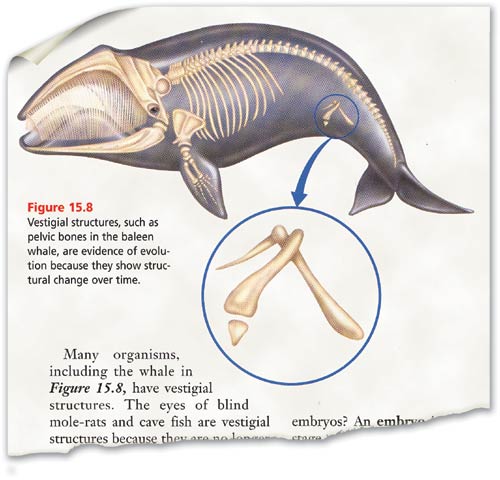
The picture shows a/an ___________

a)

homologous structure

b)

vestigial structure

32.

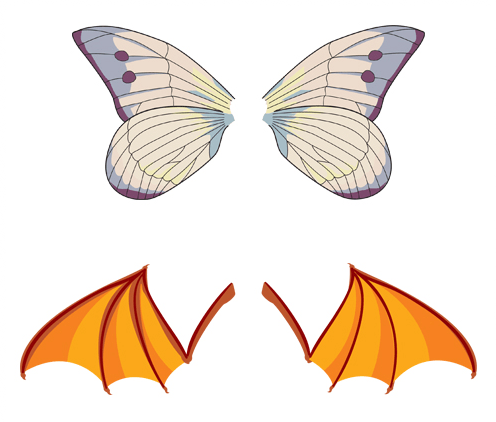
What is this an example of?

a)

Homologous structure

b)

Analogous structure

c)

Vestigial organs

d)

Functional adaption

33.
Which of the following is an example of a vestigial structure?
a)
the wings of a red-tailed hawk
b)
the hind limbs of a house cat
c)
the fins of sharks
d)
the tailbone of a human
34.
How do fossils provide evidence that evolution has happened on Earth?
a)
Fossils show how the sizes of certain animals has changed drastically over millions of years
b)
Fossils show that some species have gone extinct
c)
Fossils show how life forms present today are different than those from the past
d)
Different sedimentary rock layers provide evidence for how the environment has changed over time
35.

Similarities in bone arrangements, like those in the picture, support the hypothesis that...

a)

these organisms are not well adapted

b)

these organisms share a common ancestor

c)

these organisms all share the same DNA sequences

d)

these organisms are members of the same species

36.
Study of embryos of various organisms to show a common ancestor because of similarities in development
a)
natural selection
b)
embryology
c)
speciation
d)
evolution
37.
What does Darwin's theory of evolution suggest?
a)
species change over time
b)
extinct species are not related to living species
c)
different species can interbreed
d)
animals that look alike are most closely related
38.

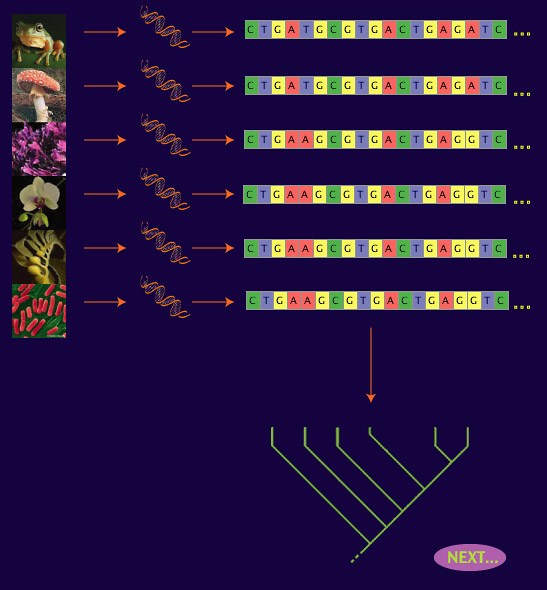
Recently, scientists have been able to use ___________to find common proteins and amino acids to determine how closely related species are.

a)

DNA

b)

Vestigial structures

c)

Fossils

d)

Homologous structures

39.

By looking at the genes of some animals we can determine which living species are most closely related to each other. This also reveals which species most recently diverged from their common ancestor.

Based on the partial gene segments shown, which pair of animals are genetically most closely related and therefore most recently diverged from their common ancestor?

a)

Chimpanzee and Mouse

b)

Rat and Mouse

c)

Rat and Chimpanzee

40.

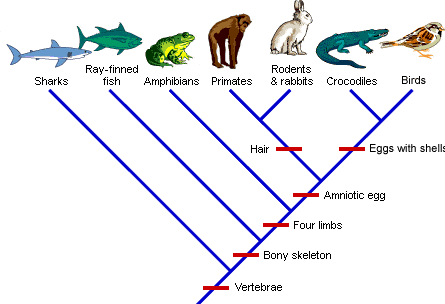
Please select all correct answers that apply, based on the cladogram shown

a)

Sharks and Primates do not have a common ancestor.

b)

Crocodiles and Amphibians are more closely related than Birds and Sharks.

c)

Rodents and Rabbits do have Eggs with Shells.

d)

Sharks have more of the traits shown than of all of the other organisms.

e)

Birds have all of the shown traits that Sharks have, but Sharks do not have all of the shown traits that Birds have.

41.

In the table shown, the DNA found in five primate species was compared to the DNA found in humans. The number of sequence differences was recorded. Based on the data in this table, what inference could you make about these species compared to humans?

a)

Lemurs are most like humans.

b)

Gorillas are most like humans.

c)

None of the species are similar to humans.

d)

Only the lemur differs from humans in any way.

42.

Select ALL the parts of Natural Selection.

a)

overproduction

b)

evolution

c)

variation

d)

selection

e)

competition

43.

Which statement is correct about the evidence in this picture?

a)

similar bones indicate a similar diet

b)

similar bones indicate a similar habitat

c)

similar bones indicate a common ancestor

d)

similar bones indicate evolution happened quick

44.
This kind of structure are body parts that have no function now and are just the remains from an ancestor.
a)
analogous structure
b)
homologous structure
c)
vestigial structure
45.
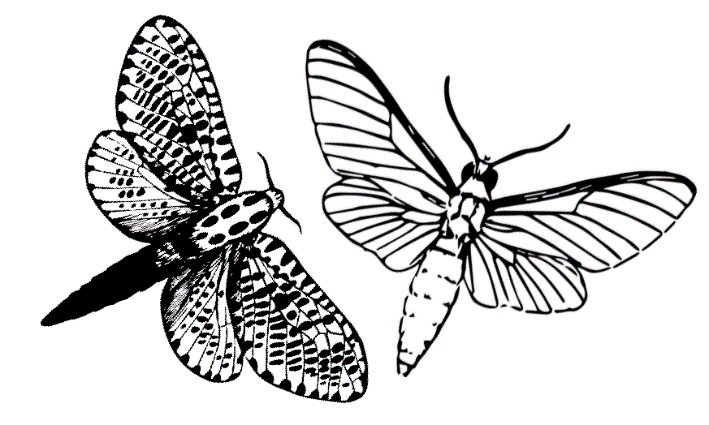
The image shows an example of..
a)
vestigial structure
b)
analogous structure
c)
homologous structure
46.
The image shows an example of..
a)
vestigial structure
b)
homologous structure
c)
analogous structure
47.

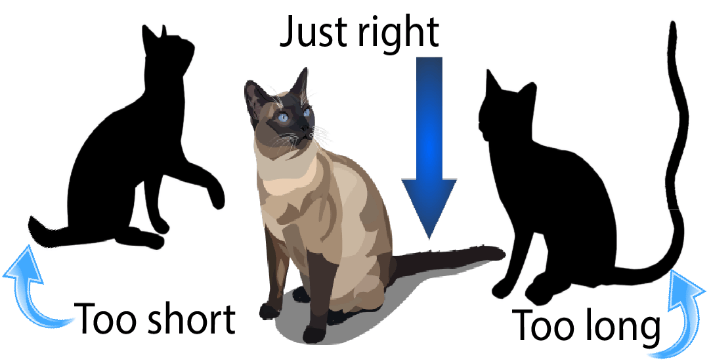
What type of selection is pictured here?

a)

Directional

b)

Disruptive

c)

Stabilizing

48.

What type of selection is pictured here?

a)

Directional

b)

Disruptive

c)

Stabilizing

49.

A particular bird species lays an average of 4 eggs per nesting season. If more than four eggs are produced, the parents may not be able to feed the hatchlings. If less than 4 eggs are produced, there is an increased risk that predators will take all the young that have been produced.

a)

Directional

b)

Disruptive

c)

Stabilizing

50.

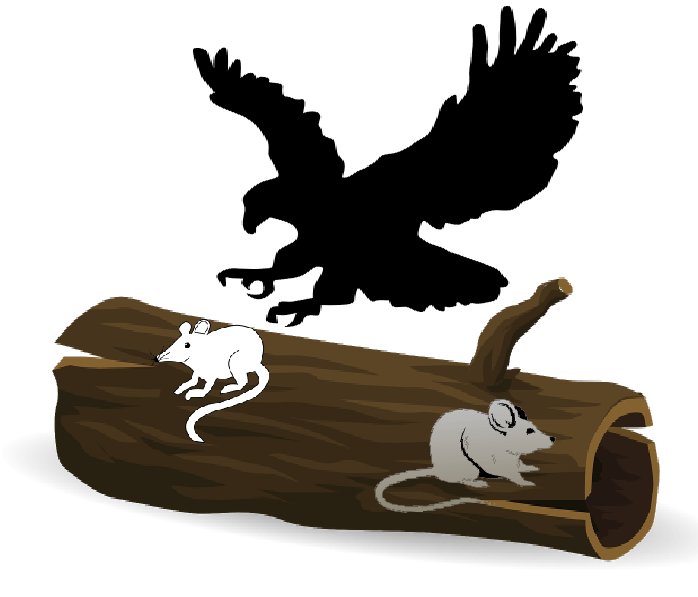
A lizard population lives in a very rocky area consisting of black rocks and white rocks. Black lizards can hide from predators by living on black rocks, and white lizards can hide from predators by living on white rocks. The intermediate grey colored lizard is found in fewer numbers because of its inability to hide from predators in this environment.

a)

Directional

b)

Disruptive

c)

Stabilizing

51.

In a population of field mice, coat color ranges from light tan to dark brown. Medium brown mice are found in greater abundance due to their ability to blend in with their surroundings.

a)

Directional

b)

Disruptive

c)

Stabilizing

52.

According to natural selection, light colored tree trunks would favor

a)

light colored moths

b)

dark colored moths

c)

red colored moths

d)

red and light colored moths

53.

Genetic diversity in a species makes long term survival of some members

a)

impossible

b)

improvable

c)

more likely

d)

less likely

54.

Over the years, white mice became extinct and darker mice survived. This is

a)

stabilizing selection

b)

directional selection

c)

disruptive selection

d)

due to exercise

55.

Average phenotypes are favored in the environment, while extremes have lower survival rates.

a)

seasonal selection

b)

distruptive selection

c)

directional selection

d)

stabilizing selection

56.

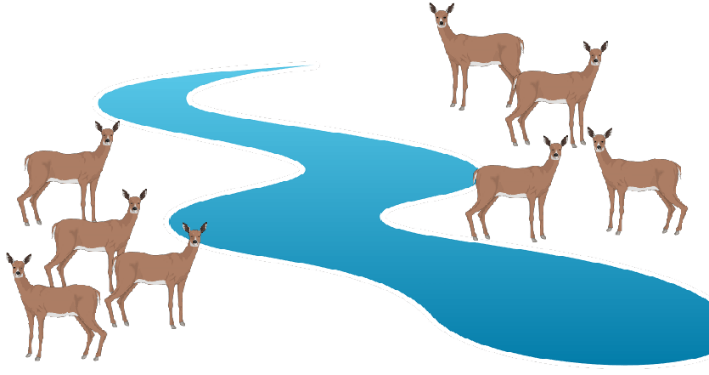
Two populations of the same species are separated by land barriers like rivers or mountains.

a)

geographical isolation

b)

temporal isolation

c)

adaptive ratiation

d)

behavioral isolaton

57.

All the possible gene combinations in a population.

a)

allele

b)

gene pool

c)

genome

d)

mitosis

58.
What is a mass extinction?
a)
When all the species in a particular area on earth suddenly go extinct
b)
When multiple species from all over the earth suddenly go extinct 
c)
When one species goes extinct due to habitat changes
d)
When all life on earth is wiped out 
59.
There have been _____ mass extinction events in Earth's history.
a)
3
b)
4
c)
5
d)
2
60.
Which of the lists below has all of the levels of classification in the correct order?
a)
Kingdom class phylum genus order species family
b)
Class Phylum Kingdom Species Family Order Genus
c)
Kingdom Family Class Order Phylum Genus Species
d)
Kingdom Phylum Class Order Family Genus Species
61.
Scientific names are written using which two levels of classification?
a)
Kingdom phylum
b)
Kingdom class
c)
Species genus
d)
Genus species
62.
Which of the following levels of classification would have organisms that had the most in common?
a)
Phylum
b)
Family
c)
Order 
d)
Kingdom
63.
What is taxonomy?
a)
A two-word naming system for describing organisms
b)
A classification system based on shared characteristics
c)
A method of observing living organisms in their natural environment
d)
A process for using radioactive elements to date fossils
64.

What scientific name is correct?

a)

Quercus Alba

b)

Quercus alba

c)

quercus Alba

d)

quercus alba

65.

Canis lupus, the scientific name for a wolf, is in which genus?

a)

Canis

b)

lupus

c)

Animalia

d)

Mammalia

66.

Which category of classification has the largest variety of organisms?

a)

genus

b)

phylum

c)

species

d)

kingdom

67.

An organism identified with binomial nomenclature includes which two taxa?

a)

class and order

b)

family and genus

c)

genus and species

d)

kingdom and phylum

68.

Scientists currently classify organisms based on features they share. How will this most likely change in the future?

a)

They will be classified based on DNA analysis.

b)

They will be classified based on similar organs.

c)

They will be classified based on common descent.

d)

They will be classified based on protein production.

69.
Term given to describe the 2 name naming system is:
a)
dichotmous key
b)
binomial nomenclature
c)
2 scientific names
d)
binomial key
70.
Which organisms are closely related? 
a)
American badger and leopard
b)
coyote and gray wolf
c)
european otter and leopard
d)
coyote and american badger
71.

What is the order of the taxonomic levels from least specific to most specific?

a)

Kingdom, Family, Species, Order, Class, Phylum, Genus

b)

Kingdom, Phylum, Class, Order, Family, Genus, Species

c)

Species, Order, Kingdom, Family, Genus, Phylum, Class

d)

Species, Genus, Family, Order, Class, Phylum, Kingdom

72.
A student discovers an arachnid with a segmented abdomen, long legs, and a tail with no stinger. The student uses the dichotomous key below to identify it. Which arachnid has the student found?
a)
Whip Scorpion
b)
Wind Scorpion
c)
Daddy long legs
d)
Scorpion
73.
How many Domains are there?
Name them:
a)
3; Archaea, Bacteria, Eukarya
b)
2; Bacteria, Eukarya
c)
1; Eukarya
d)
3; Bacteria, Eukarya, Protists
74.
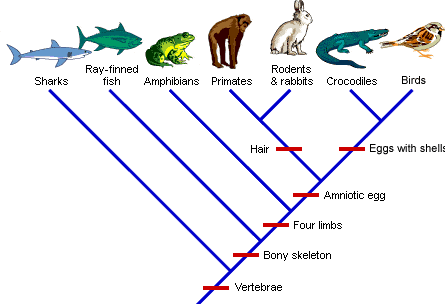
According to this cladogram, sharks are MOST closely related to which organism? 
a)
Amphibians
b)
Ray finned fish
c)
Crocodiles
d)
Birds
75.
According to this cladogram, birds are LEAST related to: 
a)
Amphibians
b)
Sharks
c)
Ray Finned Fish
d)
Crocodiles
76.
Cladograms are constructed by grouping organisms together based on their____________ characteristics.
a)
shared
b)
different
c)
similar
d)
opposite
77.
What is the purpose of a dichotomous key?
a)
to find a common ancestor
b)
to show the evolution of organisms
c)
to show relationships between organisms
d)
to identify organisms
78.
When animal learns to ignore harmless stimuli like a scarecrow, what type of learning is this? 
a)
innate learning
b)
classical conditioning 
c)
habituation 
d)
trial and error learning 
79.
Why is a spider spinning a web an innate behavior?
a)
It learns how to spin the web from its mother.
b)
It learns how to spin a web through insight learning.  
c)
It is born knowing how to spin a web.
d)
It learns how to spin a web through observational learning.
80.

What do we call a behavior that is learned from observations?

a)

inherited behaviors

b)

learned behaviors

c)

imprinting

d)

acquired traits

81.

A behavior animals are born knowing how to do is an __________.

a)

example

b)

animal

c)

option

d)

instinct

82.
Which is an example of a learned behavior?
a)
blinking
b)
riding a bike
c)
swallowing
d)
crying
83.

TADPOLES KNOWING HOW TO SWIM AND AVOID DANGER AS SOON AS THEY ARE BORN IS AN EXAMPLE OF ..

a)

LEARNED BEHAVIOR

b)

INNATE BEHAVIOR

84.
An automatic response that does not involve a message from the brain.
a)
Reflex
b)
Innate Behavior
c)
Trial and Error
d)
Conditioning
85.
Salmon knowing which stream they were hatched in is an example of this type of behavior.
a)
Imprinting
b)
Conditioning
c)
Insight
d)
Trial and Error