
 Worksheets
Biology Unit 1 Review 19-20
Total questions: 85
Worksheet time: 1hrs 4mins
Name
Class
Date
1.

Which domain is capable of living in extreme environments like hot springs, geysers, or very salty waters?
a)
Bacteria
b)
Archaea
c)
Eukarya
2.

Which domain includes all animals and plants?
a)
Archaea
b)
Eukarya
c)
Bacteria
3.

Almost all bacteria are...
a)
Unicellular
b)
Multicellular
4.

Which two kingdoms are entirely multicellular?
a)
Animalia and Plantae
b)
Animalia and Protista
c)
Protista and Plantae
5.

To which phylum do crabs and spiders belong?
a)
Echinodermata
b)
Arthropoda
c)
Cnidaria
d)
Mollusca
6.

To which phylum do birds and cats belong?
a)
Arthropoda
b)
Chordata
c)
Echinodermata
d)
Cnidaria
7.

To which phylum do sea stars and corals belong?
a)
Echinodermata
b)
Arthropoda
c)
Cnidaria
d)
Annelida
8.
To say that an organism is heterotrophic means...
a)
it cannot reproduce asexually
b)
it cannot make its own food
c)
it cannot breathe oxygen gas
9.
Which kingdoms have some organisms that can make their own food (autotrophic)?
a)
Plantae and Animalia
b)
Fungi and Plantae
c)
Protista and Plantae
10.
Organisms whose cells have NO nucleus are classified as...
a)
Eukaryotic
b)
Prokaryotic
c)
Dead
11.
True or False: All cells have DNA.
a)
True
b)
False
12.
True or False: All living things are made of one or more cells.
a)
True
b)
False
13.

Fungi are a type of...
a)
decomposer
b)
producer
14.
What is the genus name here:
Canis lupus
Canis lupus
a)
Canis
b)
lupus
15.

The name for the phylum of segmented worms is called...
a)
Echinodermata
b)
Arthropoda
c)
Annelida
d)
Cnidaria
16.

Most animals in this phylum have a backbone.
a)
Arthropoda
b)
Chordata
c)
Annelida
d)
Mollusca
17.
The scientific name for an organism is made from the:
a)
class and family name
b)
genus and species name
c)
domain and kingdom name
d)
kingdom and phylum name
18.
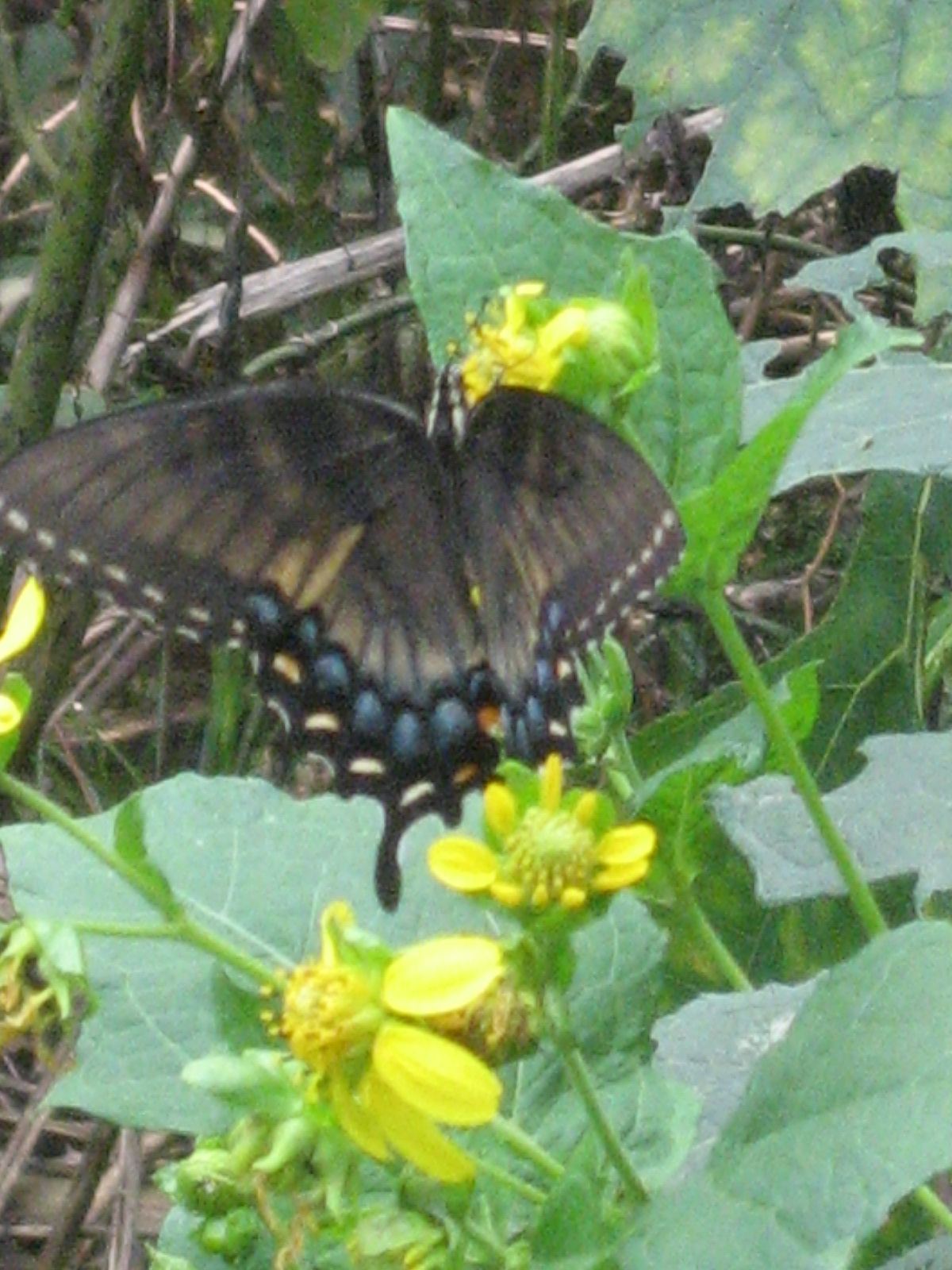
The 8 levels of classification, most broad to most specific.
a)
Domain, Genus, Family, Order, Class, Phylum, Kingdom, Species
b)
Domain, Species, Kingdom, Genus, Phylum, Family, Class, Order
c)
Domain, Kingdom, Phylum, Class, Order, Family, Genus, Species
d)
Order, Kingdom, Species, Domain, Phylum, Family, Class, Genus
19.
Term given to describe the 2 name naming system is:
a)
dichotmous key
b)
binomial nomenclature
c)
2 scientific names
d)
binomial key
20.
Who first proposed binomial nomenclature as a way of classifying organisms?
a)
Carl Linnaeus
b)
Carl's Jr.
c)
Charles Darwin
d)
Henry Groseclose
21.
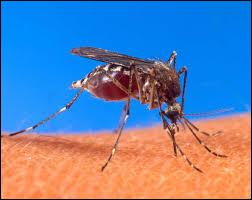
Mosquito belongs to what kingdom?
a)
Animal Kingdom
b)
Plant Kingdom
c)
Fungi Kingdom
d)
Protista Kingdom
22.
Which organisms are most closely related?
a)
Equus caballas (Horse) & Equus burchellii (Zebra)
b)
Cyanea artica (Jellyfish) &
Ctenodiscus crispatus (Mud Starfish)
Ctenodiscus crispatus (Mud Starfish)
c)
Naja naja (cobra) & Glycine max (soya bean)
d)
Ophiocomina nigra (black brittle star) & Brassica nigra (black mustard)
23.
The science of describing, classifying, and naming living things is called:
a)
Geology
b)
Biology
c)
Taxonomy
d)
Chemistry
24.
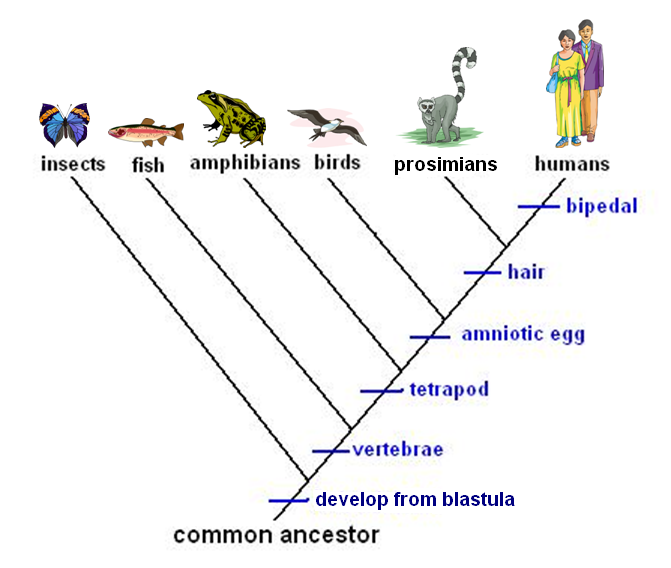
Which organisms pictured on the cladogram have hair?
a)
prosimians only
b)
prosimians and humans
c)
humans only
d)
prosimians and birds
25.
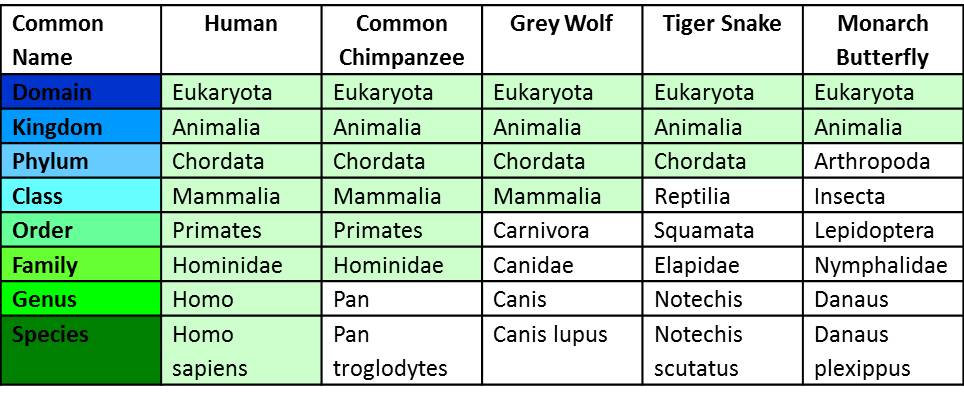
Which organism in the table is least closely related to the chimpanzee?
a)
human
b)
grey wolf
c)
tiger snake
d)
monarch butterfly
26.

An illustration and a dichotomous key are given. What is the correct classification for this organism?
a)
Class Insecta
b)
Order Amblygygi
c)
Order Araneae
d)
Order Scorpiones
27.
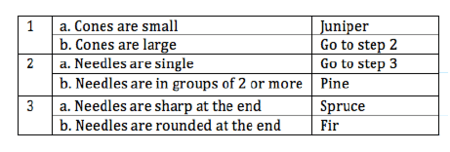
A dichotomous key for trees is provided. Hikers found a tree that has large brown cones and single sharp needles. What species of tree have the hikers found?
a)
Juniper
b)
Pine
c)
Spruce
d)
Fir
28.

Using this dichotomous key, identity the name of the circled fish.
a)
band-tail puffer
b)
spotted goat fish
c)
peacock flounder
d)
trumpet fish
29.
Amphibians spend the first part of their lives in the fresh water breathing through gills.
a)
True
b)
False
30.
If an animal is amphibious, it means it can live on land and in the water.
a)
True
b)
False
31.
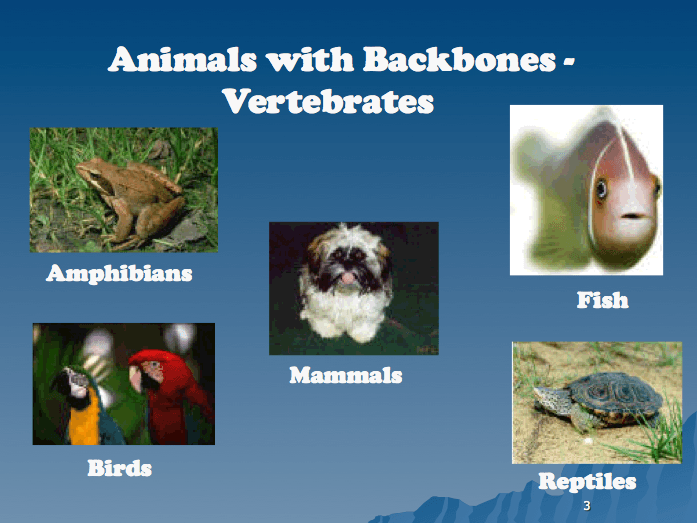
There are five categories of vertebrates. Which one is not a vertebrate?
a)
Mammals
b)
Birds
c)
Arthropods
d)
Reptiles
32.
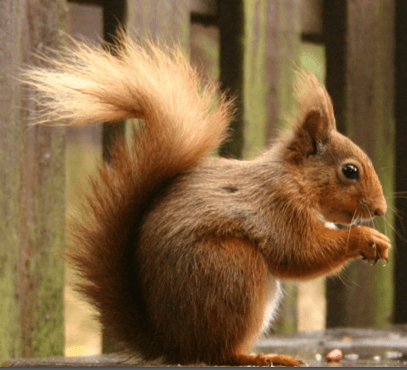
What am I?
a)
Mammal
b)
Amphibian
c)
Bird
d)
Reptile
33.
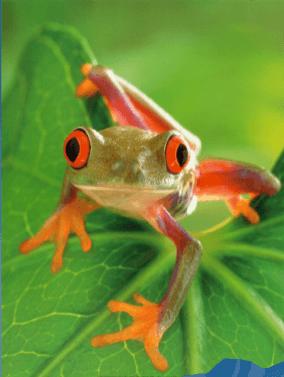
My body is moist and smooth, I lay eggs, and live in or near the water. What am I?
a)
Amphibian
b)
Reptile
c)
Bird
d)
Fish
34.

My body is warm and covered in feathers. I lay eggs which hatch into chickens. What am I?
a)
Reptile
b)
Amphibian
c)
Mammal
d)
Bird
35.
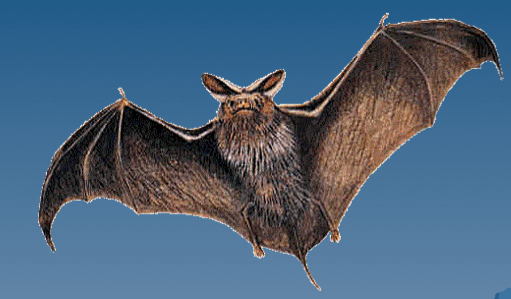
My body is warm, I have fur, feed my young on milk, and have live births. What am I?
a)
Reptile
b)
Bird
c)
Mammal
d)
Fish
36.
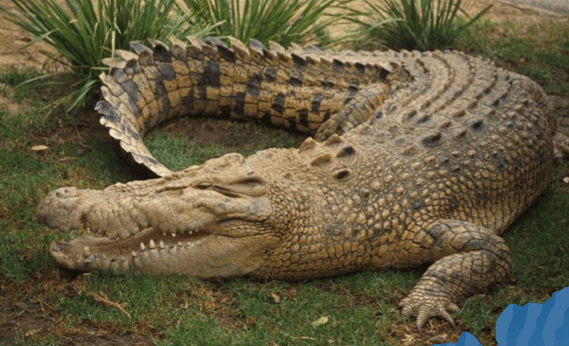
I am covered in dry scales and I lay eggs. What am I?
a)
Mammal
b)
Fish
c)
Amphibian
d)
Reptile
37.

My body is cold, am covered in scales, use gills to breathe under water, and I lay eggs. What am I?
a)
Fish
b)
Mammal
c)
Reptile
d)
Amphibian
38.

What am I?
a)
Fish
b)
Reptile
c)
Amphibian
d)
Mammal
39.

What am I?
a)
Mammal
b)
Reptile
c)
Amphibian
d)
Fish
40.

Which of the following is a vertebrate?
a)
Amphibian
b)
Echinoderm
c)
Arthropod
d)
Annelid
41.
A human is a mammal and is in what phylum?
a)
Chordata
b)
Eukarya
c)
Animalia
d)
Echinoderm
42.

What am I?
a)
Mollusk
b)
Annelid
c)
Arthropod
d)
Cnidarian
43.

What am I?
a)
Arthropod
b)
Cnidarian
c)
Mollusk
d)
Porifera
44.

I am spiny, have a water vascular system with tube feet, radial symmetry, and am called a brittle star.
a)
Mullosk
b)
Arthropod
c)
Echinoderm
d)
Cnidarian
45.

I have a soft-body, a hard shell, and live on land and water. What am I?
a)
Mollusk
b)
Arthropod
c)
Echinoderm
d)
Cnidarian
46.

I have a digestive cavity with one opening, and have tentacles. I am a hydra.
a)
Echinoderm
b)
Cnidarian
c)
Arthropod
d)
Mollusk
47.

I have a hard exoskeleton, a segmented body, pairs of jointed appendages, and live on land and water. I am a crab. What is my phylum?
a)
Mollusk
b)
Arthropod
c)
Echinoderm
d)
Cnidarian
48.

In what phylum am I?
a)
Annelid
b)
Mollusk
c)
Echinoderm
d)
Cnidarian
49.
It has 8 legs so it is an...
a)
Tentacles
b)
Insect
c)
Arachnid
d)
Crab
50.
If you touch the tentacles of the _____ it stings you!
a)
Ant
b)
Jellyfish
c)
Octopus
d)
Scorpion
51.
Organism that eats other organisms for energy
a)
Consumer
b)
Invertebrate
c)
Vertebrate
52.
Animal WITHOUT a backbone
a)
Consumer
b)
Invertebrate
c)
vertebrate
53.
Animal WITH a backbone
a)
Consumer
b)
Invertebrate
c)
Vertebrate
54.
Maintaining an internal balance in organisms is
a)
symmetry
b)
segmentation
c)
cephalization
d)
homeostasis
55.
Animal characteristics include:
a)
multicellular
b)
eukaryotic
c)
heterotrophic
d)
no cell walls
e)
all of the above
56.
A rapid change from the young to the adult form of an animal.
a)
metamorphosis
b)
budding
c)
diffentiation
d)
reproduction
57.
What type of symmetry do Porifera have?
a)
asymmetrical
b)
bilateral
c)
radial
d)
exoskeleton
58.
What type of symmetry do cnidarians have
a)
asymmetrical
b)
bilateral
c)
radial
d)
medial
59.
What type of symmetry do MOST mollusks have?
a)
Bilateral
b)
Radial
c)
Circular
d)
Asymmetrical
60.
Flat bodied worms are grouped together in which phylum?
a)
Phylum Platyhelminthes
b)
Phylum Nematoda
c)
Phylum Annelida
61.
Which phylum do roundworms belong to?
a)
Turbellaria
b)
Cestoda
c)
Nematoda
d)
Porifera
62.
Bacteria are prokaryotes which means they
a)
have a nucleus on their capsule
b)
do not contain a nucleus
c)
can live in environments with and without oxygen
63.
The outer covering of a bacteria cell is called the
a)
flagella
b)
cytoplasm
c)
cell wall
64.

Name this bacteria shape
a)
coccus
b)
spirillum
c)
bacillus
65.

Name this bacteria shape
a)
bacillus
b)
coccus
c)
spirillum
66.

Name this bacteria shape
a)
coccus
b)
bacillus
c)
spirillum
67.
A disease causing organism
a)
pathogen
b)
poison
c)
vaccine
68.
Strep throat is caused by
a)
bacteria
b)
virus
69.
The flu is caused by
a)
bacteria
b)
virus
70.
Bacteria are only found in dirty places
a)
True
b)
False
71.
A structure that can help bacteria survive harsh conditions.
a)
capsids
b)
endospores
c)
pili
d)
DNA
72.
Bacteria exchange genetic information during
a)
asexual reproduction
b)
binary fission
c)
conjugation
d)
photosynthesis
73.
Superbugs can be prevented if people
a)
get rid of antibiotics
b)
take the antibiotics of another person
c)
do not follow the directions for taking prescribed antibiotics
d)
help people become aware of how to use antibiotics
74.
Archea differ from Bacteria in that the cell wall
a)
contains peptidoglycan
b)
contains lipids
c)
contains oxygen
d)
contains nitrogen
75.
Which is not one of the 6 characteristics of all living things?
a)
Needs oxygen
b)
Grows and Develops
c)
Reproduces
d)
Made of Cells
76.
Is a virus considered living or non-living?
a)
Living
b)
Non-Living
c)
Neither
77.
Can a virus change the normal activity of a cell?
a)
No
b)
Maybe
c)
Yes
78.
What is a host?
a)
Organism that lives on the cell and causes it harm
b)
Something that causes harm to the cell
c)
Cell that the virus invades and takes over
79.
What is the first step of the virus reproduction cycle?
a)
The viruses genetic material (DNA) starts to take over the functions of the cell
b)
The host cell bursts open, releasing the new viruses
c)
The virus injects its genetic material into the cell
d)
A virus attaches to the surface of a host cell
80.
Antibiotics kill viruses
a)
True
b)
False
81.

When a virus invades a living cell, its _______
takes over the cell's functions.
takes over the cell's functions.
a)
outer coat
b)
genetic material
c)
core
d)
cytoplasm
82.

What do viruses have in common with living cells? They both...
a)
store genetic information
b)
have chloroplasts
c)
use glucose for cellular respiration
d)
have endoplasmic reticulum
83.

What part of the phage is the DNA?
a)
A
b)
B
c)
C
d)
D
84.

Louis Pasteur created a process of heating food to kill germs that was called...
a)
sanitation
b)
chemistry
c)
germ theory
d)
pasteurization
85.
Robert Koch established and published experimental steps known as Koch’s _______, that gave us the way to understand if an agent was linked to a disease.
a)
Steps
b)
Posters
c)
Postulates
d)
Expiraments
100 %

