wayground logo

Free Printable Worksheets

Font size

S
M
L
XL
Worksheets

2.1-2.2

Total questions: 84

Worksheet time: 1hrs 25mins

Name
Class
Date
1.
all matter is made of what 
a)
energy 
b)
atoms 
c)
electrons 
d)
compounds 
2.
Particles in an atom that are neutral and have no charge are 
a)
negatrons 
b)
electrons 
c)
neutrons 
d)
protons 
3.
The particles that are found in the nucleus of an atom are
a)
neutrons and electrons
b)
electrons only
c)
protons and neutrons
d)
protons and electrons
4.
Neutrons are _______________ particles.
a)
negative
b)
positive
c)
neutral
d)
cows
5.
The positive particles of an atom are called ___________.
a)
electrons 
b)
atoms
c)
neutrons 
d)
protons 
6.
electrons have this type of charge?
a)
negative
b)
positive
c)
neutral
7.
The smallest part of an element is known as the 
a)
Periodic Table
b)
Atom
c)
Group
d)
Period
8.
Where are neutrons located in the atom?
a)
shells/orbitals
b)
rings
c)
center
d)
nucleus
9.
How does the size of a proton compare to the size of a neutron?
a)
larger
b)
smaller
c)
equal
10.
These particles orbit around the nucleus of an atom.  What are they called?
a)
electrons
b)
protons
c)
neutrons
d)
photons
11.
What is the overall charge of this atom?
a)
+3
b)
-3
c)
0
d)
+1
12.
Can a mixture be separated? 
a)
No
b)
Yes
c)
Only sometimes
13.
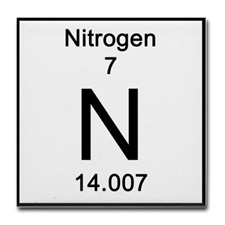
What is the number of protons that the element in this image contain?
a)
14
b)
7
c)
15
d)
18
14.
If an atom has 10 protons, 10 neutrons, and 10 electrons, what is the mass of the atom?
a)
10
b)
20
c)
30
15.

What charge does an atom have when it GAINS electrons?

a)

Positive

b)

Negative

c)

Neutral

16.

When an atom loses an electron, it becomes a(n) _____________ ion.

a)

positive

b)

negative

c)

neutral

d)

polyatomic

17.

If the mass number of this chlorine atom is 36, how many neutrons does it have?

a)

17

b)

18

c)

19

d)

can't be determined

18.

What is the atomic number of this atom shown in the Bohr model?

a)

11

b)

12

c)

13

d)

can't be determined

19.

What is the mass number of the atom shown in the Bohr model?

a)

11

b)

12

c)

23

d)

Can't be determined

20.

Is this atom an ion? If so what would it's charge be?

a)

Yes, 1-

b)

No it is neutral

c)

Yes, 1+

d)

Can't be determined

21.
An atom with an unequal number of protons and electrons is said to have (a) ___.
a)
no charge
b)
balance
c)
charge
d)
unbalance
22.
Two atoms of the same element but with different mass numbers are called________
a)
electrons
b)
isotopes
c)
variables
d)
electron cloud
23.

Which subatomic particle has a positive charge?

a)

proton

b)

nuetron

c)

electron

d)

atom

24.

Which subatomic particle has a negative charge?

a)

proton

b)

neutron

c)

electron

d)

atom

25.

Which subatomic particle has a neutral (0) charge?

a)

proton

b)

nuetron

c)

electron

d)

atom

26.

Why is the overall charge of an atom neutral (0)?

a)

They have the same number of protons and neutrons.

b)

They have the same number of protons and electrons.

c)

They have the same number of electrons and neutrons.

27.

How many protons does fluorine have?

a)

19

b)

1

c)

9

d)

10

28.

How many neutrons does nitrogen have?

a)

7

b)

14

c)

0

d)

6

29.

How many electrons does silicon have?

a)

28

b)

14

c)

0

d)

10

30.

Using the diagram as a reference, how many electrons does lithium have in its OUTER shell?

a)

1

b)

3

c)

8

d)

2

31.

Using the diagram as a reference, how electrons does carbon have in its OUTER shell?

a)

2

b)

6

c)

4

d)

1

32.

Using the diagram as a reference, how electrons does neon have in its OUTER shell?

a)

10

b)

8

c)

2

d)

6

33.
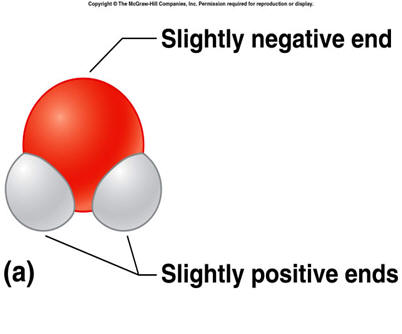
A water molecule looks like _____.
a)
smiley face
b)
mickey mouse
c)
a long chain of atoms
d)
grumpy cat
34.
What is the chemical formula for water?
a)
2HO
b)
H2O
c)
HO2
d)
H2O2
35.
How many hydrogen atoms are in one molecule of water?
a)
1
b)
2
c)
3
d)
4
36.
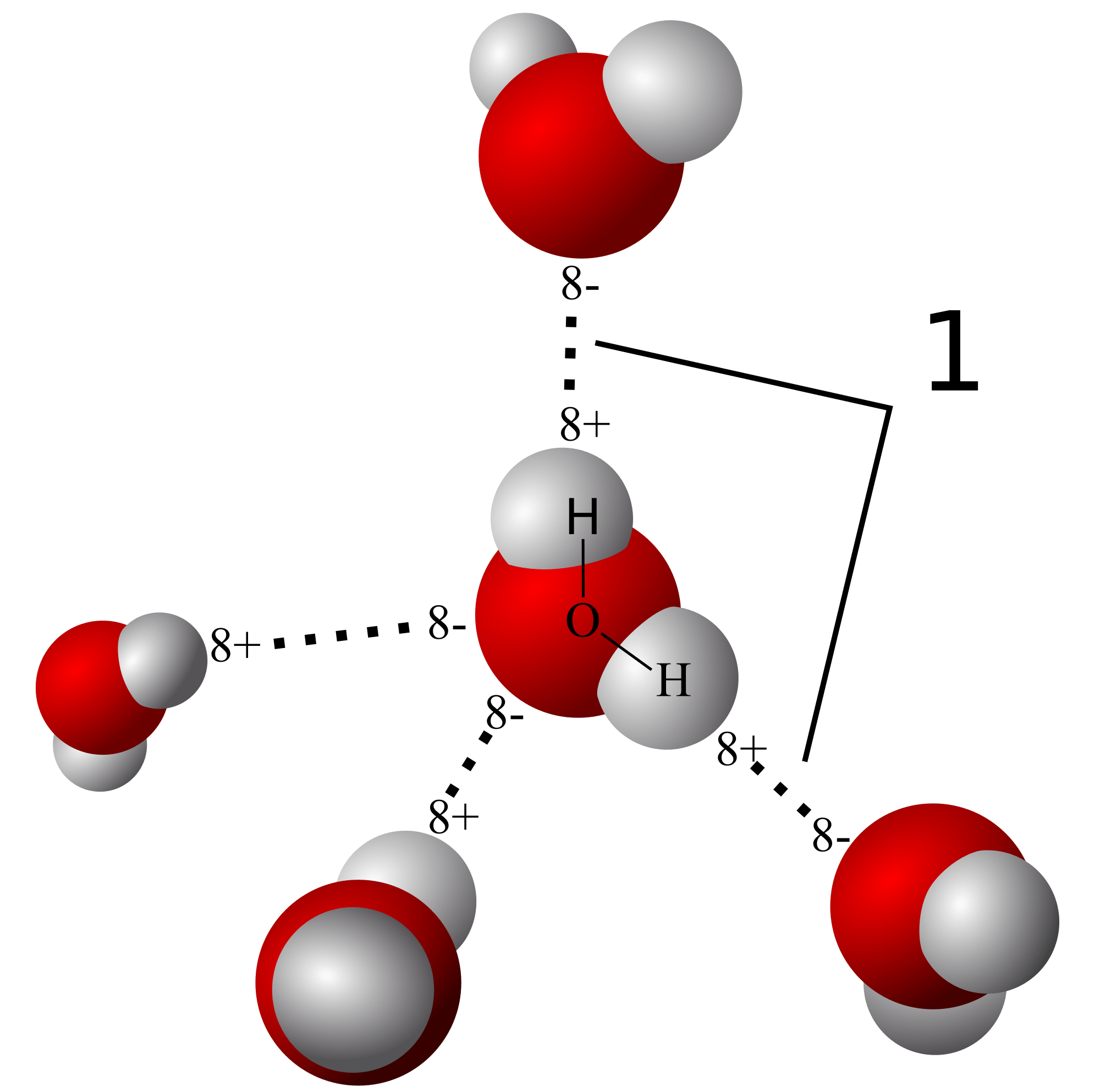
Which letter represents hydrogen?
a)
A
b)
B
c)
C
d)
D
37.
Which letter represents oxygen?
a)
A
b)
B
c)
C
d)
D
38.
Which letter represents the negative end?
a)
A
b)
B
c)
C
d)
D
39.
Which letter represents the positive end?
a)
A
b)
B
c)
C
d)
D
40.
Because water has a positive and a negative end, and is attracted to other molecules it is called a ______ molecule.
a)
mickey mouse
b)
polar (tiny magnet)
c)
special
d)
miracle
41.
The property where water molecules are attracted to other water molecules.
a)
adhesion
b)
capillary action
c)
cohesion
d)
universal solvent
42.
The property where water molecules are attracted to other types of molecules (surfaces).
a)
adhesion
b)
capillary action
c)
cohesion
d)
universal solvent
43.
The property where water can dissolve almost all substances on Earth.
a)
adhesion
b)
capillary action
c)
cohesion
d)
universal solvent
44.
The property where water can pull itself up tubes or through spaces in paper or fabrics.
a)
adhesion
b)
capillary action
c)
cohesion
d)
universal solvent
45.
Why can some insects walk on water?
a)
The water sticks to the insect.
b)
The insect is too light to break the surface tension.
c)
The insect has hydrophobic oils on its legs.
d)
Insects can't walk on water.
46.
How does capillary action happen?
a)
water is polar
b)
it drags other water molecules up the tubes
c)
it sticks to the tubes
d)
ALL OF THESE REASONS
47.
A water strider can skate along the top of a pond because:
a)
covalent bonds result in water cohesion
b)
hydrogen bonds result in water cohesion (surface tension)
c)
water striders have adapted to take advantage of water cohesion
d)
low surface tension of water
48.
What word describes when water is attracted to other substances?
a)
cohesion
b)
adhesion
c)
capillary action
d)
surface tension
49.
Why can water have no net charge but have slight charges in different parts of the molecule?
a)
The oxygen end is slightly negative and the hydrogen end is slightly positive
b)
The hydrogen end is slightly negative and the oxygen end is slightly positive
c)
The hydrogen and oxygen ends change in polarity
d)
Because it is hydrophobic
50.
Attractions between water molecules are called
a)
Covalent bonds
b)
Ionic bonds
c)
Polar bonds
d)
Hydrogen bonds
51.
The attraction that causes water and other liquids to form drops on thin films is called ________________. This is also water’s ability to be attraction to other water molecules.
a)
adhesion
b)
capillary action
c)
cohesion
d)
surface tension
52.
molecule in which opposite ends have opposite electric charges
a)
cohesion
b)
polar molecule
c)
hydrogen bond
d)
solution
53.
Which end of the water molecule has a slightly positive charge?
a)
the oxygen end
b)
the hydrogen end
c)
both ends are slightly positive
d)
neither end is positive
54.
Water is a universal solvent because it...
a)
It can be found anywhere
b)
It freezes when it gets cold
c)
floats when frozen
d)
Dissolves most substances
55.
Which characteristic of water will allow a paperclip to remain floating on water when the paperclip is gently placed on top of the water?
a)
adhesion
b)
surface tension
c)
solvent properties
d)
nonpolar
56.
Water is a universal solvent
a)
True
b)
False
57.
A Compound that is being dissolved is called a
a)
Solution
b)
Solute
c)
Solvent
d)
Suspension
58.
A solvent is...
a)
substance into which the solute dissolves
b)
a compound being dissolved
c)
a substance that does not dissolve
d)
None of the above
59.
A water strider can skate along the top of a pond because:
a)
covalent bonds result in water cohesion
b)
hydrogen bonds result in water cohesion (surface tension)
c)
water striders have adapted to take advantage of water cohesion
d)
low surface tension of water
60.
Why can water have no net charge but have slight charges in different parts of the molecule?
a)
The oxygen end is slightly negative and the hydrogen end is slightly positive
b)
The hydrogen end is slightly negative and the oxygen end is slightly positive
c)
The hydrogen and oxygen ends change in polarity
d)
Because it is hydrophobic
61.
Attractions between water molecules are called
a)
Covalent bonds
b)
Ionic bonds
c)
Polar bonds
d)
Hydrogen bonds
62.
Acids have more what? 
a)
OH ions 
b)
OH- ions
c)
H+ ions 
d)
All of the above 
63.
The attraction that causes water and other liquids to form drops on thin films is called ________________. This is also water’s ability to be attraction to other water molecules.
a)
adhesion
b)
capillary action
c)
cohesion
d)
surface tension
64.
Acid (H+) + base (OH-) → water + salt
a)
The reaction above is solution
b)
The reaction above is a suspension
c)
The reaction above is neutralization
d)
The reaction above is condensation
65.
The pH scale is a range from:
a)
1-7
b)
0-14
c)
1-14
d)
1-20
66.
A(n) ______ is a substance with a pH less than 7
a)
Acid
b)
Alkaline
c)
Base
d)
Buffer
67.
A(n) _______ is a substance with a pH greater than 7.
a)
Base
b)
Acid
c)
Buffer
d)
Water
68.
This substance releases OH- into solution
a)
Acid
b)
Base
c)
Neutral
69.

In a test of pH levels, a baking soda has a pH of 9 and bleach has a pH of 12. What is true about there relationship?

a)

Both of the solution are Bases

b)

Both of the solution are Acids

c)

The Baking soda is an acid and the Bleach is a base

d)

The baking soda is a base and the Bleach is an Acid.

70.

A base is a substance

a)

That releases OH- ions when dissolved in water

b)

That releases H+ ions when dissolved in water

c)

Does not release any ions when dissolved in water

d)

None of the above

71.

A pH of 3 is how many times more acidic than a pH of 5?

a)

2

b)

20

c)

10

d)

100

72.
On the pH scale higher numbers indicate
a)
acids
b)
bases
73.
On the pH scale higher numbers indicate
a)
acids
b)
bases
74.

The picture below shows the relative concentrations of H+ and OH- in a solution. Is the solution an acid or a base?

a)

acid

b)

base

75.

Water has a neutral because

a)

it has more H+ ions than OH-

b)

it has more OH- ions than H+

c)

it does not produce any ions

d)

it has an equal amount of H+ and OH- in solution

76.
According to the pH range which substance is more acidic than lemon juice
a)
Hydrochloric acid
b)
cabbage
c)
milk
77.
Bleach is a strong base, what is the pH level of bleach?
a)
13
b)
14
c)
1
d)
2
78.
A solution has a pH of 7.0.  What would happen to the pH if OH ions were added?
a)
pH would go up
b)
pH would go down
c)
pH would stay the same
d)
None of these
79.
The ability of water to move through and around substances is called?  (Examples:  Water moving through a paper towel; water being transported from the roots to the top leaves of a tree.)
a)
Capillary action
b)
Cohesion action
c)
Concave action
d)
None of the above
80.
A solvent is...
a)
a substance into which the solute dissolves
b)
a compound being dissolved
c)
a substance that does not dissolve
d)
None of the above
81.
The attraction that causes water and other liquids to form drops on thin films (like wax paper) is called ________________. This is also water’s ability to be attracted to other water molecules.
a)
adhesion
b)
capillary action
c)
cohesion
d)
surface tension
82.
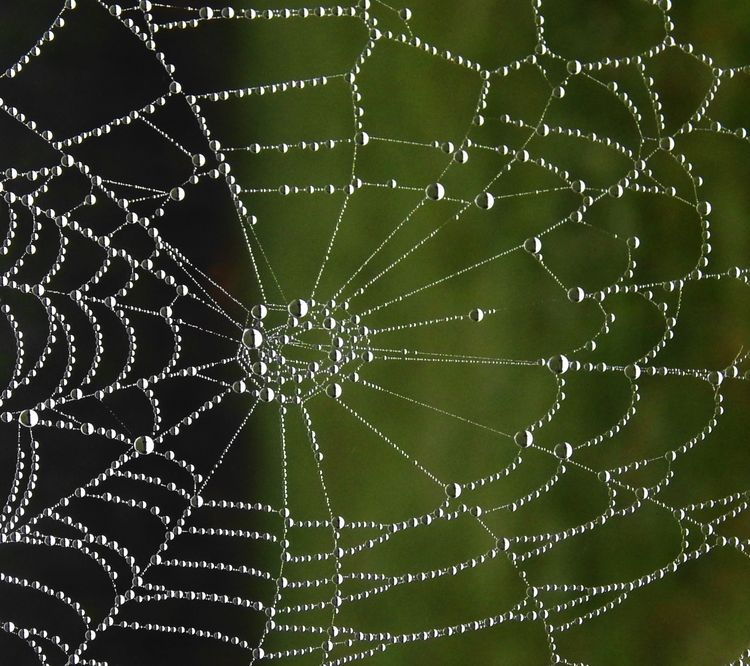
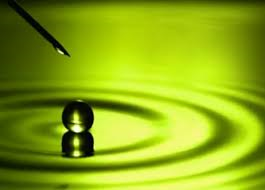
Water droplets take a spherical shape (as pictured) because of ____________
a)
adhesion
b)
cohesion
c)
capillary action
d)
solubility
83.
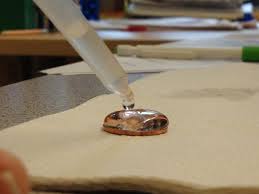
Which property of water will cause water to bead up on glass?
a)
Adhesion
b)
Cohesion
c)
Ability to dissolve substances
d)
High specific heat
84.
Why does water move from the roots to the leaves of plants?
a)
Water is pushed by solutes
b)
Capillary action pulls the water molecules like a chain
c)
Water is pulled by gravity
d)
Water’s cohesion causes it to “pull” towards the leaves