wayground logo

Free Printable Worksheets

NEW

Font size

S
M
L
XL
Worksheets

Exam 1 Review

Total questions: 80

Worksheet time: 2hrs 19mins

Name
Class
Date
1.

What are the four biological molecules?

a)

proteins, carbohydrates, lipids, nucleic acids

b)

A, T, C, G

c)

water, air, earth, and fire

d)

Joe, Nick, and Kevin Jonas

2.

Starches and fibers are examples of which biomolecule?

a)

Lipid

b)

Protein

c)

Nucleic Acid

d)

Carbohydrate

3.

Enzymes are an example of which biomolecule?

a)

Carbohydrate

b)

Lipid

c)

Nucleic Acid

d)

Protein

4.

Which biomolecule is made of nucleotides and includes your DNA?

a)

Carbohydrate

b)

Lipids

c)

Protein

d)

Nucleic Acid

5.

Which biomolecule is used for insulation and energy storage?

a)

Protein

b)

Nucleic Acid

c)

Lipid

d)

Carbohydrate

6.
Which biomolecule is made of amino acids?
a)
Nucleic Acid
b)
Carbohydrate
c)
Protein
d)
Lipid
7.
Which biomolecule is your main source of quick energy?
a)
Nucleic Acid
b)
Protein
c)
Lipid
d)
Carbohydrate
8.
Which biomolecule contains fats and oils?
a)
Proteins
b)
Nucleic Acid
c)
Lipids
d)
Carbohydrate
9.

If you want a reaction to speed up you need a(n) _________.

a)

nucleic acid

b)

enzyme

c)

nerve cell

d)

carbohydrate

10.
All polymers are made up of...
a)
monosaccharides
b)
monomers
c)
proteins
d)
None of these
11.
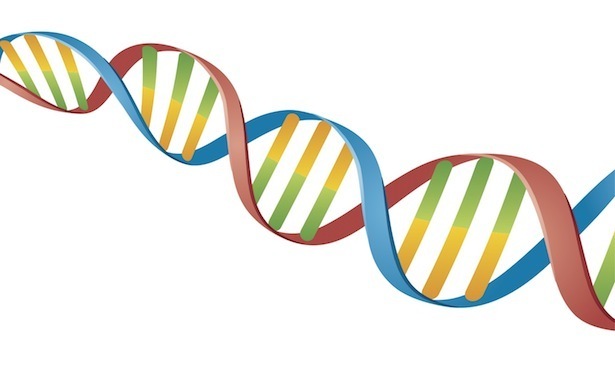
Which biomolecule is this a picture of?
a)
Protein
b)
Nucleic Acid
c)
Lipid
d)
Carbohydrate
12.
Name this biomolecule
a)
carbohydrate
b)
lipid
c)
nucleic acid
d)
protein
13.
What are foods that are high in carbs?
a)
Eggs, fish, poultry
b)
Cheese, meats, vegetables
c)
Bread, potatoes, and pasta
d)
Multitude of oils, butter and condiments
14.
What is the function of a nucleic acid?
a)
Stores genetic information
b)
Stores energy
c)
Quick source of energy
d)
Builds structures
15.
What is the purpose  of an enzyme?
a)
give permission for the reaction
b)
raise activation energy
c)
speed up reactions
d)
control how many reactions occur
16.
What are the 4 most abundant elements in living things?
a)
hydrogen, oxygen, nitrogen, carbon
b)
hydrogen, helium, oxygen, carbon
c)
carbon, manganese, iron, hydrogen
17.
The element _______is found in all of the organic compounds.
a)
Iron
b)
Nitrogen
c)
Carbon
d)
Oxygen
18.
The building blocks (monomers) or proteins are _______.
a)
Nucleotides
b)
Monosaccharides
c)
Amino Acids
d)
Glycerol and fatty acids
19.
___________ are many monomers bonded together that form a larger molecule.
a)
Polymers
b)
Monomers
c)
Trinominers
d)
DNA
20.
DNA and RNA are examples of 
a)
Carbohydrates
b)
Lipids
c)
Proteins
d)
Nucleic Acids
21.
Nucleotides are the building blocks (monomers) of ______.
a)
Carbohydrates
b)
Lipids
c)
Proteins
d)
Nucleic Acids
22.

What are the building blocks of carbohydrates?

a)

monosaccharides

b)

amino acids

c)

glycerol

d)

DNA

23.
The basic unit of life is a ____________.
a)
atom
b)
molecule
c)
organelle
d)
cell
24.
A water strider can skate along the top of a pond because:
a)
covalent bonds result in water cohesion
b)
hydrogen bonds result in water cohesion (surface tension)
c)
water striders have adapted to take advantage of water cohesion
d)
low surface tension of water
25.
What word describes when water is attracted to other substances?
a)
cohesion
b)
adhesion
c)
capillary action
d)
surface tension
26.
What two elements make up water?
a)
Helium and oxygen
b)
Hydrogen and oxygen
c)
helium and carbon
d)
oxygen and carbon
27.
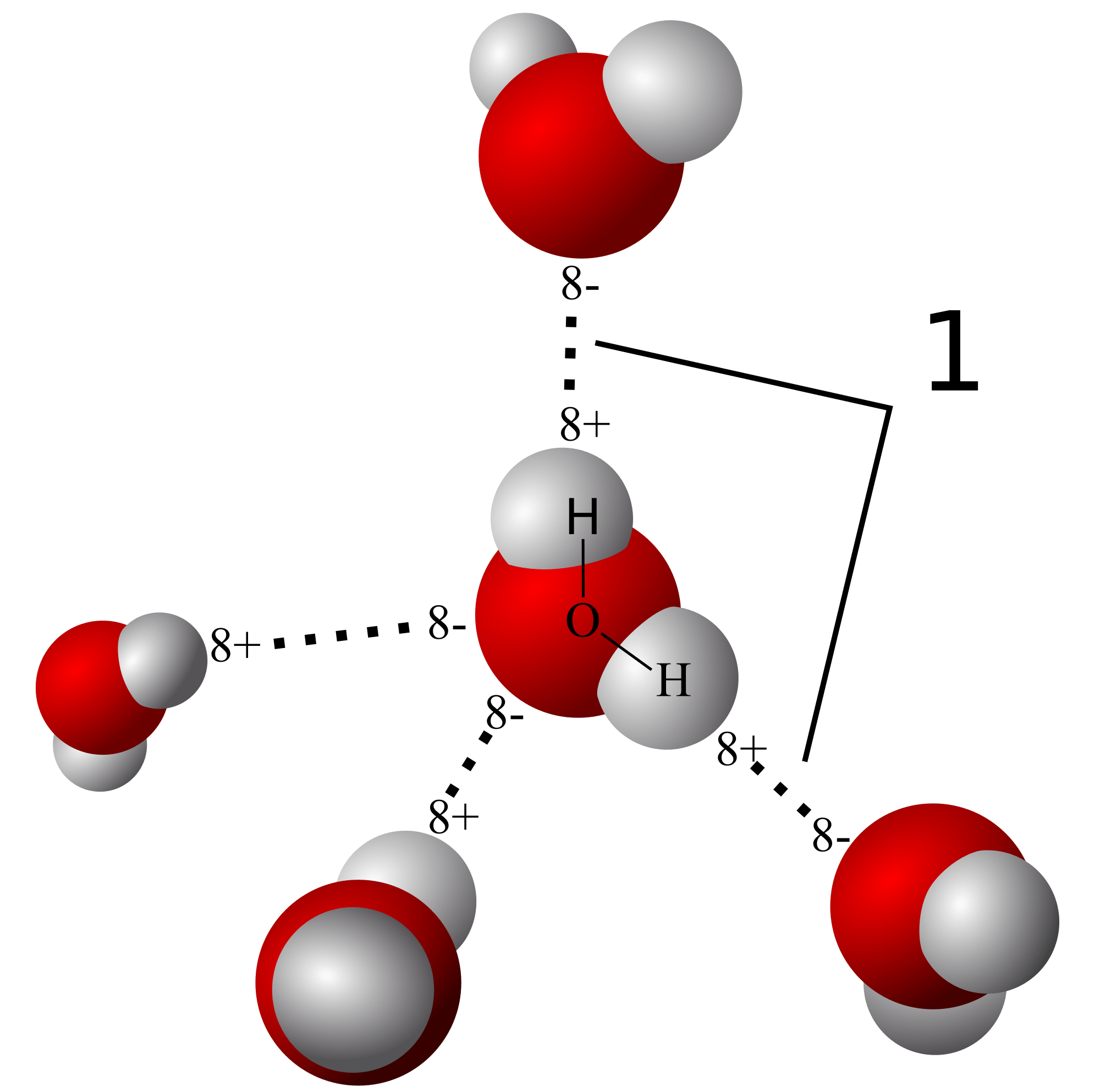
Attractions between water molecules are called
a)
Covalent bonds
b)
Ionic bonds
c)
Polar bonds
d)
Hydrogen bonds
28.
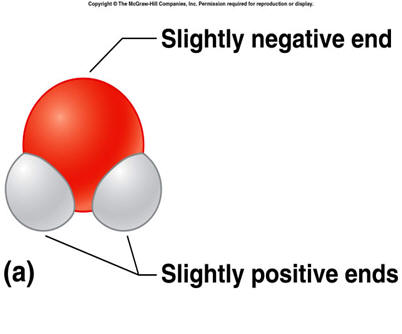
Water is polar because...
a)
The unequal sharing of electrons gives the water molecule a slight negative charge near its oxygen atom and a slight positive charge near its hydrogen atoms.
b)
The molecule has two poles, at which the it is colder than other regions of the molecule.
c)
The unequal sharing of electrons gives the water molecule a slight negative charge near its hydrogen atoms and a slight positive charge near its oxygen atom.
d)
The water molecule is neutral.
29.
molecule in which opposite ends have opposite electric charges
a)
cohesion
b)
polar molecule
c)
hydrogen bond
d)
solution
30.
A general definition of cohesion is the attraction of:
a)
particles of the same substance
b)
particles of a different substance
c)
particles of both the same and different substances
d)
particles of neither the same or different substances
31.
The monomer of a lipid is called...
a)
a nucleotide
b)
a monosaccharide
c)
an amino acid
d)
a fatty acid
32.
The monomer of a nucleic acid is called... 
a)
an amino acid
b)
a fatty acid
c)
a monosaccharide
d)
a nucleotide
33.
The substance being dissolved in a solution.
a)
sands
b)
solute
c)
solvent
d)
alloy
34.
The substance in which a solute is dissolved
a)
sands
b)
solvent
c)
alloy
d)
negative particles
35.
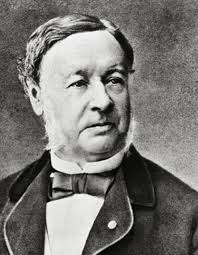
Robert Hooke, Anton van Leeuwenhoek, Theodor Schwann, Rudolf Virchow, and Matthias Schliden were all responsible for what theory?
a)
The Theory of Gravity
b)
The Theory of Relativity
c)
The Cell Theory
d)
The Theory of Continental Drift
36.
What tool do you use to view the cells?
a)
metric ruler
b)
centrifuge
c)
microscope
d)
telescope
37.
All living things are made up of...
a)
cells
b)
cell tissues
c)
organ
d)
organ systems
38.
All cells come from___________ cells.
a)
pregnant
b)
pre-existing
c)
paternal
d)
pin size
39.
An organism made of one cell is called
a)
unicellular organism
b)
multicellular organism
40.
Which of the following scientists concluded that all animals are made of cells?
a)
Rudolf Virchow
b)
Matthais Schleiden
c)
Robert Hooke
d)
Theodor Schwann
41.
Which of the following scientists was the first to observe bacteria under a microscope?
a)
Anton van Leuwenhoek
b)
Matthais Schleiden
c)
Robert Hooke
d)
Theodor Schwann
42.
Which is NOT part of the Cell Theory
a)
New cells are produced from existing cells
b)
All living things are composed of cells
c)
Only eukaryotic cells have a nucleus
d)
Cells are the basic unit of structure & function in living things
43.
Who discovered and named cells? 
a)
Captain Hook
b)
Robert Hooke
c)
Zacharias Janssen
d)
Rudolf Virchow
44.
What did Hooke first examine? 
a)
Pond water
b)
Plant cells
c)
Cork
d)
Animal fat
45.

The endosymbiotic theory most directly explains which of the following

a)

Mitochondria and chloroplast have small, prokaryotic ribosomes

b)

DNA in chloroplasts code for some proteins

c)

Some bacteria develop resistance to antibiotics

d)

Bacteria contain a single circular chromosome

46.
What was Schleiden convinced of? 
a)
All plants are made of cells
b)
All animals are made of cells
c)
All cells form spontaneously
d)
None of the above
47.
Which of the following controls movement of materials in and out of a cell? 
a)
Cell wall
b)
Cell membrane
c)
Cytoplasm
d)
Nucleus
48.
Which organelle is the protein factory? 
a)
Ribosomes
b)

Mitochondria

c)
Centriole
d)
Lysosomes
49.
What organelle surrounds and supports plant cells?

a)
Cell Membrane
b)
Cell Wall
c)
Nucleus
d)
Golgi Complex
50.
In what organelle does the food making process in plants take place?

a)
Endoplasmic Reticulum
b)
Vacuole
c)
Chloroplasts
d)
Mitochondria
51.
In what organelle is the genetic material found inside?
 
a)
Endoplasmic Reticulum
b)
Golgi Complex
c)
Nucleolus
d)
Nucleus
52.
What organelle is called the "powerhouse" of a cell?

a)
Endoplasmic Reticulum
b)
Nucleus
c)
Mitochondria
d)
Nucleolus
53.
What is the gel-like substance inside of cells called?

a)
photoplasm
b)
photosynthesis
c)
cytoskeleton
d)
cytoplasm
54.
What is the function of nucleus?
a)
Structure that organizes motion of chromosomes. 
b)
Structure that contains DNA and directs the cell 
c)
Membrane that surrounds and protects the cell 
d)
Stack of membranes that packages chemicals
55.
Where does photosynthesis occur?
a)
mitochondria
b)
stomata
c)
xylem
d)
chloroplast
56.
What is the difference between rough and smooth ER?
a)
There is no difference.
b)
Plants have rough ER, animals have smooth ER.
c)
What type of injuries the Doctors treat.
d)
Rough has ribosomes, smooth does not.
57.
I am a protein packaging and shipping machine! Who am I?
a)
vacuole
b)
ribosome
c)
endoplasmic reticulum
d)
golgi apparatus
58.
Where is the DNA found in a prokaryotic cell? 
a)
floating around in the cytoplasm 
b)
in the nucleus 
59.
What type of cell has a nucleus? 
a)
eukaryotic
b)
prokaryotic 
60.
Amino acids link together to form proteins. In which organelle would this process occur?
a)
Lysosome
b)
Ribosome
c)
Centriole
d)
Mitochondria
61.
What is the function of the vacuole?
a)
Sac that stores water, nutrients, and waste products
b)
Sac filled with digestive chemicals
c)
Jelly-like substance within the plasma membrane
d)
stack of membranes that packages chemicals
62.
What cell part is NOT found in all cells?
a)
Cell Wall
b)
Cell Membrane
c)
Cytoplasm
d)
Genetic Material
63.
What makes the endoplasmic reticulum rough?
a)
Vessicles
b)
Vacuoles
c)
Ribosomes
d)
Chromosomes
64.

What forms the channels and pumps in the phospholipid bilayer?

a)

carbohydrates

b)

proteins

c)

hydrophilic heads

d)

lipids

65.
Which of the following is responsible for getting large or charged (polar) molecules across the cell membrane?
a)
E
b)
B
c)
C
d)
D
66.
Hydrophilic portion of cell membrane?
a)
A
b)
C
c)
D
d)
67.
Hydrophobic region of the cell membrane?
a)
E
b)
B
c)
C
d)
68.

Hydrophobic means...

a)

water-loving

b)

water-fearing

c)

nonpolar

d)

lipid soluble

69.
A phospholipid has 2 parts. What are they called? 
a)
Hydrophilic Head, Hydrophobic Tail 
b)
Hydrophobic Head, Hydrophilic Tail 
70.
A ______________ is composed of a phosphate and glycerol head and 2 fatty acid chain tails. 
a)
phospholipid 
b)
Carbohydrate
c)
Cholesterol 
d)
Protein 
71.
Describes the arrangement of the cell membrane as bendable and made of many parts. 
a)
The Fluid Mosaic Model 
b)
The Major Mobility Model 
c)
The Crazy Cell Model
d)
The Maze Model
72.
___________ strengthens and stabilizes the cell membrane.
a)
Carbohydrates 
b)
Proteins 
c)
Phospholipids 
d)
Cholesterol
73.
___________ form the two layers of the cell membrane. 
a)
Carbohydrates 
b)
Proteins 
c)
Phospholipids 
d)
Cholesterol
74.
Cells need to bring in molecules to carry out cellular processes. Often, this requires moving the molecules across the cell membrane against the concentration gradient. How do these molecules get into the cell?
a)
passive transport by diffusion
b)
active transport using ATP 
c)
passive transport by osmosis
d)
 osmosis
75.
 In pure water, a red blood cell from an animal will swell and burst, but a leaf cell from a plant will not. Which structure in the leaf cell is responsible for this difference?
a)
cell membrane
b)
cell wall
c)
 mitochondrion
d)
nucleus
76.
The diffusion of water across a selectively permeable membrane is called 
a)
active transport
b)
facilitated diffusion
c)
osmosis
d)
phagocytosis
77.
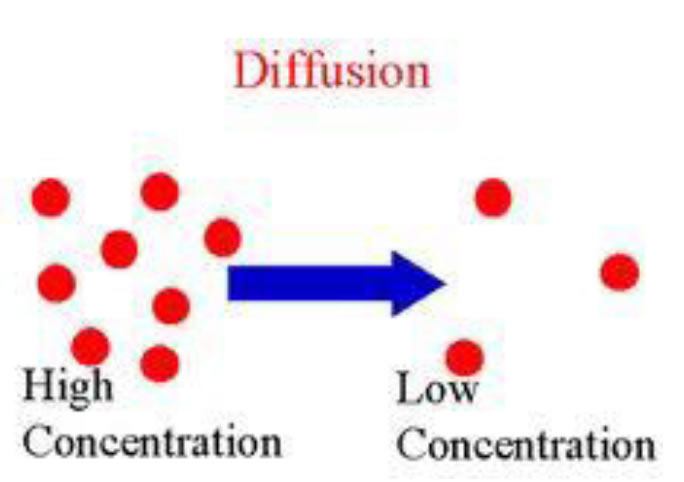
During diffusion molecules tend to move 
a)
   up the concentration gradient
b)
 from an area of lower concentration to an area of higher concentration
c)
 in a direction that doesn’t depend on concentration
d)
 down the concentration gradient
78.
Movement of particles from high to low concentration. 
a)
Passive Transport
b)
Active Transport
79.
Uses ATP (energy)
a)
Passive Transport
b)
Active Transport
80.

Stain commonly used to stain cells so they can be seen under a light microscope

a)

Water

b)

Methylene blue

c)

Bromothymol Blue

d)

Magnesium Chloride