wayground logo

Free Printable Worksheets

Font size

S
M
L
XL
Worksheets

Physics Quiz 3 - Midterm Part 1

Total questions: 34

Worksheet time: 29mins
Name
Class
Date
1.
Gravitational potential energy depends on the ________ and ________ of the object. 
a)
Height and mass
b)
Friction and movement
c)
Mass and Movement
d)
Height and Friction 
2.

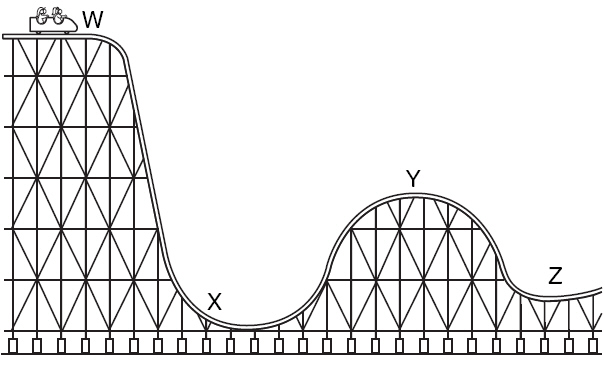
At which point is gravitational potential energy greatest?

a)

W

b)

X

c)

Y

d)

Z

3.

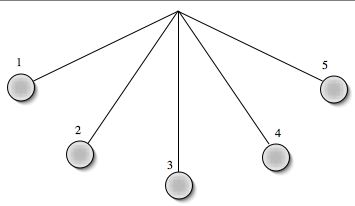
When a pendulum swings, at which point is gravitational potential energy at its greatest?

a)

1

b)

2

c)

3

d)

4

4.

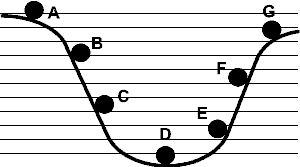
Which point has the most potential energy?

a)

G

b)

F

c)

B

d)

A

5.
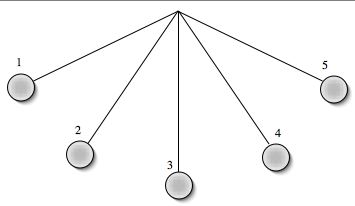
When a pendulum swings, at which point is kinetic energy highest?
a)
1
b)
2
c)
3
d)
4
6.
At which point is kinetic energy greatest? 
a)
W
b)
X
c)
Y
d)
Z
7.
The faster an object moves, the ________ kinetic energy it has. 
a)
more
b)
less
c)
none of the above
d)
all of the above 
8.
Energy due to motion is ____________ energy. 
a)
Potential 
b)
Energy
c)
Kinetic
d)
Friction
9.
As a pendulum swings from its highest to lowest position, what happens to its kinetic and potential energy? 
a)
Both the potential energy and kinetic energy decrease
b)
The potential energy decreases while the kinetic energy increases 
c)
The kinetic energy decreases while the potential energy increases 
d)
Bothe the potential energy and kinetic energy increase 
10.
Marcy uses a hair dryer to dry her hair.

 To what kinds of energy does electrical energy change when she uses the hair dryer?
 
a)
heat and light
b)
heat and motion
c)
motion and sound
d)
heat, motion, and sound
11.
A battery converts what type of energy to another?
a)
sound to kinetic
b)
light to heat
c)
mechanical to electrical
d)
chemical to electrical
12.
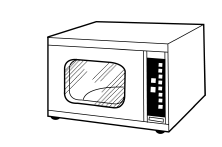
The picture shows a microwave oven. As a microwave oven is operated, electrical energy is transformed into all of the following types of energy EXCEPT —
a)
solar
b)
light
c)
thermal
d)
mechanical
13.
Electrical Energy is transferred to _____ Energy.
a)
Thermal
b)
Solar
c)
Electrical
d)
None
14.
At what position would a cyclist have the most kinetic energy?
a)
A
b)
B
c)
D
d)
F
15.
Any object that rises and falls experiences a change in:
a)
gravitational potential energy & kinetic energy
b)
release of energy
c)
size
d)
color
16.
According to the Law of Conservation of Energy...
a)
energy changes form
b)
energy can be created and destroyed
c)
energy flows from one material to the next
d)
energy cannot be created or destroyed
17.

If we trace back all energy we use each day, we find it comes from

a)

kinetic energy

b)

potential energy

c)

the sun

18.
Energy transformations occur when...
a)
energy is created through conduction
b)
energy changes from one form to another
c)
two forces slide together that are touching
d)
a chemical reaction takes place
19.
When the temperature of matter increases the particles...
a)
speed up and move closer
b)
speed up and move farther apart
c)
slow down and move closer together
d)
slow down and move farther apart
20.
As particles are exposed to colder temperatures they _____
a)
speed up
b)
slow down
c)
stay the same
d)
become ions
21.
The faster molecules move, 
a)
the higher the temperature
b)
the less temperature
c)
the same temperature
d)
I don't know
22.
The slower molecules move, 
a)
the higher the temperature
b)
the less temperature
c)
the same temperature
d)
I don't know
23.

Sound travels FASTEST through which of these materials?

a)

Air, a gas

b)

Empty space

c)

Metal, a solid

d)

Water, a liquid

24.

What material (medium) does sound travel through slowest?

a)

gas

b)

solid

c)

liquid

d)

trees

25.

Thermal energy is determined by:

a)

the mass of the object & theremometer

b)

the type of object & the temperature of the object

c)

temperature of an object & the mass of the object

d)

speed the object is moving & temperature of the object

26.

A glow stick converts chemical energy into light energy. Which pieces of evidence below most accurately explains why over time glow sticks stop emitting light.

a)

The glow stick burnt out.

b)

Glow sticks are designed to only glow for 1 day. There aren't chemicals that allow it to glow longer.

c)

Overtime, the chemical energy from the glow stick is used up, and is no longer being changed into light energy that we can see.

d)

Overtime, the light energy burns out and all that is left is the chemical energy in the burnt out glow stick.

27.

When you hear a basketball bounce in a gym, which of the following statement(s) is correct about energy transfer.

a)

GE is changed to KE, then KE is changed to SE (sound energy)

b)

Since energy can not be created or destroyed the ball will bounce forever

c)

When the ball makes contact with the ground KE is also changed into thermal energy

d)

Energy is lost to its surroundings

28.

When wires are connected to a battery and a lightbulb in a circuit, the lightbulb is light. Which types of energy are produced by the battery and lightbulb?

a)

Electrical and light

b)

electrical and sound

c)

sound and light

d)

all of the above

29.

What is wrong with the circuit?

a)

The light is not big enough

b)

it needs more wires

c)

The wires are not closed

d)

Another energy source is needed

30.

Which of the objects below can be connected to the ends of the wires to complete the circuit and make the buzzer sound?

a)

another wire

b)

a switch

c)

a battery

d)

a bulb

31.

What is a circuit?

a)

A complete and closed path around which is circulating electric

b)

Heat and electricity

c)

It covers one form of energy to mechanical energy

d)

A electrical device

32.
Will the light bulb in this circuit light and why/why not?
a)
yes, because it has two batteries
b)
no, because the switch is open
c)
yes, because it is in a circuit
d)
no, because the bulb is burned out
33.
Which statement is true?
a)
The light bulb will light up because the  circuit is complete.
b)
The light bulb will light up because the  circuit is broken.
c)
The light bulb will not light up because the  circuit is complete.
d)
The light bulb will not light up because the  circuit is broken.
34.

The picture showing the energy conversion

Chemical → light & heat

is:

a)
b)
c)
d)