wayground logo

Free Printable Worksheets

NEW

Font size

S
M
L
XL
Worksheets

Weather Review Vocabulary

Total questions: 61

Worksheet time: 1hrs 5mins

Name
Class
Date
1.
heavy rainfall
a)
cold front
b)
warm front
2.
cold air moves in behind the front
a)
cold front
b)
warm front
3.
light rain or drizzle
a)
cold front
b)
warm front
4.
cold air mass pushes the warm air mass upward
a)
cold front
b)
warm front
5.
warm air mass stretches over a cold air mass
a)
cold front
b)
warm front
6.
lightning and thunder may occur
a)
cold front
b)
warm front
7.
light snowfall or snow flurries
a)
cold front
b)
warm front
8.
blizzard like conditions
a)
cold front
b)
warm front
9.
The symbol on a weather map for a cold front is what?
a)
a line with triangles on it
b)
a line with semi-circles on it
c)
a line with squares on it
d)
a line with circles on it
10.
When a cold front is approaching, what happens?
a)
warm air is pushing under cold air causing humid weather and lower temperatures
b)
warm air is pushing under cold air causing humid weather and higher temperatures
c)
warm air rises, cools, and causes rain and thunderstorms
d)
cold air is pushed over warm air causing rain and thunderstorms
11.
In a high pressure area, the weather will likely be
a)
cooler and clear skies
b)
warm but cloudy
c)
cold and rainy
d)
snowy and clear
12.
Which system results in rainy or stormy weather?
a)
high pressure
b)
low pressure
c)
hurricane
d)
weather system
13.
This is the symbol for which type of front?
a)
cold front
b)
warm front
c)
occluded front
d)
stationary front
14.
This is the symbol for which type of front?
a)
cold front
b)
warm front
c)
stationary front
d)
occluded front
15.
Which type of front is near Seattle?
a)
cold front
b)
warm front
c)
occluded front
d)
stationary front
16.
Which front is located near San Diego?
a)
cold front
b)
warm front
c)
occluded front
d)
stationary front
17.
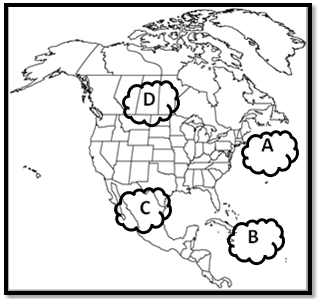
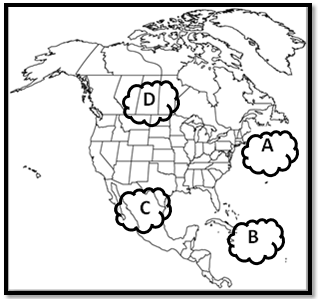
Which type of air would you find at air mass A?
a)
cold, dry
b)
warm, humid
c)
warm, dry
d)
cold, humid
18.
Which type of air would you find at air mass D?
a)
cold, dry
b)
warm, humid
c)
warm, dry
d)
cold, humid
19.

Cottony, billowy, pictures

a)

Cirrus

b)

Cumulus

c)

Stratus

d)

Nimbostratus

20.

High, thin wispy

a)

Cirrus

b)

Cumulus

c)

Stratus

d)

Cumulonimbus

21.

Winter clouds, brings snow

a)

Cirrus

b)

nimbostratus

c)

Cumulonimbus

d)

Alto cumulus

22.

Thunderstorm cloud

a)

Cumulonimbus

b)

Nimbostratus

c)

Cirrus

d)

Contrail

23.
This type of cloud is thin, wispy, and made of ice crystals
a)
cumulus cloud
b)
stratus cloud
c)
cirrus cloud
d)
cumulonimbus cloud
24.
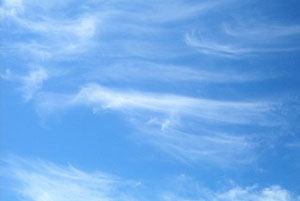
what type of cloud is shown?
a)
cumulus
b)
cirrus
c)
stratus
25.
what type of cloud is shown?
a)
cumulus
b)
cirrus
c)
stratus
26.
What part of the water cycle does this picture show?
a)
condensation
b)
precipitation
c)
evaporation
27.
Which of these is an example of precipitation?
a)
snow
b)
air
c)
clouds
d)
vapor
28.
What is the water cycle?
a)
the 3 forms of water
b)
the movement of water on, above, or below the surface of the Earth
c)
when water melts
d)
when clouds form
29.

Hurricanes that hit the east coast of the United States often start as low-pressure systems

off the west coast of Africa. Which global winds move these hurricanes toward the United

States?

a)

polar easterlies

b)

prevailing westerlies

c)

northeast trade winds

d)

southeast trade winds

30.

Why do hurricanes die out soon after hitting landfall?

a)

Cloud types change.

b)

Warm water no longer feeds them.

c)

Rotation of the storm changes direction.

31.

Why do most storms move from the west coast of America to the east

coast?

a)

Polar Easterlies

b)

South East Trade Winds

c)

North East Trade Winds

d)

Prevailing Westerlies

32.

Which country would Great Britain’s climate be most like if the Gulf Stream and the Labrador Current did not exist?

a)

South Africa

b)

South America

c)

Canada

d)

Antarctica

33.

Which has the greatest effect on the movement of the jet stream?

a)

size of clouds

b)

amount of precipitation

c)

differences in air temperatures

34.

Which best describes a characteristic of the jet stream?

a)

It forms a boundary between a cold air mass and a warm air mass.

b)

It creates the high winds around the eye of a hurricane.

c)

It forces the hot air along the equator to rise to areas in North

America.

d)

It causes high pressure air masses to rotate clockwise.

35.

The polar jet stream is an air current that flows across North America. It flows much faster

in winter than it does in summer. Why is it faster in the winter?

a)

Northern air has more oxygen in winter.

b)

Northern air is warmer in winter.

c)

Northern air is colder in winter.

d)

Northern air is drier in winter.

36.

Where do hurricanes form?

a)

in the ocean near warm areas

b)

in the ocean near cold areas

c)

in large lakes near cold areas

d)

in large lakes near warm areas

37.
What is the jet stream?
a)
Precipitation in North Carolina
b)
Weather over a long period of time
c)
Strong winds above the Earth's surface
d)
Football flying over the Earth
38.
What flows does the Jet Stream have?
a)
West to East
b)
West to South
c)
North to West 
d)
South to East
39.
What flows does the Jet Stream have?
a)
West to East
b)
West to South
c)
North to West 
d)
South to East
40.
Which best describes how winds in the jet stream blow?
a)
between a boundary of cold air and a boundary of warm air
b)
between two boundaries of hot air
c)
no pattern
d)
between two boundaries of cold air
41.
Winds are caused by 
a)
equal heating 
b)
unequal heating
42.
What is the instrument called that measures air pressure?
a)
thermometer
b)
ruler
c)
yard stick
d)
barometer
43.
What will most likely result when the jet stream moves south of North Carolina?
a)
North Carolina will experience tropical weather conditions.
b)
North Carolina will experience hot, dry weather.
c)
North Carolina will experience mild weather.
d)
North Carolina will experience cold weather.
44.
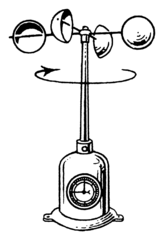
This weather instrument is an...
a)
wind vane
b)
anemometer
c)
barometer
d)
thermometer
45.
This weather instrument is a...
a)
anemometer
b)
barometer
c)
wind vane
d)
thermometer
46.
This weather instrument is a...
a)
thermometer
b)
wind vane
c)
anemometer
d)
rain gauge
47.
This weather instrument is a...
a)
thermometer
b)
anemometer
c)
rain gauge
d)
barometer
48.
This weather instrument is a...
a)
anemometer
b)
Christmas ornament
c)
wind vane
d)
barometer
49.
Temperature is measured in...
a)
degrees
b)
inches
c)
centimeters
d)
feet
50.
This instrument measures air pressure.
a)
anemometer
b)
barometer
c)
rain gauge
d)
thermometer
51.
A high pressure system means we might have this weather.
a)
Snow blizzard
b)
Sunny and dry
c)
Rain storm
d)
Tornado
52.
A low pressure system means we might have this weather.
a)
Sunny 
b)
A clear sky
c)
Dry day
d)
Stormy or wet
53.
This tool is used with a wind vane to determine the direction of the wind.
a)
wrench
b)
screwdriver
c)
compass
d)
telescope
54.
This tool measures the wind speed.
a)
barometer
b)
anemometer
c)
thermometer
d)
my dog when he sticks his head out the window
55.
This tool photographs clouds and sends data to meteorologists.
a)
camera
b)
iPhone 5
c)
satellite
d)
radar
56.
What pushes weather from place to place?
a)
magic
b)
water
c)
wind
d)
clouds
57.
Satellites show clouds on earth, while radar shows what?
a)
Precipitation
b)
Cable tv
c)
sun light
d)
temperatures
58.
How does the Gulf Stream affect weather conditions along the eastern coast of the United States?
a)
The Gulf Stream causes temperatures to decrease.
b)
The Gulf Stream causes temperatures to increase.
c)
The Gulf Stream causes more overcast skies.
59.
What impact does the Gulf Stream have on North Carolina’s coastal climate?
a)
The cold water from the Gulf Stream current cools the land.
b)
The warm water from the Gulf Stream current warms the land.
c)
The cold water from the Gulf Stream current decreases inland wind speeds.
d)
The warm water from the Gulf Stream current increases inland wind speeds.
60.

Which causes North Carolina to experience an increase in winter precipitation?

a)

El Niño

b)

La Niña

c)

trade winds

d)

prevailing westerlies

61.

How could La Niña affect weather during the summer in North Carolina?

a)

It could decrease wind.

b)

It could increase rainfall.

c)

It could decrease rainfall.