
 Worksheets
Praxis-Biology
Total questions: 74
Worksheet time: 1hrs 28mins
A group of students are setting up an experiment to determine how temperature affects the rate of CO2 production in germinating seedlings. The students place 12 similar sprouting corn seedlings in individual test tubes. Each seedling sits on top of a cotton ball over 15mL of a BTB solution. The test tubes are sealed to trap CO2 emitted from seedlings; the BTB is expected to turn yellow as CO2 reacts with the solution. The students divide the test tubes into four groups of three and incubate the groups in a closed and dark frig or in well it classroom under the conditions shown in the table. Which of the following is a significant flaw in the experimental design?
The experiment includes more than one independent variable
The students should test CO2 emission at more temperatures.
Too many seedlings are placed in each experimental group.
The data obtained are qualitative rather than quantitative.

In the punnett square below, what belongs in the missing square
b = blue eyes
What is true about these two brothers that have brown eyes?
One has genotype BB the other Bb.
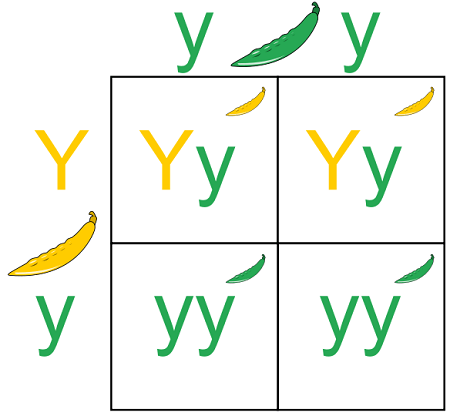
Black fur is dominant to white fur in rabbits. Cross a homozygous black rabbit with a homozygous white rabbit. What will the genotype be of the offspring?
100% Black
50% Black/ 50% white
0% Black
100% Bb


What percent of the offspring are hybrids?
25
50
75
100


Is this karyotype for a male or female?
MALE
FEMALE


Nucleic acids are mad up of nucleotide. What is the structure of a nucleotide?
(hint: look for a 5-Carbon Sugar Molecule)


What are the 4 main elements that make up Organic Molecules?
H, O, B, P
H, C, O, N
H, C, O, He
H, P, O, K

What Organic molecule is a biologically functional molecule that consists of one or more polypeptides folded and coiled into a specific 3-D structure?
Lipid
Carbohydrate
Nucleic Acid
Protein

Cells tend to be small, with sizes ranging between 1 and 100 mm. These small sizes help to ensure that cells have a favorable surface-area-to-volume ratio. Choose the statement that explains why a favorable surface-area-to-volume ratio is advantageous.
Higher surface-area-to-volume ratios improve the efficiency of transporting materials in and out of cells.
Lower surface-area-to-volume ratios improve the efficiency of transporting materials in and our of cells.
Higher surface-area-to-volume ratios speed up the flow of cytoplasm within cells.
Higher surface-area-to-volume ratios slow down the flow of cytoplasm within cells.
Both prokaryotic and eukaryotic cells contain all of the following EXCEPT
Cell (Plasma) Membrane
Chloroplast
Cytoplasm
Ribosomes
Which of the following must exist in a population before natural selection can act?
sexual reproduction
variation among individuals caused by environmental factors
genetic variation among individuals
asexual reproduction
sporulation
Adult male humans generally have deeper voices than do adult female humans, which is the direct result of higher levels of testosterone causing growth of the larynx. If the fossil records of apes and humans alike show a trend toward decreasing larynx size in adult females and increasing larynx size in adult males, then
stabilizing selection was occurring in these species concerning larynx size.
intrasexual selection seems to have occurred.
sexual dimorphism was developing over time in these species
selection was acting more direction upon genotype than upon phenotype.
Linkage on a single chromosome violates Mendel’s law of
independent assortment.
segregation.
dominance.
genetic determinism.
Locus A and locus B recombine with 10 percent frequency. Locus A and locus C recombine with 23 percent frequency. Locus B and locus D recombine with 4 percent frequency. Locus D and locus E do not recombine. Based on this information, which pairs of loci are most likely to be closest together?
A and B
A and C
B and D
D and E
A human female is heterozygous for a recessive X-linked trait. She has children with a male who does not have the trait. Their sons have a _______ probability of expressing the trait, while their daughters have a probability of _______ of expressing the trait.
0; 0
0.25; 0.25
0.5; 0
0.5; 0.5
A mutant phenotype in humans appears more often in males than in females and often skips a generation. From this, you can conclude that the allele responsible is
sex-linked.
autosomal dominant.
autosomal recessive.
autosomal codominant.

The figure shows the inheritance pattern of red-green colorblindness in a family. The inheritance pattern is consistent with a(n) _______ allele. The phenotype of individual A’s _______ will be most informative in determining whether she is a carrier.
autosomal dominant; sons
autosomal dominant; daughters
sex-linked; sons
sex-linked; daughters
The egg (ovum) of a rabbit contains 22 chromosomes. How many chromosomes are in the somatic (body) cells of a rabbit?
11
22
44
88
132
Rocky Mountain juniper (Juniperus scopulorum) and one seeded juniper (J. monosperma) have overlapping ranges. IF pollen grains (which contain sperm cells) from one species are unable to germinate and make pollen tubes on female ovules (which contain egg cells) of the other species, then which of these terms is applicable?
reduced hybrid viability
hybrid breakdown
behavioral isolation
mechanical isolation
One hypothesis that has been proposed regarding the origin of life suggests that life evolved from an "RNA world" to today's "DNA world". Considering the properties of RNA and DNA molecules, which questions would direct an investigation of the most insightful test(s) of this hypothesis?
Could RNA have provided a template for DNA assembly, thereby enabling a more stable molecule that is replicated more accurately?
Is it likely that simple, yet stable RNA molecules served as a primitive precursor to a less stable DNA molecule that was more capable of storing more information?
Since ribozymes could freely enter and leave the vesicles, could these molecules have brought external DNA into the cell as a less stable, but more reliable storage molecule of double-stranded DNA?
Is it likely that RNA molecules functioned as ribozymes to synthesize DNA from amino acids, and that this role was reversed when DNA became the information source?
Endosymbiosis is an evolutionary theory that explains the origin of eukaryotes and suggests a specific order in which this might have occurred. Ancestral cells engulfed and then began to use the metabolic processes of the smaller cells. Based on shared core processes and features, which statement most accurately describes the order, the theory, and the evolutionary implication for all organisms within domain Eukarya?
As carbon dioxide levels were increasing over time, natural selection would have favored organisms that acquired a photosynthetic prokaryote to convert carbon dioxide into sugars. THese would have likely been the first eukaryotic cells. At which point, these ancestral cells engulfed mitochondria-like prokaryotes that would have provided an even greater advantage for cells in this environment.
As Earth was becoming more aerobic, mitochondria would have provided an advantage to host cells by converting "toxic" oxygen into energy for heterotrophic cells. Since mitochondria are found in all eukaryotes, these combinations likely evolved first. Photosynthetic eukaryotes probably acquired an autotrophic prokaryote, which developed an advantageous symbiotic relationship within the host cell.
Ancestral heterotrophic eukaryotes most likely engulfed both a heterotrophic and an autotrophic prokaryote, whereas ancestral photosynthetic eukaryotes probably provided the host cell for the first mitochondria. Over time, natural selection favored these relationships and these cells became ancestors of all eukaryotes.
All ancestral eukaryotes would have most likely consumed a nucleus-like prokaryote that eventually became the eukaryotic nucleus. These new eukaryotic cells would have had an advantage over prokaryotic cells by acquiring a nuclear command center for regulating cellular activities.
Fossil evidence indicates that several kinds of flightless dinosaurs possessed feathers. If some of these feather-bearing dinosaurs incubated clutches of eggs in carefully constructed nests, this might be evidence supporting the claim that
their feathers originally served as insulation, and only later became flight surfaces
the earliest reptiles could fly, and the feathers of flightless dinosaurs were vestigial flight surfaces.
dinosaurs were as fully endothermal (warm-blooded) as modern birds and mammals.
the feathers were plucked from the bodies of other adults to provide nest building materials.
On the Bahamian island of Andros, mosquitofish populations live in various, now isolated, freshwater ponds that were once united. Currently, some predator-rich ponds have mosquitofish that can swim in short fast bursts; other predator-poor ponds have mosquitofish that can swim continuously for a long time. When placed together in the same body of water, the two kinds of female mosquitofish exhibit exclusive breeding preferences.
Which two of the following have operated to increase divergence between mosquitofish populations on Andros?
sexual selection and natural selection
bottleneck effect and founder effect
bottleneck effect and sexual selection
sexual selection and founder effect
Dog breeders maintain the purity of breeds by keeping dogs of different breeds apart when they are fertile. This kind of isolation is most similar to which of the following reproductive isolating mechanisms?
gametic isolation
reduced hybrid fertility
habitat isolation
mechanical isolation
There is still some controversy among biologists about whether Neanderthals should be placed within the same species as modern humans or into a separate species of their own. Most DNA sequence data analyzed so far indicate that there was probably little or no gene flow between Neanderthals and Homo sapiens. Which species concept is most applicable in this example?
biological
morphological
phylogenetic
ecological
Swine are vulnerable to infection by bird flu virus and human flu virus, which can both be present in an individual pig at the same time. When this occurs, it is possible for genes from bird flu virus and human flu virus to be combined. If the human flu virus contributes a gene for Tamiflu resistance (Tamiflu is an antiviral drug) to the new virus, and if the new virus is introduced to an environment lacking Tamiflu, then what would most likely occur?
The new virus will maintain its Tamiflu-resistance, just in case of future exposure to Tamiflu
If the Tami-flu resistance gene confers no benefit in the current environment, and has no cost, the virus will become dormant until Tamiflu is present.
The Tami-flu resistance gene will undergo mutations that convert it into a gene that has a useful function in this environment.
If the Tami-flu resistance gene involves a cost, it will experience directional selection leading to reduction in its frequency.
Adult male humans generally have deeper voices than do adult female humans, which is the direct result of higher levels of testosterone causing growth of the larynx. If the fossil records of apes and humans alike show a trend toward decreasing larynx size in adult females and increasing larynx size in adult males, then
stabilizing selection was occurring in these species concerning larynx size.
intrasexual selection seems to have occurred.
sexual dimorphism was developing over time in these species
selection was acting more direction upon genotype than upon phenotype.
In the wild, male house finches (Carpodus mexicanus) vary considerably in the amount of red pigmentation in their head and throat feathers, with colors ranging from pale yellow to bright red. THese colors come from carotenoid pigments that are found in the birds' diets; no vertebrates are known to synthesize carotenoid pigments. Thus, the brighter red the male's feathers are, the more successful he has been at acquiring the red carotenoid pigment by his food-gathering efforts (all other factors being equal). During breeding season, one should expect female house finches to prefer to mate with the brightest red feathers. Which of the following is true of this situation?
Alleles that promote more effective deposition of carotenoid pigments in the feathers of males should increase over the course of generations.
there should be directional selection for bright red feathers in males
alleles that promote more efficient acquisition of carotenoid-containing foods by males should increase over the course of generations.
All of these statements are correct.


The mutated DNA segment is TTACGCAAC. This is an example of ___ mutation.
The mutated DNA segment is TTATCGCAAG. This is an example of ___ mutation.
The mutated DNA segment is TTCGCAAG. This is an example of ___ mutation.


