wayground logo

Free Printable Worksheets

Font size

S
M
L
XL
Worksheets

Global 10 Midterm Review

Total questions: 85

Worksheet time: 4hrs 49mins

Name
Class
Date
1.
What is one way that Medieval and Renaissance artists differ?
a)
Renaissance art focuses more on religion
b)
Medieval artists were more realistic
c)
Renaissance artist turned to Roman and Greek works for inspiration
d)
They are the same
2.
On what peninsula did the Renaissance begin?
a)
Spain
b)
England
c)
Italy
d)
Germany
3.
Humanism...
a)
emphasized the Bible
b)
leads to happier lives
c)
encourages people to learn Latin and Greek
d)
focuses on the potential of humans to achieve 
4.
The Sistine Chapel was painted by...
a)
Michalangelo
b)
Albrecht Durer
c)
Miguel Cervantes
d)
Leonardo DaVinci
5.
______________ art was flat with rigid, emotionless figures, while ______________ art had full backgrounds with figures that showed emotion and detail.
a)
Renaissance, Medieval
b)
Renaissance, Classical
c)
Classical, Medieval
d)
Medieval, Renaissance
6.
Which of these would be valued most by a Renaissance thinker who emphasized individualism?
a)
a nation's strength 
b)
a family's ancestors
c)
a person's achievements
d)
an army's success in battle
7.
Title...
a)
Madonna
b)
Mona Lisa
c)
Margaret
d)
da Vinci
8.
Italian artist who also excelled in astronomy, engineering, and anatomy 
a)
Michelangelo
b)
Raphael
c)
Johann Guttenberg
d)
Leonardo da Vinci
9.

What did the Catholic Church do to Martin Luther for publishing his 95 Theses?

a)

Arrest him

b)

Arrest and execute him

c)

Excommunicate him

d)

Ignored him

10.

What did Martian Luther nail to the church

a)

Bible

b)

95 Theses

c)

Plate

d)

Board

11.

Who started Reformation

a)

Martin Luther

b)

Christofer Columbus

c)

John Locke

d)

Napoleon

12.

What is Reformation

a)

When the Roman Empire split into two empires, the east and the west

b)

When protestant churches and ideas formed, breaking away from the Catholic Church

c)

A time when more and more people began to read and write

d)

A time when people studied humanism and art

13.

How did the invention of the printing press help the Reformation?

a)

Bibles printed allowed more people to read them.

b)

People could read translations of the Bible in their language.

c)

It allowed reformers to spread their ideas.

d)

All of the Above

14.
Martin Luther's main complaint was against what?
a)
Inquisitions
b)
Indulgences
c)
The Bible
d)
Ice Cream
15.
What historical invention allowed Reformers like Martin Luther to reach a large audience and challenge the Church?
a)
train
b)
plane
c)
internet
d)
printing press
16.
What were indulgences?
a)
the lavish ways the church clergy lived and dined
b)
arranged marriages
c)
payments accepted by the church to forgive sins
17.
Authors living during the Renaissance started writing in the everyday language of the people known as the
a)
perspective
b)
chiaroscuro
c)
contrapposto
d)
vernacular
18.
What is the name of the reformer who kicked off Calvinism?
a)
Erasmus
b)
John Calvin
c)
Zwingli
19.

What is the name of the effort by the Catholic Church to defeat Protestantism?

a)

The Reformation

b)

The counter-reformation

c)

The Inqusition

d)

The Enlightenment

20.
Galileo was tried for heresy because he argued  
a)
That heaven did not exist
b)
That Earth revolved around the sun
c)
Against the law of gravity
d)
That the sun revolved around the Earth
21.
The idea that the earth is the center of the universe is the ___________ theory.
a)
geocentric
b)
heliocentric
c)
earthcentric
d)
world's worst
22.
The idea that the sun is the center of the universe is the ____________ theory.
a)
geocentric
b)
heliocentric
c)
solar
d)
sunny
23.
What is the first step to the scientific method?
a)
Make a hypothesis 
b)
State a question or problem
c)
Do the experiment
d)
Analyze the data 
24.
What is the heliocentric theory?
a)
There is no sun
b)
The sun is smaller than the Earth
c)
The sun is the center of the universe
d)
The Earth in the center of the universe
25.
What did the geocentric theory state?
a)
The sun was at the center of the universe
b)
The earth was at the center of the universe
26.
What did Galileo Improve?
a)
The astrolabe
b)
the stars
c)
The Telescope
d)
cat food.
27.
Enlightened thinkers based their philosophical beliefs on what two things?
a)
power and privilege
b)
money and fame
c)
good looks and charm
d)
reason and logic
28.
Whose authority was challenged by the new scientific theories during the 16th and 17th centuries? 
a)
Catholic Church
b)
Roman Gods
c)
Baptist ministers
d)
The Queen of Spain
29.
Many rulers came to power believing that their right to lead came from God. This is an example of: 
a)
Supreme Law
b)
Divine Right
c)
Their Opinion
d)
Poor Judgement
30.
The Scientific Revolution can best be described as:
a)
A period when scientists embraced the teachings of the Church
b)
The time when the Catholic Church empathized most with scientists 
c)
period when scientists began to question the old teachings of the Church
d)
 Scientific property invented by astrophysicists to explain the rotation of the Earth
31.
Another word for philosopher is...
a)
doctor
b)
thinker
c)
minister
d)
actor
32.

Define "laissez-faire"

a)

the state should not impose higher prices on food

b)

the government does not interfere with business

c)

the state should not create new laws

d)

a blank mind

33.
Define "social contract"
a)
an entire society of Imperial Stormtroopers
b)
an entire society of flesh-eating bacteria
c)
an entire society agrees to be governed by its king
d)
an entire society agrees to be governed by its general will
34.

John Locke, Jean Rousseau, and Voltaire all lived during what was called the:

a)

Dark Ages

b)

Middle Ages

c)

Enlightenment

d)

Depression

35.
Which Enlightenment philosopher argued that people have the right to abolish their government and create a new one?
a)
Montesquire
b)
Locke
c)
Voltaire
d)
Rousseau
36.
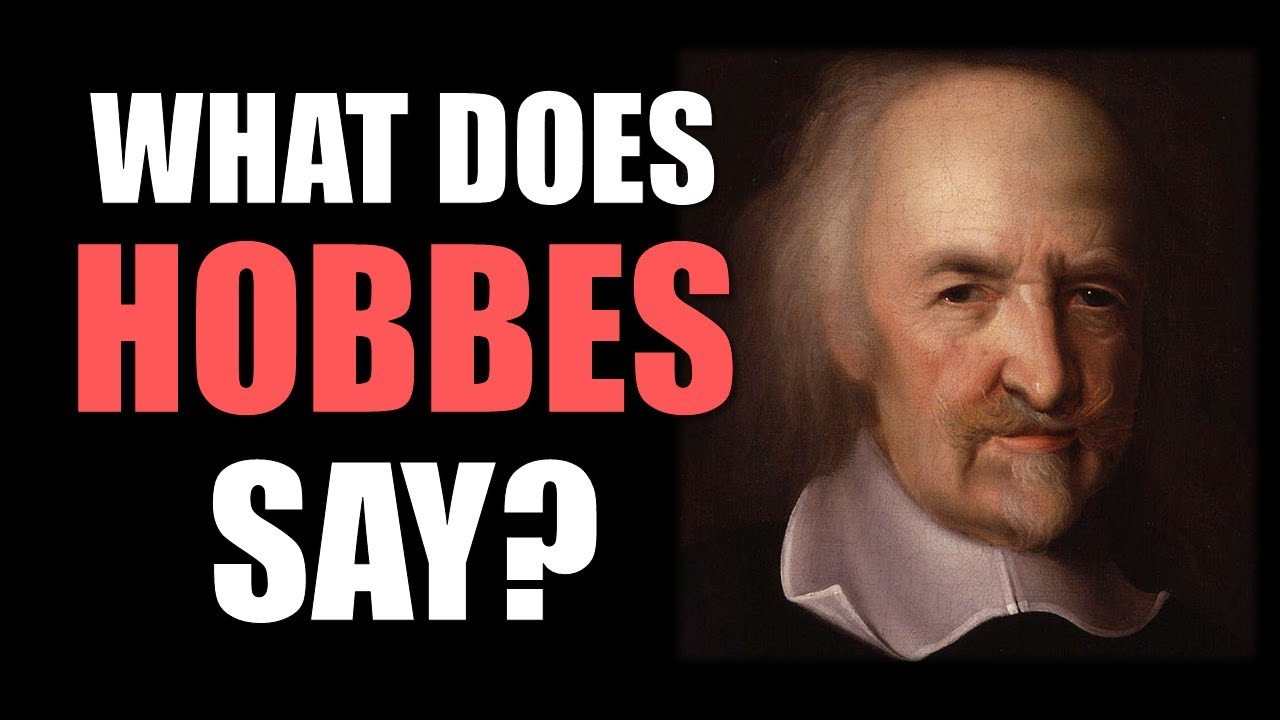
How did Hobbes view human nature?
a)
We are inquisitive and industrious.
b)
We are naturally selfish and quick to fight.
c)
We are naturally altruistic and usually willing to compromise.
d)
We are born a 'blank slate', and we develop differently according to our life's experiences..
37.
Enlightenment philosopher who believed people had natural rights of life, liberty, and property.
a)
John Locke
b)
Montesquieu
c)
Rousseau
d)
Voltaire
38.
According to John Locke, why are governments created?
a)
God gives monarchs a divine right to rule over their people
b)
People are naturally selfish and need a strong ruler to create order
c)
People set up governments to protect their lives and property
d)
Civil government must be established to offset the power of the church
39.
What is an absolute monarchy?
a)
The power is in the hands of all.
b)
All of the power is given to the people and no power is given to the monarch.
c)
The king (monarch) has all of the power.
40.

A monarchy is...

a)

a government ruled by a president

b)

a government ruled by a mayor

c)

a government ruled by a king or queen

d)

a government ruled by Chuck Norris

41.
This is a ruler with complete authority over the government and lives of the people.
a)
Supreme Monarch
b)
Absolute Monarch
c)
Monarch
d)
Queen
42.

True or False: In a monarchy, people get to vote on all laws.

a)

True

b)

False

43.
One cause of the French Revolution was the emergence of a new middle class of merchants and professionals called the 
a)
bourgeoisie
b)
aristocracy
c)
sans culottes
d)
denoument
44.
France was deep in debt because
a)
money spent on the American Revolution
b)
Marie Antoinette's lavish spending
c)
the 1st and 2nd estates did not pay taxes
d)
all of the above
45.
The idea that reason should guide society rather than tradition helped cause the revolution and came from
a)
the Declaration of Independence
b)
the Scientific Revolution
c)
the Enlightenment
d)
all of the above
46.
The French Revolution began when King Louis XVI
a)
was executed
b)
had his troops attack Paris
c)
called the Estates General together
d)
abdicated
47.
The First Estate in French society was composed of 
a)
the Clergy
b)
people with special courts
c)
people who did not pay taxes
d)
all of the abve
48.
The Second Estate was composed of 
a)
Church leaders
b)
Nobility
c)
Peasants
d)
none of the above
49.
Most of the people of France belonged to the 
a)
1st 
Estate
b)
2nd Estate
c)
3rd Estate
d)
4th Estate
50.
Why was voting in the Estates General unfair
a)
votes were not secret
b)
each estate voted by how many members there were
c)
each estate got the same number of votes
d)
the King got two votes
51.
When the other estates refused to change voting rules the 3rd Estate 
a)
met separately
b)
declared themselves the new government
c)
Created the National Assembly
d)
all of the above
52.
When the people of Paris heard that the military was going to stop the revolution their response was to 
a)
leave the city
b)
storm the Bastille
c)
force the King to come to Paris
d)
none of the above
53.
In 1789, the hungry women of Paris marched to Versailles and 
a)
forced the King to return to Paris
b)
demanded that the King abdicate
c)
demanded that the King leave France
d)
all of the above
54.
The National Assembly set down the ideas of the Revolution in 
a)
the Declaration of Independence
b)
the Declaration of the Rights of Man
c)
the US Constitution
d)
The Edict of Nantes
55.
Radicals are people who 
a)
try to prevent change
b)
believe in capital punishment
c)
support the old government
d)
believe in extreme measures
56.
The radicals who took over the revolution were led by 
a)
Louis XVI
b)
Robespierre
c)
Rousseau
d)
Marquis de Lafayette
57.
The Radicals eliminated anyone accused of being against the Revolution during 
a)
the Terror
b)
the Great Fear
c)
Thermidorian Reaction
d)
Thermidorian Reaction
58.
Robespierre was sent to the guillotine because
a)
he was accused of a crime he did not committ
b)
other radicals thought he might execute them next
c)
the King's supporters captured him
d)
none of the above
59.
Which of the following describes why Napoleon was able to quickly gain power? 
a)
The French political system was finally stable after Robespierre executed any enemy of the republic
b)
The political and economic problems that the revolution tried to fix still existed and the people were desperate for change
c)
The newly created French republic of virtue insisted on having a firm leader that would expand the empire across all of Europe
d)
All of the above 
60.
The great French empire that Napoleon created eventually fell after the unsuccessful invasion of Russia. Why was the invasion considered a great disaster for Napoleon? 
a)
There was a massive air attack by the Russians that wiped out most of Napoleons army
b)
Russia's scorched-earth policy and cold winter wiped out most of Napoleons army
c)
The Battle of the Bulge wiped out most of Napoleons army
d)
The newly formed United States allied with Russia to wipe out most of Napoleons army
61.
Which of the following describes what happened when Napoleon instituted the Continental System?
a)
His brother Joseph was not able to withstand the guerrilla warfare tactics used by Spanish nationalists
b)
The British navy was too strong for the blockade and France's economy suffered as a result
c)
The Russians used the scorched-earth policy to eventually starve Napoleons army
d)
The blockade successfully restricted British trade and led to fall of Great Britain
62.
What is the continental system? 
a)
Economic plan to strengthen Europe and weaken Britain
b)
A new system of government 
c)
Working with America to gain investments
d)
Economic system put in place under Napoleon
63.
After his initial defeat, Napoleon was exiled to the island of ______; his second exile was to the island of _________.
a)
St. Helena; Elba
b)
Elba; Corsica
c)
Elba; St. Helena
d)
Corsica; St. Helena
64.
Napoleon replaced Monarchs of the countries he took over with
a)
Enlightened Philosophes
b)
Family Members
c)
Parliaments
d)
Soldiers from his Grand Army
65.
How did the event depicted in this picture impact the course of the Napoleonic Wars?
a)
Napoleon defeated Austria and Prussia
b)
Napoleon invaded Britain but was defeated
c)
Napoleon successfully invaded Russia
d)
Napoleon invaded Russia but lost most of his men
66.
In which country did the Industrial Revolution begin?
a)
The United States
b)
England
c)
France
d)
Germany
67.
What had to occur before the Industrial Revolution could take place?
a)
The Economic Revolution
b)
The Glorious Revolution
c)
The Agricultural Revolution
d)
The French Revolution
68.
Which 2 natural resources were the backbone of the Industrial Revolution?
a)
wood and peat
b)
oil and natural gas
c)
coal and iron
d)
cotton and tobacco
69.
Which innovation  allowed factories to be built anywhere?
a)
flying shuttle
b)
spinning jenny
c)
cotton gin
d)
steam engine
70.
What is the movement of people from rural to urban areas called?
a)
ruralization
b)
colonization
c)
inflation
d)
urbanization
71.
The system in which the government owns and controls the means of production, such as mines and factories, is called?
a)
fascism
b)
socialism
c)
capitalism
d)
mercantilism
72.
Which of the following was NOT associated with early factory working conditions?
a)
Low wages
b)
Safe working conditions
c)
Dangerous working conditions
d)
Widespread pollution
73.
What product was first made using machines in factories?
a)
Steel
b)
textiles
c)
locomotives
d)
flying shuttles
74.
A place where people and machines join together to mass produce goods.
a)
School
b)
Corporation
c)
Factory
d)
Urbanization
75.
Mass production led to:
a)
Products being more superior in quality
b)
goods became less expensive
c)
laborers received higher wages
d)
industries moved to rural areas
76.
Before the Industrial Revolution all products were created by
a)
Factories
b)
Hand
c)
Slaves
d)
Royalty
77.
Factory owners used child labor because children--
a)
Read better than their parents
b)
Are more efficient than other workers
c)
Can be paid less than adults
d)
Needed jobs to support parent
78.

How did the Industrial Revolution affect the cities?

a)

Made the crime rate decrease

b)

Led to an increase in farm workers

c)

Make the cities cleaner and safer

d)

Led to an increase in population in the cities so people could work in factories

79.
Which of the following best describes mining conditions?
a)
dangerous, long hours, and low pay
b)
clean, dark and cold
c)
high pay and high danger
d)
all workers were treated fairly
80.
What were working conditions like in factories during the Industrial Revolution? [7-3.4]
a)
Workers enjoyed a clean and safe working environment.
b)
Workers had great relationships with the factory owners.
c)
Workers received good pay and received health benefits.
d)
Workers used dangerous machines and the hours were long.
81.
To bring a product or material into your country from another country is called ________.
a)
Import
b)
Export
c)
Investment
d)
Labor
82.
Which of these was not one of the effects of the new inventions in the textile industry?
a)
cloth could be made much more quickly
b)
some people lost their jobs
c)
workers stopped working at home and began working in factories
d)
workers had more time for their hobbies
83.
The Industrial Revolution...
a)
Improved the lives of average people in many ways.
b)
Made people's lives worse
c)
Significantly changed the way people live
d)
All of the above
84.
Which statement is true?
a)
Children were not allowed to work in the mines during the Industrial Revolution
b)
Work conditions were closely regulated
c)
There were no labor laws that prevented children from working
d)
Children were allowed to work but they were treated fairly. 
85.

What did Martian Luther nail to the church

a)

Bible

b)

95 Theses

c)

The Code of Hammurabi

d)

The Declaration of the Rights of Man