
 Worksheets
Common Assessment Quarter 2 Review
Total questions: 45
Worksheet time: 35mins
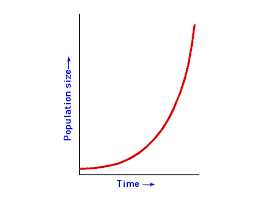

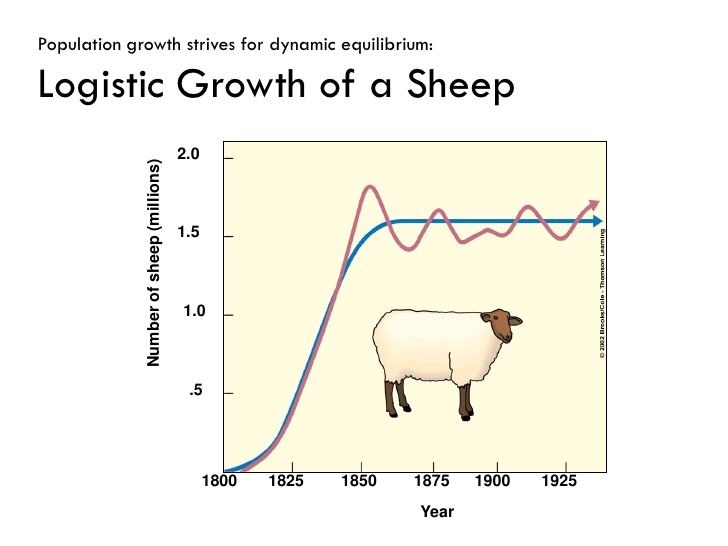


If a country has a death rate of 30 and a birth rate of 45 the change in population would show the population growth is ______.
Increasing
Decreasing
Staying the same
Fluctuating too much
Regarding population dispersion patterns, which of the following does not match

As resources in a population become less available, population growth
increases slowly.
reaches carrying capacity.
enters a phase of exponential growth.
The number of wild horses per square kilometer in a prairie is the horse population’s
density.
dispersion.
size.
birth rate.
Which of the following species has the highest reproductive potential?


In which type of interaction between species does ONE species BENEFIT by HARMING ANOTHER species but not killing it?
predation
parasitism
mutualism
commensalism
A species of plant has exponential growth after it is introduced into an area where it has never lived. Which statement BEST DESCRIBES EXPONENTIAL GROWTH?
Each individual plant grows much larger than usual.
The population immediately decreases.
Within a few years, the population increases dramatically.
The species’ reproductive potential declines.


A bear eats fish out of the river.
mutualism
parasitism
predation
commensalism

*The tick lives on dog and feeds on its blood and tissue.
* The dog gets skin irritation and can pick up diseases carried by tick.
Remoras eat scraps leftover from sharks, while the shark is not affected by the remora. This relationship can be represented by...
+/-
+/0
+/+
0/0
Parasites are similar to predators because...
both have to hunt or find food.
both keep their food source alive.
both kill their food source.
both A and B are correct.
A population of wolves is 500. This number describes the population's...
density.
dispersion.
size.
distribution.
A city park has 30 squirrels per square mile. This number describes the population's ...
density.
dispersion.
size.
distribution.
Which of the following would stop a rabbit population form growing out of control?
Unlimited space for a habitat.
No competition from other species.
Introduction of a predator, such as hawks.
Unlimited food resource.
A population of lions has 5 births and 2 deaths. What is its change in population size?
+5
-3
+3
-2
A population of leopards has 100 births and 150 deaths. The change of population size is _______ and the population is experiencing ______ growth.
-50...Negative
250...Positive
50...Positive
0...Zero
The current human population is 7.4 billion people, and is increasing rapidly! How could a growing human population impact our resources?
Less available clean water
Increase need for food production
Increase in habitat destruction
All of the above
Red tailed hawk and Barn Owl both try to eat a mouse at the same time. The relationship between the hawk and the owl is...
predation.
symbiosis.
competition.
What groups of organisms are most in danger of extinction?
Animals that have many offspring.
Species that are only found in a few places on earth.
Species that live far away from humans.
Species that adapt quickly to changing environments.
What is the best method to preserve biodiversity?
Creating large parks to protect many species
Freezing fertilized eggs
Setting aside small plots of land
Unlimited hunting
What is an invasive species?
Foreign organism that takes over an ecosystem.
An organism that might become endangered.
An organism that has many natural predators.
An organism that cannot adapt to a new environment.

If all the sea otters died in the diagram above, what would happen?
The ecosystem would be stable and healthy.
The sea urchin population would decrease.
The kelp populations would disappear.
The kelp population would increase.
The sea otter is a species on which other species in an ecosystem largely depend. If it were removed the ecosystem would change drastically. This means the sea otter is a ...
Endangered Species
Keystone Species
Endemic Species
Invasive Species
Parasites are similar to predators because...
both have to hunt or find food.
both kill their food source.
both keep their food source alive.
both A and B are correct.
In White Meadow Lake, 50 duck eggs were laid, but only 20 of the eggs actually hatched. Unfortunately, 10 ducks that hatched were killed by predators. Later, 2 died from old age, and 2 died from disease. Calculate the change in population size.
+6 ducks
-6 ducks
+36
-36
You catch, tag, and release 20 goldfish from a pond. The next day, you catch 20 goldfish from the pond and count 10 recaptures. Estimate the population size.
First Sample X Second Sample/#recaptured
4 goldfish
40 goldfish
10 goldfish
400 goldfish

