Worksheets
This Quiz ROCKS!- Rocks Practice Quiz
Total questions: 43
Worksheet time: 30mins
Broken pieces of rock often transported by wind or water is known as
weathering
sediments
magma
fossils
The word used to describe an object that does not come from living things is __________.
organic
fossils
inorganic
magma
When melted rock is on the surface of the Earth it is known as __________.
sediments
fossils
magma
lava
Rocks that cool quickly will have little or no ______________.
fossils
crystals
sediments
weathering
___________ rocks form from particles of other rocks cemented together.
*You can reference your ESRT to help you!
clastic
chemical
organic
Coal and limestone are both ___________ sedimentary rocks because they came from the remains of living things.
*You can reference the ESRT to help you
organic
inorganic
fossils
magma
___________ sedimentary rocks form when dissolved minerals precipitate or evaporate from the water and harden into a rock.
clastic
chemical
organic
The group of rocks that will most likely contain fossils are the _______________ rocks.
sedimentary
igneous
metamorphic
____________ rocks are formed through the process of heat and pressure changing the rock into a new rock.
sedimentary
igneous
metamorphic

The picture shows a model of the rock cycle.
During which part of the rock cycle does water
break rocks apart?
Part 1
Part 2
Part 3
Part 4
Shale is a sedimentary rock that can be metamorphosed into slate by
cementation
sedimentation
chemical weathering
increased pressure
Which statement about the formation of rocks is true?
**Use the rock cycle chart to see which statement is true. Follow the arrows from rock to rock.
Heat and pressure can change igneous rock to sedimentary rock.
Weathering and erosion can change sedimentary rock into sediment.
Heat and pressure can cause metamorphic rock to weather and erode.
Weathering and erosion prevent magma from changing into igneous rock.

The table below shows how four different rocks were formed and gives their composition.
Granite is one kind of intrusive igneous rock.
Which rock described in the table is most likely granite?
**Use the IGNEOUS ROCK Chart!
***Eliminate choices that have keywords that go with other types of rocks!
1
2
3
4

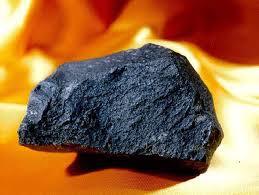
The picture shows an igneous rock.
The rock’s glassy texture indicates that it formed from melted rock that cooled
**Use the IGNEOUS ROCK chart
slowly, deep below Earth’s surface
slowly on Earth’s surface
quickly, deep below Earth’s surface (inside)
quickly on Earth’s surface (outside)

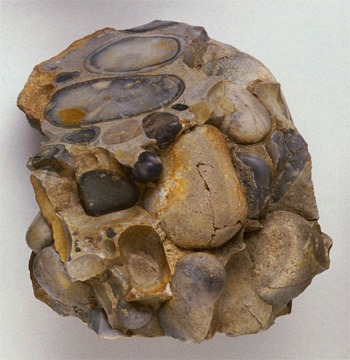
The rounded pebbles of this rock have been cemented together to form
*use the keywords!
**Use your Reference Chart!
granite, an igneous rock
conglomerate, a sedimentary rock
sandstone, a sedimentary rock
gneiss, a metamorphic rock
Which feature is characteristic of sedimentary rocks?
layering of sediments
glassy texture
large crystals
gas pockets

The diagram shows some of the layers of rocks found in the Grand Canyon.
Scientists find these layers of rock useful for studying
fossils.
What type of rock is shown labeled in
these layers?
extrusive
metamorphic
igneous
sedimentary
Which type of rock is likely to show ripple marks and fossils?
intrusive igneous
metamorphic
extrusive igneous
sedimentary

Which two processes formed this rock?
**Use your keywords and/or Rock Cycle Chart!
melting and cooling
heat and pressure
compacting and cementing
weathering and melting
Which statement best describes a general property of rocks?
Most rocks are made of a single mineral.
Most rocks have more than one mineral.
All rocks contain minerals formed by compression and cementation.
All rocks contain fossils.

Which sequence of events occurs in the formation of a sedimentary rock?
*Use your Rock Cycle Chart
A
B
C
D
Large deposits of rock gypsum and rock salt usually form in areas
where there are volcanoes
covered by ice
that are warm seas with evaporation
of fresh water lakes

The diagram below represents the fossils found in a rock formation found in central Rhode Island.
In which type of rock were the fossils most likely found?
sedimentary rock that formed in an ocean environment
sedimentary rock that formed in a land environment
igneous rock that formed in an ocean environment
igneous rock that formed in a land environment

Which granite sample most likely formed from magma that cooled and hardened at the slowest rate?
COOL SLOWLY = _________ SIZE CRYSTALS
a- SMALLEST CRYSTALS
b- SMALL CRYSTALS
c- LARGE CRYSTALS
d- LARGEST CRYSTALS
Wavy bands of light and dark minerals visible in gneiss probably formed from the
cementing together of individual minerals grains
cooling and crystallizing of magma
evaporation of an ancient ocean
heat and pressure during metamorphism
If rocks come into close contact with magma underground, but not actually in the magma, they would form a(n)
igneous rock
sedimentary rock
metamorphic rock
organic rock

The diagram below shows a cross section of a portion of Earth’s crust that has not been overturned. Letters A, B, C, and D represent sedimentary rock layers that contain fossils.
Which rock layer contains the oldest fossils?
A
B
C
D
A student observed a rock made up of many small particles of sand arranged in light-colored layers and dark-colored layers. Which of the following statements describes how this type of rock most likely formed?
Clay was crushed and frozen under a glacier.
Lava from a volcano cooled quickly in water.
River sediments were slowly compacted and cemented together.
Mineral deposits hardened into solid rock in underground caves.
Larger crystal size in one of two igneous rocks of similar composition usually indicates that the rock with the larger crystals cooled for
a shorter period of time than the other
a longer period of time than the other
the same amount of time as the other
Metamorphic rocks formed by contact metamorphism will most likely be found
contact metamorphism = underground, near to magma, but not directly touching it.
in mountains
underground by magma
at the beach
by a volcano