wayground logo

Free Printable Worksheets

Font size

S
M
L
XL
Worksheets

Earth & Sun Module Review Quiz

Total questions: 123

Worksheet time: 1hrs 26mins

Name
Class
Date
1.

Shadows will always be found ...

a)

in the opposite direction of the sun

b)

in the same direction as the sun

2.

Shadows are longest when?

a)

at noon

b)

in the morning and evening

3.

We see the sun rise in the

a)

east

b)

west

c)

east or west depending on what season we are in

d)

east or west depending on where we are on the Earth

4.

We see the sun set in the

a)

west

b)

east

c)

east or west depending on what season we are in

d)

east or west depending on where we are on the Earth

5.

Does the Sun really rise / move?

a)

Yes, the Sun moves each morning and evening.

b)

No, the rotation of the Earth makes the Sun appear to move.

6.

Why do shadows change throughout the day?

a)

Because the sun is moving across the sky.

b)

Because the position of the sun in the sky is changing throughout the day as the Earth rotates on its axis.

c)

Because we are changing our position on the Earth as we walk around.

d)

Because the moon is moving all day.

7.

True or False? The direction of a shadow is the same at the same time each day.

a)

true

b)

false

8.

Shadows are the shortest

a)

in the morning

b)

in the evening

c)

at noon

9.

A compass will always point

a)

North

b)

South

c)

East

d)

West

10.

The angle of a shadow can tell us the

a)

weather

b)

time

c)

season

d)

Earth's location in space

11.

The angle of a shadow changes

a)

the same amount each hour

b)

at different speeds each hour

12.

At noon, shadows point

a)

East

b)

South

c)

West

d)

North

13.

In the morning shadows point

a)

North

b)

East

c)

South

d)

West

14.

In the afternoon, shadows point

a)

North

b)

South

c)

East

d)

West

15.

True or False? We can tell the time of day by observing our shadow.

a)

True

b)

False

16.

The half of the Earth's surface facing the Sun is called

a)

night

b)

day

17.

Night is

a)

the half of the Earth's surface in its own shadow.

b)

the half of the Earth's surface facing the sun.

c)

the half of the Earth's surface facing the moon.

d)

the reflection of the moon.

18.

Which way does the Earth rotate when viewed from above?

a)

clockwise (to the right)

b)

counterclockwise (to the left)

19.

Which part of the United States gets to see sunrise first?

a)

North

b)

South

c)

East

d)

West

20.

How many hours earlier does the Eastern part of the United States get to see sunrise compared to the Western part?

a)

1 hour

b)

3 hours

c)

1 day

d)

10 hours

21.

What causes night and day?

a)

The Earth's revolution around the Sun?

b)

The Earth's rotation on its axis.

c)

The moon.

d)

The other planets.

22.

Earth going around the Sun in orbit is called

a)

rotation

b)

revolution

23.

Earth spinning around on its own invisible axis is called

a)

rotation

b)

revolution

24.

If a planet did not rotate on its axis, but still revolved around its sun, would it still have night and day, even if the length of night and day changed?

a)

yes

b)

no

25.

True or False? Planets and stars (except for the Sun) are only visible in the night sky.

a)

True

b)

false

26.

True or False? The Moon is only visible in the night sky.

a)

True

b)

False

27.

Is the Sun the biggest star in the Universe?

a)

Yes, because it appears the largest from Earth.

b)

No, it only appears to be the largest star because it is the closest one to Earth.

28.

Which is correct?

a)

The Earth orbits around the moon.

b)

The moon orbits around the Earth.

29.

Why can't we see the sun at night?

a)

Because it moves too far away from us at night?

b)

Because at night, our side of the planet is facing away from the Sun.

c)

Because other stars are brighter than the Sun at night.

d)

Because we don't know where to look for it at night.

30.

We can sometimes see the moon at both night and day. Why?

a)

Because we have more than one moon.

b)

Because of where the Moon is in its orbit around the Earth.

c)

Because sometimes it shines brighter than other times.

31.

The Earth's diameter (distance across) is how many times that of the moon?

a)

10 times

b)

four times

c)

100 times

d)

1000 times

32.

The Sun's diameter (distance across the center) is how many times the diameter of the Earth?

a)

5 times

b)

110 times

c)

1000 times

d)

10 times

33.

How many Earth's could we fit between the Earth and the Moon?

a)

30 Earths

b)

100 Earths

c)

10 Earths

d)

2000 Earths

34.

How many Earth's could we fit between the Earth and the Sun?

a)

4 Earths

b)

100 Earths

c)

12,000 Earths

d)

1000 Earths

35.
Is the Moon bigger or small than the Earth?
a)
Bigger
b)
Smaller
c)
The same
36.
When the Earth is between the Moon and the Sun, it is most likeky a:
a)
Full Moon
b)
Half Moon
c)
3rd Quarter Moon
37.
The Moon gets its light from the
a)
Earth
b)
Stars
c)
Sun
38.
About how long does it take the Moon to complete it's cycle?
a)
1 week
b)
1 month
c)
1 year
39.
Why does the Moon have different phases?
a)
It follows the Sun around the Earth.
b)
It moves around the Earth.
c)
It moves around the Sun.
40.
What is the correct order of the Moon Phases?
a)
1st Quarter, 3rd Quarter, New, Full
b)
New, 1st Quarter, Full, 3rd Quarter
c)
New, Full 1st Quarter, 3rd Quarter
41.
We can see the light shining on the Moon during the New Moon Phase. 
a)
True
b)
False
42.
When the Moon is between the Earth and the Sun, it is most likely in what phase?
a)
New
b)
3rd Quarter
c)
Full
43.
How many phases of the moon are there?
a)
eight
b)
four
c)
ten
44.
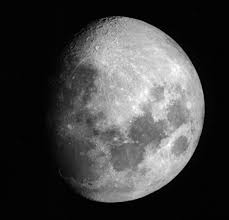
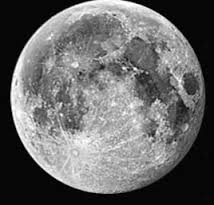
Name the moon phase
a)
waning crescent
b)
waxing crescent
c)
waning gibbous
d)
waxing gibbous
45.
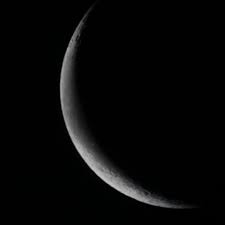
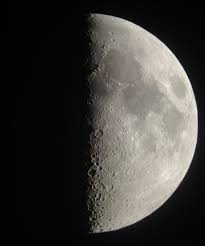
Name the moon phase
a)
waning crescent
b)
waxing crescent
c)
waning gibbous
d)
waxing gibbous
46.
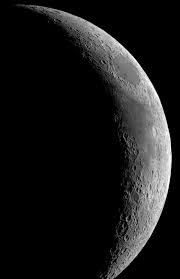
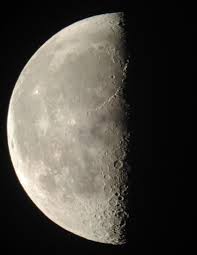
Name the moon phase
a)
waning crescent
b)
waxing crescent
c)
waning gibbous
d)
waxing gibbous
47.
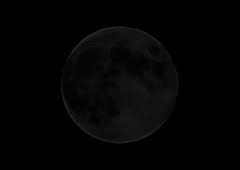
Name the moon phase
a)
First Quarter
b)
Last Quarter
c)
New Moon
d)
Full Moon
48.
Name the moon phase
a)
First Quarter
b)
Last Quarter
c)
New Moon
d)
Full Moon
49.
Name the moon phase
a)
First Quarter
b)
Last Quarter
c)
New Moon
d)
Full Moon
50.
Name the moon phase
a)
First Quarter
b)
Last Quarter
c)
New Moon
d)
Full Moon
51.

To revolve or to move in a path around another object is to

a)

rotate

b)

orbit

52.

All of the objects in our solar system orbit the

a)

Moon

b)

Sun

c)

Earth

53.

Solar means

a)

hot

b)

sun

c)

moon

d)

earth

54.

Which statement is TRUE?

a)

Smaller objects orbit larger objects.

b)

Larger objects orbit smaller objects.

55.

What keeps the smaller objects in orbit around the larger objects?

a)

very long invisible strings in the universe

b)

the gravitational interaction between the objects

56.

Do stars actually move across the night sky?

a)

No, they just appear to be moving, like the Sun during the day, because of Earth's rotation on its axis.

b)

Yes, they move very quickly across the sky while the Earth stands still.

57.

On a clear night, we can see about how many stars?

a)

2000

b)

2

c)

200

d)

20

58.

True or False? The stars do not move or change position.

a)

true

b)

false

59.

Groups of stars named after their recognizable forms or mythological figures are called

a)

star pictures

b)

constellations

c)

galaxies

d)

solar systems

60.

True or False? We see all of the same stars and their constellations every night all year long?

a)

True

b)

False

61.

Why do we see different constellations at different times of the year?

a)

Because of Earth's rotation

b)

Because of Earth's revolution around the Sun

c)

Because the stars keep moving

d)

Because the constellations move to other solar systems

62.

Air is ...

a)

100% oxygen

b)

found everywhere in all levels of the atmosphere

c)

a mixture of gases held by gravity near Earth's surface

63.

True or False? Air does not take up any space. (Think of our investigations.)

a)

True

b)

False

64.

True or False? Air has mass.

a)

True

b)

False

65.

True or False? Air can be compressed into a smaller space?

a)

True

b)

false

66.

The two main permanent gases found in air are

a)

oxygen and nitrogen

b)

hydrogen and helium

67.
Where you will find the ozone layer.
a)
stratosphere
b)
thermosphere
c)
exosphere
d)
mesosphere
68.
Where weather occurs.
a)
stratosphere
b)
thermosphere
c)
troposphere
d)
mesosphere
69.
Where we live.
a)
stratosphere
b)
thermosphere
c)
troposphere
d)
mesosphere
70.
The hottest layer.
a)
troposphere
b)
thermosphere
c)
exosphere
d)
mesosphere
71.
Which order is correct from the earth to space?
a)
thermosphere
 troposphere
 exosphere
mesosphere
stratosphere
 ionosphere
b)
thermosphere
 troposphere
 stratosphere
 exosphere
mesosphere
 ionosphere
c)
exosphere
ionosphere
thermosphere
mesosphere
 stratosphere
troposphere
d)
troposphere
thermosphere
 troposphere
 stratosphere
 exosphere
mesosphere
72.
What two gases are found throughout all layers of the atmosphere?
a)
Nitrogen and carbon dioxide
b)
Nitrogen and oxygen
c)
Oxygen and carbon dioxide
d)
Trace gases and water vapor
73.
What does the earth's atmosphere do?
a)
help to regulate the temperature on Earth
b)
Help UV rays to reach the Earth's surface
c)
Creates meteors in the sky
d)
Keep ocean waters cold
74.
As you go higher in the troposphere, the temperature _______________.
a)
decreases
b)
increases
c)
stays the same
d)
gets very hot
75.
Where I find clouds.
a)
thermosphere
b)
stratosphere
c)
troposphere
d)
ionosphere
76.
Which layer is the outermost layer?
a)
troposphere
b)
thermosphere
c)
exosphere
d)
mesosphere
77.

True or False? The air in the atmosphere gets thinner as the distance from Earth’s surface increases.

a)

True

b)

False

78.
What instrument measures the amount of liquid that falls to the ground in a given period of time.
a)
hydrometer
b)
rain gauge 
c)
thermometer
d)
barometer 
79.
What instrument measures temperature?
a)
rain gauge 
b)
hydrometer
c)
thermometer 
d)
wind vane
80.
What instrument measures air pressure?
a)
barometer
b)
hydrometer 
c)
rain gauge
d)
anemometer 
81.
What instrument measures wind speed?
a)
thermometer 
b)
wind vane
c)
barometer
d)
anemometer 
82.
What instrument measures wind direction?
a)
wind vane
b)
hydrometer
c)
rain gauge
d)
barometer 
83.
What does the wind vane point towards.
a)
Where the wind is coming from
b)
Where the wind is blowing to
c)
the sun
d)
the moon 
84.
What instrument measures the humidity?
a)
anemometer
b)
rain gauge 
c)
barometer
d)
hydrometer 
85.
a)
anemometer 
b)
barometer 
c)
wind vane
d)
rain gauge 
86.
a)
barometer 
b)
anemometer 
c)
hydrometer 
d)
thermometer 
87.

What do meteorologists do?

a)

The watch out for meteors coming near Earth.

b)

They use special instruments to measure and record weather variables.

c)

They travel in space.

88.

What is the major source of energy that heats the Earth?

a)

the Sun

b)

the moon

c)

the stars

d)

the atmosphere

89.

What happens to Earth materials when they are exposed to sunlight?

a)

they cool off

b)

they heat up

c)

nothing

90.

True or False? Dry soil gets hotter than water when both materials are exposed to equal amounts of solar energy.

a)

True

b)

False

91.

Which cools down faster when taken out of the sun, soil or water? .

a)

soil

b)

water

c)

they both cool down at the same speed

92.

Which takes more energy - changing the temperature of soil or changing the temperature of water?

a)

soil

b)

water

c)

They both take the same amount of energy.

93.

Conduction, convection and radiation are three ways to

a)

measure gravity

b)

determine the mass of an object

c)

three methods of heat transfer

d)

three constellations

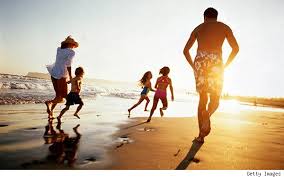
94.
The sun shines down on this family as the play on the beach.
a)
conduction
b)
convection
c)
radiation
95.
A group of friends gather around a fire to stay warm.
a)
conduction
b)
convection
c)
radiation
96.
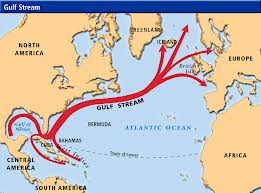
The Gulf Stream is a current that brings warm ocean water from the south to the north.
a)
conduction
b)
convection
c)
radiation
97.
Walking on the warm sand sand with your bare feet.
a)
conduction
b)
convection
c)
radiation
98.
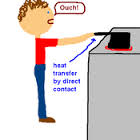
Which direction will the heat flow while this person holds a hot cup of tea?
a)
from the cup to her hand
b)
from her hand to the cup
c)
no heat is transferred
99.
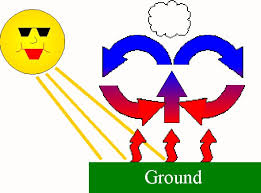
Warm air rises and the cool air sinks.
a)
conduction
b)
convection
c)
radiation
100.
In this experiment, the WARM red dye and the COLD blue dye was placed in the water at the same time. The warm red dye rose to the top while the cold blue dye sank to the bottom.
a)
conduction
b)
convection
c)
radiation
101.
Johnny accidentally grabbed the handle of the hot pot.
a)
conduction
b)
convection
c)
radiation
102.
Heat transfers from an area of ____temperature to an area of ___ temperature.
a)
high to low
b)
low to high
c)
high to high
103.

When a volume of fluid is warmed from the bottom,

a)

The water that gets warmed at the bottom, will stay at the bottom and the cooler water will stay at the top.

b)

The warmed water will rise and the cooler water from the top will sink.

104.
What is the water cycle?
a)
the 3 forms of water
b)
the movement of water on, above, or below the surface of the Earth
c)
when water melts
d)
when clouds form
105.
What is the energy source for the water cycle?
a)
the sun
b)
the earth
c)
water
d)
the moon
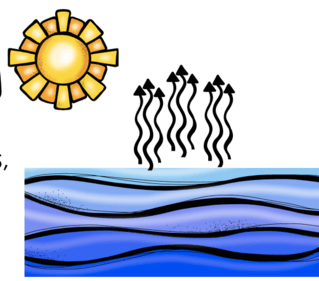
106.
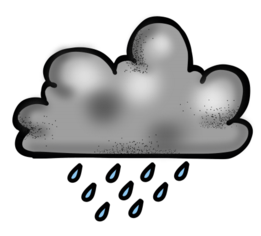
What part of the water cycle does this picture show?
a)
condensation
b)
precipitation
c)
evaporation
107.
What part of the water cycle does this picture show?
a)
condensation
b)
precipitation
c)
evaporation
108.
What part of the water cycle does this picture show?
a)
condensation
b)
precipitation
c)
evaporation
109.
What is evaporation?
a)
The part of the water cycle when the sun heats up water, turning it from a liquid into water vapor or steam. It rises from the ground into the air.
b)
The part of the water cycle when the water vapor in the air gets cold. The water turns back into a liquid and forms clouds.
c)
The part of the water cycle when clouds get heavy and can no longer hold the liquid water. This causes the water to fall from the sky to the earth as rain, snow, sleet, or hail.
110.
What is condensation?
a)
The part of the water cycle when the sun heats up water, turning it from a liquid into water vapor or steam. It rises from the ground into the air.
b)
The part of the water cycle when the water vapor in the air gets cold. The water turns back into a liquid and forms clouds.
c)
The part of the water cycle when clouds get heavy and can no longer hold the liquid water. This causes the water to fall from the sky to the earth as rain, snow, sleet, or hail.
111.
What is precipitation?
a)
The part of the water cycle when the sun heats up water, turning it from a liquid into water vapor or steam. It rises from the ground into the air.
b)
The part of the water cycle when the water vapor in the air gets cold. The water turns back into a liquid and forms clouds.
c)
The part of the water cycle when clouds get heavy and can no longer hold the liquid water. This causes the water to fall from the sky to the earth as rain, snow, sleet, or hail.
112.

Fresh water is

a)

the process of water turning into gas

b)

water vapor that turns into water

c)

water that contains little or no dissolved salts

d)

clouds that form close to the ground

113.

Where can MOST of the Freshwater be found?

a)

glaciers

b)

rivers

c)

lakes

d)

rain

e)

aquifers

114.

What is Earth's major water storage, home to 97.5% of all water on Earth?

a)

rivers

b)

glaciers

c)

ocean

d)

lakes

115.
What is the water that fills the cracks and spaces in underground soil and rock layers called?
a)
Groundwater
b)
Water Table
c)
Precipitation
d)
Snow
116.
Which represents the distribution of water on Earth?
a)
3% freshwater, 97% salt water
b)
97% freshwater, 3% salt water
c)
71% freshwater, 29% salt water
d)
29% freshwater, 71% salt water
117.
What is it called when plants give off water vapor as a waste product?
a)
condensation
b)
evaporation
c)
sublimation
d)
transpiration
118.
Which of the following best describes weather?
a)
day to day conditions of the atmosphere at a place in regards to heat, dryness, sunshine, wind, rain, etc.
b)
long-term conditions (30 or more years) of the atmosphere at a place in regards to heat, dryness, sunshine, wind, rain, etc.
119.
Describe a temperate climate.
a)
dry and cold year round
b)
warm year round, high humidity and rainfall
c)
variety of climate patterns, seasons, moderate precipitation
120.
Describe a tropical climate.
a)
dry and cold year round
b)
warm year round, high humidity and rainfall
c)
variety of climate patterns, seasons, moderate precipitation
121.
Describe a polar climate.
a)
dry and cold year round
b)
warm year round, high humidity and rainfall
c)
variety of climate patterns, seasons, moderate precipitation
122.
Which changes faster?
a)
weather
b)
climate
123.

True or False.

Latitude determines your type of climate.

a)

true

b)

false