wayground logo

Free Printable Worksheets

Font size

S
M
L
XL
Worksheets

Cardiovascular Test Review

Total questions: 85

Worksheet time: 28mins

Name
Class
Date
1.
blood vessels that allow exchange of nutrients with body tissues
a)
arteries
b)
veins
c)
capillaries
d)
coronary arteries
2.
SA (sinoatrial) node; regulates to pace  the heart
a)
AV node
b)
Purkinje fibers
c)
SV node
d)
pacemaker
3.
vessels that carry blood away from the heart
a)
arteries
b)
veins
c)
capillaries
4.
Which of the following is a function of the heart?
a)
Ensuring 2 way blood flow
b)
Regulating blood supply
c)
Exchange of oxygen and CO2
d)
Falling in love
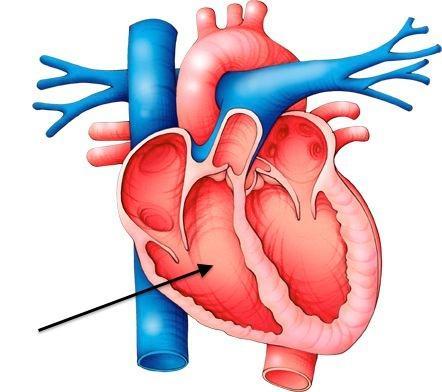
5.
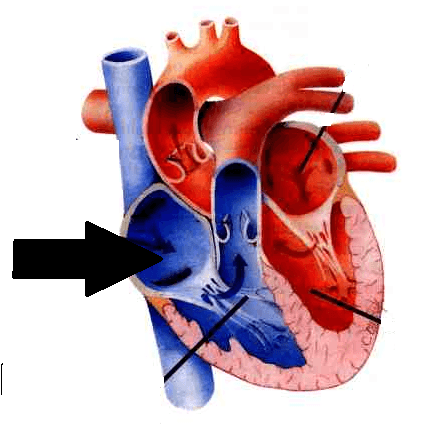
What is the name of the unlabeled portion of the heart?
a)
Right atria
b)
Right ventricle
c)
Left atria
d)
Left ventricle
6.
The Sinoatrial node is also known as the ________
a)
action potential
b)
refractory period
c)
pacemaker
d)
semilunar valvce
7.
The two upper chambers of the heart are called:
a)
ventricles
b)
atrium
c)
valves
8.

What is a "normal" blood pressure

a)

120/110 mmHg

b)

120/80 mmHg

c)

100/80 mmHg

d)

140/80 mmHg

9.

lowest pressure against the blood vessels of the body. Measures between contractions

a)

diastolic pressure

b)

systolic pressure

c)

hypotension

d)

hypertension

10.
Largest artery in the human body:
a)
Pulmonary artery
b)
femoral artery
c)
aorta
d)
carotid artery
11.
The lining of the chambers of the heart is called the
a)
myocardium
b)
epicardium
c)
endocardium
d)
pericardium
12.
The heart itself receives blood from the
a)
carotid artery
b)
femoral artery
c)
coronary artery
d)
pulmonary artery
13.
A normal heart rate at rest would be:
a)
15 bpm
b)
40 bpm
c)
70bpm
d)
95 bpm
14.
The pressure exerted on the arterial walls when the heart relaxes is called the
a)
diastolic pressure
b)
systolic pressure
c)
hydrostatic pressure
d)
osmotic pressure
15.
What does the left side of the heart do? 
a)
The left side of the heart pumps  blood through the lungs where it gets oxygen.
b)
The left side of the heart receives the blood containing oxygen and pumps blood to the rest of the body.
c)
The left side of the heart controls the muscles on the left side of the body,
d)
The left side of the heart supplys our arms with bloo
16.
What does the right side of the right heart do?
a)
The right side of the heart  receives deoxygenated blood from the body through the vena cava and pumps it into the right ventricle which then sends it to the lungs to be oxygenated.
b)
The right side of the heart is  responsible for words, logic, numbers, analysis, lists, linearity and sequence
c)
The right side of the heart pumps  blood through the lungs where it gets oxygen.
d)
The right side of the heart is meaty organ that sits on the right side of the belly. 
17.

What is the main organ of the circulatory system?

a)

small intestine

b)

bone

c)

lungs

d)

heart

18.

The job of the heart is to . . .

a)

pump blood around the body.

b)

send food to the small intestines.

c)

break down food.

d)

give energy to the body.

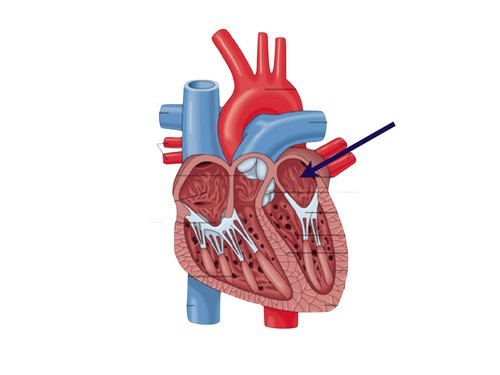
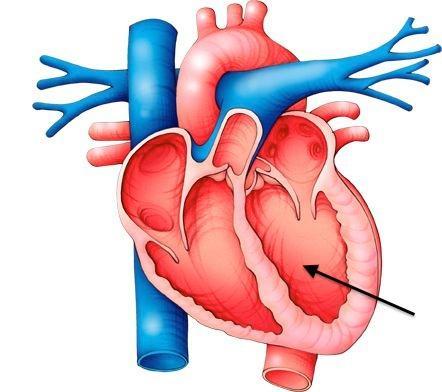
19.
Identify
a)
Left atrium
b)
Right atrium
c)
Left ventricle
d)
Right ventricle
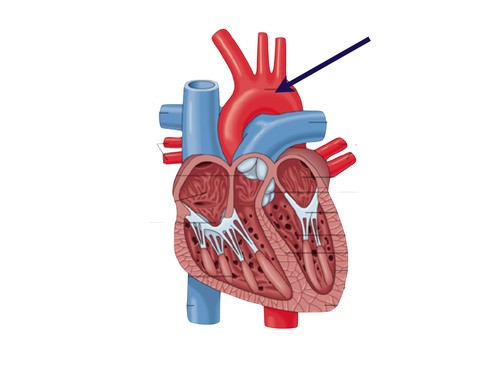
20.
Identify
a)
Pulmonary veins
b)
Pulmonary artery
c)
Aorta
d)
Vena cava
21.
Identify
a)
Left atrium
b)
Right atrium
c)
Left ventricle
d)
Right ventricle
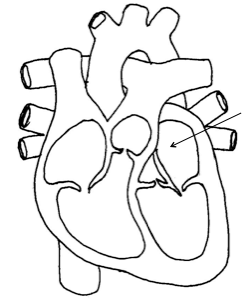
22.
Identify
a)
Left atrium
b)
Right atrium
c)
Left ventricle
d)
Right ventricle
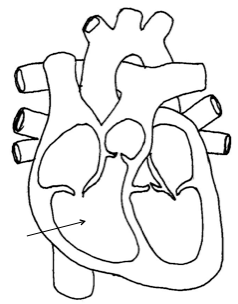
23.
Identify
a)
Left atrium
b)
Right atrium
c)
Left ventricle
d)
Right ventricle
24.
The heart has ___ chambers.
a)
1
b)
2
c)
3
d)
4
25.
This chamber of the heart RECEIVES blood returning from the body
a)
Right Atrium
b)
Right Ventricle
c)
Left Atrium
d)
Left Ventricle
26.
The aorta is the largest artery in the body. The blood leaving the aorta is full of?
a)
Oxygen 
b)
Carbon Dioxide 
c)
White blood Cells 
d)
Potassium 
27.
Thin-walled vessels that allow for the exchange of O2 , CO2, nutrients and wastes between blood cells or air sacs in the lungs
a)
Arteries
b)
Veins
c)
Capillaries
28.
A flap of tissue that prevents blood from flowing backward
a)
Aorta
b)
Atrium
c)
Septum
d)
Valve
29.
What function does the heart do?
a)
Protects organs and produces red blood cells.
b)
Generates heat.
c)
Breaks down food into nutrients.
d)
The heart is a pump, which moves the blood. The arteries and veins are the pipes where the blood flows.
30.
What is the main function of the artery?
a)
It controls your brain and your thought process.
b)
They carry oxygen- poor blood BACK to the heart.
c)
Arteries carry oxygen- rich blood AWAY from the heart.
d)
It receives information (senses) and sends messages to the body about how to react to things.
31.
Structure(s) that keep the blood flowing in one direction.
a)
Valve(s)
b)
Septum(s)
c)
Neuron(s)
d)
Bronchiole(s)
32.
What do Red-Blood cells do?
a)
Carry oxygen from the lungs to the body cells and  transport carbon dioxide from the cells back to the lungs
b)
keeps blood flowing in one direction to the heart and prevent blood from flowing backwards
c)
Collects  blood from the capillaries and drain it into the veins
d)
Bring nutriients to the cells and carries away waste materials.
33.
What blood type has anti-A antibodies?
a)
Type A
b)
Type B
c)
Type AB
d)
Type O
34.
A deficiency in hemoglobin or red blood cells.
a)
anemia
b)
polycythemia
c)
leukemia
d)
leukocytosis
35.
What is the oxygen carrying pigment in blood?
a)
hematocrit
b)
hemopoesis
c)
hemoglobin
d)
hemostasis
36.
Which is NOT a formed element in blood?
a)
leukocyte
b)
thrombocyte
c)
plasma
d)
erythrocyte
37.
The scientific name of a red blood cell
a)
erythrocyte
b)
leukocyte
c)
thrombocyte
d)
plasmocyte
38.

Which part of human blood carries hormones and nutrients?

a)

plasma

b)

platelets

c)

red blood cells

d)

white blood cells

39.

Platelets are a part of blood that help in the:

a)

formation of hemoglobin

b)

formation of a clot

c)

release of anitbodies

d)

absorption of amino acids

40.
What part of blood is responsible for fighting infections?
a)
Red Blood Cells
b)
White Blood Cells
c)
Platelets
d)
Plasma
41.

Which blood cells are the most numerous?

a)

RBC

b)

WBC

c)

platelets

d)

Leucocyte

42.
How long do erythrocytes live?
a)
forever
b)
100-120 days
c)
2 weeks only
d)
a year
43.
What does blood consist of?
a)
plasma, red blood cells, white blood cells, platelets
b)
hormones, oxygen, nutrients, water
c)
red blood cells
d)
carbon dioxide and minerals
44.
What type of tissue is blood?
a)
nerve
b)
muscle
c)
epithelial
d)
connective
45.
An individual's blood type is determined by
a)
environment
b)
genetics
c)
both environment and genetics
d)
your children's blood type
46.
This part of blood helps it clot, when you get cut.
a)
Red blood cells
b)
Plasma
c)
Platelets
d)
White blood cells
47.
What part of blood is responsible for carrying oxygen and carbon dioxide to or from body cells?
a)
Red Blood Cells
b)
White Blood Cells
c)
Platelets
d)
Plasma
48.

Where is blood made?

a)

Compact Bone

b)

Spongy Bone

c)

Bone Marrow

d)

Liver

49.

What makes up around 55% of the blood?

a)

Plasma

b)

Red Blood Cells

c)

White Blood Cells

d)

Platelets

50.

Which of the following is NOT a type of blood vessel?

a)

Artery

b)

Capillary

c)

Vein

d)

Ventricle

51.
Someone who has Type O blood has what for antibodies (clumping proteins)?
a)
No antibodies
b)
A antibodies
c)
B antibodies
d)
A and B antibodies
52.
What type(s) of blood can a person with type B blood safely RECEIVE?
a)
A and AB
b)
B and AB
c)
A and O
d)
B and O
53.

Responsible for producing antibodies to fight diseases

a)

Basophil

b)

Monocyte

c)

Lymphocyte

d)

Eosinophil

e)

Neutrophil

54.

fight allergic reactions, parasitic infections and inflammation in the body.

a)

Basophil

b)

Monocyte

c)

Lymphocyte

d)

Eosinophil

e)

Neutrophil

55.

Largest leukocyte, remove dead cells

a)

Basophil

b)

Monocyte

c)

Lymphocyte

d)

Eosinophil

e)

Neutrophil

56.

Involved with allergic reactions, contain histamines

a)

Basophil

b)

Monocyte

c)

Lymphocyte

d)

Eosinophil

e)

Neutrophil

57.
Which is not a granulocyte?
a)
neutrophil
b)
monocyte
c)
basophil
d)
eosinophil
58.

Neutrophils are a white blood cell capable of

a)

producing antibodies

b)

phagocytosis

c)

clotting blood

d)

carrying oxygen and carbon dioxide
59.
During an acute infection your ______ count will likely _____.
a)
Leukocyte, decrease
b)
Leukocyte, increase
c)
Thrombocyte, decrease
d)
Thrombocyte, increase
60.
Name this part.
a)
Superior vena cava
b)
Right ventricle
c)
Inferior vena cava
d)
Pulmonary vein
61.
Name this part.
a)
Right atrium
b)
Left ventricle
c)
Right ventricle
d)
Left atrium
62.
Name this part.
a)
Left ventricle
b)
Pulmonary artery
c)
Right atrium
d)
Pulmonary veins
63.
Name this part.
a)
Pulmonary veins
b)
Left atrium
c)
Aorta
d)
Pulmonary artery
64.
Name this part.
a)
Superior vena cava
b)
Right ventricle
c)
Right atrium
d)
Inferior vena cava
65.
Name this part.
a)
Right ventricle
b)
Pulmonary artery
c)
Left ventricle
d)
Right atrium
66.
Which side of the heart pumps oxygen-rich blood to the rest of the body?
a)
Right
b)
Left
67.
Pulmonary circulation involves blood flow to and from the heart and the _______.
a)
body
b)
digestive organs
c)
brain
d)
lungs
68.
The _____ valve lies between the right atrium and right ventricle.
a)
bicuspid
b)
aortic semilunar
c)
pulmonary
d)
tricuspid
69.
Which is thicker:  left or right ventricle?
a)
left 
b)
right
70.

What part of the heart divides the ventricles into two sides?

a)

ventricular separator

b)

divider

c)

Septum

71.

The tip of the heart is called the apex.

a)

true

b)

false

72.

The endocardium is the outer layer of the heart.

a)

true

b)

false

73.

Which of the following statements is true regarding pulmonary circulation?

a)

It carries oxygenated blood away from the heart.

b)

It carries deoxygenated blood to the body.

c)

It carries oxygenated blood away from the lungs.

d)

It carries deoxygenated blood toward the heart.

74.

The aorta carries:

a)

oxygenated blood to the body

b)

oxygenated blood to the lungs

c)

deoxygenated blood to the heart

d)

deoxygenated blood to the lungs

75.

Which of the following statements regarding the heart is NOT true?

a)

The heart has four chambers.

b)

The heart is located in the mediastinum of the chest.

c)

The heart is composed of smooth muscle fibers.

d)

The heart is a muscular pump.

76.

Which layer of the heart is responsible for contracting in order to pump blood?

a)

endocardium

b)

epicardium

c)

pericardium

d)

myocardium

77.

Which of the following statements regarding the ventricles is NOT true?

a)

Ventricles are the pumping chambers.

b)

Ventricles receive blood directly from the veins, returning blood to the heart.

c)

Ventricles have a thick muscular wall.

d)

Ventricles pump blood into the great arteries.

78.

The mitral valve is also called the ________ valve.

a)

bicuspid valve

b)

tricuspid valve

c)

pulmonary valve

d)

aortic valve

79.

Blood exits the left side of the heart into the

a)

aorta

b)

vena cava

c)

pulmonary artery

d)

pulmonary veins

80.
The _________ PUMPS blood to the lungs.
a)
Right Atrium
b)
Right Ventricle
c)
Left Atrium
d)
Left Ventricle
81.
Which component of blood makes up 1% of the blood?
a)
White blood cells & Platelets
b)
Plasma & Platelets
c)
Plasma & White blood cells
d)
Platelets & Red blood cells
82.
Where does the blood go after it goes into the pulmonary arteries?
a)
lungs
b)
heart
c)
head
d)
hands
83.
Occurs when fat deposits thicken the walls of the arteries.
a)
atherosclerosis
b)
diabetes
c)
hemophilia
d)
anemia
84.
Occurs when the blood flow to a part of the heart muscle is blocked.
a)
heart attack
b)
stroke
c)
anemia
d)
paralysis
85.

oxygen for carbon gas exchange takes place in the

a)

veins

b)

arteries

c)

capillaries