wayground logo

Free Printable Worksheets

NEW

Font size

S
M
L
XL
Worksheets

Mrs. Jones Plant & Animal Cell

Total questions: 53

Worksheet time: 1hrs 11mins

Name
Class
Date
1.
The invention of the microscope allowed scientists to see
a)
cells
b)
bacteria
c)
microorganisms
d)
all of the above
2.
A microscope is an instrument that makes
a)
tiny objects look bigger
b)
distant objects look closer
c)
distant objects look bigger
d)
large objects look smaller
3.
The microscopic building block of all living things
a)
cell
b)
blood
c)
saliva
d)
atom
4.

One difference between plant and animal cells is that animal cells DO NOT HAVE?

a)

a nucleus

b)

chloroplasts

c)

a cell membrane

d)

centrioles

5.
A microscope is an instrument that.
a)
makes faraway objects look closer.
b)
makes small objects appear larger.
c)
decreases the size of small objects.
d)
increases the size of small objects.
6.
All living things are made up of...
a)
cells
b)
cell tissues
c)
organ
d)
organ systems
7.
What cell part is NOT found in all cells?
a)
Cell Wall
b)
Cell Membrane
c)
Cytoplasm
d)
Genetic Material
8.
This type of cell needs a cell wall and chloroplasts
a)
Plant cell
b)
Animal Cell
c)
Bacteria
9.
what organelle controls the cell.
a)
Lysosome
b)
Nucleus
c)
Nucleolus
d)
Chromosomes
10.

Acts like a gatekeeper- allowing some materials to pass through it, but not others.

a)

cytoplasm

b)

cell membrane

c)

mitochondria

d)

vacuoles

11.
food making structure of the plant cell
a)
chloroplasts
b)
cell wall
c)
vacuole
d)
cell membrane
12.
Directs all cell activities "Brain or Control Center of cell"
a)
Lysosomes
b)
Nucleus
c)
ribosomes
d)
Mitochondria
13.
What is a Cell Wall?
a)
Made up of a liquid structure
b)
A rigid structure that surrounds the cell/ gives it protection
14.
Plants and animal cells both have a nucleus.
a)
True
b)
False
15.
plants don't have chloroplasts
a)
true
b)
false
16.
"Storage tanks" Can hold food, water or waste for the cell
a)
Ribosomes
b)
Vacuole
c)
Chloroplast
d)
Nucleolus
17.

Cell structures that perform specific functions are called

a)

tissues

b)

organs

c)

organelles

d)

organ systems

18.

Which type of cell is the cell membrane found in?

a)

Plant cells only

b)

Both plant and animal cells

c)

Animal cells only

d)

Bacteria

19.

What structure is only in plant cells? It is outside of the cell membrane and adds more support/structure to the plant.

a)

Cell membrane

b)

Cell Nucleus

c)

Cell Wall

d)

Endoplasmic Reticulum

20.

What is the function of the cell wall in plant cells?

a)

control the cell's activities

b)

make food for the organism

c)

protect and support the cell

d)

hold the cell's parts in place

21.

What thin layer protects the cell and regulates what substances enter and leave the cell?

a)

cell membrane

b)

cell

c)

cell wall

d)

golgi body

22.
A thick cell wall helps support a plant cell.
a)
True
b)
False
23.
What is the nickname for the Nucleus?
a)
"Powerhouse"
b)
"The gatekeeper"
c)
"The Brain"
24.
Which of these pictures shows a plant under a microscope?
a)
A
b)
B
c)
C
d)
D
25.
Is the following a plant or animal cell or both? 
Cell Wall
a)
Plant
b)
Animal
c)
Both
26.
Which 2 organelles are in plants and animals?
a)
cell wall and cytoplasm
b)
nucleaus and plastids
c)
cell membrane and cytoplasm
d)
cell membrane and chlorophast
27.
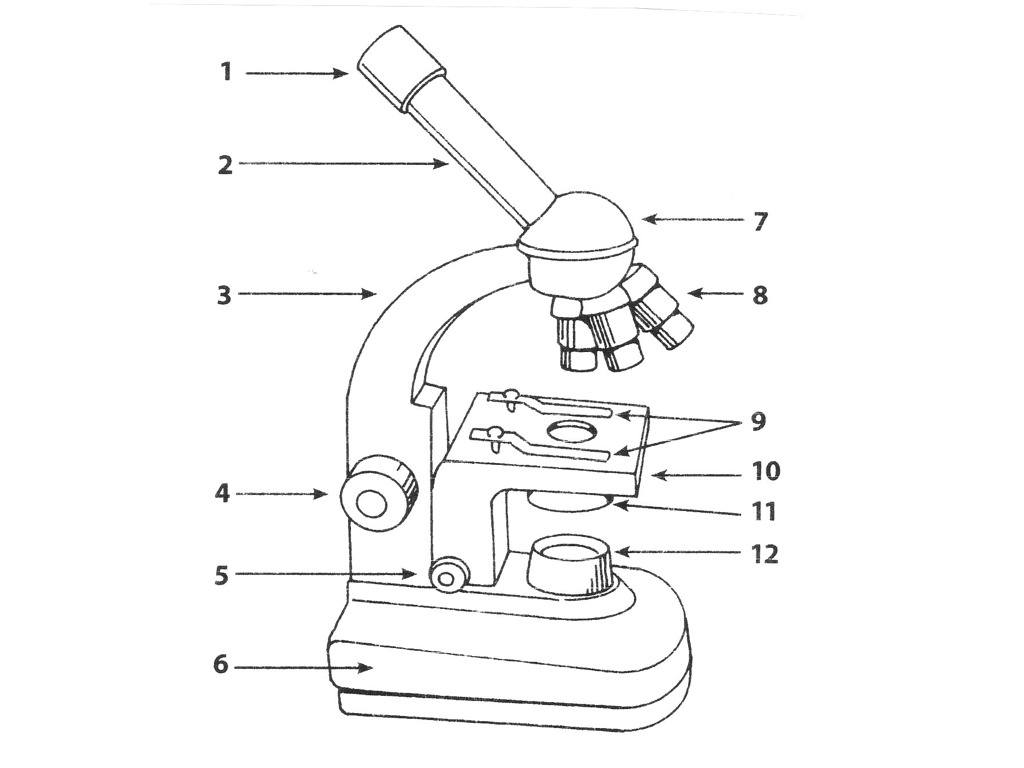
What tool do you use to view the cells?
a)
metric ruler
b)
centrifuge
c)
microscope
d)
pipette
28.
Chloroplasts in plant cells allow the plant to perform a function that animal cells cannot do.  What is the main function of the chloroplasts found in plant cells?
a)
to absorb light energy and manufacture food
b)
to remove waste materials by active transport
c)
to manufacture chemical energy from food
d)
to control the shape of the cell
29.
What is one basic function of the vacuoles?
a)
circulating oxygen
b)
producing food
c)
controlling cell processes
d)
storing water
30.
All cells need energy to function.  Which cell organelle is responsible for producing energy in the cell?
a)
chloroplasts
b)
mitochondria
c)
nucleus
d)
vacuoles
31.
What is the function of a cell wall?
a)
to protect and support the cell
b)
to perform different functions in each cell
c)
to prevent water from passing through it
d)
to prevent oxygen from entering the cell
32.
Cells with a nucleus and membrane-bound organelles are called ____________________.
a)
prokaryotes
b)
eukaryotes
c)
bacteria
d)
protists
33.

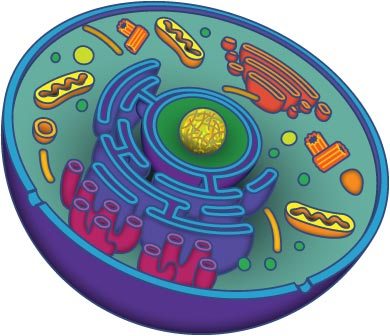
What cell is this?

a)

Animal Cell

b)

Plant Cell

34.

The organelle labeled #1 is

a)

cell membrane

b)

cytoplasm

c)

vacuoles

d)

mitochondria

35.

The organelle listed on #2 is

a)

mitochondria

b)

cell wall

c)

vacuoles

d)

cell membrane

36.

The organelle labeled # 3 is

a)

nucleus

b)

cytoplasm

c)

cell wall

d)

chloroplast

37.

What organelle is labeled on #4

a)

cytoplasm

b)

mitochondria

c)

chloroplast

d)

cell wall

38.

What organelle is labeled as #5

a)

chloroplast

b)

cell membrane

c)

cell wall

d)

nucleus

39.

What organelle is labeled as #6

a)

cytoplasm

b)

chloroplast

c)

cell membrane

d)

cell wall

40.

What organelle is labeled as #7?

a)

cell wall

b)

cytoplasm

c)

cell membrane

d)

nucleus

41.

What cell is this?

a)

plant cell

b)

animal cell

42.

What organelle is labeled as #1

a)

cell membrane

b)

mitochondria

c)

cytoplasm

d)

vacuole

43.

What organelle is labeled as #2

a)

cytoplasm

b)

nucleus

c)

cell membrane

d)

mitochondria

44.

What organelle is labeled as #3

a)

nucleus

b)

mitochondria

c)

vacuole

d)

cytoplasm

45.

What organelle is labeled as #4

a)

cell membrane

b)

vacuole

c)

cytoplasm

d)

vacuole

46.

What organelle is labeled as #5

a)

cell membrane

b)

vacole

c)

nucleus

d)

cytoplasm

47.
These are complex cells that have organs working together to provide life's functions
a)
Unicellular/Single Cell Organism
b)
Mulitcellular/Multi-Celled Organism
48.
What has one cell that performs all of life's functions
a)
Unicellular/Single Cell Organism
b)
Mulitcellular/Multi-Celled Organism
49.

Germs are also called ...

a)

microbes

b)

ants

c)

microscopes

d)

creatures

50.

Where are bacteria located?

a)

No where.

b)

Every where!

c)

Only in the restroom.

d)

On my hands only.

51.
Bacteria are used in
a)
farming
b)
the medical industry
c)
the food industry
d)
all of these
52.

Bacteria are tiny ___________

a)

No celled

b)

Three celled

c)

Ten celled

d)

One Celled

53.

Most bacteria are....

a)

Harmless and helpful

b)

Painful and mean

c)

Rude and annoying

d)

Harmful and helpless