
 Worksheets
plants vocabulary M1 CS T2
Total questions: 49
Worksheet time: 43mins
Name
Class
Date
1.
Plants need to take in ________ for photosynthesis
a)
oxygen
b)
soil
c)
carbon dioxide
d)
sugar
2.
Where does photosynthesis take place in the plant?
a)
roots
b)
flowers
c)
stem
d)
leaves
3.
What gas is released into the air after the plant makes food through photosynthesis?
a)
oxygen
b)
carbon dioxide
c)
hydrogen
d)
nitrogen
4.

Using this image, what organelle is C?
a)
Cell Wall
b)
Mitochondria
c)
Large Cell Vacuole
d)
Chloroplast
5.
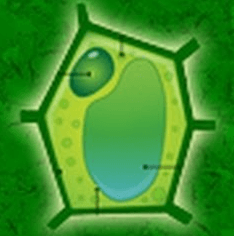
A rigid layer that lies outside the cell's membrane is...
a)
Cytoskeleton
b)
Cilia
c)
Cell Wall
d)
Flagella
6.

The chloroplast _____.
a)
uses sugar to make energy
b)
eliminates waste products from the cell
c)
uses light energy to make sugar
d)
manufactures proteins for cell export
7.

I am a protein packaging and shipping machine! Who am I?
a)
vacuole
b)
ribosome
c)
endoplasmic reticulum
d)
golgi apparatus
8.
jello-like material, fills the space between cell organelles, is where many chemical reactions occur
a)
cytoplasm
b)
chromatin
c)
chloroplast
d)
cell membrane
9.
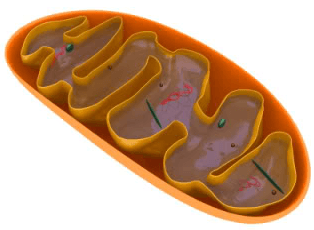
What are tiny organelles that convert glucose into ATP?
a)
Ribosomes
b)
Vesicles
c)
Cytoskeleton
d)
Mitochondria
10.
This is a system of membranous tubules and sacs in eukaryotic cells that functions as a path along which molecules move from one part of the cell to another. Can be rough or smooth.
a)
Mitochondria
b)
Chloroplast
c)
Endoplasmic reticulum
d)
Centrioles
11.
This is part of the endoplasmic reticulum that is used to make lipids. There are no ribosomes.
a)
Vesicles
b)
Lysosomes
c)
Rough ER
d)
Smooth ER
12.
This is part of the endoplasmic reticulum that is used to make proteins that will be used by other cells. It is lined with ribosomes.
a)
Vesicles
b)
Lysosomes
c)
Rough ER
d)
Smooth ER
13.
These organelles link amino acids together to form proteins; Proteins are made here. They can be found in the cytosol or on ER.
a)
Lysosomes
b)
Ribosomes
c)
Vacuole
d)
Cell wall
14.
This is a rigid structure that give plant cell protection support and shape; it is made of cellulose
a)
Cell membrane
b)
Cell wall
c)
Vacuole
d)
Endoplasmic reticulum
15.
This is a double layer of phospholipids that creates a barrier between the cells internal and external environments; it controls what comes in or out of the cell (selective permeable)
a)
Nucleus
b)
Cilia
c)
Cell membrane
d)
Flagella
16.
Plant and animal cells are identical.
a)
True
b)
False
17.
What anchor plants to the ground and absorb water and nutrients?
a)
Roots
b)
Stem
c)
Xylem
d)
Leaves
18.
Which of the following is NOT a function of the stem of a plant?
a)
Hold the leaves toward the sun
b)
Hold the petals up for pollinators
c)
Provide a way for xylem to transport food
d)
Support the plant
19.
What is the tissue that is used to transport necessary materials throughout the plant?
a)
Circulatory tissue
b)
Transport tissue
c)
Vascular tissue
d)
Pathway tissue
20.
Which of the following statements best describes phloem's function in the plant?
a)
transpports water and minerals up from the roots to the rest of the plant
b)
transports food down from the leaves to the rest of the plant
c)
transports water and minerals down from the roots to the rest of the plant
d)
transports food up from the leaves to the rest of the plant
21.
What is the waxy layer on leaves?
a)
Chloroplasts
b)
Plastic
c)
Wax
d)
Cuticle
22.
What is the function of the cuticle on a leaf?
a)
to keep water from entering the leaf
b)
to keep water from leaving the leaf
c)
to keep bacteria out of the leaf
d)
to keep oxygen in the leaf
23.
What are the openings on the underside of leaves that let carbon dioxide into the leaf and let oxygen out?
a)
Chloroplasts
b)
Stomata
c)
Stomach
d)
Cuticle
24.
In which type of growth response does the plant grow toward a light source?
a)
Phototropism
b)
Heliotropism
c)
Geotropism
d)
Hydrotropism
25.
In which type of growth response does the plant follow the sun?
a)
Phototropism
b)
Heliotropism
c)
Geotropism
d)
Thigmotropism
26.
In which type of growth response does the plant grow in response to touch?
a)
Hydrotropism
b)
Heliotropism
c)
Geotropism
d)
Thigmotropism
27.
In which type of growth response does the plant's roots grow toward a water source?
a)
Hydrotropism
b)
Phototropism
c)
Heliotropism
d)
Thigmotropism
28.
Small grains that contain a plant's male reproductive cells.
a)
stamen
b)
pollen
c)
anther
d)
stigma
29.
The stalks in a flower that produce the male reproductive cells
a)
pistil
b)
stamen
c)
filament
d)
stigma
30.

Small leaf-like structures forming an outer circle at the base of a flower.
a)
petals
b)
sepal
c)
anthers
d)
dicots
31.
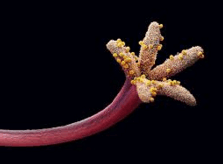
The part of the flower on which the pollen grains land.
a)
pistil
b)
stamen
c)
style
d)
stigma
32.
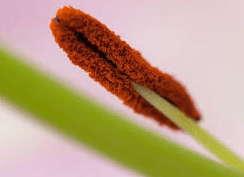
The part of a flower that produces the male reproductive cells.
a)
anther
b)
style
c)
stigma
d)
filament
33.

Their leaves are not veined, and the flower parts are usually in fours or fives.
a)
monocot
b)
dicot
c)
angiosperm
d)
gymnosperm
34.
Brightly colored parts of flowers that attract insects.
a)
petals
b)
pistils
c)
stamen
d)
filaments
35.

The stalk connecting the ovaries and stigmas.
a)
filament
b)
pistil
c)
style
d)
anther
36.
They enclose the egg cells inside the ovaries.
a)
ovules
b)
anther
c)
seeds
d)
angiosperms
37.
The transfer of pollen, containing the sperm cells, to the female part of the flower.
a)
seed disperal
b)
pollination
c)
germination
d)
fertilization
38.
The enlarged base of the pistil that stores the eggs of the plant is the ___.
a)
ovary
b)
ovule
c)
stigma
d)
style
39.
The tip of the style that has sticky hairs to trap pollen is the ___.
a)
stamen
b)
stigma
c)
ovary
d)
style
40.
Brightly colored parts of flowers that attract insects.
a)
petals
b)
pistils
c)
stamen
d)
filaments
41.
The ovary, style, and the stigma make up the female part of a plant called the ?
a)
stamen
b)
petals
c)
stem
d)
carpel (pistil)
42.
After fertilization what does the ovary develop into?
a)
Fruit
b)
Bud
c)
Seed
d)
Flower
43.
Pollen comes from the male or female parts of the flower?
a)
male
b)
female
44.

Which part produces sperm enclosed in pollen?
a)
A
b)
B
c)
C
d)
E
45.

C, D , and E are collectively known as the ______.
a)
stamen
b)
anther
c)
sepal
d)
pistil
46.

How is C adapted to receiving pollen from male flowers?
a)
Part C is sticky.
b)
Part C is colorful.
c)
Part C produces nectar.
d)
Part C produces eggs.
47.

Which part may develop into a fruit?
a)
E
b)
D
c)
C
d)
A
48.
Nonvascular plant?
a)
fern
b)
moss
c)
pine tree
d)
oak tree
49.
Flowering plants?
a)
angiosperms
b)
gymnosperms
c)
mosses
d)
ferns
100 %

