
Font size
 Worksheets
Medieval Europe Test Review
Total questions: 52
Worksheet time: 34mins
What mountains are found just to the North of Italy?
Urals
Carpathian
Alps
Appalachian

What mountains divide Europe and Russia?
Carpathian
Ural
Pyrenees
Appalachians
Who won the Battle of Hastings?
Harold Godwinson
William the Conqueror
Justinian
Saladin
Select all of these that are true about William the Conqueror and his conquest of England.
He built Norman style castles in England.
The conquest led to the merging of Norman and Anglo-Saxon culture.
He created the Domesday Book.
He brought the influence of French language to England.
He forced the people of England to submit to his rule.

What is Feudalism?
The farming community that people lived on during Medieval Europe.
The political/social system in which a vassal serves a lord.

A (a) is a lower ranking noble that serves a lord.

What is a manor?
A farming community in medieval Europe that nobles ran and peasants worked.
The political/social system in which a vassal serves a lord.
The protection that nobles provided during medieval Europe eventually allowed for the development of what?
Mosaics and Compasses
Towns, trade, and governments
Farming Improvements
The Black Plague

Select all that is true about Charlemagne.
He united much of Western Europe under his rule.
He contributed to the spread of Christianity.
He valued education in his empire.
He expanded the use of feudalism.
He was the king of England.
Which of these was the strongest Germanic tribe that formed an empire in was is today Germany? (The Germanic group of Charlemagne)
Anglo-Saxons
Normans
Osogoths
Franks
What was the agreement that popes and kings came to called that temporarily ended the investiture conflict?
Magna Carta
Concordat of Worms
Treaty of Versailles
Rule of Law

What is the document called that King John was forced to sign at Runnymede?
Magna Carta
Concordat of Worms
What two reasons did Pope Urban II want to fight in the Crusades?
To become the leader of the Muslims
To rejoin the Catholic and Eastern Orthodox churches.
The regain land lost in England.
To take Jerusalem back from the Muslims.
Select all of these that are effects of the Crusades?
Western Europeans gained new knowledge and goods when they came into contact with Muslims and Byzantines.
Feudalism weakens as nobles leave their manors to fight.
Peace is created among Jews, Muslims, and Christians.
Bitter feelings are created among Jews, Muslims, and Christians.
Increased demand of Eastern goods in Western Europe.

Which of these crusades were successful for the Christians?
The third
The second
The first
The first three

What is the North Atlantic Drift?
A large expanse of plain found in Northern Europe.
A warm ocean current that brings warmer climate and better fishing in Northern Europe.
A range of mountains that isolate the most western peninsula in Europe.
A cold ocean current that created an overall colder climate in Northern Europe.

What is the North European Plain?
A large expanse of Plain in Northern Europe.
A warm ocean current that causes the warming of Northern Europe.
A mountain range.
A grassland that stretches from Eastern Europe to China.

Which of these organizations had the most influence over people in Medieval WESTERN Europe?
The Eastern Orthodox Church
The Caliphate
The Central Government
The Catholic Christian Church
What was the Spanish Inquisition?
An effort to reconquer the Iberian Peninsula by the Christians.
A court created by the pope to try and torture heretics in Europe.
A court created by Ferdinand and Isabella to try and torture heretics in Spain.
A war between Christians and Muslims for Jerusalem.

What was the Reconquista?
An effort to reconquer the Iberian Peninsula by the Christians.
The court that tried and tortured heretics.
A legal document
A war between Muslims and Jews over the holy land.

What is 1?
Pacific Ocean
Mediterranean Sea
English Channel
Atlantic Ocean
What is 3?
Pacific Ocean
Mediterranean Sea
English Channel
Atlantic Ocean

What was Joan of Arc's influence on the Hundred Years' War?
She fought in multiple battles in the Hundred Years War.
She helped lead the English to victory and encouraged English patriotism.
She rallied the French troops and encouraged French patriotism.
All of the above
The long term effects of the Black Plague led to the development of a (a) economy.
How did the plague spread from Asia to Europe?
It spread through the illegal sales of food.
It spread through fleas on rats transported by trade ships and caravans.
It spread through cultural diffusion.
It spread by camles used for trade on the Tans-Saharan caravans.

Which of these did the Magna Carta NOT do?
Limited the power of the king
Established Rule of Law
Created a council of barons
Gave all freeman the right to trial by jury
Created an election for the King of England
How did Henry V's victories at Agincourt and Normandy influence England during the Hundred Years' War?
It led to them winning the Hundred Years' War.
They helped the development of English patriotism.
They led to England losing the Hundred Years' war.
They led to the signing of the Magna Carta.
Henry V increased the use of what language, which led to it becoming an official language?
English
French
Latin
Italian
What did Charles Martel, Clovis, Pepin, and Charlemagne all have in common as Frankish rulers?
The supported Islam.
They discouraged Feudalism.
They supported Catholic Christianity and the pope.
They fought in the crusades.
Which of these best describes the relationship between popes and monarchs in the Middle Ages?
They often kept their duties separate and rarely interacted or dealt with each other.
They often cooperated and helped each other out, but would also struggle for power.
They were constantly at war with each other.
They were close companions and ruled Europe together harmoniously.
Which of these is an outcome of both the Crusades and the Black Death?
The decline of trade.
The spread of knowledge.
The increase in anti-Semitism.
The spread of French culture to England.
What are the long term effects of the plague on economy in Europe?
It led to agricultural improvements.
Wealth became more evenly spread among people in Europe.
An expansion in the merchant population in Europe.
Banks emerged in Europe.
People moved to towns as farmers became more efficient.

What role did monasteries play in Medieval Europe?
Monks copied bibles and classical writings.
Monasteries served as centers of learning seeing as how monks were some of the only literate people and they taught skills.
Monks served a missionaries, spreading Christianity to places beyond the alps that practiced paganism.
All of the above
How did geography play a role in manors?
Castles were often built on high ground.
Manors were established along waterways.
Castles were often built in areas that had meaning to the nobles.
All of the above
Match the person with the correct description.
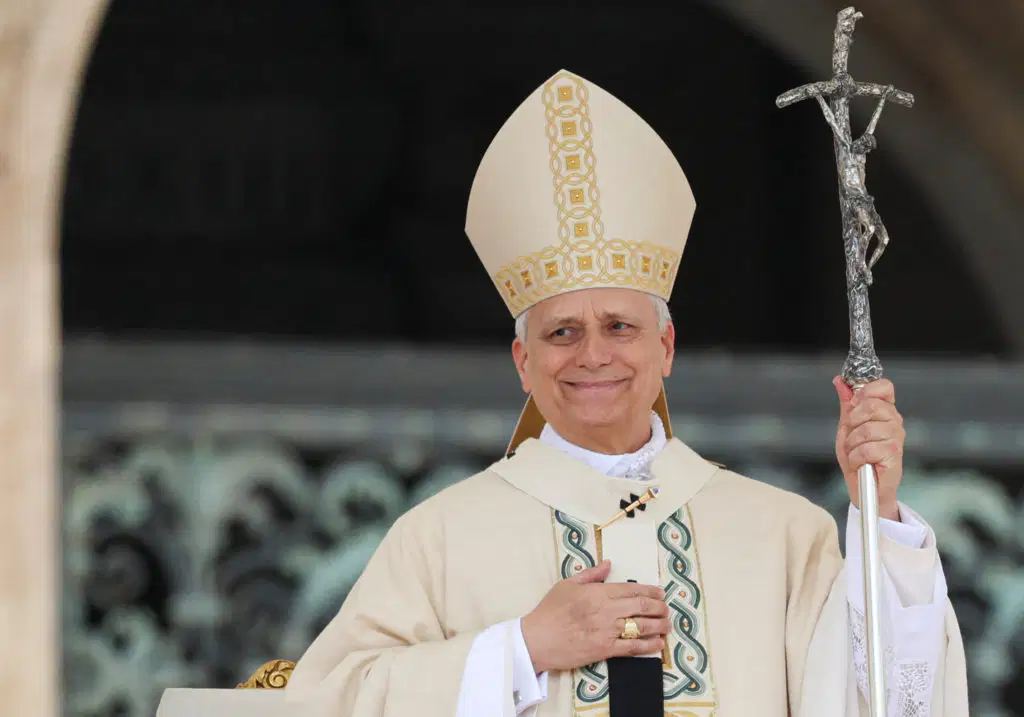
The title of the Catholic Church leader

Successful Muslim general
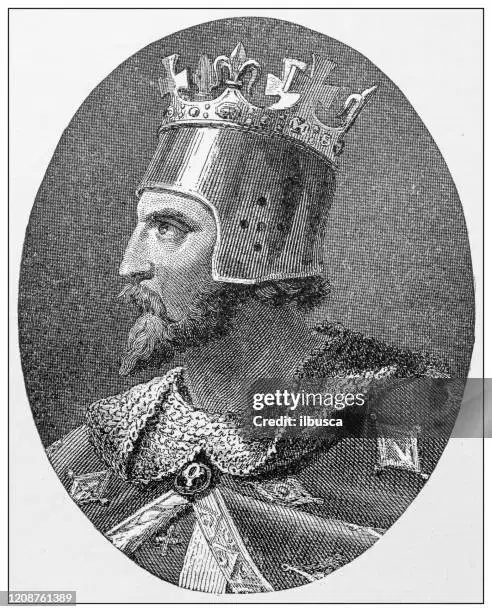
King of England & fought in the Crusades
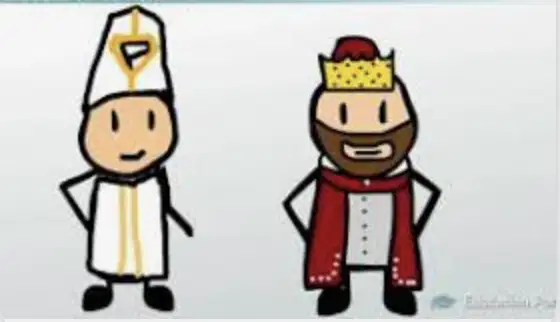
Excommunicated by Pope Gregory VII

Forced to sign the Magna Carta

Which number identifies where the Crusades took place?
1
2
3
4

Which of these completes the chart?
decstruction of trade routes
agricultural improvements
spread of polytheism

Who is the chart describing?
Henry V
Charlemagne
Queen Isabella
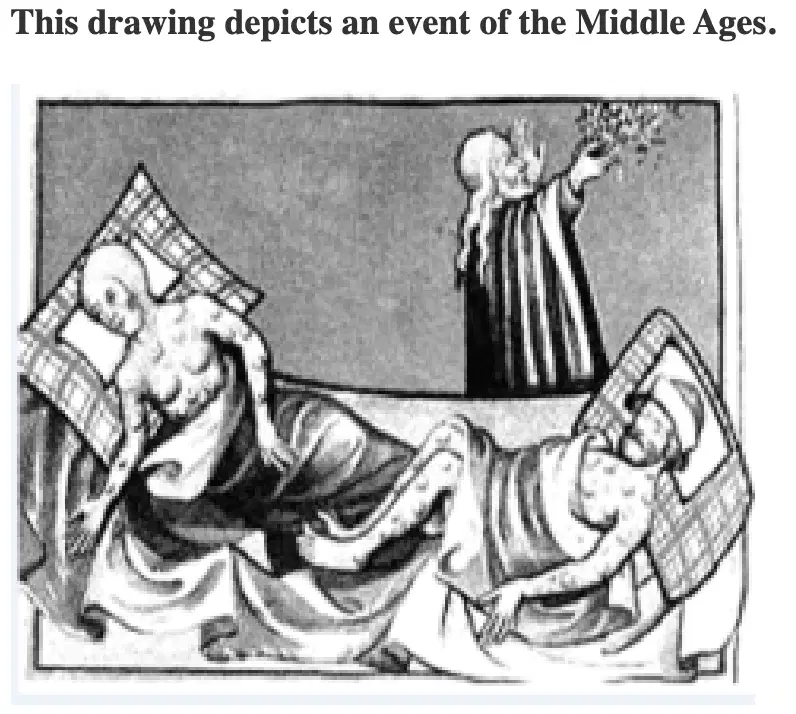
What event does this drawing depict?
The fall of Western Rome
The Crusades
The Hundred Years War
The Bubonic Plague
Label the feudal social hierarchy of Europe.
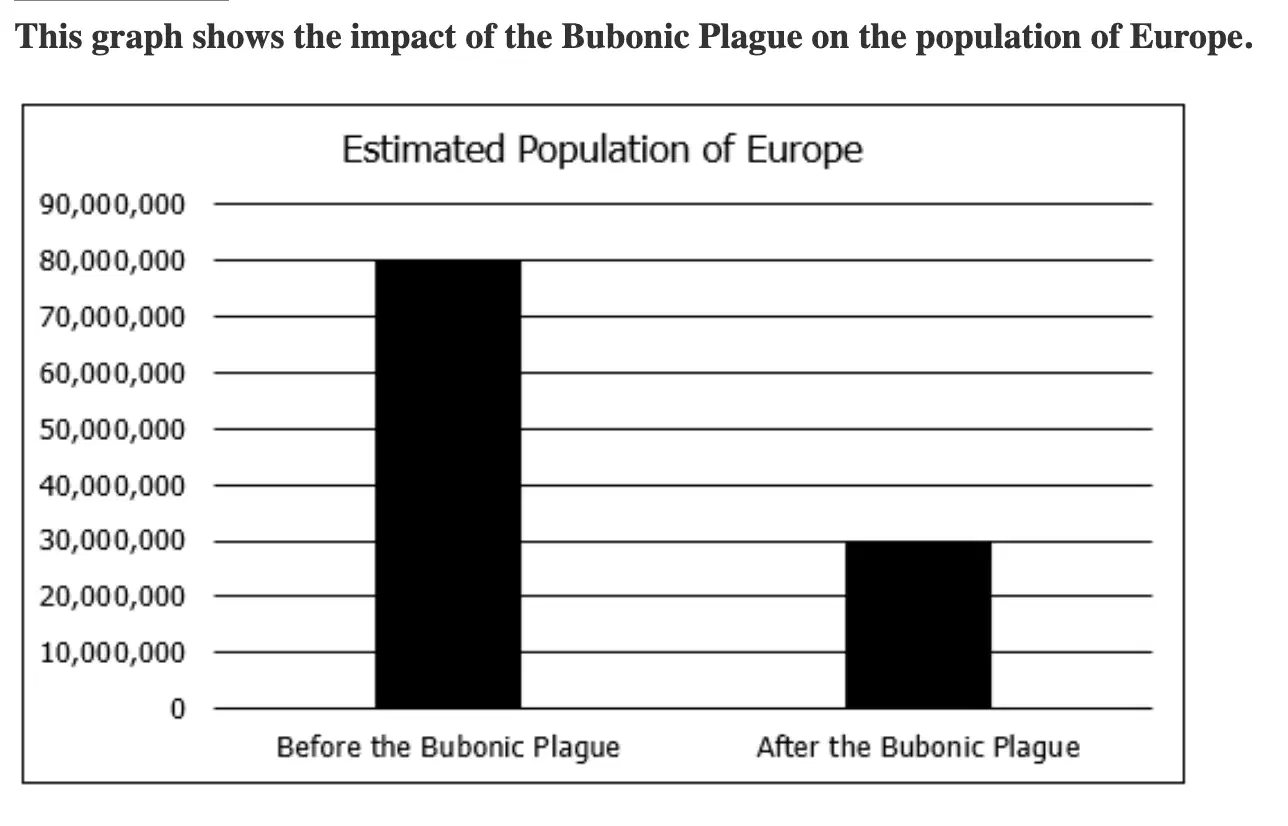
Based on this source, how did the Bubonic Plague impact Europe?

Based on this painting, which of these statements is true?
Monasteries did not have libraries.
Monasteries weakened education.
Monasteries were not religious centers.
Monasteries educated their members.

Who is being described in this chart?
Charlemagne

What historical event caused the changes on these maps?

Which of these statements about medieval monasteries is true based on the image?
Monasteries decreased the literacy rate in Europe.
Monasteries preserved religious texts.
Monasteries preserved Buddhist texts.
All of the above
Match the term with the correct definition.
Trial Jury
A group of citizens sworn to give a verdict in a legal case
Knight
A mounted soldier serving under a feudal superior
Heresy
A belief or opinion contrary to orthodox religious doctrine
Manorialism
An economic system dependent on land.
Feudalism
A social system in medieval Europe where land was held in exchange for service
The Black Death: Economic and Social Effects
The Black Death, or Bubonic Plague, spread from Central Asia to China, the Middle East, and Europe during the 14th century, causing widespread devastation. It is estimated that the plague killed nearly one-third of the global population, leading to significant economic and social changes. The loss of life disrupted agricultural production, as fewer workers were available to tend fields, resulting in food shortages and higher prices.
In Europe, the economic impact of the Black Death was profound. With fewer laborers, surviving workers demanded higher wages, leading to shifts in the feudal system. Landowners began to lease land to peasants, fostering a more independent agricultural economy. This period also saw the rise of a merchant class, as trade routes reopened and commerce expanded to meet new demands.
The plague also influenced technological improvements. With labor shortages, innovations in farming tools and techniques emerged to increase efficiency. Towns grew as people moved to urban areas seeking opportunities, and these towns became centers of trade and banking. The growth of banking systems helped facilitate commerce and supported the development of a modern economy.
Trade routes played a significant role in the spread of the Black Death. The Silk Road and maritime routes carried goods, people, and unfortunately, the plague itself. While these routes brought devastation, they also connected distant regions, laying the groundwork for global trade networks that would later flourish.
Ultimately, the Black Death was a turning point in history. It reshaped economies, societies, and trade networks, setting the stage for the development of a modern economy. Agricultural improvements, the rise of commerce, and technological advancements were all influenced by the challenges and changes brought about by the plague.
It is estimated that the plague killed how much of the population?
(a)
The deaths caused by the plague led to a shortage in (a)
How did labor shortages during the Black Death influence farming?
It led to innovations in farming tools and techniques.
It caused the building of more manors.
It increased trade with the Americas.
It reduced food prices.
What societal change was influenced by the Black Death?
Strengthening of traditional beliefs
Decline of feudalism
Decrease in urbanization
The rise of a barter system
What role did trade routes play during the Black Death?
They slowed the spread of the disease
They facilitated the spread of the plague
They were completely abandoned
They were unaffected by the plague
How did towns change as a result of the Black Death?
They disappeared
They became centers of trade and banking
They were often burned to stop disease.
The began producing more paper products

Who would complete the title of the chart?
The Pope
Bishops
Barons
Byzantines

This passage is describing what event?
The creation of the Holy Roman Empire.
The Norman Invasion of England.

This passage is evidence of what actions by Charlemagne?
Charlemagne's support and enrichment of Christianity.
Select where the Reconquista took place.
What TWO countries fought in the Battle of Hastings and The Hundred Years War?
England
Spain
Italy
Portugal
France

