Wayground logo

Free Printable Worksheets

Font size

S
M
L
XL
Worksheets

Earth's Structure

Total questions: 35

Worksheet time: 39mins
Name
Class
Date
1.
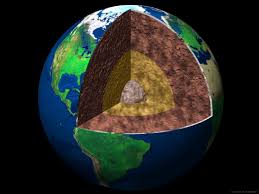
What is the top layer of the Earth's surface called? 
a)
Mantle
b)
Innercore
c)
Outercore
d)
Crust
2.
A dense ball of solid iron and nickel.
a)
crust
b)
inner core
c)
mantle 
d)
outer core
3.

Which layer of Earth is located below the crust?

a)

crust

b)

inner core

c)

mantle

d)

lithosphere

4.

What is the thickest layer of the earth made of melted rock?

a)

mesosphere

b)

mantle

c)

asthenosphere

d)

lithosphere

5.
Is the outer core a liquid or solid?
a)
liquid
b)
solid
6.
Temperature _____________________ as you go deeper into the earth.
a)
increases
b)
decreases
c)
goes up and down depending on the layer
d)
stays the same
7.
Pressure ______________________ as you go deeper into the Earth
a)
increases
b)
decreases 
c)
goes up or down depending on the layer
d)
stays the same
8.

True or False:

The Earth's crust is thin and rocky.

a)

True

b)

False

9.

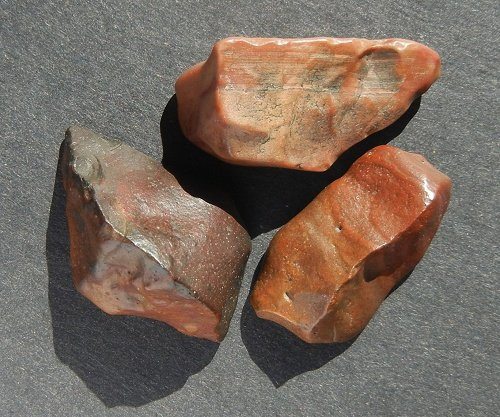
These rocks were made smooth by wind blowing smaller rock particles across their surface. This is an example of:

a)

physical weathering

b)

chemical weathering

10.

This type of weathering occurs when rock is physically broken down into smaller pieces of rock.

a)

physical weathering

b)

chemical weathering

11.
How do plants weather rocks?
a)
during photosynthesis
b)
when roots grow into cracks of rocks and expand the rock
c)
when the plant moves water from the roots to the leaves
12.
3.  Which types of changes are included in the process of weathering?
a)
A.  physical
b)
B.  chemical
c)
C.  both
13.

What is weathering?

a)

A process that breaks down rocks into smaller pieces

b)

A shift in weather patterns

c)

The process by which mountains are formed

d)

The process by which the seasons change

14.

This type of weathering occurs when rocks weaken then break down due to chemical changes such as acid rain.

a)

physical weathering

b)

chemical weathering

c)

erosion weathering

d)

deposition

15.

Which is NOT an example of physical weathering?

a)

waves

b)

water

c)

acid rain

d)

temperature changes

16.
How does freezing water cause the weathering of rocks?  The freezing water—
a)
keeps the rocks in place
b)
makes the rocks last longer
c)
expands cracks and breaks rocks
d)
causes rocks to fall in landslides
17.
Rain washing away soil from a hillside
a)
Weathering
b)
Erosion
c)
Deposition
18.
Waves dropping sand on the beach
a)
Weathering 
b)
Erosion
c)
Deposition
19.
Wind blowing sand from one location to another
a)
Weathering
b)
Erosion
c)
Deposition
20.
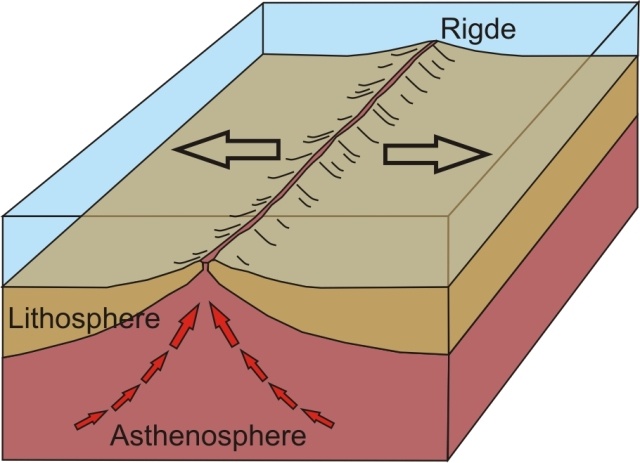
What causes seafloor spreading to occur?
a)
Old crust is destroyed at divergent boundaries.
b)
New crust forms at divergent boundaries, pushing old crust outwards.
c)
New crust forms as plates move over hotspots.
21.
What is a divergent boundary? 
a)
two plates moving towards each other
b)
two plates rubbing side to side
c)
two plates moving away from each other
d)
happens in the lithosphere
22.
What type of boundary is this?
a)
Divergent
b)
Convergent
c)
Transform Fault
23.
What would you be most likely to find at a transform boundary?
a)
Earthquakes
b)
Volcanoes
c)
Mountains
d)
Rift
24.
Mountains are created when....
a)
Two continental plates collide
b)
An Oceanic plate subducts under a Continental Plate
c)
Two continental plates pull apart
25.
What kind of plate boundary is shown here?
a)
divergent
b)
convergent
c)
transform
d)
submergent
26.
What kind of plate boundary is shown here?
a)
divergent
b)
convergent
c)
transform
d)
subducting
27.

Why does the moon have very little weathering and erosion?

a)

there is water, but no air

b)

there is too much air and water

c)

there is very little air and water

28.

How does weathering and erosion occur on the moon?

a)

from air and water

b)

from meteorites hitting the surface

c)

from astronauts walking around on the moon

29.
What is Magma when it reaches the surface of Earth?
a)
Lava
b)
Mafic Magma
c)
Felsic Magma
d)
None of these
30.
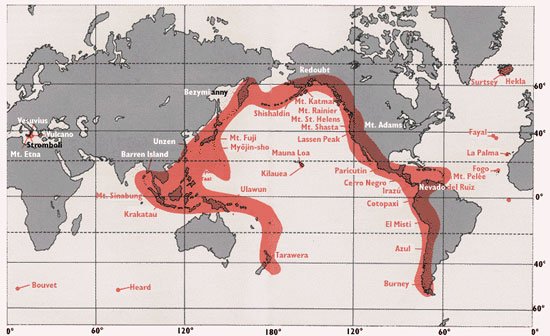
This is the name for the chain of volcanos around the edge of the Pacific Plate.
a)
Circle of Fire
b)

Ring of Volcanoes

c)
Ring of Fire
d)
Circle of Magma
31.
Where do volcanoes come from?
a)
Places where plates move apart
b)
Places where plates are moving together
c)
Hot Spots
d)
All of these options
32.

A crack in the earth's crust is called a-

a)

fracture

b)

fault

c)

joint

33.

The area where two or more plates meet is called a __________________.

a)

plate edge

b)

plate boundary

c)

ring of fire

34.

According to the continental drift theory, a single, huge continent once existed called

a)

Pangaea.

b)

Wegener.

c)

Panthalassa.

d)

Eurasia

35.

What are the two continents that fit together based on Wegener's Theory?

a)

Asia and Russia

b)

India and Asia

c)

South America and Africa

d)

Africa and Asia