Wayground logo

Free Printable Worksheets

Font size

S
M
L
XL
Worksheets

10th grade Chapter 9: What is an Animal?

Total questions: 75

Worksheet time: 1hrs 28mins

Name
Class
Date
1.

An living creature that makes its own food is called a

a)

haploid

b)

diploid

c)

heterotroph

d)

autotroph

2.

All animals have ____________ cells meaning all cell parts are contained within membranes.

a)

diploid

b)

eukaryote

c)

haploid

d)

prokaryote

3.

Unlike plants, animals do not have _________________.

a)

cell walls

b)

multi cellular

c)

eukaryote cells.

d)

diploid cells.

4.

ALL animals are _____ at some point in their life like this baby barnacle.

a)

sessile

b)

mobile

c)

haploid

d)

autotrophs

5.

This term ___________ means animals must eat other living things for food.

a)

autotroph

b)

heterotroph

c)

haploid

d)

diploid

6.

All animals have fur. True or false?

a)

True

b)

False

7.

This gorgonian coral is a animal. True or false?

a)

True

b)

False

8.
What unit are all living things made of?
a)
Cells
b)
Skeletons
c)
Hearts
d)
Carapaces
9.
Many cells of the same type form a _____.
a)
Organism
b)
Chloroplast
c)
Tissue
d)
Organ system
10.
Two or more kinds of tissues together form an _____.
a)
Organ
b)
Chloroplast
c)
Cell
d)
Tissue
11.
Organ systems working together form a living _____.
a)
Chloroplast
b)
Tissue
c)
Cell
d)
Organism
12.
What are vertebrates?
a)
Animals with a backbone
b)
Animals without a backbone
13.

Animals without a backbone are ______________

a)

Vertebrates

b)

Invertebrates

14.
The 8 levels of classification, most broad to most specific.
a)
Domain, Genus, Family, Order, Class, Phylum, Kingdom, Species
b)
Domain, Species, Kingdom, Genus, Phylum, Family, Class, Order
c)
Domain, Kingdom, Phylum, Class, Order, Family, Genus, Species
d)
Order, Kingdom, Species, Domain, Phylum, Family, Class, Genus
15.
Which have stinging cells called nematocysts?
a)
cnidarians
b)
molluscs
c)
poriferans
d)
arthropods
16.

Which organism would be a cnidarian?

a)

jellyfish

b)

sponge

c)

dog

d)

earthworm

17.

Annelids include

a)

earthworms and leeches

b)

sponges

c)

Hydra and jellyfish

d)

Dogs and cats

18.

Jellyfish have stinging cells and are therefore in Phylum

a)

Cnidaria

b)

Porifera

c)

Echinodermata

d)

Chordata

19.

These organisms are filter-feeders, lack tissues, and are capable of regeneration.

a)

Porifera

b)

Cnidaria

c)

Echinoderm

d)

Rotifera

20.

Sponges have radial symmetry.

a)

True

b)

False

21.
Sponges use pores to 
a)
move from place to place.
b)
filter food from the water.
c)
defend themselves.
22.
Because sponges cannot move around they are considered ______. 
a)
sessile
b)
senile
c)
sedementary
d)
spongin
23.
Asexual sponge reproduction where a piece of the adult sponge breaks off and settles in a new area growing to adulthood.
a)
broadcast spawning
b)
branching
c)
budding
d)
forcast spawning
24.

True/False: Sponges reproduce by both sexual and asexual reproduction.

a)

True

b)

False

25.
Sponges belong to which group of animals?
a)
Vertebrates
b)
Invertebrates
26.
Sponges belong in which phylum?
a)
Cnidaria
b)
Porifera
c)
Chordata
d)
Arthropoda
27.
What type of symmetry do sponges (Porifera) have?
a)
asymmetrical
b)
radial
c)
bilateral 
d)
medial
28.
Describes an animal that does not move as an adult
a)
hermaphrodite
b)
sessile
c)
filter feeder
d)
spongin
29.
The hard "skeleton" structures in a sponge are called...
a)
Spongin
b)
Spicules
c)
Amebocytes
d)
Pinococytes
30.
Most sponges are hermaphrodites.  What does this mean?
a)
sponges can produce their own food
b)
sponges can produce both eggs and sperm
c)
sponges cannot reproduce
d)
sponges can swim around
31.
What is true about sponges?
a)
They have organs
b)
They have bilateral symmetry
c)
They have a true coelom
d)
They are animals
32.
what are the functions of an animals
a)
reproduce once and die
b)
obtain food and oxygen and move in some way
c)
live
d)
obtain food and oxygen,move in some way,homeostasis,and to reproduce
33.
what type of symmetry?
a)
assymetrical
b)
no idea 
c)
radial 
d)
bilateral
34.
what type of symmetry?
a)
bilateral
b)
assymetrical
c)
radial
d)
no idea
35.

what type of symmetry?

(the coral,not the diver)

a)

asymetrical

b)

bilateral

c)

radial

d)

no idea!!!

36.

An animal that lives and feeds on other animals is a

a)

parasite

b)

vaccination

c)

host

d)

disease

37.

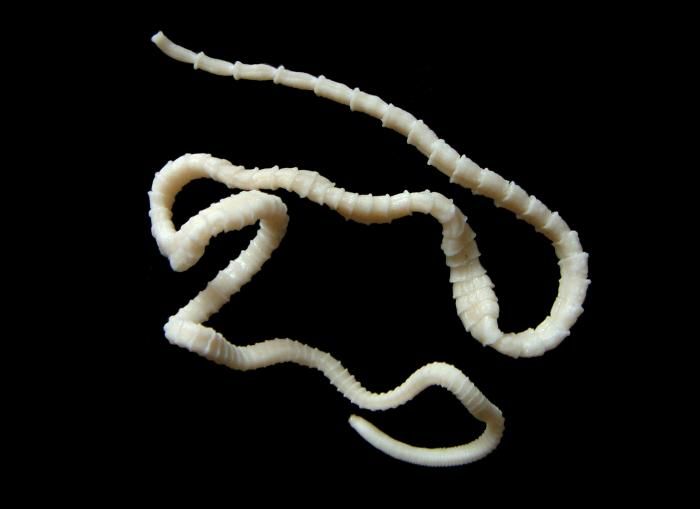
A tapeworm can grow to ________ meters in a whale.

a)

10

b)

90

c)

30

d)

60

38.
How do planarians reproduce asexually?
a)
laying eggs
b)
they don't reproduce asexually
c)
regeneration of missing parts
d)
planarians fertilize their own eggs
39.
What type of symmetry do flatworms have?
a)
radial
b)
bilateral
c)
no symmetry
d)
cephalization
40.

Annelids, like earthworms, have repeating segments.

a)

True

b)

False

41.

Water currents are a natural occurrence that help sponges obtain food and oxygen, expel waste, and form sperm and egg cells.

a)

true

b)

false

42.

The # of invertebrate phyla.

a)

1

b)

34

43.

The # of vertebrate phyla.

a)

1

b)

34

44.

The % of animals that are vertebrates.

a)

97

b)

3

45.

The % of animals that are invertebrates.

a)

97

b)

3

46.

A jellyfish uses bright lights to communicate. This behavior is a result of it using..

a)

submission

b)

dominance

c)

bioluminescence

47.

what type of symmetry?

(the diver,not the coral)

a)

asymetrical

b)

bilateral

c)

radial

d)

no idea!!!

48.

What is the most common asexual mode of reproduction observed in sponge?

a)

binary fission

b)

budding

c)

fragmentation

d)

hermaphroditism

49.

how many tissue layers are in a sponge body?

a)

1

b)

2

c)

3

d)

None. Cells are not organized into tissues

50.
The body plan of a worm exibits __________.
a)
radial symmetry
b)
bilateral symmetry
c)
circular symmetry
d)
no symmetry
51.

Segmented worms include earthworms and _______.

a)

tapeworms

b)

Nematoda

c)

leeches

d)

planaria

52.
Hirundinea, such as leeches, are _________. 
a)
herbivores
b)
carnivores
c)
omnivores
53.

When a planaria is spliced in half, what happens?

a)

both ends regenerate

b)

only the head end makes a new tail

c)

only the tail end makes a new head

d)

it dies

54.

A tapeworm is an example of a

a)

roundworm

b)

flatworm

c)

segmented worm

d)

earthworm

55.
example is a tapeworm
a)
flat
b)
round
c)
segmented
d)
more than one
56.
example is planarian
a)
flat
b)
round
c)
segmented
d)
more than one
57.
example is a leech
a)
flat
b)
round
c)
segmented
d)
more than one
58.
What am I?
a)
endotherm
b)
ectotherm
59.
What am I?
a)
endotherm
b)
ectotherm
60.
What am I?
a)
endotherm
b)
ectotherm
61.
Body temperature changes with the environment.
a)
endotherm
b)
ectotherm
62.
Cold Blooded
a)
endotherm
b)
ectotherm
63.
Warm Blooded
a)
endotherm
b)
ectotherm
64.
All invertebrates are ________________.
a)
endotherm
b)
ectotherm
65.
Which of the following is endothermic?
a)
dog
b)
crab
c)
worm
d)
mollusk
66.

What would a reptile do in order to warm itself up?

a)

bask or lay out in the sun

b)

eat some food

c)

shiver

d)

run around

67.

Which of the following statements is true regarding ectothermic animals?

a)

They must eat constantly to stay warm.

b)

They must sweat or pant to release excess body heat.

c)

They rely on the environment to control their temperature.

d)

Most animals on the earth are NOT ectothermic.

68.

The Cnidarians live in ...

a)

aquatic environmet

b)

surface

c)

in mountains

d)

in a desert

69.

Choose the characteristics of sponges

a)

They filter the sea water to get nutrients

b)

They filter the fresh water to get nutrients

c)

They don´t filter

70.

Sponges have cells, tissues, and organs.

a)

True

b)

False

71.

How do sponges feed?

a)

Filter feed

b)

Hunt

c)

Absorb through ocean floor

72.
Sponges reproduce ________ by releasing sperm and eggs into the water.
a)
Sexually
b)
Asexually
c)
Sessile
d)
Larva
73.

Sponges are primarily sessile organisms. What does this mean?

a)

They live permanently in one palce

b)

They move around their whole life

74.

Can coral sting you?

a)

yes

b)

no

75.

What is the most dangerous type of jelly? (Look it up when you are done -it's way scarier than a box jelly!)

a)

sea nettle

b)

sea wasp

c)

lions mane jelly

d)

moon jelly