wayground logo

Free Printable Worksheets

Font size

S
M
L
XL
Worksheets

Microhabitats and Biodiversity

Total questions: 128

Worksheet time: 2hrs 52mins

Name
Class
Date
1.
What is the difference between biotic and abiotic?
a)
Biotic are non-living things
b)
Abiotic are living organisms
c)
Biotic is life,
Abiotic is non-living
d)
Biotic is non-living, Abiotic is living
2.
What does biodiversity mean?
a)
Only one species in an area.
b)
The different amount of species in an area
c)
All abiotic life
d)
Nitrogen fixation
3.
Which option is abiotic?
a)
Plants
b)
Bacteria
c)
Water
d)
Fungi
4.
Which option is abiotic?
a)
Plants
b)
Rocks
c)
Animals
d)
Fungi
5.
Which option is biotic?
a)
Plants
b)
Air
c)
Water
d)
Energy
6.
Food provides animals with the materials and energy they need for growth, warmth, and motion. Plants get material for growth mostly from air and water, and obtain energy from sunlight.

Producers provide food to consumers because ―
a)
many animals prefer eating plants to eating meat
b)
plants can easily make food from soil and water
c)
animals cannot produce their own food
d)
plants are more abundant in ecosystems
7.
The illegal capture or killing of an organism, often for money, is called...
a)
poaching
b)
harvesting
c)
fragementation
d)
extinction
8.
All living and nonliving things in an environment and the many ways they interact are called ______
a)
ecosystem
b)
community
9.

Biodiversity is important for the ____________ of systems in nature.

a)

harmony

b)

stability

c)

peace

d)

happiness

10.

What happens when species become extinct?

a)

a few are still alive

b)

the adults are dead but some eggs still have not hatched

c)

the whole species does not exist

d)

the species do not exist in some parts of the world

11.

Critical to the functioning of an ecosystem

a)

hybrids

b)

genetic diveristy

c)

keystone species

12.
A place where plants and animals live and grow naturally is called a ______________.
a)
shelter
b)
tree
c)
habitat
d)
organism
13.
Which option is biotic?
a)
Plants
b)
Air
c)
Water
d)
Energy
14.

Biodiversity is greater

a)

Near the poles

b)

In the Tundra

c)

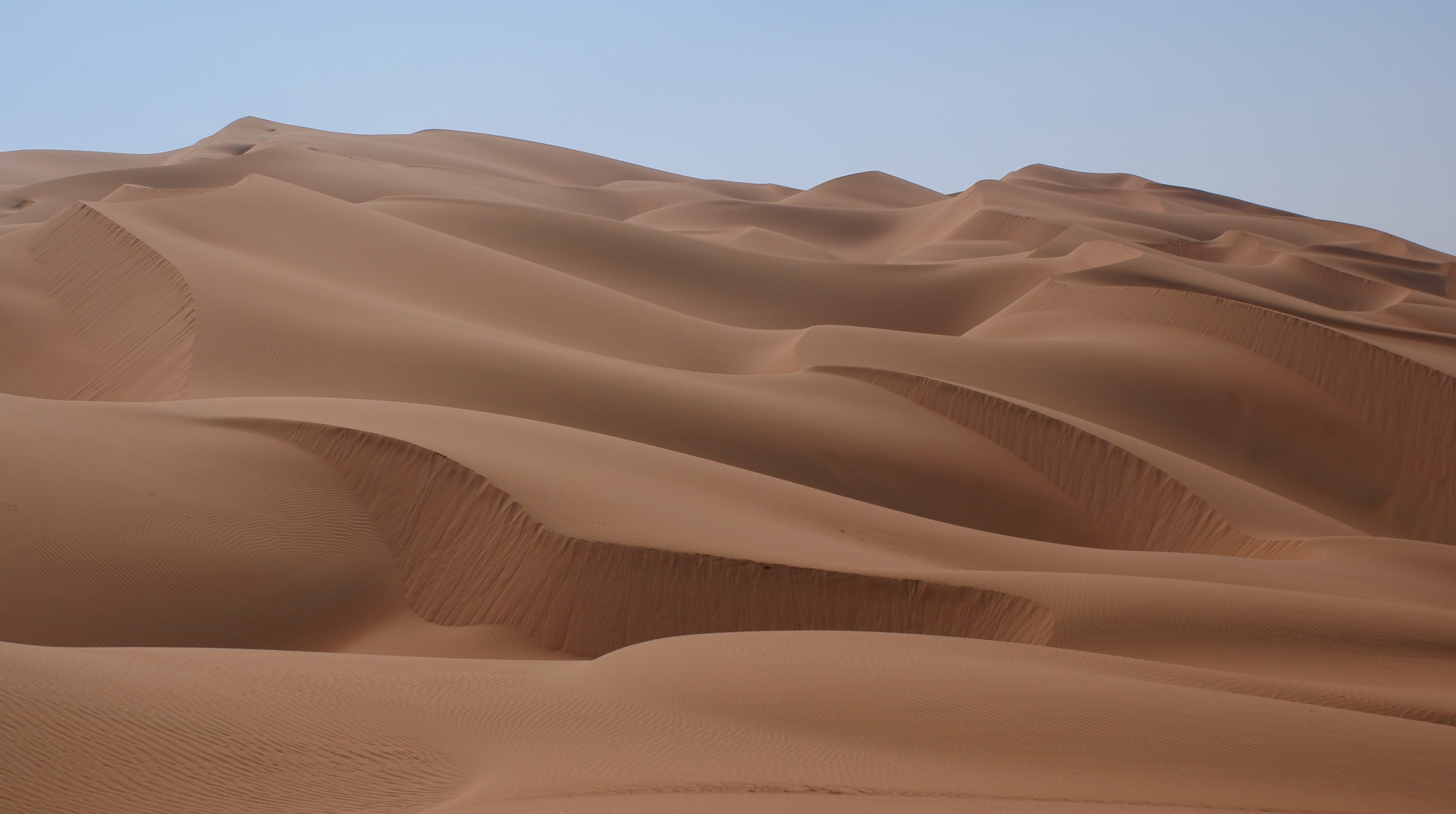
In the desert

d)

Near the equator
15.
Which biome is more biodiverse?
a)
Desert
b)
Sand
c)
Tundra
d)
Rainforest
16.
What is the main factor that separates the biomes?
a)
Land
b)
Water
c)
Climate
d)
Longitude
17.
Which biome is the driest?
a)
Desert
b)
Tundra
c)
Taiga
d)
Rainforest
18.
Which Biome has permafrost?
a)
Temperate Forest
b)
Rainforest
c)
Taiga
d)
Tundra
19.
Which biome has deciduous trees (which lose their leaves)?
a)
Temperate Forest
b)
Rainforest
c)
Grasslands
d)
Taiga
20.
Which biome has coniferous trees (which don't lose their leaves)?
a)
Taiga
b)
Temperate Forest
c)
Tundra
d)
Grasslands
21.
A large ecosystem is called a ______
a)
Ecosystem
b)
Habitat
c)
Biome
d)
Niche
22.
Which biome has wide-open fields of grass?
a)
Taiga
b)
Grasslands
c)
Temperate Forest
d)
Rainforest
23.
Which biome has the most variety of plants and animals?
a)
Temperate Forest
b)
Rainforest
c)
Tundra
d)
Grasslands
24.
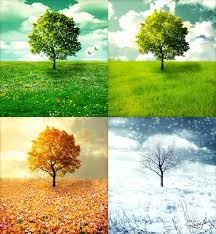
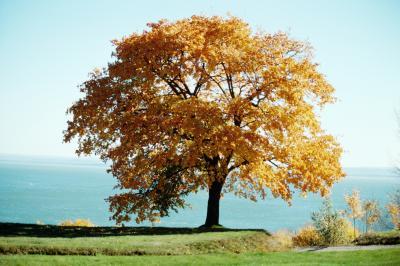
Which biome has 4 seasons?
a)
Taiga
b)
Tundra
c)
Grasslands
d)
Temperate Forest
25.
In which 2 biomes can only plants/animals with adaptations survive?
a)
Taiga/Temperate Forest
b)
Grasslands/Desert
c)
Tundra/Desert
d)
Rainforest/Tundra
26.
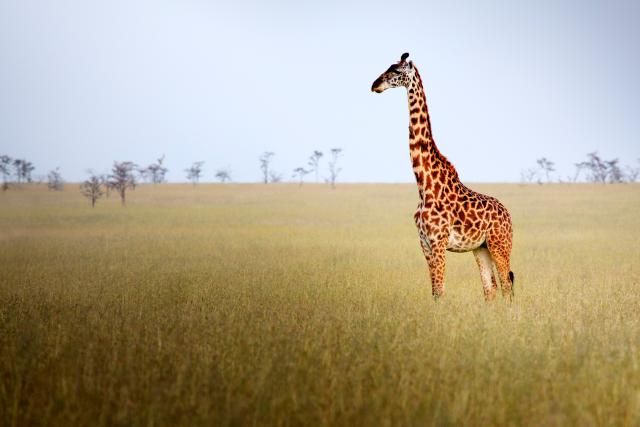
Which biome is home to lions, zebras, wildebeests, giraffes, and elephants?
a)
Grasslands
b)
Tundra
c)
Rainforest
d)
Temperate Forest
27.
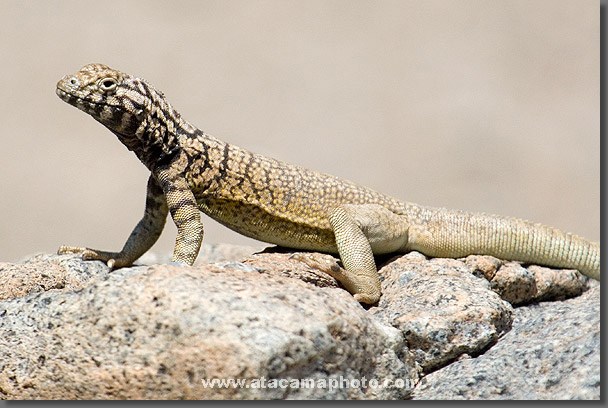
Which biome is home to cacti, scorpions, coyotes, kangaroo rats, and lizards?
a)
Desert
b)
Grasslands
c)
Temperate Forest
d)
Taiga
28.
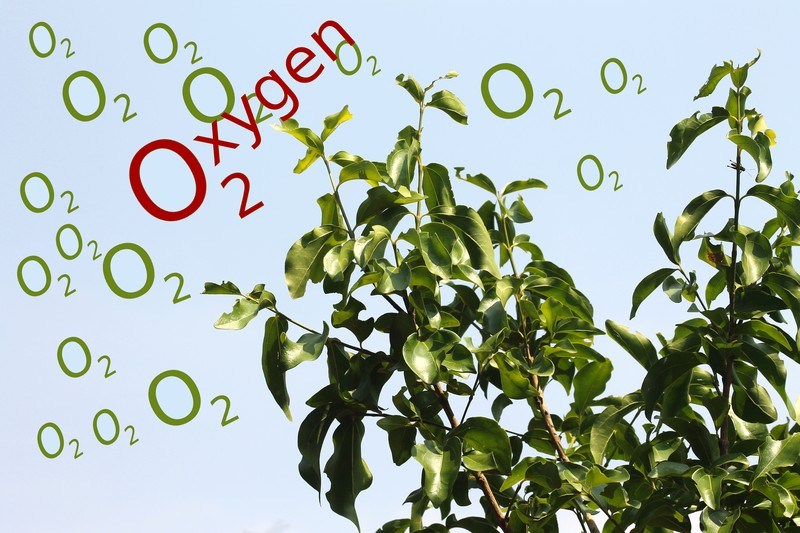
Which biome produces over 50% of the world's oxygen?
a)
Rainforest
b)
Temperate Forest
c)
Grasslands
d)
Taiga
29.
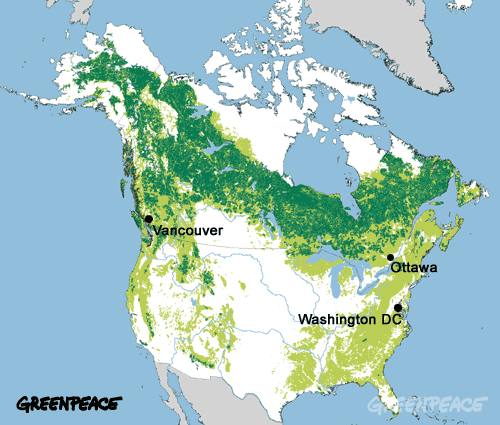
Which biome is Canada in?
a)
Tundra
b)
Taiga
c)
Temperate Forest
d)
Desert
30.
Which biome is home to jaguars, anacondas, leopards, gorillas, and poisonous tree frogs?
a)
Grasslands
b)
Temperate Forest
c)
Rainforest
d)
Tundra
31.
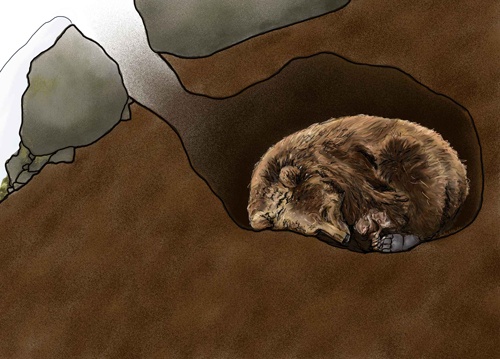
Which biome could an animal who hibernates in the winter to survive the cold live in?
a)
Grasslands
b)
Taiga
c)
Desert
d)
Rainforest
32.
In which biome does an organism have to be able to conserve water to survive?
a)
Rainforest
b)
Taiga
c)
Desert
d)
Temperate Forest
33.
Which biome is characterized by low temperatures and low amounts of rainfall?
a)
tundra
b)
desert
c)
temperate deciduous forest
d)
tropical rain forest
34.
Which biome covers most of the land mass near the Earth's equator?
a)
tundra
b)
desert
c)
grassland
d)
tropical rainforest
35.
Which biome is found on the mountain above the tree line?
a)
grassland
b)
deciduous forest
c)
tundra
d)
tropical forest
36.
Which biome, because of its climate, has the largest number of species of plants and animals?
a)
tundra
b)
desert
c)
tropical rainforest
d)
pine forest
37.
One characteristic feature of tundra is that only the surface thaws in the summer and refreezes in the winter, leaving a layer of permanently frozen subsoil.  This characteristic is known as
a)
glaciation
b)
permafrost
c)
crystallization
d)
soilfrost
38.
Which type of trees is found in a temperate forest?
a)
deciduous
b)
evergreen
c)
ginko
d)
palm
39.
Which major biome is home to cacti, mesquite, white thorn, pack rats, small reptiles, and coyotes?
a)
desert
b)
taiga
c)
tundra
d)
grassland
40.
In which biome is Georgia located?
a)
tropical rainforest
b)
temperate rainforest
c)
temperate deciduous forest
d)
alpine forest
41.
Which biome receives between 0 to 25 centimeters of rain per year, has a temperature range of 0 to 50 degrees Celsius, has poor soil, and is home to lizards, scorpions, and snakes?
a)
desert
b)
mountain
c)
taiga
d)
tundra
42.
Which biome receives between 0 and 25 centimeters of precipitation each year, has a temperature range from -27 to 5 degrees Celsius, has frozen soil, and is home to hares, caribou, and wolves?
a)
desert
b)
mountain
c)
savannah
d)
tundra
43.
Which of the following habitats probably has the greatest number of plant and animal species?
a)
the African savannah
b)
a rainforest in Brazil
c)
a temperate forest in China
d)
a temperate grassland in Kansas
44.
Which biome contains large populations of grazing herbivores, few species of birds, and deep, rich soil?
a)
taiga
b)
tundra
c)
deciduous forest
d)
grassland
45.
This biome contains mostly spruce trees and Douglas firs, which are both evergreen.  The winters are long and cold and the summers are short and rainy.  The soil is very rich.  Moose and elk live here.  This biome is classified as a
a)
taiga
b)
tundra
c)
deciduous forest
d)
temperate forest
46.
The biome known for trees with broad leaves that fall off the trees in the winter.
a)
Coniferous Forests
b)
Deciduous Forests
c)
Deserts
d)
Tropical Rain Forests
47.
The most important abiotic factors when studying biomes are...
a)
Food and Water
b)
Water and Sunlight
c)
Temperature and Oxygen
d)
Water and Temperature 
48.
The greatest biodiversity on earth is found in the __________ biome.
a)
taiga
b)
grassland
c)
temperate deciduous forest
d)
tropical rainforest
49.
This biome is found around the equator and is home to a large amount of biodiversity.
a)
Deserts
b)
Tropical Rain Forests
c)
Savannas
d)
Chaparral 
50.
Which biome is MOST LIKE the "desert" in terms of precipitation?
a)
tropical rainforest
b)
temperate deciduous forest
c)
tundra
d)
coniferous forest
51.
Which biome is represented by the rainfall amounts in letter C?
a)
desert
b)
prairie
c)
deciduous forest
d)
tropical rain forest
52.
A ________ is a forest biome consisting mostly of cone-bearing evergreen trees
a)
desert
b)
temperate deciduous forest
c)
taiga
d)
tundra
53.
Areas defined by their geographical location and ecological similarity are called?
a)
ecozones
b)
biotopes
c)
biomes
d)
biodomes
54.
What are the key features of the Tundra?
a)
cold winter, thin acidic soil, evergreen trees
b)
treeless, permafrost, cold dark winters
c)
ong cool summers, short dark winters, migrating animals
d)
many evergreen trees, short moist summers, long snowy winters
55.
Which of the following is NOT an example of a biome?
a)
Desert
b)
Marine
c)
Freshwater
d)
Waterpark
56.
Which of the following in an ecosystem is classified as BIOTIC?
a)
Rock
b)
Sand
c)
Wind
d)
Tree
57.
Which of the following in an ecosystem is ABIOTIC?
a)
Sunlight
b)
Frog
c)
Scorpion
d)
Snake
58.
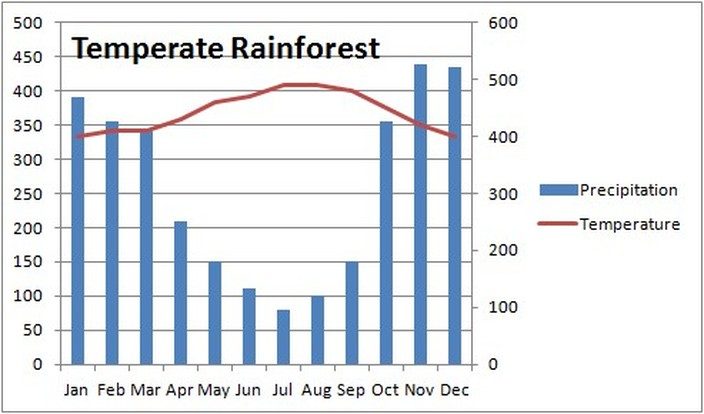
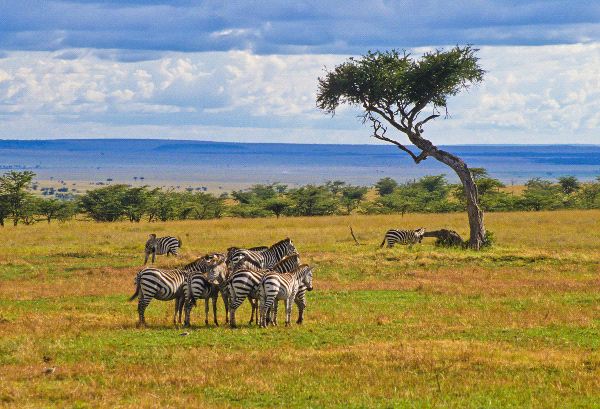
What biome? 
a)
Savannah
b)
Temperate Rainforest
c)
Taiga
d)
Desert
59.
What are the biotic factors of the savanna
a)
animals 
b)
plants 
c)
grass
d)
all of the above
60.
Which of these describes the rainforest?
a)
populated by squirrels, bears and pine trees
b)
relatively few trees
c)
generally close to the equator
d)
short, mild, dry summers
61.
The rainforest has the greatest variety of different organisms that live there. In other words, the rainforest has the greatest ______.
a)
speciation
b)
biodiversity
c)
climate
d)
succession
62.
What biome?
a)
Mountains
b)
Tundra
c)
Tropical Rainforest
d)
Temperate Forest
63.
How much rain falls in the desert?
a)
10 inches
b)
more than 10 inches
c)
less than 10 inches
d)
none at all
64.
What kind of soil is found in the desert?
a)
humus
b)
sand
c)
dirt
d)
flowers
65.
 As you travel from the North Pole toward the equator, you would expect to see
a)
tropical rain forests, then deserts, then taiga.
b)
temperate deciduous forests, then taiga, then tropical rain forests.
c)
tundra, then grasslands, then tropical rain forests.
d)
taiga, then desert, then tundra.
66.
The taiga
a)
a cold, treeless, desert-like biome found near the North and South Poles
b)
found mostly in Africa
c)
a forest biome dominated by coniferous trees, such as pine, fir, and spruce
d)
a dry, rocky biome found in the central part of South America.
67.
We would NOT find this animal in the deciduous forest
a)
squirrel
b)
deer
c)
bear
d)
giraffe
68.
What is the average, year-to-year conditions of weather in an area?
a)
Biome
b)
Air Mass
c)
Climate
d)
Precipitation
69.
Nonliving elements in an ecosystem are called _______________. 
a)
biotic factor
b)
abiotic factor
c)
limiting factor
d)
carrying capacity 
70.
Is a deer an abiotic or biotic factor? 
a)
abiotic
b)
biotic
71.
Is a weather an abiotic or biotic factor? 
a)
abiotic
b)
biotic
72.
Is sunlight an abiotic or biotic factor? 
a)
abiotic
b)
biotic
73.
A living or once-living organisms in an ecosystem is a
a)
population
b)
biotic factor
c)
abiotic factor
d)
community
74.
this cold biome has tall trees that photosynthesize all year round
a)
Tundra
b)
Tropical Rainforest
c)
Taiga
d)
Deciduous
75.
The underside of a rotting log is an example of a:
a)
Taiga
b)
Microhabitat
c)
Savanna
d)
Biome
76.
An example of an organism that might live in a microhabitat is...
a)
spider
b)
fox
c)
deer
d)
raccoon
77.
This picture shows a...
a)
microhabitat
b)
ecosystem
c)
habitat
d)
biome
78.

Which of the following is an abiotic factor in the tundra?

a)

soil

b)

rocks

c)

water

d)

ice

79.

Which of the following is an adaptation to survive in the taiga?

a)

broad leaves

b)

thorns

c)

hibernation

d)

long necks

80.

Which of the following is an adaption to survive in the desert?

a)

needle leaves

b)

dormancy

c)

nocturnal

d)

hibernation

81.

What is the difference in a microhabitat and a biome?

a)

size

b)

temperature

c)

climate

d)

precipitation

82.
You observe earthworms in a microhabitat in your schoolyard. Why are earthworms and other decomposers an essential part of a healthy ecosystem?
a)
Decomposers make resources available to producers by breaking down waste materials.
b)
Decomposers extract energy from sunlight as they break down plant materials, adding returning energy to the system.
83.
A/n ___ consists of all the communities that live in an area and the abiotic features of their environment.
a)
community
b)
population
c)
biome
d)
ecosystem
84.
All the organisms of one species that live in an area are called the ___.
a)
population
b)
ecosystem
c)
biome
d)
community
85.
What factor contributes the most to the sustainability of a habitat?
a)
competition among large predators
b)
large variety of organisms
c)
presence of volcanic rock
d)
absence of bacterial species
86.
Where  does  the energy of most of the ecosystems come from?
a)
Batteries 
b)
Air
c)
Sun
d)
Electricity
87.
Temperature, light, air, water, and soil are all  _____  parts of the environment
a)
alive
b)
biotic 
c)
abiotic
d)
living
88.
A ____________ breaks down waste or dead organisms and recycles nutrients.
a)
consumer
b)
producer
c)
decomposer
d)
omnivore
89.

Functions of animals that help them survive in their environment are —

a)

structural adaptations

b)

modifications

c)

physical characteristics

d)

behavioral adaptations

90.

Which plants would most likely be found in a rain forest?

a)

1

b)

2

c)

3

d)

4

91.

A student walks the schoolyard and observes that there are many living things such as different plants and animals. She notices that moss grows in moist shady areas but did not see any in the open yard where its sunny. What is the best explanation for her observation?

a)

Different habitats support different plants and animals

b)

All plants and animals can live in any environment

c)

Schoolyards are not able to sustain living things

d)

Schoolyards are the only places where moss can grow.

92.

The picture shows an arctic fox.

In which biome does the fox most likely live?

a)

Desert

b)

Tundra

c)

Grasslands

d)

Temperate Rainforest

93.

Which of the following factors determines a biome's identity

a)

the climate that exists there

b)

the number of people who live there

c)

the amount of pollution that occurs there

d)

the types of activities that can be done there

94.

You observe a garden in a schoolyard. Corn, tomatoes, pumpkins, and other crops thrive in the garden. What is most likely true of the soil in this micro-habitat?

a)

It is dry and frozen

b)

It is rocky, sandy, and dry

c)

It is deep, dark, and nutrient rich

d)

It is thin, acidic, and nutrient poor.

95.

In which biome would you expect to find many coniferous trees?

a)

Taiga

b)

Tundra

c)

Savanna

d)

Tropical rain forest

96.

How is a tundra biome similar to a desert biome

a)

Both biomes have dry rocky soils

b)

Both biomes lack plants or animals

c)

Both biomes are hot during the day and cold at night

d)

Both biomes are characterized by very little precipitation.

97.
Even a small area, such as a schoolyard, contains many microhabitats. Each microhabitat would probably contain a wide variety of organisms. What would the organisms in a single microhabitat have in common?
a)
They would all be about the same size
b)
They would all depend on each other for food and shelter
c)
They would all be the same species
d)
They would not have anything in common
98.
A habitat that receives little or no precipitation will most likely be suitable for organisms that
a)
hibernate for long periods of time
b)
are covered in thick fur to keep warm
c)
spend most of the day in the sunlight
d)
store large quantities of water internally
99.
Which statement best defines the desert biome?
a)
a place that has low temperatures
b)
presence of cactus plants
c)
warm and sandy
d)
receives less than 10 inches of rain a year
100.
1.  What is the average weather in a particular place over a long period of time called?
a)
habitat
b)
ecosystem
c)
biome
d)
climate
101.
1.  The freshwater biome includes all of the following EXCEPT
a)
lakes
b)
ponds 
c)
oceans
d)
streams
102.

This biome is filled with large hardwood trees

a)

Temperate Forest

b)

Boreal Forest (Taiga)

c)

Rainforest

d)

Desert

103.

This biome covers 70% of Earth's surface

a)

Rainforest

b)

Ocean

c)

Temperate Forest

d)

Boreal Forest (Taiga)

104.

This biome has permafrost present most of the year.

a)

Arctic (Polar)

b)

Arctic Tundra

c)

Desert

d)

Boreal Forest (Taiga)

105.

Which biome would you find the following organisms in - sharks, kelp, coral

a)

Deserts

b)

Ocean

c)

Taiga

d)

Arctic Tundra

106.

What are examples of microhabitats that you might find in your backyard?

a)

Under a tree

b)

Puddle of water

c)

Garden

d)

Under a rock

107.

What is one important way the arctic fox is adapted to its environment?

a)

its strong paws help it climb trees

b)

Its small size helps the fox hide below forest plants

c)

Its white fur helps the fox stand out to other animals

d)

its small ears and nose help slow the fox's heat loss in a cold climate

108.

You observe a garden in a schoolyard. Corn, tomatoes, pumpkins, and other crops thrive in the garden. What is most likely true of the soil in this micro-habitat?

a)

It is dry and frozen

b)

It is rocky, sandy, and dry

c)

It is deep, dark, and nutrient rich

d)

It is thin, acidic, and nutrient poor.

109.

Which best explains biodiversity?

a)

The population of a species in an ecosystem

b)

The variety of species in an ecosystem

c)

The study of life

d)

The difference number of biomes on Earth

110.

Which ecosystem has the greatest amount of biodiversity?

a)

Polar regions

b)

Deciduous forest

c)

Tundra

d)

Tropical rainforest

111.

Why do these two microhabitats located in the same biome support different varieties of life?

a)

Because the climates are very different in each location.

b)

Different animals prey on the different insects.

c)

Because the microhabitats each have different resources.

d)

Because the tree is dead, it can't support life.

112.

Which of the following situations contributes to stability in an ecosystem?

a)

increase in biodiversity

b)

decrease in biodiversity

c)

extinction of a population from the ecosystem

d)

removal of many populations of organisms

113.

Some plants have a waxy thick coat with thorns. Where would you find this type of plant?

a)

Grassland

b)

Tundra

c)

Desert

d)

Forest

114.
Plants in this biome are adapted to poor soil, extreme temperatures and less than 25 centimeters of rainfall per year.
a)
Tundra
b)
Taiga
c)
Desert
d)
Grasslands
115.
Under a rock is a good place to view a micro habitat.
a)
True
b)
False
116.

If your local environment begins to turn into a desert, what will most likely happen to the organisms in the environment?

a)

A different variety of organisms will be supported rather than the ones that currently exist

b)

The populations of organisms currently existing in the environment will not be affected

c)

The new desert environment will be unable to support any populations of organisms

d)

The populations of organisms currently existing in the environment will increase

117.

A flower bed is created at a school so lowers can be planted in the autumn. Over the summer, the flower bed is ignored. Which of the following should the students expect when they come back to school?

a)

Tree

b)

Weeds

c)

Nothing

d)

Shrubs

118.

The role of a pioneer species in primary succession is to change a bare habitat into one that is suitable for other organisms. A species that is responsible for primary succession in an ecosystem is most likely able to --

a)

migrate during the winter

b)

survive any predator

c)

carry out photosynthesis

d)

live at high altitudes

119.

Students observe ecological succession of a field that has been left bare. Which of the following are the students likely to observe first?

a)

Formation of topsoil

b)

Growth of grasses and weeds

c)

Growth of shrubs and trees

d)

A mature grassland community

120.

The most sustainable ecosystem would

a)

Have low biodiversity

b)

Have high biodiversity

c)

Not experience change

d)

Have no predators

121.

Microhabitats are very small parts of the environment that supports a distinct flora (plant) and fauna (animal). Of the following, which one is a microhabitat?

a)

Moss growing on top of a rotting log

b)

Aquatic biomes

c)

Deer, Rabbits, and Fox sharing a field

d)

Fish and seahorses swimming around a reef.

122.

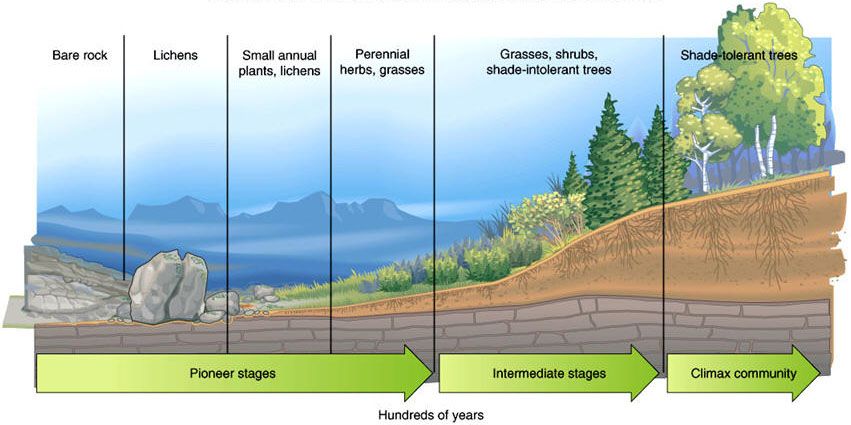
What type of succession is shown in this picture?

a)

Secondary Succession

b)

Old-Field Succession

c)

Primary Succession

d)

Volcanic Succession

123.

The first organisms that appear in an ecological community are ____________________.

a)

ecological succession

b)

primary succession

c)

secondary succession

d)

pioneer speciles

124.

Which of the following is true in a climax community?

a)

The community will constantly evolve and quickly change

b)

If one species dies, a new species will fulfill the same role

c)

The community is stable for a long time, with the same species maintaining it's population

d)

The community goes through a major change called "climax" every few hundred years
125.

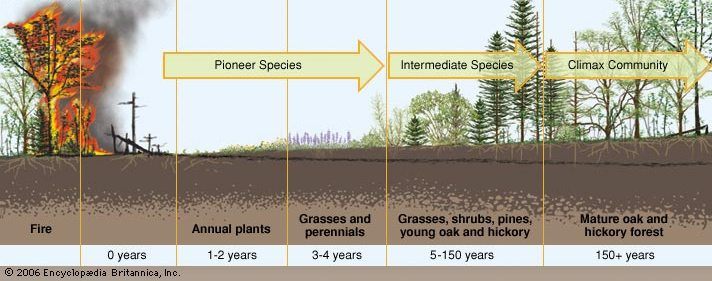
The picture shows what type of succession?

a)

Primary

b)

Secondary

c)

Tertiary

d)

Quadanary

126.

The picture shows what type of succession?

a)

Primary

b)

Secondary

c)

Tertiary

d)

Quadanary

127.

After a volcanic eruption, lava covers the land. What is the order that plants grow to repopulate the area?

a)

Lichens → Shrubs → Grasses → Trees

b)

Shrubs → Trees → Grasses → Lichens

c)

Grasses → Lichens → Shrubs → Trees

d)

Lichens → Grasses → Shrubs → Trees

128.
Which of the following is not an abiotic factor?
a)
sun
b)
temperature
c)
soil
d)
grass