
NEW
Font size
S
M
L
XL
 Worksheets
4th SW DA Review
Total questions: 29
Worksheet time: 22mins
Name
Class
Date
1.
The type of plate boundary where two plates come together is a .....
a)
Convergent Boundary
b)
Divergent Boundary
c)
Transform Boundary
d)
Plate Boundary
2.
Which of the following causes Earth's tectonic plates to move?
a)
Energy from the Sun
b)
Magnetic Pole Reversal
c)
Convection currents in the mantle
d)
Faults in Mountain Ranges
3.
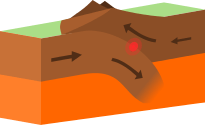
What type of plate boundary is this?
a)
Plate
b)
Divergent
c)
Convergent
d)
Transform
4.

What type of event will occur at this boundary?
a)
Earthquake
b)
Volcano Eruption
c)
Tornado
d)
Mountain Building
5.
A divergent boundary occurs when plates ....
a)
Pull apart
b)
Come together
c)
Slide past each other
d)
subducting
6.
Which of the following is the name of the ancient supercontinent formed 28 Million Years ago.
a)
Pangea
b)
Gondwanda
c)
Laurasia
d)
Neverland
7.
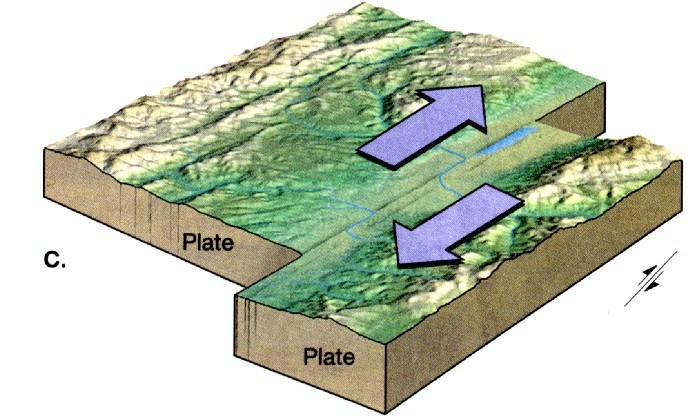
What type of plate boundary is this?
a)
Transform
b)
Convergent
c)
Divergent
d)
Plate
8.
Which type of rock results from melting and cooling of magma?
a)
Igneous
b)
Metamorphic
c)
Sedimentary
d)
Extrusive
9.
Which type of rock forms from extreme heat and pressure?
a)
Igneous
b)
Sedimentary
c)
Organic
d)
Metamorphic
10.
Wind, water, and ice breaking down rock is called
a)
Erosion
b)
Deposition
c)
Compaction
d)
Weathering
11.
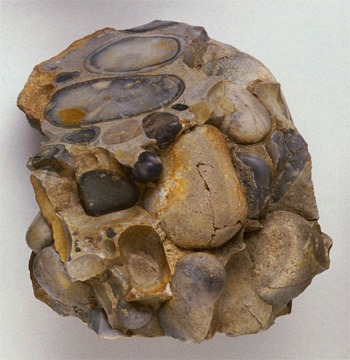
This rock was formed by smaller pieces of rock that settled at the bottom of a lake millions of years ago. What type of rock is this?
a)
Sedimentary
b)
Igneous
c)
Metamorphic
12.
What are the 3 major types of rocks?
a)
Igneous, Metamorphic, Sedimentary
b)
Metamorphic, Igneous, Cementation
c)
Brown, Red, Gray
d)
Streak, Hardness, Breakage
13.

This rock started as lava that cooled and then was heated and put under pressure over time. What type of rock is this?
a)
Sedimentar
b)
Igneous
c)
Metamorphic
14.

This rock started as molten magma. What type of rock is this?
a)
Sedimentary
b)
Igneous
c)
Metamorphic
15.
The thinnest layer of the Earth is the ___________.
a)
mantle
b)
crust
c)
core
16.
Tectonic plates are made up of continental crust and ________ crust.
a)
continental
b)
oceanic
c)
plates
d)
mantle
17.
What is the thickest layer of the Earth?
a)
the crust
b)
the mantle
c)
the outer core
d)
the inner core
18.
What describes the outer core?
a)
solid
b)
liquid
c)
viscous
d)
gas
19.
Which layer of Earth is made up of tectonic plates?
a)
outer core
b)
inner core
c)
asthenosphere
d)
lithosphere
20.

Identify the tectonic plate located on B
a)
North American Plate
b)
Pacific Plate
c)
Eurasian Plate
d)
Antarctic Plate
21.
Identify the tectonic plate located on D
a)
North American Plate
b)
Pacific Plate
c)
Eurasian Plate
d)
Antarctic Plate
22.
Identify the tectonic plate located on G
a)
North American Plate
b)
South American Plate
c)
African Plate
d)
Antarctic Plate
23.
Identify the tectonic plate located on I?
a)
North American Plate
b)
South American Plate
c)
African Plate
d)
Antarctic Plate
24.

The Venn Diagram below represents the most abundant elements in each of the listed categories. Which element would be placed where label Z is?
a)
Oxygen
b)
Neon
c)
uranium
25.

The diagram shows the rock cycle. After compaction and cementation take place, what is the type of rock that is produced labeled Z ?
a)
Igneous
b)
Sedimentary
c)
Metamorphic
d)
Erosion
26.

Which numbered plate represents south America?
a)
13
b)
1
c)
4
d)
7
27.
a rock has many small grains of sand in different layers. It was formed by deposition, compaction and cementations, which type of rock has been formed?
a)
Igenous
b)
Metamorphic
c)
Sedimentary
28.

Which plate identifies the pacific plate?
a)
A
b)
B
c)
C
d)
D
29.

Which plate identifies the Eurasian Plate?
a)
A
b)
B
c)
C
d)
D
Reset

