wayground logo

Free Printable Worksheets

Font size

S
M
L
XL
Worksheets

Marking Period Three Review (LIFT)

Total questions: 164

Worksheet time: 2hrs 53mins

Name
Class
Date
1.

What is the first step of how a bill becomes a law?

a)

introduced in either the House of Representatives or the Senate

b)

discussed by the conference committee

c)

the floor debate

d)

the bill is voted on

2.

Who approves the bill and signes or vetos it?

a)

US Senate

b)

President

c)

H.O.P

d)

Vice President

3.

Who can override a veto by the president?

a)

judicial branch

b)

legislative branch

c)

executive branch

4.

Who is apart of the conference committee?

a)

both houses

b)

president and vice president

c)

judicial branch

5.

Who are our elected official(s)?

a)

representatives and senators

b)

president

c)

president and vice president

d)

senators

6.

when do all bills become laws?

a)

july 22

b)

june 1

c)

january 1

d)

july 1

7.

Who influences Congress in making laws?

a)

executive branch

b)

president

c)

interest groups

d)

no one

8.

True or False:

The legislative branch cannot override a veto if the president vetos it

a)

True

b)

False

9.
Almost all of the bills introduced in Congress become laws.
a)
True
b)
False
10.
An idea for a law can come from
a)
the President
b)
Constituents
c)
Interest Groups
d)
All of the Above
11.
The only way to override a presidential veto is to get a ____________ vote in both houses of Congress in favor of the bill. 
a)
majority
b)
2/3
c)
3/4
d)
unanimous
12.

What does a bill start out as?

a)

a law

b)

an idea

13.

Who can sponsor a bill?

a)

teenagers

b)

a senator

c)

a judge

14.

A bill introduced in the House of Representatives is introduced in the...

a)

cart

b)

hopper

15.
Awarding medals to the winners of college scholarships.
a)
Chief of State
b)
Chief Citizen
c)
Commander in Chief
16.
Appointing someone to serve as the head of the Central Intelligence Agency (CIA)
a)
Chief of State
b)
Chief Citizen
c)
Commander in Chief
d)
Chief Executive
17.
Travelling to London to meet with British leaders.
a)
Chief of State
b)
Chief Diplomat
c)
Commander in Chief
d)
Chief Legislator
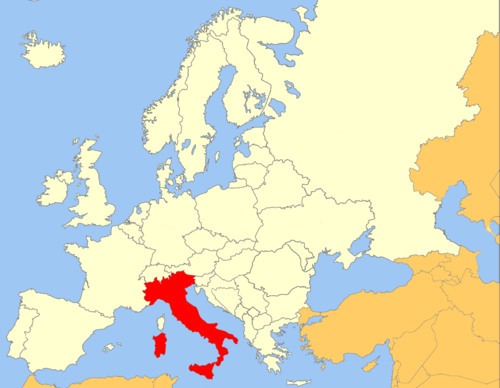
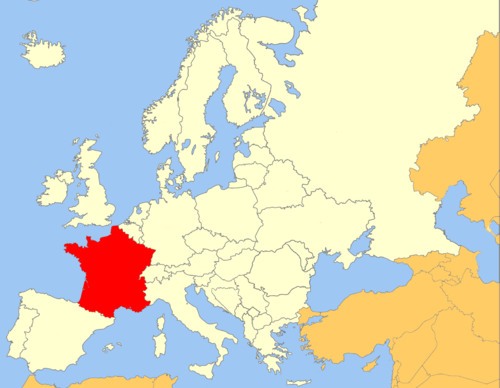
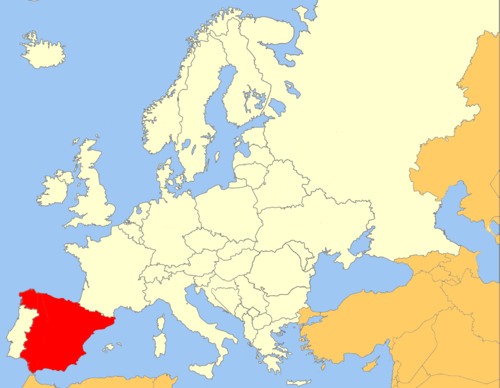
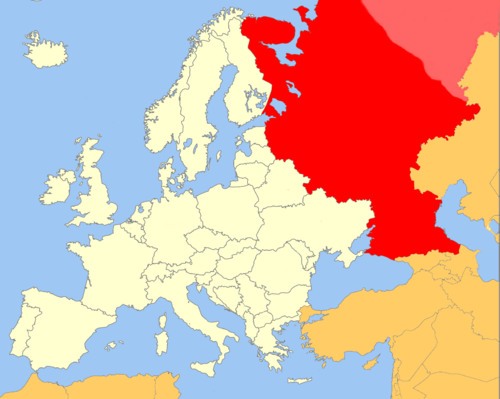
18.
Inspecting a Navy Yard
a)
Chief of State
b)
Chief Diplomat
c)
Commander in Chief
d)
Chief Legislator
19.
Inviting members of Congress to lunch in the White House.
a)
Chief of State
b)
Chief Diplomat
c)
Commander in Chief
d)
Chief Legislator
20.
Choosing leading party members to serve in the Cabinet. 
a)
Chief of Party
b)
Chief Diplomat
c)
Commander in Chief
d)
Chief Legislator
21.
Deciding in wartime whether to bomb foreign cities. 
a)
Chief of Party
b)
Chief of State
c)
Commander in Chief
d)
Chief Legislator
22.
Here's the president campaigning with Governor Wolf. Which hat is he wearing?
a)
chief executive
b)
head of state
c)
party leader
d)
commander in chief
23.
Here's Pres. Bush addressing troops he deployed to Iraq. Which hat is he wearing?
a)
Chief executive 
b)
party leader 
c)
Economic guardian 
d)
Commander in Chief
24.
Here's president GHW Bush with Clarence Thomas who he nominated for Supreme Court justice. What hat was he wearing?
a)
chief executive
b)
Party leader
c)
Head of state
d)
Legislative leader
25.
As Chief Citizen, the President represents all Americans.
a)
True
b)
False
26.
What does the President do as Chief Diplomat?
a)
Leads foreign policy
b)
Leads his political party
c)
Leads the Executive Branch
d)
Leads the military 
27.
Which branch has the President?
a)
Legislative
b)
Executive
c)
Judicial
28.
Which branch has the Supreme Court? 
a)
Legislative
b)
Executive
c)
Judicial
29.
Which branch has the Cabinet? 
a)
Legislative
b)
Executive
c)
Judicial
30.
Which branch has the Senate?
a)
Legislative
b)
Executive
c)
Judicial
31.
Which branch has the Vice President?
a)
Legislative 
b)
Executive
c)
Judicial
32.

Which branch writes new laws?

a)

Legislative

b)

Executive

c)

Judicial

33.
Which branch interprets the laws?
a)
Legislative
b)
Executive
c)
Judicial
34.
Which branch can veto or approve laws? 
a)
Legislative
b)
Executive
c)
Judicial
35.

Which branch can nominate (choose) justices?

a)

Legislative

b)

Executive

c)

Judicial

36.
Which branch can override the veto?
a)
Legislative 
b)
Executive
c)
Judicial
37.
Which branch commands the military?
a)
Legislative
b)
Executive
c)
Judicial
38.
Which branch can declare war?
a)
Legislative 
b)
Executive
c)
Judicial
39.
Which branch presides over the cabinet?
a)
Legislative
b)
Executive
c)
Judicial
40.
Which branch declares laws unconstitutional?
a)
Legislative 
b)
Executive
c)
Judicial
41.
Which branch has the power to tax?
a)
Legislative
b)
Executive
c)
Judicial
42.
Which branch can declare the acts of the other branches unconstitutional?
a)
Legislative
b)
Executive
c)
Judicial
43.
Which branch enforces the laws?
a)
Legislative
b)
Executive
c)
Judicial
44.
Which branch is Congress?
a)
Legislative
b)
Executive
c)
Judicial
45.

Which branch has 9 justices?

a)

Legislative

b)

Executive

c)

Judicial

46.
To be president you must be 
a)
a citizen for 7 years
b)
a citizen for 9 years
c)
a natural born citizen
d)
a citizen for 14 years
47.
Which article in the Constitution deals with the Executive Branch?
a)
l
b)
ll
c)
lll
d)
llll
48.
What does the executive branch do?
a)
elect the president
b)
make the laws
c)
enforces the laws
d)
count the votes
49.
.  Who has the expressed power to declare war?  
a)
President
b)
Congress
c)
House
d)
Senate
50.
Who can veto a law?
a)
President
b)
Vice President
c)
Mayor
d)
Supreme Court
51.
The part of the Constitution that describes the legislative branch is _________________-
a)
Preamble
b)
Article I
c)
Article II
d)
Amendments
52.
How many Senators are there?
a)
435
b)
50
c)
100
d)
200
53.
The number of representatives a state has is based on the state's _________________________.
a)
location
b)
geographic size
c)
population
d)
name
54.

The court that gets to decide what is constitutional

a)

Supreme Court

b)

Trial Court

55.

Supreme Court case that introduced the concept of "judicial review"

a)

Bush. v. Gore

b)

Marbury v. Madison

56.

What does the judicial branch do?

a)

Interpret, or clarify, the laws of the United States

b)

Judge the actions of the President

c)

Participate on Judge Judy

57.

Which article in the constitution gives us the Judicial Branch?

a)

2nd

b)

3rd

c)

22nd

d)

25th

58.
The governor serves a term of ___ years
a)
2
b)
7
c)
5
d)
4
59.
True/False:  The President can "check" the Judicial Branch by appointing justices to the Supreme Court.
a)
True
b)
False
60.
True/False:  The Legislative Branch can "check" the Executive Branch by overriding the President's veto with a 2/3 majority.
a)
True
b)
False
61.
Which branch makes treaties with other countries?
a)
Legislative
b)
Executive
c)
Judicial
62.
Which branch is selected by the Electoral College?
a)
Legislative
b)
Executive
c)
Judicial
63.
Which branch is divided into the House and the Senate?
a)
Legislative
b)
Executive
c)
Judicial
64.
Which branch appoints judges, ambassadors, and secretaries?
a)
Legislative
b)
Executive
c)
Judicial
65.
Dividing up the functions or role of government is known as what?
a)
Judicial Review
b)
Separation of Powers
c)
Amendment Process
66.
Which court case establishes Judicial Review?
a)
Mculloh V Maryland
b)
Marbury V Madison
c)
Plessy V Ferguson
d)
Hamilton V Jefferson
67.
Who is the chief of Justice in 1803?
a)
John Marshal
b)
John Boy
c)
John Adams
d)
John Goodman
68.

What check does the Supreme Court have on Congress?

a)

may veto laws

b)

may disapprove treaties or appointments

c)

may appoint judges

d)

may declare legislative action unconstitutional

69.

The power of the Supreme Court to decide what the Constitution means is.......

a)

Appellate Jurisdiction

b)

Summary Judgement

c)

Judicial Review

d)

Writ of Certiorari

70.

Which part of the U.S. Constitution established the judicial branch?

a)

Article I

b)

Article II

c)

Article III

d)

Article IV

71.

What is Judicial Review?

a)

The courts can review laws and declare them unconstitutional

b)

Judges have a review system for some court cases

c)

The courts have the ability to reverse a decision

72.
The most important invention/improvement responsible for the growth of American industry 
a)
factories
b)
railroads
c)
corporations
d)
telephone
73.
Known as the "Master of Steel"
a)
John D. Rockefeller
b)
Cornelius Vanderbilt
c)
Gustavus Swift
d)
Andrew Carnegie
74.
____________ is a negative term to describe the great industrialists of the Gilded Age and __________ is a positive term to describe them.
a)
Robber Barons, Captains of Industry
b)
Captains of Industry, Robber Barons
75.
He created the company known as Standard Oil
a)
Andrew Carnegie
b)
Cornelius Vanderbilt
c)
John D. Rockefeller
d)
Thomas Edison
76.
This man was known for his success in consolidating the railroads
a)
John D. Rockefeller
b)
Andrew Carnegie
c)
Cornelius Vanderbilt
d)
Gustavus Swift
77.
Industrialization allowed for our country to go from  _______ to ________
a)
consumer, producer
b)
handmade production , machine made production
c)
Captain of Industry, Robber Baron
d)
Rich, poor
78.
Who was the captain of industry for shipping and railroad?
a)
John D. Rockefeller
b)
Cornelius Vanderbilt
c)
J. P. Morgan
d)
Andrew Carnegie
79.
J.P. Morgan was the captain of which industry?
a)
Banking
b)
Oil
c)
Railroad
d)
Coal
80.
Between the Civil War and WWI the US was transformed from an agricultural to an _____ nation.
a)
industrial
b)
civilized
c)
archaic
d)
agrarian
81.
Which three big businesses transformed America in the years between 1870 and 1914?
a)
meatpacking, automobile,  and construction
b)
railroads, steel and oil
c)
textile, meatpacking and canals
d)
political machines, settlement houses and ghettos
82.
The total or complete control of a service, product or industry that prevents competition
a)
Union
b)
Robber Barron
c)
Monopoly
d)
Captain of Industry
83.
All of the following were reasons for urban growth EXCEPT ...
a)
mechanization.
b)
specialized industries.
c)
immigration.
d)
discovery of gold.
84.
All of the following were urban problems of the early 1900s EXCEPT ...
a)
crime.
b)
living conditions.
c)
pollution.
d)
finding jobs.
85.
This picture is an example of a ...
a)
tenement.
b)
political machine.
c)
monopoly.
d)
sweatshop.
86.
______________ the movement of population from farms to cities, began slowly in the early 1800s.
a)
ruralization
b)
urbanization
c)
domestication
d)
summerization
87.

After his retirement, Andrew Carnegie donated most of his money (over $350 million) to establish schools, libraries and universities.

a)

Captain of Industry

b)

Robber Baron

88.

In response to a strike at Carnegie's Homestead (Pennsylvania) Steel Plant in 1892, Carnegie and his plant manager Henry Frick hired a private security company, the Pinkertons, to help break the strike, leading to ten dead union workers and hundreds of injuries

a)

Captain of Industry

b)

Robber Baron

89.
Henry Ford is known for?
a)
Creating the first assembly line plant
b)
Being very wealthy and influential
c)
Producing cars in a large factory inefficiently
d)
I don't know who Henry Ford is
90.
Which three big businesses transformed America in the years between 1870 and 1914?
a)
meatpacking, automobile,  and construction
b)
railroads, steel and oil
c)
textile, meatpacking and canals
d)
political machines, settlement houses and ghettos
91.
Religious persecution, political instability, exhausted resources, and war.  These are examples of:
a)
Push Factors
b)
Pull Factors
92.
I had a monopoly on the steel industry. I am ______________
a)
Thomas Edison
b)
John D. Rockefeller
c)
The Wright Brothers
d)
Andrew Carnegie
93.
Where is the steel industry located?
a)
New York City
b)
Philadelphia, PA
c)
Pittsburgh, PA
d)
Boston, MA
94.
The police enter your home and arrest you without a reason. 
a)
Due Process
b)
Not Due Process
95.
The police have a warrant to search a house, so they do what the warrant says.
a)
Due Process
b)
Not Due Process
96.
The Federal Government wants to wiretap your home but has no reason to do that. 
a)
Due Process
b)
Not Due Process
97.
The Federal Government charges a person with a crime and has probable cause to do so. 
a)
Due Process 
b)
Not Due Process
98.
The state of Virginia follows the proper procedure to arrest a person. 
a)
Due Process
b)
Not Due Process
99.
Due Process means legal fairness
a)
True
b)
False
100.
True or False: Muchrakers are journalists who write about all the corruption and what needed to be reformed. 
a)
True
b)
False
101.
Who wrote “The Jungle”?
a)
Jane Addams 
b)
Upton Sinclair
c)
George Waring 
d)
Jacob Riis
102.
Muckrakers wrote all about what?
a)
politics 
b)
corruption 
c)
the education system 
d)
the oresident
103.
Does a person with insomnia have trouble with...
a)
Eating
b)
Walking
c)
Sleeping
d)
Breathing
104.
Who is the executive leader of the state?
a)
Mayor
b)
Governor
c)
President
d)
Attorney General
105.
_____________________ = House of Delegates + Virginia Senate
a)
General Assembly
b)
Congress
c)
Virginia executive
d)
 Supreme Court
106.
Which powers are saved for the states?
a)
Concurrent
b)
Implied
c)
Reserved
d)
Expressed
107.
Who is the head lawyer for the state?
a)
Virginia Supreme Court
b)
Attorney General
c)
Governor
d)
Delegate
108.
When writing laws in the General Assembly they must follow this -
a)
Virginia Constitution
b)
Virginia Supreme Court
c)
Governor
d)
Expressed Powers
109.
What is the term for two houses in a legislature?
a)
bicameral
b)
public policy
c)
bicamel
d)
bureaucratic
110.
Which would be in the General Assembly?
a)
House of Delegates
b)
House of Representatives
c)
Supreme Court
d)
U.S. Senate
111.
Public health, safety and welfare are responsibilities of the -
a)
National
b)
State
c)
Local
112.
What is Federalism?
a)
Division of Power between the National and State
b)
Federal Powers
c)
State Powers
d)
State Powers
113.
How long is a Governor's Term?
a)
Six Years
b)
Two Years
c)
Four Years
d)
Five Years
114.
What are Concurrent Powers? 
a)
Powers given to the states
b)
Powers given to local government
c)
Power Shared by the National and State Government
d)
Powers Denied
115.
The Virginia Senate has ___ members.
a)
40
b)
50
c)
60
d)
100
116.
The House of Delegates has ___ members.
a)
40
b)
100
c)
80
d)
435
117.
Judges are appointed by:
a)
General Assembly
b)
Governor
c)
Supreme Court
d)
Court of Appeals
118.
What is another word for a local law?
a)
bicameral
b)
biennial
c)
ordinance
d)
cabinet
119.

14 Points

a)

Peace plan, League of Nations

b)

Peace plan, Punish Great Britain

c)

Austria-Hungary

120.

Happened after Treaty of Versailles

a)

United States Senate rejects Versailles Treaty

b)

U.S. signs Versailles treaty

c)

U.S. Joins League of Nations

121.

Became a communist country

a)

Russia

b)

England

c)

France

d)

United States

122.

This country used U-Boats

a)

Germany

b)

England

c)

France

d)

United States

123.

This country attacked First

a)

England

b)

France

c)

Japan

d)

Germany

e)

Austria-Hungary

124.

Did not participate in WWI

a)

France

b)

Spain

c)

England

d)

Serbia

e)

United States

125.

This country wanted revenge before and after WWI.

a)

Germany

b)

France

c)

England

d)

United States

126.

This country lost the Alsace and Lorraine region prior to the war.

a)

Austria-Hungary

b)

England

c)

Germany

d)

France

127.

Home of Archduke Franz Ferdinand

a)

Germany

b)

Austria-Hungary

c)

England

d)

France

128.

Western Front

a)

Russia

b)

France

129.

Eastern Front

a)

Russia

b)

France

130.

Czar Nicholas is from here

a)

Russia

b)

Germany

c)

England

d)

France

131.

After the war, this country was split up into Czechoslovakia, Yugoslavia, Austria.

a)

Germany

b)

England

c)

Austria-Hungary

d)

France

132.

This country had the largest navy in the world.

a)

England

b)

France

c)

Russia

d)

Germany

133.

President Wilson hoped that the League of Nations would

a)

cause WWII

b)

Punish Germany

c)

Make the United States a superpower

d)

enable nations to solve their conflicts without going to war

134.

Put in the correct order

a)

Lusitania sinks, 14 points, U.S. enters WWI, U.S. does not join League of Nations

b)

Lusitania sinks, U.S. enters WWI, 14 points, U.S. does not join League of Nations

c)

14 points, Lusitania sinks, U.S. enters WWI, U.S. does not join League of nations

135.

Armistice Day

a)

Nov 11, 1918

b)

Nov 11 1911

c)

Sept 11 1914

d)

July 4 1776

136.
When a strong country takes over a weaker country for economic, social or political reasons it is called
a)
industrialization
b)
miliatrism
c)
imperialism
d)
nationalism
137.

All of these were causes of why WWI began, except

a)

military build up

b)

Assassination of Archduke Ferdinand

c)

Alliance Systems

d)

Zimmerman telegram

138.

Who was NOT part of the allied powers

a)

England

b)

United States

c)

Russia

d)

Bulgaria

139.

Who was NOT part of central powers

a)

Germany

b)

Russia

c)

Austria Hungary

d)

Ottoman empire

140.

Who assassinated Archduke Ferdinand

a)

Lee Harvey Oswald

b)

Fidel Castro

c)

Gavrilo Princep

d)

Otto Von Bismarck

141.

Who was president when America entered WWI

a)

Theodore Roosevelt

b)

FDR

c)

Woodrow Wilson

d)

George Washington

142.

What was the Lusitania

a)

A U.S. battleship sunk by the Germans

b)

A passenger ship sunk by the Germans

c)

A German submarine

d)

A general in WWI

143.

Who were the Allies?

a)

France

b)

Germany

c)

Great Britain

d)

Russia

144.

What word describes when neither side in war can gain an advantage to win?

a)

Stalemate

b)

Blockade

c)

Total war

d)

Front

145.

The Treaty of Versailles angered many Germans after World War I because the treaty

a)

divided Germany into Communist and non-Communist zones

b)

made Germany restore its emperor

c)

required all German-speaking Europeans to return to Germany

d)

forced Germany to pay large war reparations

146.
Payment for damages after a war is called
a)
Demilitarization
b)
Self-determination
c)
Reparations
d)
Democracy
147.

What does this political cartoon best represent?

a)

Public opposition to the League of Nations

b)

German Imperial Fleet discussing a blockade

c)

The Zimmerman Telegram

d)

Talks of Germany's unrestricted submarine warfare

148.

In January 1918, President Wilson spoke to Congress about the war aims of the nation. His plan ultimately became known as the _______________________ and was designed to create a lasting peace in the world.

a)

Fourteen Points

b)

Treaty of Versailles

c)

Wilson's suggestions

d)

League of Nations

149.

Which country declared war first?

a)

Germany

b)

Austria-Hungary

c)

France

d)

Serbia

150.
What country is #1 on the map?
a)
Great Britain
b)
France
c)
Germany 
d)
Russia
151.
What country is #2 on the map?
a)
Great Britain
b)
France
c)
Germany 
d)
Italy
152.
What country is #2 on the map?
a)
Great Britain
b)
France
c)
Germany 
d)
Italy
153.
What country is #3 on the map?
a)
Great Britain
b)
France
c)
Germany 
d)
Italy
154.
What country is #4 on the map?
a)
Germany
b)
Russia
c)
Austria-Hungary
d)
Ottoman Empire
155.
What country is #4 on the map?
a)
Germany
b)
Russia
c)
Austria-Hungary
d)
Ottoman Empire
156.
What country is #5 on the map?
a)
Ottoman Empire
b)
Germany
c)
Russia
d)
Austria-Hungary
157.
What country is #6 on the map?
a)
Italy
b)
Ottoman Empire
c)
Austria-Hungary
d)
Russia
158.
What country is #7 on the map?
a)
France
b)
Austria-Hungary
c)
Germany
d)
Italy
159.

What year did America join WWI?

a)

1914

b)

1916

c)

1917

d)

1919

160.

On what day did Germany sign the armistice ending WWI?

a)

April 16, 1917

b)

January 1, 1918

c)

November 11, 1918

d)

November 1, 1918

161.

What country is this?

a)

Italy

b)

Spain

c)

Germany

d)

Russia

162.

What country is this?

a)

France

b)

Spain

c)

Italy

d)

Germany

163.

What country is this?

a)

Spain

b)

Portugal

c)

France

d)

Italy

164.

What country is this?

a)

Russia

b)

Poland

c)

Germany

d)

Ukraine