
 Worksheets
WHI. Benchmark 1 Review
Total questions: 82
Worksheet time: 1hrs 22mins

B
Huang He
Indus
Nile
Tigris and Euphrates
C
Huang He
Indus
Nile
Tigris and Euphrates
D
Huang He
Indus
Nile
Tigris and Euphrates


This is one of the many forms of Brahman celebrated by
Taoists
Hindus
Jews
Zoroastrians
The Hebrews settled between the Mediterranean Sea and the __________.
Jordan River Valley
Nile River Valley
Indus River Valley
Huang He River Valley
Amazon River Valley
Which ancient civilization was built between the Tigris and Euphrates River Valleys?
Aztec
Mongols
Mesopotamia
Nubian
Hebrews
Nubia existed along the upper part of the ___________.
Nile River
Indus River
Huang He River
Tigris River
Ganges River
The Huang He River was important to what civilization?
Indian
Hebrew
Chinese
Egyptian
Incan
Ancient Indian Civilization was located in the ________.
Jordan River Valley
Nile River Valley
Indus River Valley
Huang He River Valley
Amazon River Valley
What type of writing was invented in Sumer?
alphabet
hieroglyphics
cuneiform
calligraphy
arabic
The need to keep records led to the development of which of the following in ancient Egypt?
alphabet
hieroglyphics
sanskirt
calligraphy
pyramids
All of the following were physical barriers making invasion of India difficult except -
Indian Ocean
Hindu Kush
Himalayas
Atlantic Ocean
What were two early Indus River Valley civilizations?
Hebrews and Egyptians
Sumerians and Babylonians
Mohenjo-Daro and Harappa
Mesopotamians and Chinese
Aztecs and Mayans
What facilitated trade and contact between China and other cultures as far away as Rome?
Silk Road
Great Wall
Code of Politeness
Golden Rule
Golden Triad
The purpose of the Great Wall was to _________.
establish boundaries for the Chinese civilizations
create a trade route between India and China
build a temple for the Chinese people
provide protection from invaders
secure borders between Chinese communities
Why was the caste system central to Indian culture?
It influenced all social interactions and choices of occupations.
It determined how the government would be established.
It separated Hinduism from Buddhism communities.
It kept Indian citizens from being able to marry outsiders (people from other civilizations).
It outlawed slavery in India and carried harsh punishments.
The Phoenicians developed which of the following to simplify their trading practices?
Alphabet
Numerical records
Coined money
Banking
Letters of Credit
Aleppo and Jericho are two early cities located in ----
the Fertile Crescent
the Sahara Desert
England
Anatolia
Central Mexico

Which ancient civilization created the settlements shown on this map?
Phoenicians
Egyptians
Hebrew
Greek
The process used by archaeologist to discover the age of an artifact:
Electrolysis
Carbon Dating
Weathering
Nuclear Fission
The study of past societies through an analysis of what people left behind:
History
Anthropology
Geography
Archaeology
What was the most important discovery in the history of mankind (Agricultural Revolution)?
making of metal tools
Hunting in teams
Taming dogs and cats
Farming and growing crops
Modern Human beings/ Wise Man
Hominids
Homo Erectus
Homo Sapiens
Neanderthals
Mrs. Johnson
Homo sapiens emerged between
A 10,000 and 40,000 years ago
B 100,000 and 400,000 years ago
C 50,000 and 100,000 years ago
D 100, 000 and 150,000 years ago

What is the best title for the list?
F Methods of New Stone Age societies
G Permanent settlements of early man
H Characteristics of Old Stone Age societies
J Trends in Neolithic agriculture
Which Neolithic site is there an international team of
archaeologists carrying out new excavations in Anatolia?
F Jericho
G Stonehenge
H Aleppo
J Catalhoyuk

Which law code contained this quote?

Leaders in early civilizations often gained power through –
F popular elections
G economic strength
H a council of elders
J hereditary rule
Who is considered to be the father of the Israelite people
according to the origins of Judaism?
F Moses
G Abraham
H Hammurabi
J Ramses II


This picture shows an area known as the..
Persian Gulf
Fertile Crescent
Promised Land
Mesopotamian Delta

Who united upper and lower Egypt and is considered to be the first pharaoh?
Menes
Ahmose
Hatshepsut
Tutankhamen
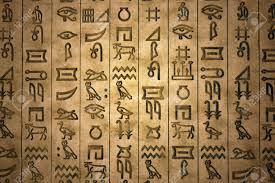
What is this system of writing called?
calligraphy
Hieroglyphs
Cuneiform
Alphabet

According to the table, which of the following best explains the difference between the written law codes established by these two documents?
The Code of Hammurabi established a harsh punishment for wrongful acts
The Ten Commandments provided a much stricter form of punishment
The Code of Hammurabi only applied to men of the patrician class
The Ten Commandments prevented violent crimes
What was a major achievement of the Code of Hammurabi?
It was the first major set of written laws
It was the first set of laws that treated men and women as equals
It was the major belief of the Babylonians
It was the first set of laws created solely by one man
Which early civilization had hereditary rulers called pharaohs?
Egypt
Mesopotamia
Phoenicia
China

Mandate of Heaven said rulers could remain in power as long as they were?
Mean
Just and Fair
Militaristic
Controlling
The Great Wall of China was built as a line of defense against invasions by what emperor?
Ivan the Great
Constantine
Kim Jong Un
Qin Shi Huangdi
What two mountain ranges protect India?
Rockies and Andes
Atlas and Appalachian
Himalayas and Hindu Kush
Alps and Ural

What was the primary purpose of the Great Wall of China?
Show Chinese strength
Protect against invaders from the North
Ensure international trade
Expand the empire
What religion started in originated in India and spread to China first then to Korea and Japan?
Islam
Buddhism
Christianity
Judaism
Shinto

Who created Taoism?
Laozi
Qin Shi Huang Di
Confucius
Master Shi Fu

What was the Mandate of Heaven?
The path to eternal reincarnation for people who believe in Buddhism
The idea that a ruler is chosen by the gods and will stay in power as long as he is a just and fair ruler
The idea that there is only one god in existence and he rules as a god on earth
The basic rules of life for Hindu people governing their beliefs in reincarnation
What do we call the series of exams one had to take in China (under the Han Dynasty) if they wanted to get a job in the government?
calligraphy
pagoads
civil service exams
Buddhism Exam

