wayground logo

Free Printable Worksheets

NEW

Font size

S
M
L
XL
Worksheets

3.6 Chemistry Test Review

Total questions: 70

Worksheet time: 59mins

Name
Class
Date
1.
The particles of the atom you can find by knowing the atomic number.
a)
neutrons
b)
protons and electrons
c)
protons and neutrons
d)
atomic mass
2.
An element with a mass number of 11 and an atomic number of 5 has how many neutrons?
a)
11
b)
5
c)
6
d)
16
3.

The mass of one proton is greater than the mass of one...

a)

neutron

b)

electron

c)

atom

d)

molecule

4.
Which letter represents a proton?
a)
A
b)
B
c)
C
d)
D
5.
Which letter represents a neutron?
a)
A
b)
B
c)
C
d)
D
6.
What is the atomic mass of the atom pictured? 
a)
9
b)
10
c)
18
d)
19
7.
What is the element name of the atom pictured? 
a)
Fluorine
b)
Neon
c)
Argon
d)
Potassium
8.

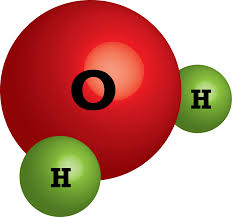
How many atoms are in this molecule?

a)

1

b)

2

c)

3

d)

4

9.
Electrons in the outermost orbital.
a)
Protons
b)
Neutrons
c)
Valence Electrons
d)
Isotopes
10.

The total number of Protons and Neutrons gives the

a)

Mass Number

b)

Atomic Number

c)

Matter

d)

Ion

11.

Identify the element in the picture

a)

carbon

b)

nitrogen

c)

helium

d)

magnesium

12.

There a _____ valence electrons

a)

2

b)

6

c)

4

d)

12

13.
Which group of the periodic table is composed of inert (not reactive)  gases?
a)
alkali metals
b)
alkaline earth metals
c)
halogens
d)
noble gases
14.

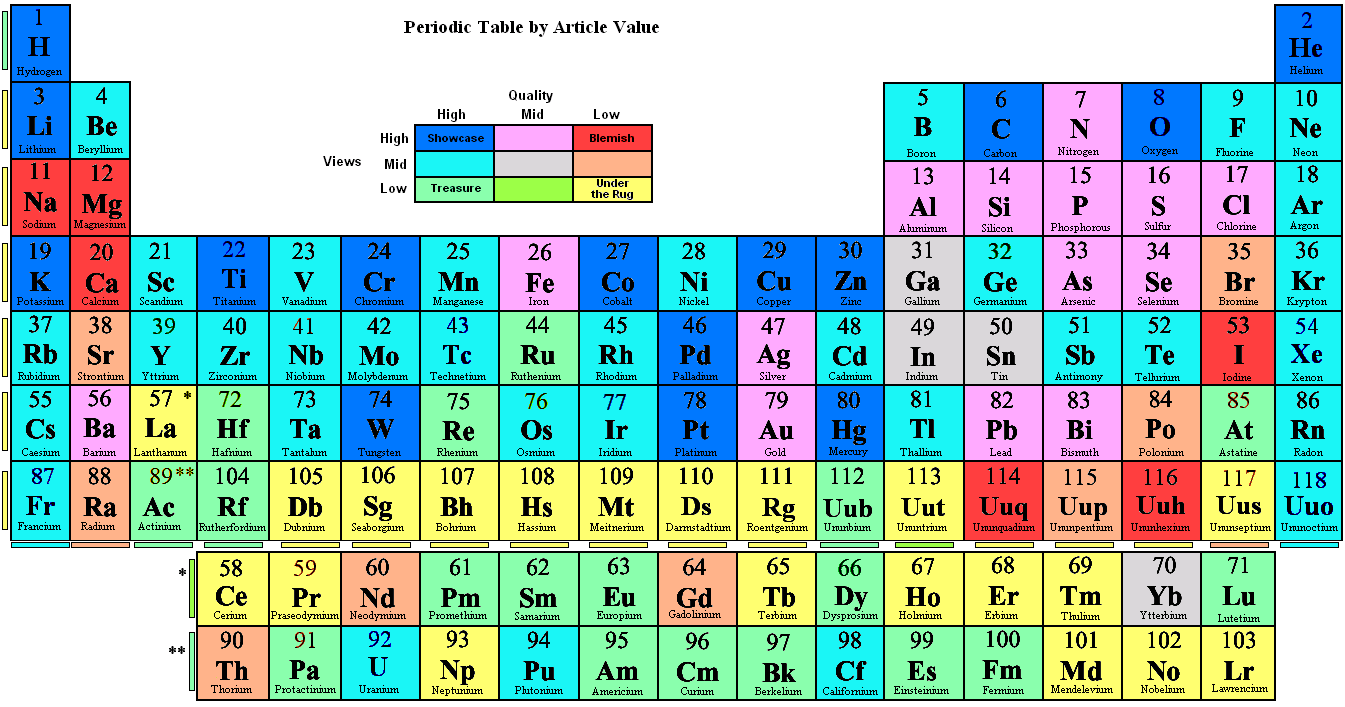
The elements along the staircase are called

a)

metals

b)

nonmetals

c)

metalloids

d)

noble gases

15.
Which of the following has a full valence shell?
a)
Oxygen
b)
Neon
c)
Barium
d)
Carbon
16.
Which section are the metals in? 
a)
dark blue
b)
light blue
c)
purple
d)
pink
17.
What section is the least reactive? 
a)
yellow
b)
red
c)
dark blue
d)
orange
18.
The yellow atoms are called 
a)
metals
b)
nonmetals
c)
metalloids
d)
noble gases
19.
The period for Bromine is ___________.
a)
3
b)
2
c)
4
20.

The period number tells how many ______ an atom of that element will have.

a)

energy levels

b)

protons

c)

valence electrons

d)

neutrons

21.
The horizontal rows on the Periodic Table are
a)
Families
b)
Groups
c)
Periods
d)
Metals
22.
The vertical columns on the Periodic Table are
a)
Periods
b)
Families/Groups
c)
Metals
d)
Non-Metals
23.
Matter in the universe is made from atoms.  Atoms make up these pure substances that cannot be broken down into a simpler form.  
a)
Compounds
b)
Elements
c)
Molecules
d)
Periodic Table
24.
Each element on the Periodic Table has its own different (unique) ____.
a)
Family
b)
Atom
c)
Period
d)
Metalloid
25.
Which Period would this element be found on just by looking at the shells/levels?
a)
1
b)
2
c)
3
d)
4
26.
How many atoms TOTAL does the compound COhave?
a)
1
b)
2
c)
3
d)
4
27.
 Which of the following statements are FALSE?
a)
metals are located to the LEFT of the zig-zag line
b)
metals are less reactive than nonmetals
c)
nonmetals are located to the RIGHT of the zig-zag line
d)
metalloids have properties of both metals and nonmetals
28.
Which is an example of a metalloid?
a)
Boron
b)
Lead
c)
Radon
d)
Gold
29.
Which is an example of a nonmetal?
a)
Platinum
b)
Carbon
c)
Silver
d)
Lead
30.
Which is an example of a metal?
a)
Radon
b)
Oxygen
c)
Aluminium
d)
Carbon
31.

Which element is located at Period 5, Group 2A?

a)

Niobium

b)

Strontium

c)

Nitrogen

d)

Phosphorus

32.

Which element is located at Period 3, Group 7A?

a)

Maganese

b)

Chlorine

c)

Rutherfordium

d)

Iodine

33.
Atoms of elements that are in the same group have the same number of
a)
neutrons
b)
protons
c)
electrons
d)
valence electrons
34.

The alkali metals have how many valence electrons?

a)

1

b)

2

c)

7

d)

8

35.

Beryllium is in group number______.

a)

Group 2A

b)

Group 3A

c)

Group 4A

d)

Group 7A

36.

The elements in a column of the periodic table

a)

have similar properties

b)

are in the same period

c)

have the same atomic mass

d)

have very similar chemical symbols

37.
Rows on the period table are called _____ while columns are called _____.
a)
groups, families
b)
groups, periods
c)
periods, groups
d)
families, groups
38.
What charge does the nucleus have and why?
a)
positive - the neutrons do not have a charge
b)
positive - the neutrons and protons are positively charged particles
c)
neutral - the neutral charge dominates the positive charge
d)
neutral - electrons cancel out the positive charge of the atom
39.

The dense mass of an atom is contained here.

a)

electron orbitals

b)

nucleus

c)

shells

d)

atomic #

40.

Which structure shown has the largest mass?

a)

Proton

b)

Neutron

c)

Atom

d)

Electron

41.

Which structure shown has the smallest mass?

a)

Proton

b)

Neutron

c)

Atom

d)

Electron

42.
In a closed system, a chemical reaction takes place.  The mass of the reactants in the beginning of the reaction is 25g.  What does the mass have to be in the end of the reaction in order to follow the law of conservation of mass?
a)
25g
b)
You can't tell with the given information.
c)
30g
d)
15g
43.
The following chemical reaction occurs:
2S + 3O2 -> 2SO3
How many atoms of oxygen are there in the reactant?
a)
2 atoms of oxygen
b)
3 atoms of oxygen
c)
6 atoms of oxygen
d)
1 atom of oxygen
44.

How many IRON atoms are in this chemical formula?

a)

4 iron atoms

b)

2 iron atoms

c)

8 iron atoms

d)

3 iron atoms

45.

How many chlorine atoms are in 3MgCl2?

a)

6

b)

5

c)

1

d)

2

46.
Is this equation balanced?
a)
yes
b)
no
c)
Not enough information
47.
Is this equation balanced?
a)
yes
b)
no
c)
Not enough information
48.

Is this balanced?

3HgO → 2Hg + O2

a)

Yes

b)

No

49.

In this chemical equation , CH4 and 2O2 are called the...

a)

Products

b)

Reactants

c)

Coefficient

d)

Subscript

50.

In this chemical equation , CO2 and 2H2O are called the...

a)

Products

b)

Reactants

c)

Coefficient

d)

Subscript

51.

Looking at the reactants, there is _____ molecule(s) of CH4 and _______ molecule(s) of O2.

a)

1, 1

b)

1, 2

c)

2, 2

d)

2, 4

52.

Looking at the products , there is _____ atom(s) of Oxygen in CO2 and _______ atom(s) of Oxygen in 2H2O.

a)

1, 1

b)

1, 2

c)

2, 2

d)

2, 4

53.

What are the REACTANTS :

H2O + CO2 → HCO + HO

a)

H2O + CO2

b)

HCO + HO

c)

H2O ONLY

d)

HCO ONLY

54.
What is a SUBSCRIPT? 
a)
The large number next to a molecule
b)
The small number on the bottom right of an atom
c)
The small number on the top left of an atom
d)
The large number at the end of a molecule 
55.

Which picture below would correctly demonstrate the Law of Conservation of Matter if this picture is the reactants?

a)
b)
c)
d)
56.

The coefficient in this chemical equation is ____ and means there are ___________.

a)

The 4; 4 atoms

b)

The 4; 4 molecules

c)

The 2; 2 atoms

d)

The 2; 2 molecules

57.

How many molecules are in the picture?

a)

5

b)

1

c)

8

d)

2

58.
With which element will Hydrogen most likely bond?
a)
Chlorine
b)
Sulfur
c)
Argon
d)
Silicon
59.
How many valence electrons are elements trying to reach in their outer shells?
a)
1
b)
2
c)
5
d)
8
60.
What determines the reactivity of an element?
a)
Size of its nucleus
b)
Number of total electrons
c)
Number of valence electrons
d)
Number of shells
61.
How do you determine the number of valence electrons an element has?
a)
Look at its period
b)
Look at its group
c)
Look at its atomic number
d)
Look at its atomic mass
62.

Four students were asked to name the parts of an atom that determine the atom’s chemical properties. The students’ responses are shown in the table below. Which student’s responses are correct?

a)

Student 1

b)

Student 2

c)

Student 3

d)

Student 4

63.

How can you tell if 2 elements are from the same period on the periodic table of elements?

a)

They are from the same periods if they have the same number of valence electrons

b)

They are from the same periods if they have the same number of energy levels or shells

c)

They are from the same periods if they have they react similarly

d)

They are from the same periods if they have similar chemical properties

64.

Which atomic diagram is considered to be a nonmetal, nonreactive, and a gas?

a)

A

b)

B

c)

C

d)

D

65.

The atoms of a certain element each contain 1 valence electron. Which statement correctly identifies this element and describes its chemical reactivity?

a)

The element is sodium, and it is highly reactive.

b)

The element is fluorine, and it is not reactive.

c)

The element is sodium, and it is not reactive.

d)

The element is fluorine, and it is highly reactive

66.

The periodic table is organized into groups and periods of elements. The characteristics of a certain group of elements are listed in the picture. Which of the elements below is in this group?

a)

Lithium (Li)

b)

Strontium (Sr)

c)

Aluminum (Al)

d)

Silicon (Si)

67.

Which elements in the picture are in the same period?

a)

Fluorine (F) and Chlorine (Cl)

b)

Chlorine (Cl) and Neon (Ne)

c)

Neon (Ne) and Argon (Ar)

d)

Fluorine (F) and Neon (Ne)

68.
An element with five valence electrons is
a)
phosphorus
b)
oxygen
c)
beryllium
d)
rubidium
69.

Which element has the least valence electrons?

a)

Al

b)

P

c)

C

d)

H

70.
Which element has 2 energy shells and 3 valence electrons
a)
Si
b)
B
c)
Li
d)
He