wayground logo

Free Printable Worksheets

NEW

Font size

S
M
L
XL
Worksheets

Unit 10 & 11 Quiz review

Total questions: 43

Worksheet time: 26mins

Name
Class
Date
1.
The following is what type of tolerance?
a)
Bilateral
b)
Unilateral
c)
Limit
d)
Nominal
2.
The following is what type of tolerance?
a)
Bilateral
b)
Unilateral
c)
Limit
d)
Nominal
3.
The following is what type of tolerance?
a)
Bilateral
b)
Unilateral
c)
Limit
d)
Nominal
4.
What is the upper limit for the 8.00 dimension in the drawing?
a)
8.01
b)
8.00
c)
8.005
d)
8.02
5.
What is the lower limit for the 8.00 dimension in the drawing?
a)
7.995
b)
7.99
c)
7.98
d)
8.00
6.
What is the tolerance for the 8.00 dimension in the drawing?
a)
.005
b)
.010
c)
.020
d)
.040
7.
Using the general tolerance chart, what is the upper limit dimension? 
a)
3.890
b)
3.895
c)
3.900
d)
4.000
8.

Using the general tolerance chart, what is the lower limit dimension?

a)

3.845

b)

3.850

c)

3.900

d)

4.000

9.

The overall width of a part is dimensioned as 3.00 ± 0.02. What is the upper limit?

a)

3.00

b)

+0.02

c)

3.02

d)

0.04

10.

The overall width of a part is dimensioned as 3.00 ± 0.02. What is the tolerance?

a)

3.00

b)

2.98 to 3.02

c)

0.02

d)

0.04

11.

Which type of tolerance is used for the depth of the counterbore?

a)

Limit dimensions

b)

Bilateral tolerance

c)

Unilateral tolerance

d)

Religious tolerance

12.

Which type of tolerance is used for the overall height of this part?

a)

Limit dimensions

b)

Bilateral tolerance

c)

Unilateral tolerance

d)

Religious tolerance

13.

Which type of tolerance is used for the diameter of this hole?

a)

Limit dimensions

b)

Bilateral tolerance

c)

Unilateral tolerance

d)

One-way tolerance

14.

These are the general tolerances provided on a drawing. What would be the upper limit for a specified dimension of 4.25?

a)

4.35

b)

4.26

c)

0.020

d)

4.46

15.

These are the general tolerances provided for a drawing. What would be the tolerance for a specified dimension of 0.405?

a)

0.005

b)

0.010

c)

0.400 to 0.410

d)

0.050

16.
Identify the Symbol.
a)
Diameter
b)
Radius
c)
Depth
17.
Identify the Symbol.
a)
Radius
b)
Diameter
c)
Depth
d)
Circles
18.
What does the symbol "R" stand for?
a)
Radius
b)
Circles
c)
Arc
d)
Diameter
19.
Name the symbol.
a)
Countersink
b)
Counterbore
c)
Spotface
d)
Diameter
20.
Name the symbol.
a)
Countersink
b)
Counterbore
c)
Radius
d)
Diameter
21.
What determines how much variance is allowed on a dimension?
a)
Tolerance
b)
Allowance
c)
Limit Dimension
d)
Variation Constraint
22.

The overall width of a part is dimensioned as 3.00 ± 0.02. What is the specified dimension?

a)

3.00

b)

3.02

c)

0.02

d)

0.04

23.

This picture shows

a)

A counterbore hole, .375 inches in diameter

b)

A countersink hole, .375 inches in diameter

c)

A counterbore hole, .312 inches in diameter

d)

A countersnore

24.

What style of tolerance is this?

a)

Bilateral

b)

Limit Dimension

c)

Unilateral

d)

Collateral Damage

25.

What is the tolerance amount shown below?

a)

.04

b)

.08

c)

.4

d)

.8

26.
_________ is the process of taking something apart and analyzing its workings in detail, usually with the intention of understanding its structure, function, and operation.
a)
Destroying
b)
Disassembly
c)
Reverse Engineering
d)
Product Engineering
27.
Stages of Reverse Engineering are?
a)
Visual, Functional, & Structural Analysis
b)
Define the Problem, Generating Concepts , &  Develop a Solution
c)
Disassemble, Analyze, & Present Solution
d)
Sketch, Assembly, & Presentation
28.
_________ has an immediate and profound effect on a design.
a)
Shape
b)
Form
c)
Color
d)
Space
29.
What visual principle of design best describes these five Spheres?
a)
Rhythm
b)
Proportion
c)
Unity
d)
Emphasis
30.
What visual principle of design best describes this symbol for recycling?
a)
Rhythm
b)
Proportion
c)
Unity
d)
Emphasis
31.
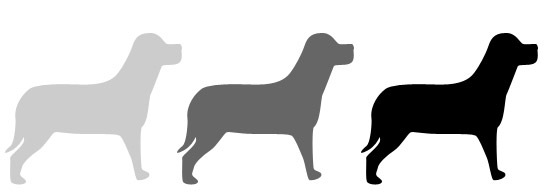
What visual principle of design best describes this computer generated “human”?
a)
Rhythm
b)
Proportion
c)
Unity
d)
Balance
32.
What visual element of design best describes this picture to the below?
a)
Texture
b)
Shape
c)
Space
d)
Value
33.
What visual element of design best describes this image of wicker?
a)
Texture
b)
Shape
c)
Space
d)
Value
34.
What visual element of design best describes this hexagon?
a)
Texture
b)
Shape
c)
Space
d)
Value
35.
What visual principle of design best describes the surface of the patio table below?
a)
Informal Balance
b)
Unity
c)
Emphasis
d)
Radial Balance
36.
What visual element of design best describes the image below?
a)
Value
b)
Form
c)
Color
d)
Texture
37.
The simple machine pictured below is classified as a(n) _________.
a)
Screw
b)
Wheel & Axle
c)
Lever
d)
Incline Plane
38.
This is the process of analyzing what a product looks like by taking note of how the elements and principles of design are used.
a)
Reverse Engineering
b)
Visual Analysis
c)
Functional Analysis
d)
Structural Analysis
39.
This is a non-destructive process where the product's purpose is identified, and the system's inputs and outputs are listed.
a)
Reverse Engineering
b)
Visual Analysis
c)
Functional Analysis
d)
Structural Analysis
40.
This is a process where a product is disassembled, uncovering principles behind how a product works. Data is collected to determine how parts interact, what the good and bad features of the product are, what manufacturing process was used, and what caused the product to succeed or fail.
a)
Reverse Engineering
b)
Visual Analysis
c)
Functional Analysis
d)
Structural Analysis
41.
Rhythm is the __________ of visual movement--colors, shapes, or lines.  Fill in the missing word.
a)
repetition
b)
stopping
c)
replacing
42.
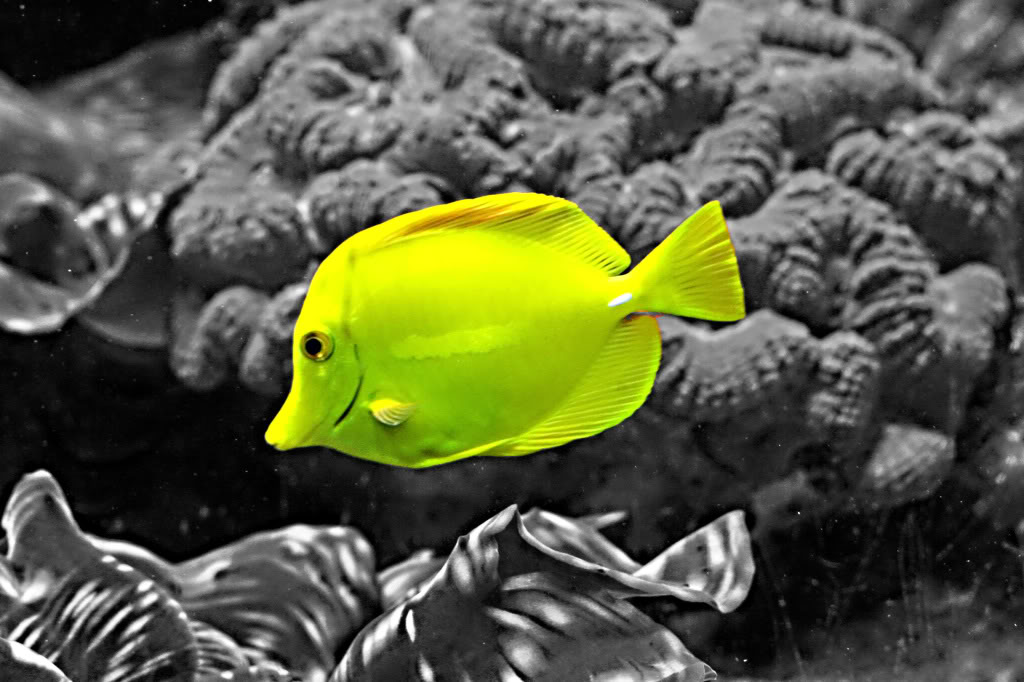
This image is a good example of which element?
a)
value
b)
balance
c)
emphasis
d)
color
43.
This image is a good example of what principle?
a)
space
b)
emphasis
c)
line
d)
texture