wayground logo

Free Printable Worksheets

NEW

Font size

S
M
L
XL
Worksheets

Space and Astronomy Pre-Test

Total questions: 61

Worksheet time: 1hrs 14mins

Name
Class
Date
1.

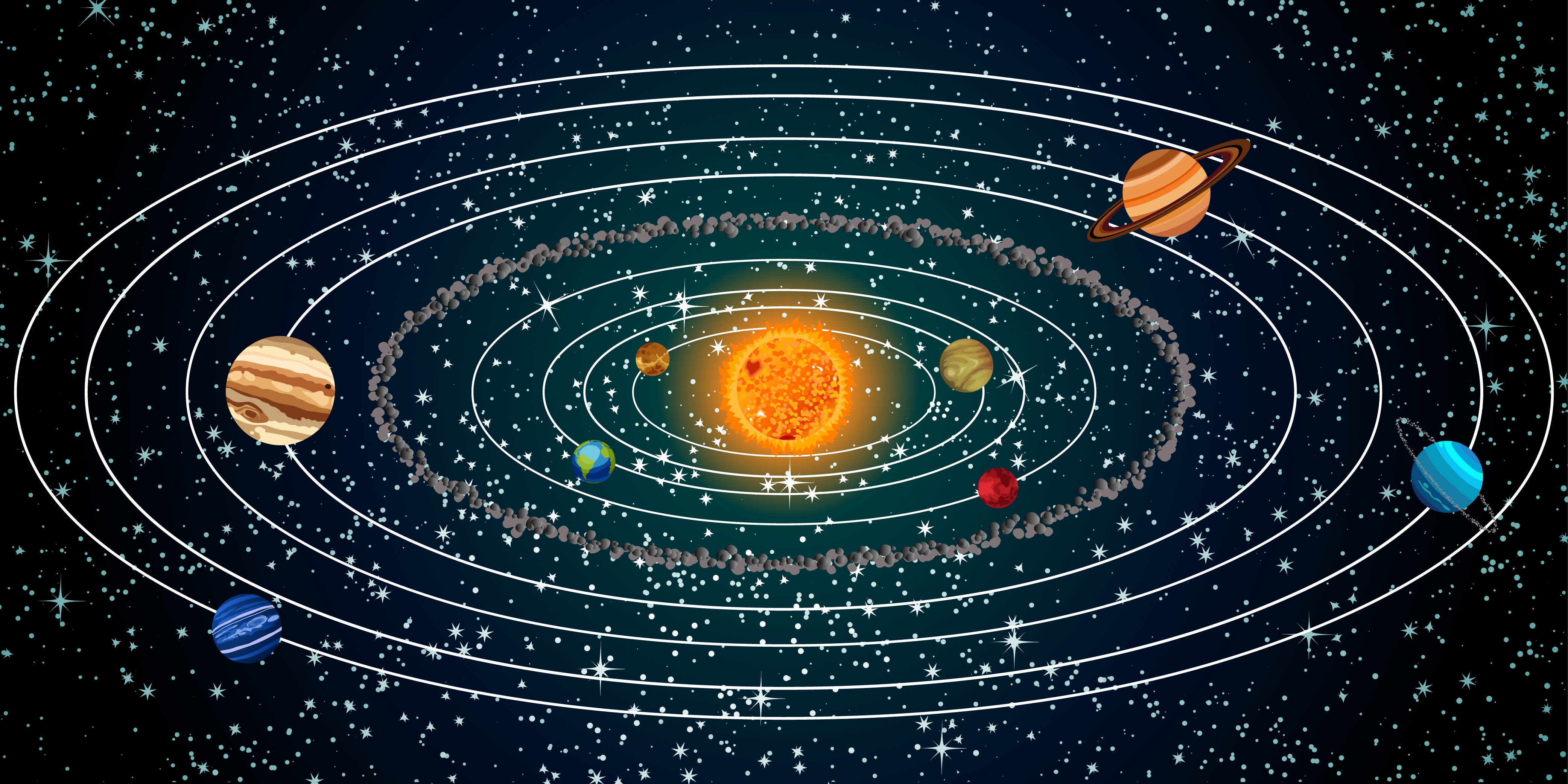
What is the correct order of the planets in the solar system?

a)

Mercury, Venus, Mars, Jupiter, Earth, Uranus, Saturn, Neptune

b)

Mercury, Venus, Earth, Mars, Jupiter, Saturn, Uranus, Neptune

c)

Mercury, Earth, Venus, Mars, Jupiter, Uranus, Saturn, Neptune

d)

Earth, Mercury, Saturn, Venus, Mars, Jupiter, Uranus, Neptune

2.

As the radius of a planet's orbit increases the time taken for it to orbit (the planet's year) the sun becomes...

a)

shorter

b)

longer

c)

stays the same

3.

The nearest star to Earth is:

a)

Proxima Centauri

b)

Alpha Centauri

c)

The Sun

d)

The Moon

4.

Stars release energy through the conversion of mass via

a)

nuclear fusion

b)

nuclear fission

c)

radioactive decay

d)

combustion

5.

The fuel for stars is

a)

hydrogen

b)

helium

c)

coal

d)

uranium

6.
What type of star is hot and dim?
a)
main sequence
b)
supergiants
c)
giants
d)
white dwarfs
7.
In the diagram given, what happens as we move to the left?
a)
Stars Get Larger
b)
Stars get Colder
c)
Stars get hotter
8.
Lightyear is used by scientist to measure what?
a)
Distance
b)
Time
c)
Energy
9.
The sun and all of the planets and other bodies that travel around it make up our...
a)
Galaxy
b)
Solar System
c)
Cluster
d)
Constellation
10.
Space and all the matter and energy in it.
a)
Space
b)
Solar System 
c)
Universe
d)
Sun
11.
A large celestial body that is composed of gas and that emits light.
a)
star
b)
black hole
c)
element 
d)
big bang
12.
A collection of stars, dust, and gas bound together by gravity.
a)
Nebula
b)
Galaxy 
c)
Universe
d)
Protostar
13.
 A large cloud of gas and dust in interstellar space; a region in Space where stars are born.
a)
Protostar 
b)
Nebula
c)
Galaxy 
d)
Star
14.
The distance that light travels in one year; about 9.46 trillion kilometers.
a)
Light Year
b)
Light Kilometer 
c)
Light Second 
d)
Warp Speed
15.
A gigantic explosion in which a massive star collapses and throws its outer layers into space.
a)
Black Hole 
b)
Supernova
c)
Neutron Star 
d)
Nebula 
16.
The most commonly accepted theory that explains the beginning of our known universe is the -
a)
Theory of Evolution
b)
Big Bang Theory
c)
Cell Theory
d)
Blackhole theory
17.
Which of the following is the largest?
a)
star
b)
universe
c)
cluster
d)
galaxy
18.
Proxima Centauri is the closest star to Earth after the Sun and is located 4.3 light years away from Earth. How long does it take light from Proxima Centauri to reach Earth?
a)
1 year
b)
4.3 years
c)
43 years
d)
10 trillion years
19.
Gravity is the force objects put on each other because of their ______.
a)
mass
b)
friendliness
c)
acceleration
d)
speed
20.
________ holds all of the planets in orbit around the sun.
a)
Gravity
b)
String
c)
Bill Nye
d)
Duct tape
21.

Earth makes one complete rotation in

a)

20 hrs.

b)

21hrs

c)

24hrs

22.

Earth revolves around the sun once every

a)

300 days

b)

345 days

c)

355 days

d)

365 days

23.

The inner planets are also referred to as the terrestrial planets. Which term best describes terrestrial?

a)

gaseous

b)

liquid

c)

rock like

24.

All planets travel in an _______________ orbit.

a)

circular

b)

round

c)

oval/ elliptical

25.

The outer planets are also referred to as the _____________

a)

terrestrial planets

b)

The Nebula planets

c)

Gas Giants

d)

Super Planets

26.
What tool would you use to study stars and space?
a)
microscope
b)
oscilloscope
c)
telescope
d)
nanoscope
27.
Which of the following is true?
a)
Earth is the center of the solar system
b)
The sun orbits the earth
c)
Gravity exists only on Earth
d)
The sun is the center of the solar system
28.
A pattern of stars is called what?
a)
constellation
b)
solar system
c)
galaxy
d)
bunch
29.
Stars are made of what?
a)
rock
b)
gas
c)
ice
d)
fire
30.
Which of the following is true?
a)
The sun is not a star
b)
The sun is bigger than most stars
c)
The sun is made of helium and hydrogen
d)
The sun has a solid surface
31.
How long is Earth's revolution?
a)
one day
b)
one year
c)
one decade
d)
one hour
32.
How long is Earth's rotation?
a)
one day
b)
one year
c)
one decade
d)
one hour
33.

Earth's 24 hour rotation causes what?

a)

one year

b)

day and night

c)

moon phases

d)

seasons

34.
What makes the sun, stars, and moon to appear to change position in the sky?
a)
earth's revolution
b)
moon phases
c)
seasons
d)
earth's rotation
35.
The imaginary line that represents earth's tilt is called what?
a)
axis
b)
equator
c)
prime meridian
d)
degrees
36.
What causes seasons?
a)
earth's distance to the sun
b)
earth's tilt and revolution
c)
earth's tilt and rotation
d)
the moon
37.
The sun is a __________ sized star.
a)
small
b)
medium
c)
large
d)
x-large
38.
Why does the sun appear to be the largest star in the sky?
a)
It is far away
b)
It is very big
c)
It is the closest star to earth
d)
It is a planet
39.
Why do planets orbit the sun (and not float around in space)?
a)
the moons are keeping them in place
b)
They were hit by an asteroid
c)
they were hit by a comet
d)
the sun's gravity keeps them in place
40.
What do scientists use to take pictures in space?
a)
mirror
b)
microscope
c)
oscilloscope
d)
satellite
41.

Earth is the ______ planet from the sun.

a)

1st

b)

2nd

c)

3rd

d)

4th

42.

Scientists use spacecraft to study a variety of objects in space. What benefits do unmanned spacecraft provide to space scientists?

a)

Instruments never commit errors.

b)

Instruments can be sent places humans cannot go

c)

Instruments can replace analysis by human scientists.

d)

Instruments require more control over the environment than human spaceflight does.

43.
Astronaut spacesuits include an oxygen delivery system because 
a)
there is less gravity in space. 
b)
space has nitrogen-rich air. 
c)
asteroids dissolve in oxygen. 
d)
space is an airless vacuum. 
44.
Which of the following parts of a spacesuit is essential for the survival of astronauts taking short space walks of less than thirty minutes? 
a)
Tool belt 
b)
Oxygen supply
c)
Freeze-dried food
d)
Magnetic boots 
45.
Astronauts need to exercise while in space because, without gravity, the environment in space - 
a)
lacks breathable air, including the oxygen humans need. 
b)
makes astronauts consume more calories during their missions. 
c)
provides less resistance and weakens muscles and bones. 
d)
does not allow the human body to retain heat as well as on Earth. 
46.
What is the main function of the ozone layer?
a)
Enables us to have drinking water
b)
Protects Earth from the sun's ultraviolet radiation
c)
Creates heat for the Earth
d)
Enables us to have air to breathe
47.
A characteristic of Earth that allows life to exist is its atmosphere that contains water vapor and carbon dioxide.  These greenhouse gases are important because they - 
a)
protect against magnetic particles
b)
create Earth's gravitational field
c)
trap thermal energy in the atmosphere
d)
are substances animals need to breathe
48.
The large, gaseous planets are also known as ____________.
a)
Inner planets
b)
Outer planets
49.
The investigation of physical conditions in space and on stars, planets, and other celestial bodies through the use of satellites, space probes, or spacecrafts with human crews.
a)
Space Exploration
b)
Newton's Law of Gravity
c)
the ISS
d)
Space travel
50.
A vehicle for exploring the surface of an extraterrestrial object.
a)
rover
b)
the International Space Station
c)
Observetory
d)
Space probe
51.
To which rocky planet are scientists planning a manned space mission
a)
Jupiter
b)
Mars
c)
Neptune
d)
Venus
52.
What scientist use a telescope to observe the night sky and led to him being called the father of astronomy?
a)
Galileo
b)
Einstein 
c)
Dr. Tyson 
d)
Dr. Wernher von Brauun 
53.

I travel around the sun faster than any other planet.

a)

Earth

b)

Mercury

c)

Pluto

d)

Venus

54.

I am the third Planet from the sun

a)

Venus

b)

Earth

c)

Neptune

d)

Pluto

55.
What is the sun mostly made up of
a)
Helium
b)
Core
c)
Carbon
d)
Hydrogen
56.
We do not usually observe relativistic effects in our daily lives because 
a)
we are moving at speeds much less than c. 
b)
we are much larger than atoms. 
c)
we are much heavier than elementary particles. 
d)
we are much lighter than stars. 
57.

What would happen if the Earth was not tilted on its axis?

a)

It would be warm all of the time.

b)

It would be the same temperature everywhere.

c)

There would be no seasons

d)

We would not have day and night

58.

What two forces affect gravity?

a)

mass and inertia

b)

mass and distance

c)

mass and force

d)

mass and weight

59.
Atmosphere is :
a)
only consisting of argon and oxygen
b)
gases on the floor of the Earth
c)
all the gases around a planet
d)
all the gases near the solar beams
60.
The human body can only go a few days without water. How do astronauts fulfill this need?
a)
Take frozen water
b)
Recycle wastewater
c)
Make water
d)
Chemically combine space elements to make water
61.
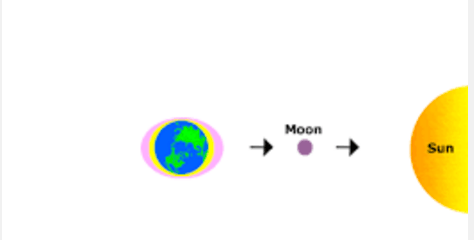
What type of tides would this arrangement of earth-moon-sun create?
a)
neap tide
b)
spring tide
c)
new moon tide
d)
full moon tide