
 Worksheets
Industrial Revolution TX Grade 8
Total questions: 63
Worksheet time: 36mins
What issue did the Missouri Compromise (1820) address?
policy dealing with European influence in the Americas
maintaining a balance between free and slave states
how many immigrants to allow into the U.S. each year
the procedure for changing an amendment to the constitution
Who invented the cotton gin?
Eli Whitney
Robert Fulton
Francis Lowell
Cyrus McCormick
Few mills and factories were built in the South because southerners
Put their money into land and slaves
Did not buy manufactured goods
Refused to pay wages to workers
Believed women should work at home
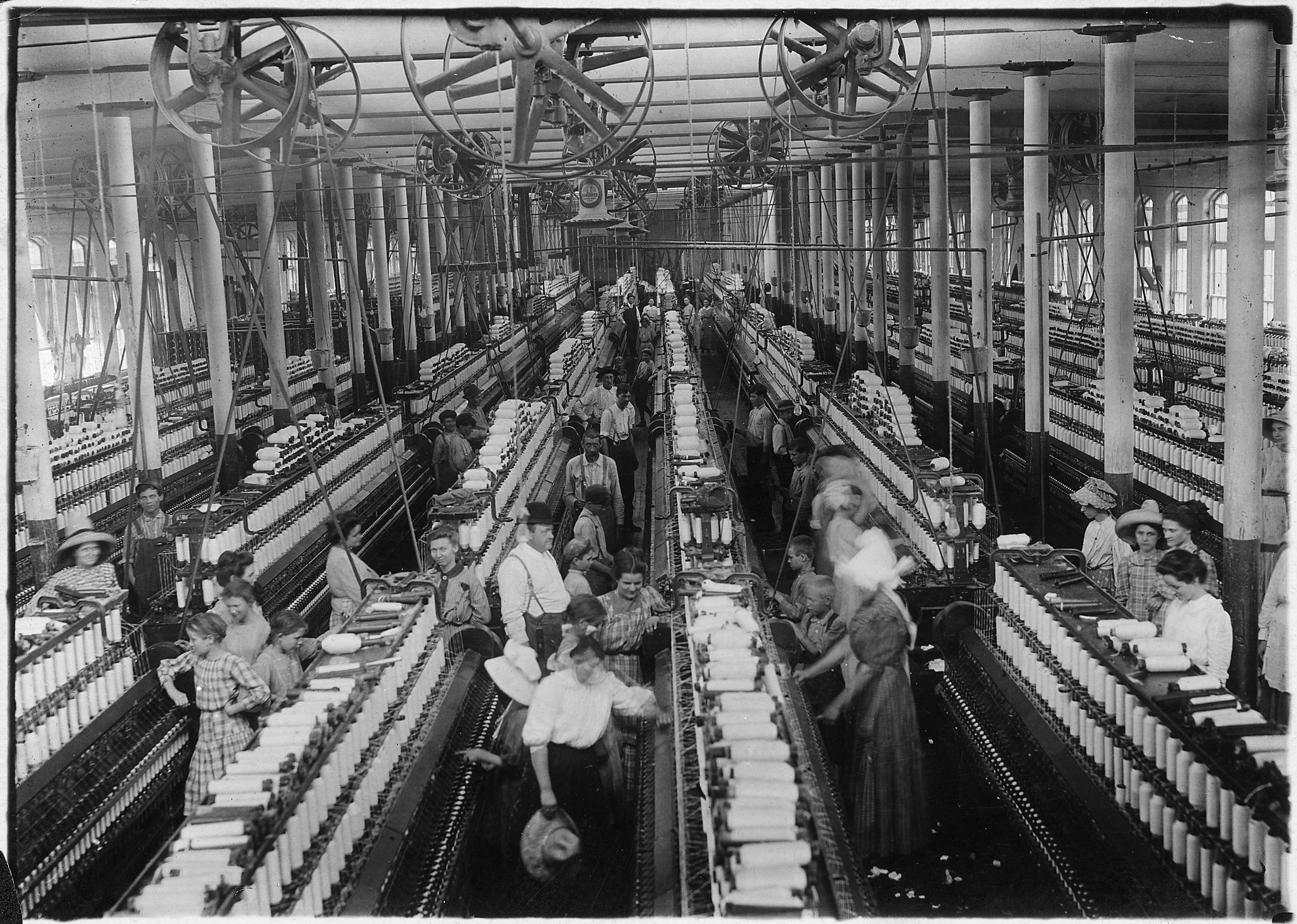

What was the invention and its effect.
cotton gin/ helped with the expansion of plantations.
Mechanical Reaper/making wheat the main economic source in the midwest
steel plow/help expand settlement in the midwest
Telegraph/help speed up communication
What immigrant group help build the Erie Canal?
Irish
Chinese
Mexican
German

The immigrant population that primarily helped build the transcontinental railroad came from--
India
China
Japan
Phillipines
A statement of American policy warning European powers not to interfere with the Americas.
Monroe Doctrine
Treaty of Ghent
Nationalism
American System
Feelings of pride and loyalty to a nation.
American System
Nationalism
Era of Good Feelings
Sectionalism
Maine became a ______ in the Missouri Compromise.
free state
free territory
slave state
Spanish territory
Slavery was prohibited in any new territories or states formed north of the 36 line of latitude. Which document is this statement from?
Treaty of Ghent
Missouri Compromise
American System
Monroe Doctrine
The selling and transporting of goods from one state to another
Autocracy
Mudslinging
Incumbent
Interstate Commerce
Established a line 36 30 as a boundary between slave and free states
McCulloch vs. Maryland
Mudslinging
Missouri Compromise
Interstate Commerce
Who was the president during the Era of Good Feelings?
John Adams
Thomas Jefferson
James Monroe
George Washington


The Era of Good Feelings was marked by
a strong sense of national unity.
a rapid increase in immigration.
an end to warfare with France.
an expansion of states' rights.

Whose economic plan including tariffs, a national bank, and federal spending for roads and canals, known as the "American System"?
John Quincy Adams
James Monroe
Andrew Jackson
Henry Clay
The decision in Gibbons v Ogden (1824) addressed which of the following issues?
The issue of congressional privileges
The regulation of interstate commerece
The right of states to tax federal property
The Supreme Court's right to declare Congressional act unconstitutional
Which Supreme Court case decided if a state had the power to tax a federal agency?
Marbury v. Madison
McCulloch v. Maryland
Fletcher v. Peck
Gibbons v. Ogden
The decisions in the cases of McCulloch v. Maryland and Gibbons v. Ogden strengthened the ...
power of the federal government.
power of the U.S. Treasury
power of the state governments.
power of the Judicial branch

Making things, somtimes in large quantities, is called ____________.
Manifolding
Manipulating
Communicating
Manufacturing

What normally happens when the speed of manufacturing something increases?
The cost also gets faster
The costs are lowered to the consumer
Prices are raised
There are fewer options to the consumers

What would explain why urban areas become so over-crowded?
People wanted to be near the harbors
People needed to live near their families
People needed to walk to work, and couldn't live far from their jobs
People just love the smell of urine and poop

Which immigrants came to America to escape a shortage of food (famine)?
Chinese
French
Irish
More Chinese
Inventor of the steamboat engine making traveling up river much easier.
Robert Fulton
Cyrus McCormick
Henry Miller Shreve
Peter Cooper
Stole blue prints of the textile and spinning mills turning yarn into thread for cloth weaving.
Samuel Morse
John Deere
Frances Lowell
Samuel Slater
Inventor of the mechanical reaper used as a farming tool for cutting and gathering crops at harvest time.
John Deere
Samuel Morse
Cyrus McCormick
Eli Whitney
Hired girls between the ages of 15 to 25 years of age to work on his textile mills weaving clothes.
Henry Miller Shreve
Cyrus McCormick
Samuel Slater
Frances Lowell
Inventor of the telegraph and the code used for helping bring the nation together via electronic communications.
John Deere
Samuel Morse
Eli Whitney
Robert Fulton
Inventor of the steel plow used to break up tough soil.
Eli Whitney
Robert Fulton
John Deere
Cyrus McCormick
The Bessemer process created a cheaper and more effective way in making __________, which led to skyscrapers
steel
gold
titanium
iron
Which statement best describes free enterprise?
A system that encourages people to start and operate their own businesses
A system where the marketplace determines prices
A system where people are free to own personal property
All of the above
How did the growth of the railway system during the nineteenth century affect the U.S. economy?
By helping expand trade and settlement into western states
By making it easier for people in rural areas to work in urban factories
By helping strengthen the economic ties between U.S. and British companies
By permitting faster communication between corporate leaders and their employees
McCulloch v. Maryland was about whether a state could _______ a U.S. bank.
tax
issue
nullify
ratify
What do you call trading across state lines?
International Trade
Highway Commerce
Inner State Commerce
Interstate Commerce
What case established the federal government’s control over interstate trade?
Marbury v. Madison
Brown v. Board
McCulloch v. Maryland
Gibbons v. Ogden
Evaluate which of the following was the greatest significance of the War of 1812 on the American economy-
Americas economy improved greatly because Congress printed money for the war effort
More factories were created because we were no longer able to purchase goods from Britain
The war resulted in America winning sole fishing rights off the coast of the New England states
American farmers began planting more cotton to replace worn uniforms of U.S. soldiers
What role did technology play in the development of the Industrial Revolution?
Technology allowed people to communicate manufacturing ideas across large pieces of land
Technology gave the federal government a way to make sure factories were safe and efficient
Technology initially slowed down the Industrial Revolution because it took time for people to learn how to operate the new machines
Technology created a way to make things faster, and therefore sell them cheaper
The Industrial Revolution grew more rapidly in the North because -
Southerners were not educated enough to operate the new technology of the Industrial Revolution
Poor farming conditions, and ample rivers to power factories encouraged Northerners to build factories
No one in the South believed that building a factory would lead to economic prosperity
The Federal government provided incentives to states in the North to build factories, but not the South
The cotton gin was a machine that benefitted farmers because it -
Created a way to quickly remove seeds from the cotton fiber, resulting in the slaves having more time to work in the fields.
Picked cotton from the plants, ending the need for slaves to pick the cotton
Allowed farmers to plant cotton seeds in a more efficient way
Removed all dust and insects from the cotton fiber so it was softer
One effect of the cotton gin was -
Slaves no longer had to work outside in the fields, but now could work indoors
Britain began purchasing cotton from the U.S. because of its high quality
The planting of cotton increased resulting in more slaves being brought to the U.S.
The Secretary of Treasury invested federal money in the cotton industry because of its success
One effect of the interchangeable parts method was -
Factories began to only make guns
Britain payed the American government $5 million in exchange for the secret behind America’s factories
Factories were able to produce goods at a faster rate, resulting in a decrease in the price of goods
The price it cost to make a good increased
The inventor of the cotton gin and the interchangeable parts method of production was -
Henry Clay
Eli Whitney
Benjamin Franklin
Kirby Macik
The term urbanization refers to -
The movement of people to rural areas from urban centers
Building of canals and roads to improve interstate transportation
The manufacturing of goods by machines rather than by hand
The movement of people from urban areas to rural centers

What is the image representing?
Missouri Compromise
Growth of slavery in the South
The creation of the Erie Canal
Era of Good Feelings
What sparked the start of the Industrial Revolution in the United States?
The War of 1812
The Missouri Compromise
George Washington's Farewell Address
The Embargo Act
1. Which of the following was a major reason for the issuance of the Monroe Doctrine?
discourage United States trade with Latin America
defend the Panama Canal from Great Britain
prevent further European colonization in the Americas
provide economic aid to Latin American nations
A time period in American history when people enjoyed peace, pride, and progress.
Missouri Compromise
American System
Whiskey Rebellion
Era of Good Feelings

