Worksheets
Exploring Space - Review
Total questions: 43
Worksheet time: 29mins
What is the electromagnetic spectrum?
A pattern of radiation that shows different wavelengths
A pattern of radiation that shows different temperatures
A pattern of radiation that shows different flares
A pattern of radiation that shows different instruments
What different types of radiation does the electromagnetic spectrum represent?
Gamma rays, X-rays, Ultraviolet Radiation, Visible light, Infrared Radiation, Microwaves, Radio Waves
Gamma rays, X-rays, Ultraviolet Radiation, No light, Infrared Radiation, Microwaves, Radio Waves
Gamma rays, Sting-rays, Ultraviolet Radiation, Visible light, Infrared Radiation, Microwaves, Radio Waves
Magnetic rays, X-rays, Ultraviolet Radiation, Visible light, Infrared Radiation, Microwaves, Radio Waves
How long does it take Earth to revolve around the Sun?
One day
One year
One month
One hour

What does the tidal bulge represent?
The Moon's gravitational pull on the Earth
The Earth's gravitational pull on the Moon

What does the Tidal Bulge follow?
The Moon
The Earth
The Sun

Based on the direction of the tidal bulge and the positions of the Earth, Moon, and Sun, what type of tide does this picture represent?
A Neap Tide
A Spring Tide
A high tide
A low tide

Based on the direction of the tidal bulge and the positions of the Earth, Moon, and Sun, what type of tide does this picture represent?
Neap Tide
Spring Tide
High Tide
Low Tide
What causes seasons on Earth?
Earth's tilt
Earth's tilt and revolution around the Sun
Earth's rotation
The changing distance between Earth and the Sun
What causes day and night on Earth?
Earth's rotation on its axis
Earth's tilt on its axis
Earth's gravity
The Sun revolving around Earth
What type of stars have high temperatures and low luminosity?
White Dwarfs
Supergiants
Giants
Main Sequence
The majority of stars that are classified on the H-R Diagram are...
Main Sequence stars
Giant stars
Super Giant stars
White Dwarf stars


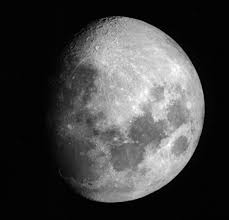
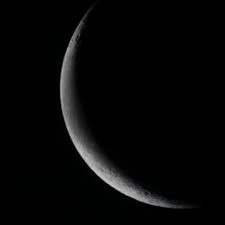

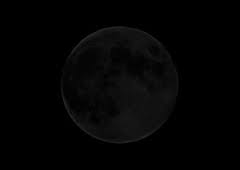

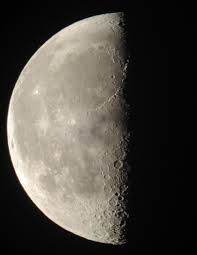
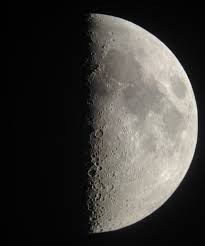
What are the moon phases in the correct order?
New Moon, Waxing Crescent, First Quarter, Waxing Gibbous, Full Moon, Waning Gibbous, 3rd (Last) Quarter, Waning Crescent
New Moon, Waxing Crescent, Waxing Gibbous, First Quarter, Full Moon, Waning Gibbous, 3rd (Last) Quarter, Waning Crescent
Full Moon, Waning Gibbous, 3rd (Last) Quarter, Waning Crescent, New Moon, Waxing Crescent, First Quarter, Waxing Gibbous,
Full Moon, Waxing Crescent, First Quarter, Waxing Gibbous, New Moon, Waxing Crescent, First Quarter, Waxing Gibbous, Waning Gibbous, 3rd (Last) Quarter, Waning Crescent,

How would you represent Earth's revolution on this diagram?
arrows pointing counter clockwise
arrows pointing clockwise
nothing needed, it is already showing Earth's revolution

Where is the Sun located in the Milky Way Galaxy?
On the "elbow" of one of the spiral arms
On the edge of one of the spiral arms
On the tip of one of the spiral arms
List the parts of the universe in order of increasing size
Planets, Stars, Galaxies, Universe
Planets, Stars, Universe, Galaxies
Universe, Stars, Planets, Galaxies
Planets, Galaxies, Stars, Universe
Earth's tilt can cause
differences in the length of day throughout the year
differences in the length of the orbit throughout the year
differences in the distance between Earth and Sun
differences in the differences between Earth and Moon
True or False - The Sun is the largest known star, that's why it's the brightest.
True
False
True or False - The Sun is a medium size star with medium brightness.
True
False
The theory of the origin of our universe is called
The Big Bang
Supernova
Super Massive Black Hole
Dark Matter


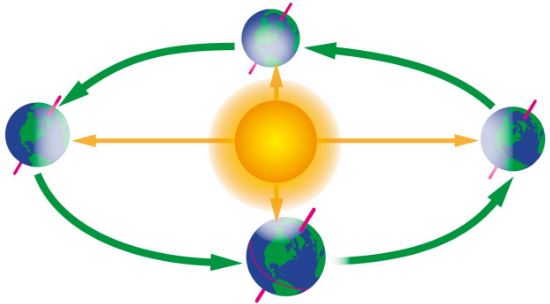
In spring/fall, would the axis of the earth be pointed toward or away from the sun?
towards
Neither away or toward
away


What characteristic of a wave never changes on the electromagnetic spectrum?
Speed of the wave
Frequency of the wave
Wavelength of the wave
Pitch of the wave
Frequency and wavelength of a wave have what type of relationship to one another?
Indirect
Direct
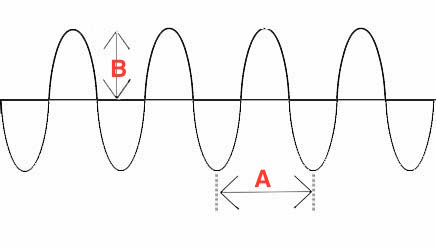
What property of this wave is represented by the letter "A"
amplitude
crest
trough
wavelength