wayground logo

Free Printable Worksheets

NEW

Font size

S
M
L
XL
Worksheets

Review for Biology Test 1

Total questions: 70

Worksheet time: 53mins

Name
Class
Date
1.
Sac within the cytoplasm that is full of fluid; plants have one large; stores food, water, etc.
a)
vacuole
b)
cell wall
c)
lysosome
d)
ribosome
2.
Gives the cell a rigid, box-like shape; outside of the cell membrane; in plants.
a)
cytoplasm
b)
chromatin
c)
cell wall
d)
cell membrane
3.
Consists of a jellylike substance that contains many organelles.
a)
ribosomes
b)
cytoplasm
c)
chloroplasts
d)
cell wall
4.
Which organelle uses energy from sunlight to make sugar?
a)
mitochondria
b)
nucleus
c)
chloroplasts
d)
vacuoles
5.
Which part of the cell is often called "the brain of the cell"?
a)
nuclear membrane
b)
endoplasmic reticulum
c)
nucleus
d)
ribosomes
6.
I am the outer most layer of an animal cell. What am I?
a)
cell wall
b)
nucleus
c)
cell membrane 
d)
cell skin
7.
I make proteins for the cell. What am I?
a)
ribosome
b)
mitochondria
c)
chloroplast
d)
lysosome
8.
You might think of me as the trash collector or recycler is maybe more accurate. What am I?
a)
cytoplasm
b)
lysosme
c)
vacuole
d)
ribosome
9.
I am a protein packaging and shipping machine! Who am I?
a)
vacuole
b)
ribosome
c)
endoplasmic reticulum
d)
golgi apparatus
10.
I store water in both plant and animal cells. What am I?
a)
cytoplasm
b)
ribosomes
c)
vacuole
d)
lysosomes
11.
I am only found in a plant cell. What am I?
a)
cell wall
b)
mitochondria
c)
cytoplasm
d)
chloroplast
12.
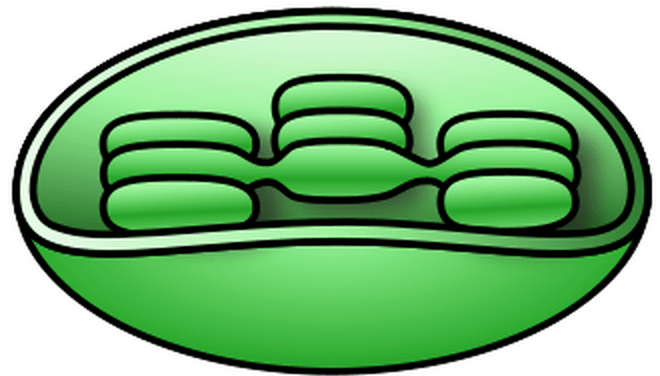
What is this?
a)
mitochondria
b)
lysosomes
c)
chloroplast
d)
endoplasmic reticulum
13.
What does this structure do?
a)
supports the cell
b)
cell's control center
c)
converts energy to food
d)
makes proteins
14.
What is the picture
a)
ribosome
b)
nucleus
c)
cell wall
d)
mitochondrion
15.
Heterozygous is when...
a)
the alleles are the same
b)
the alleles are different
c)
the alleles are absent
d)
the alleles are present
16.
In a heterozygous genotype, the ___________ allele takes over in the phenotype.
a)
recessive
b)
dominant
c)
lower case letter
d)
both 
17.
T - tall and t = short
In the punnett square below, what belongs in the missing square
a)
tt
b)
Tt
c)
Bb
d)
TT
18.
G = green, g = yellow
The genotype for a yellow plant is...
a)
GG
b)
Gg
c)
gg
d)
all of the choices result in yellow
19.
B = brown fur  b = white fur
In the punnett square, what is the probability for white fur? 
a)
0%
b)
25%
c)
50%
d)
75%
20.
In plants, tall (T) is dominant to short (t). Perform the following cross: Tt x Tt. What is the probability of producing a short plant?
a)
0%
b)
25%
c)
50%
d)
75%
21.
Which of the following is NOT a genotype?
a)
heterozygous
b)
a trait
c)
Bb
d)
homozygous recessive
22.
Which of the following alleles is homozygous (purebred) recessive?
a)
Tt
b)
tt
c)
TT
d)
t
23.
Two brown eyed parents (Bb) have a baby. What is the chance the baby is blue eyed?
a)
0 %
b)
25%
c)
50%
d)
75%
24.
Which sequence of DNA bases would pair with this partial strand
ATG TGA CAG
a)
ATG TGA CAG
b)
TAC ACT GTC
c)
GTA AGT GAC
d)
CAT TCA CTG
25.
Which of the following best describes a DNA molecule?
a)
double helix
b)
contains ribose
c)
made of amino acids
d)
contains Uracil
26.
Which of the following units are repeatedly joined together to form a strand of DNA?
a)
amino acids
b)
nucleotides
c)
fatty acids
d)
polysaccharides
27.
In a molecule of double-stranded DNA, the amount of Adenine present is always equal to the amount of
a)
cytosine
b)
guanine
c)
thymine
d)
uracil
28.
Adenine bonds with ______________.
a)
Guanine
b)
Thymine
c)
Cytosine
d)
Adenine
29.
Guanine bonds with ______________.
a)
Adenine
b)
Guanine
c)
Cytosine
d)
Thymine
30.
Why is DNA important?
a)
it is very small and very complicated
b)
it's in everything
c)
it serves as the blueprint for traits of all living things
d)
because we eat it every day for energy
31.
What determines the code, or information, of a DNA molecule?
a)
the shape (structure) of the nitrogen bases
b)
the order (sequence) of the nitrogen bases
c)
the color of the nitrogen bases
d)
the frequency (number) of nitrogen bases
32.
Which 2 molecules form the sides (backbone) of the DNA ladder?
a)
deoxyribose sugar and adenine
b)
deoxyribose sugar and a hydrogen bond
c)
deoxyribose sugar and the nucleus
d)
deoxyribose sugar and phosphate
33.
Which organelle is DNA usually found in?
a)
cell membrane
b)
vacuole
c)
chloroplast
d)
nucleus
34.

What is the corresponding side of the following strand of DNA:

AATCATGGA

a)

AATCATGGA

b)

TTAGTACCT

c)

UUAGUACCU

d)

GGATAUCUA

35.
What is the correct complimentary strand for the following DNA?ATCGAG
a)
TACGAG
b)
ATCGAG
c)
TAGCTG
d)
TAGCTC
36.
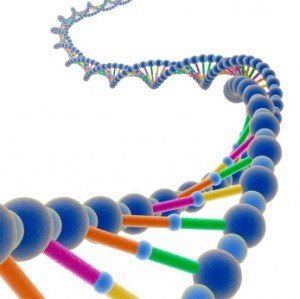
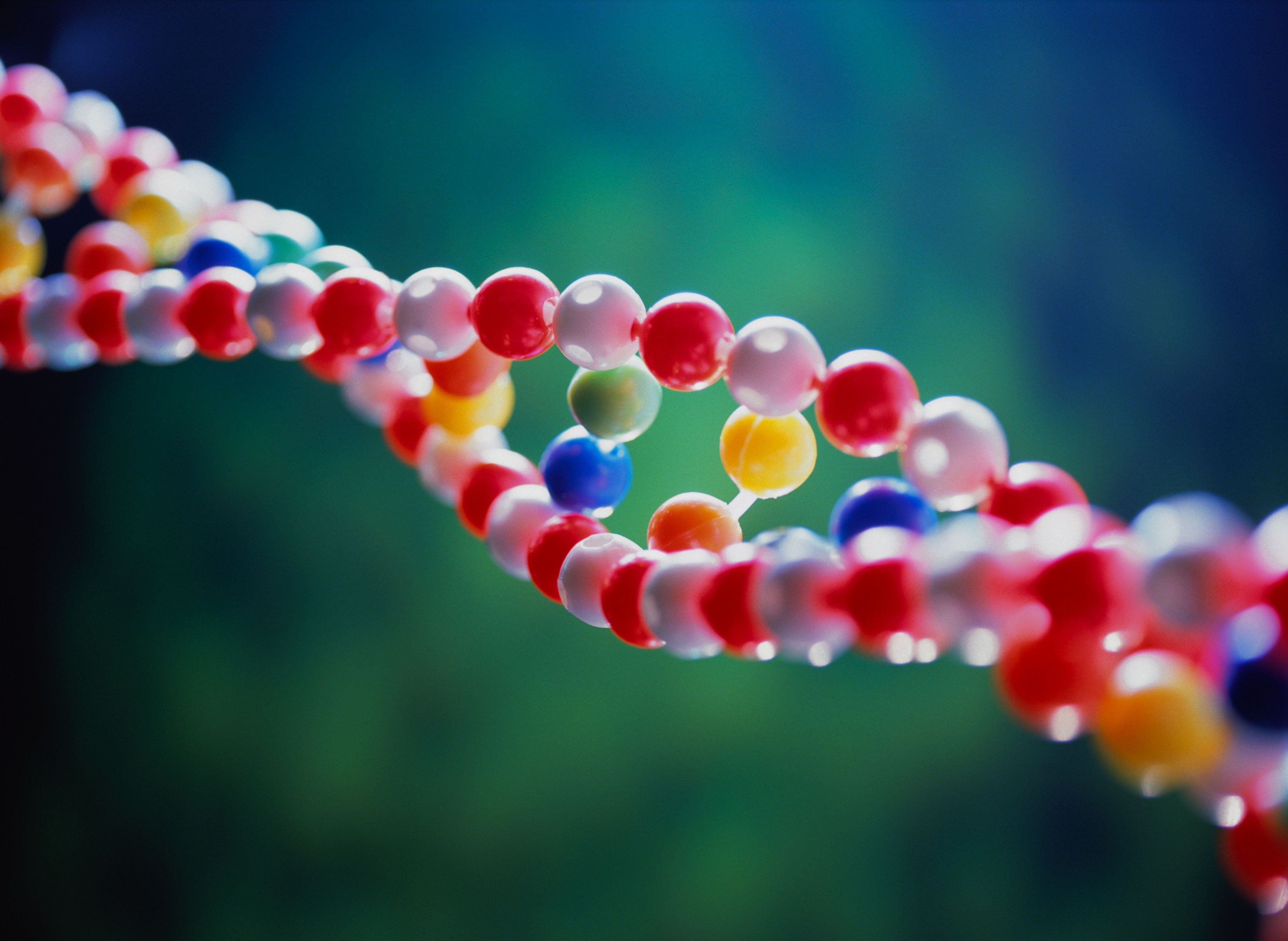
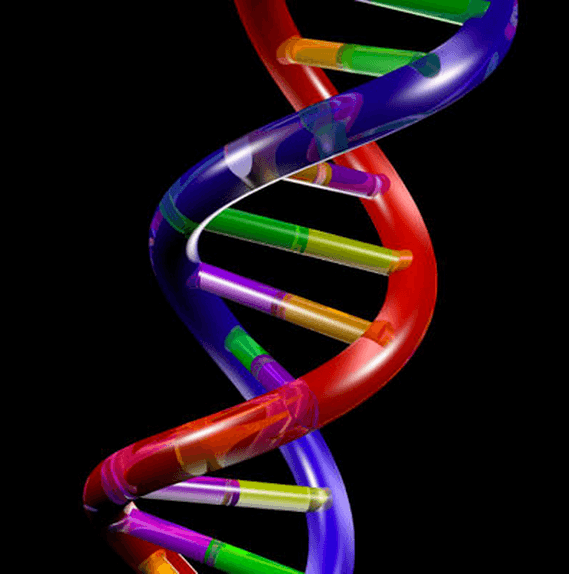
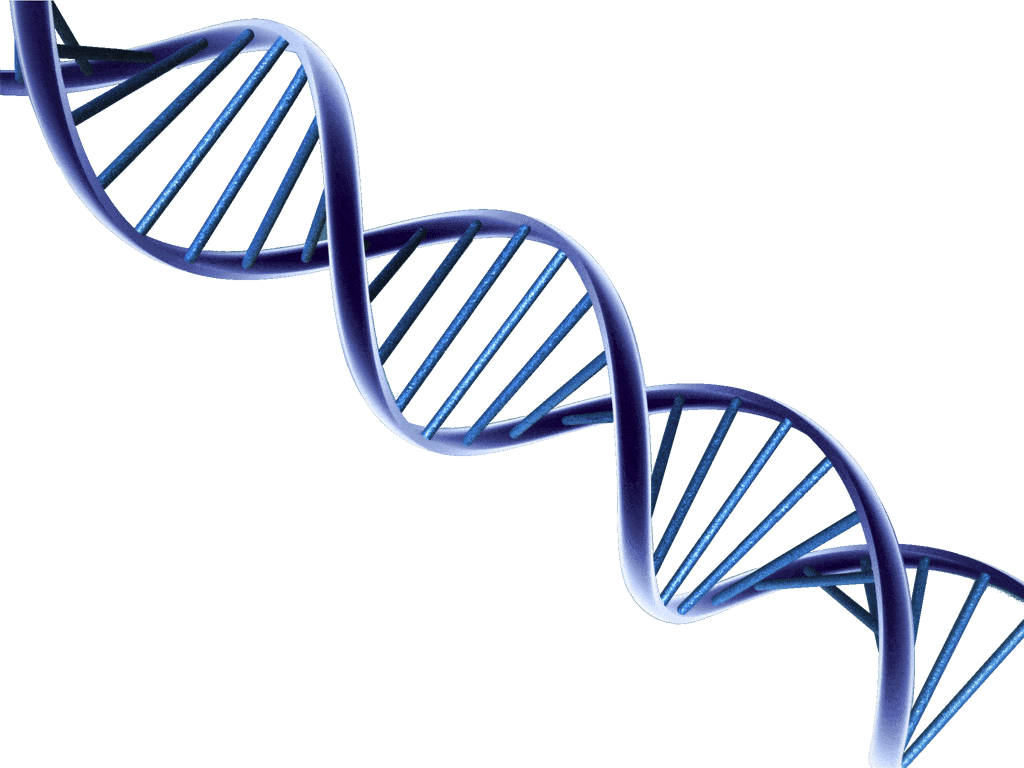
The drawing shows the structure of what molecule?
a)
A DNA molecule
b)
A lipid molecule
c)
A carbohydrate molecule
d)
A protein molecule
37.
What are the three components of a nucleotide?
a)
sugar, hydrogen, nitrogen base
b)
sugar, oxygen, nitrogen base
c)
sugar, phosphate, nitrogen base
d)
sugar, phosphate, protein
38.

Green plants produce their own food through the process of photosynthesis. Which characteristic of life is this?

a)

All living things use energy

b)

All living things contain cells

c)

All living things maintain homeostasis

d)

All living things do photosynthesis

39.

A baby song bird hatches from its egg with both parent songbirds watching. Which characteristic of life is this?

a)

All living things reproduce

b)

All living things maintain homeostasis

c)

All living things use energy

d)

All living things are able to see

40.

A rabbit eats a carrot. Which characteristic of life is this?

a)

All living things must eat food

b)

All living things use energy

c)

All living things maintain homeostasis

d)

All living things grow

41.

A camel has long eyelashes that work to keep the dust and sand out of its eyes. Which characteristic of life is this?

a)

All living things adapt to their environment

b)

All living things grow

c)

All living things have cells

d)

All living things use energy

42.

A caterpillar hibernates in a cocoon and emerges as a butterfly. Which characteristic of life is this?

a)

All living things adapt to their environment

b)

All living things use energy

c)

All living things respond to their environment

d)

All living things grow and develop

43.

A tulip opens in the morning at sunrise and closes in the evening at sunset. Which characteristic of life is this?

a)

All living things have cells

b)

All living things use energy

c)

All living things respond to their environment

d)

All living things grow

44.

Over three years, Tim's height has increased from 5'4" to 5'11". Which characteristic of life is this?

a)

All living things contain cells

b)

All living things maintain homeostasis

c)

All living things use energy

d)

All living things grow

45.

A cat is an organism that has a respiratory system that contains lungs and a trachea. Which characteristic of life is this?

a)

All living things contain cells

b)

All living things maintain homeostasis

c)

All living things have different levels of organization

d)

All living things breathe

46.

When you step out into the cold, your body shivers in order to keep its temperature at 98.6F. Which characteristic of life is this?

a)

All living things use energy

b)

All living things contain cells

c)

All living things maintain homeostasis

d)

All living things grow

47.
The cells produced via meiosis are called:
a)
sex cells
b)
somatic cells
c)
body cells
d)
skin cells
48.
This produces 2 identical cells.
a)
mitosis
b)
meiosis
49.

A human usually has xx amount of chromosomes.

a)

6

b)

23

c)

4

d)

46

e)

92

50.
What phase is  shown in the picture?
a)
anaphase 1
b)
anaphase 2
c)
metaphase 1
d)
telophase 1
51.
Meiosis makes sperm and egg cells. In humans, sperm and egg cells each have _____ chromosomes. Therefore a fertilized human egg cell (sperm and egg cell combined) would create a cell with _____ chromosomes.
a)
23, 46
b)
46, 23
c)
2, 4
d)
50, 100
52.
Goes through P.M.A.T two rounds 
a)
Mitosis
b)
Meiosis
c)
Osmosis
d)
Transcription
53.
If the Diploid number of Carrots is 18, the haploid number is
a)
18
b)
9
c)
27
d)
36
54.
If a somatic cell in a butterfly contains 24 chromosomes, a butterfly egg would contain
a)
3
b)
6
c)
12
d)
24
55.
A male shark has 40 chromosomes in each of its sex cells. How many would be present in its body cells?
a)
20
b)
40
c)
80
d)
160
56.
a)
Prophase
b)
Interphase
c)
Anaphase
d)
Telophase
57.
a)
Anaphase
b)
Cytokinesis
c)
Telophase
d)
Metaphase
58.
a)
Cytokinesis
b)
Interphase
c)
Anaphase
d)
Metaphase
59.
a)
Anaphase
b)
Cytonkinesis
c)
Interphase
d)
Prophase
60.
a)
Cytokinesis
b)
Anaphase
c)
Telophase
d)
Prophase
61.
Which is Metaphase?
a)
A
b)
E
c)
C
d)
F
62.
Chromosomes condense from long stands into rod like structures. 
a)
Prophase
b)
Interphase
63.
The phase in mitosis where chromosomes move away and are pulled apart by spindles to opposite sides of the cell.
a)
prophase
b)
anaphase
c)
metaphase
d)
telephase
64.
A chromatid is attached to a spindle fiber by the
a)
nucleolus
b)
deep furrow
c)
centromere
d)
centriole
65.
The structures that hold together sister chromatids
a)
tissues
b)
chromosomes
c)
spindle
d)
centromeres
66.
The process by which the nuclear material is divided equally between two new cells
a)
mitosis
b)
cancer
c)
spindle
d)
centromere
67.
the two halves of the doubled chromosome structure 
a)
centromeres
b)
sister chromatids
c)
spindle
d)
tissues
68.
Why would it be important to replicate DNA before a cell divides in mitosis or meiosis?
a)
In order for genetic information to be transferred into daughter cells.
b)
In order for the cell to be able to increase in size.
c)
In order for the DNA to be contained in the nucleus.
d)
In order for the cell to re-order the DNA sequencing in the new cells.
69.
In mitosis, the two resulting cells are
a)
different from the starting cell and identical to each other.
b)
different from the starting cell and different from each other.
c)
identical to the starting cell and different from each other.
d)
identical to the starting cell and identical to each other.
70.
What is the name of the structure labeled X?
a)
Centriole
b)
Centrosome
c)
Chromatid
d)
Chromosome