wayground logo

Free Printable Worksheets

NEW

Font size

S
M
L
XL
Worksheets

Geology

Total questions: 46

Worksheet time: 37mins
Name
Class
Date
1.
The type of plate boundary where two plates come together is a .....
a)
Convergent Boundary
b)
Divergent Boundary
c)
Transform Boundary
d)
Plate Boundary
2.
Which of the following causes Earth's tectonic plates to move?
a)
Energy from the Sun
b)
Magnetic Pole Reversal
c)
Convection currents in the mantle
d)
Faults in Mountain Ranges
3.
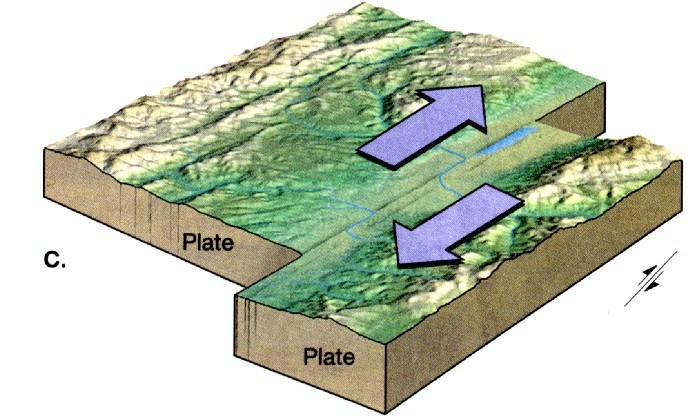
What type of plate boundary is this?
a)
Plate
b)
Divergent
c)
Convergent
d)
Transform
4.
What type of event will occur at this boundary?
a)
Earthquake
b)
Volcano Eruption
c)
Tornado
d)
Mountain Building
5.
A divergent boundary occurs when plates ....
a)
Pull apart
b)
Come together
c)
Slide past each other
d)
subducting
6.
Which of the following is the name of the ancient supercontinent formed 28 Million Years ago.
a)
Pangea
b)
Gondwanda
c)
Laurasia
d)
Neverland
7.
Which of the following is NOT evidence to support the theory of plate tectonics?
a)
Fossils
b)
Mountains
c)
Glaciers
d)
Sand Erosion
8.
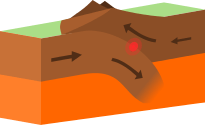
What type of plate boundary is this?
a)
Transform
b)
Convergent
c)
Divergent
d)
Plate
9.
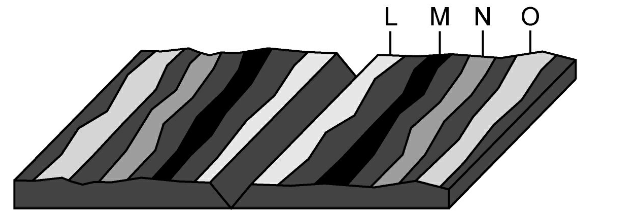
Where would the oldest rock be found?
a)
L
b)
M
c)
N
d)
O
10.
How is it possible for new crust to be formed without increasing the surface area of the Earth?
a)
Crust is destroyed at the same time it is created
b)
New crust is underwater where it sinks
c)
New crust breaks more easily than old crust
11.
Mountains are created when....
a)
Two continental plates collide
b)
Two oceanic plates pull apart
c)
An Oceanic plate subducts under a Continental Plate
d)
Two continental plates pull apart
12.
During sea floor spreading, molten material rises up from the mantle...
a)
along the continents
b)
at the mid ocean ridges
c)
deep ocean trenches
d)
at north and south poles
13.
What is the process that picks up and moves weathered rocks?
a)
Deposition
b)
Landslide
c)
Weathering
d)
Erosion
14.

Once magma reaches the earth's surface, it is called __________.

a)

a vent

b)

minerals

c)

igneous rocks

d)

lava

15.

Hot, molten rock inside the earth is called ...

a)

lava

b)

magma

c)

igneous rock

d)

minerals

16.

Series of natural processes by which rocks are slowly

changed from one kind of a rock to another.

a)

igneous rock

b)

metamorphic rock

c)

sedimentary rock

d)

rock cycle

17.

Rock formed when existing rock is changed by heat &

pressure.

a)

sedimentary rock

b)

texture

c)

metamorphic rock

d)

intrusive rock

18.

A teacher asked the students to name the 3 types of rocks. Which student wrote the correct answer?

a)

1. Tectonic 2. Metamorphic 3. Igneous

b)

1. Igneous 2. Sedimentary 3. Metamorphic

c)

1. Sedimentary 2. Igneous 3. Volcanic

d)

1. Igneous 2. Magma 3. Sedimentary

19.

Metamorphic rock is formed by —

a)

cementation

b)

heat and pressure

c)

compaction

d)

melting magma

20.

Which process occurs when igneous rocks are created?

a)

Sedimentation

b)

Cooling

c)

Weathering

d)

Pressure

21.

The breaking down of all rocks is called —

a)

earthquakes

b)

erosion

c)

weathering

d)

melting

22.
Which type of rock results from melting and cooling of magma?
a)
Igneous
b)
Metamorphic
c)
Sedimentary
d)
Extrusive
23.
A metamorphic rock changes into an igneous rock by what two processes?
a)
Melting and cooling
b)
Extreme heat and pressure
c)
Compaction and cementation
d)
Weathering and erosion
24.
True/False: Igneous rocks can only turn into metamorphic rocks.
a)
True
b)
False
25.
The process in which dissolved minerals crystallize and glue sediment together.
a)
compaction
b)
deposition
c)
organic rock
d)
cementation
26.
When sediments are pressed together tightly, this is called ____________.
a)
Compaction
b)
Cementation
c)
Weathering
d)
Erosion
27.
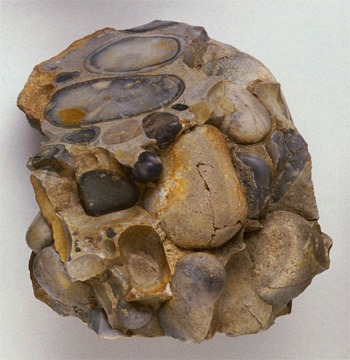
This rock was formed by smaller pieces of rock that settled at the bottom of a lake millions of years ago. What type of rock is this?
a)
Sedimentary
b)
Igneous
c)
Metamorphic
28.
Rock that forms when sediment from older rocks get pressed and cemented together.
a)
Sedimentary Rock
b)
Metamorphic Rock
c)
Igneous Rock
29.
The name rock is given when it is broken down into smaller pieces.
a)
texture
b)
weathering
c)
sediment
d)
erosion
30.
_______ rock forms from magma/lava
a)
Metamorphic
b)
Sedimentary
c)
Igneous
31.
The process of moving weathered rock and depositing it in another location is called?
a)
weathering
b)
erosion
c)
deposition
32.
The process of slowly breaking rocks into smaller pieces is called
a)
weathering
b)
erosion
c)
deposition
33.
Glaciers shape and carve away the land beneath them and can drastically reshape the landscape over hundreds or even thousands of years.
a)
True
b)
False
34.
Weathering and erosion are the same thing.
a)
True
b)
False
35.
Wind blowing sand from one location to another is called
a)
Weathering
b)
Erosion
c)
Deposition
36.
Water getting into cracks, freezing, and breaking the rocks or pavement apart is called?
a)
Weathering
b)
Erosion
c)
Deposition
37.
Waves dropping sand on the beach is called?
a)
Weathering
b)
Erosion
c)
Deposition
38.
A mudslide flowing down a steep hill is called?
a)
Weathering
b)
Erosion
c)
Deposition
39.
True or False : Sea-floor Spreading adds new material to the ocean floor?
a)
True
b)
False
40.
New crust is always formed at the...
a)
mid-ocean ridge
b)
deep-ocean trench
c)
asthenosphere
41.
When looking at mid ocean ridges the oldest rocks are 
a)
In the middle
b)
Found close to the rift zone
c)
Found far from the mid ocean ridges
42.
The Theory of Continental Drift states that Pangaea broke apart and the continents "drifted" away from each other
a)
True
b)
False
43.
Which piece of evidence did Wegener use to prove continental drift?
a)
The shape of the continents
b)
Similar fossils found on separate continents
c)
Tree fossils found in odd places
d)
All of the above
44.
Why did no one believe Wegener's thoery?
a)
He could not explain HOW the continents moved
b)
He didn't have evidence
c)
His data was wrong
d)
He didn't use the right technology to gather data
45.
What two specific continents fit together most noticeably?
a)
Africa and North America
b)
South America and Europe
c)
South America and Africa
d)
Antartica and Africa
46.
The presence of the same ________ on several continents supports the idea of continental drift.
a)
rocks
b)
fossils
c)
both fossils and rocks
d)
neither fossils nor rocks